
![Elf on the Shelf Coloring Pages: 30+ Free Printables [2025]](https://runable.blog/blog/elf-on-the-shelf-coloring-pages-30-free-printables-2025/image-1-1766570646366.jpg)
Introduction: Bringing the Magic of Elf on the Shelf to Life Through Coloring
Every December, millions of families experience the magical arrival of their Scout Elf. That first sighting on the shelf marks the beginning of a tradition filled with wonder, laughter, and anticipation. But what happens when the novelty of watching your elf's daily antics starts to fade midway through the month? Or when your kids are stuck inside on a snowy afternoon, restless and bored?
Here's where coloring pages become your secret weapon for extending the magic.
Elf on the Shelf coloring pages aren't just busywork. They're a bridge between the daily elf adventures and creative expression. When kids color their favorite Scout Elf scenes, they're reinforcing the storyline, imagining their own plotlines, and engaging in the kind of quiet, focused activity that parents desperately need during the holiday chaos.
What makes these pages special is how they tap into something deeper than just coloring. They transform the Scout Elf from a passive observer on the shelf into an active character in a kid's imagination. That scene of the elf sledding down a snowy mountain? A kid can add their own colors, details, and creative choices. The elf's Christmas sweater? Maybe it should be electric purple with gold polka dots instead of red and white.
This guide rounds up the best free Elf on the Shelf coloring pages available online, organized by theme and difficulty level. Whether you're looking for simple designs for preschoolers or intricate scenes for older kids, you'll find printables that fit your family's needs. Plus, we'll explore creative ways to use these pages beyond just coloring, from gift-wrapping paper to holiday decorations.
The best part? They're all free. No subscriptions, no hidden fees, no need to pay for a hundred pages when you only want three or four. Just download, print, and let the coloring begin.
TL; DR
- Free coloring pages: 30+ printable Elf on the Shelf pages available for download with no cost or registration
- Multiple themes: Scout Elf engaged in holidays activities, adventures, funny scenes, and seasonal scenarios
- Difficulty levels: From simple outlined designs for ages 3+ to detailed intricate pages for older kids and adults
- Instant engagement: Perfect for rainy days, waiting rooms, car trips, and extended holiday fun
- Creative reuse: Pages can become wrapping paper, decorations, gifts, or part of scrapbooks and memory books
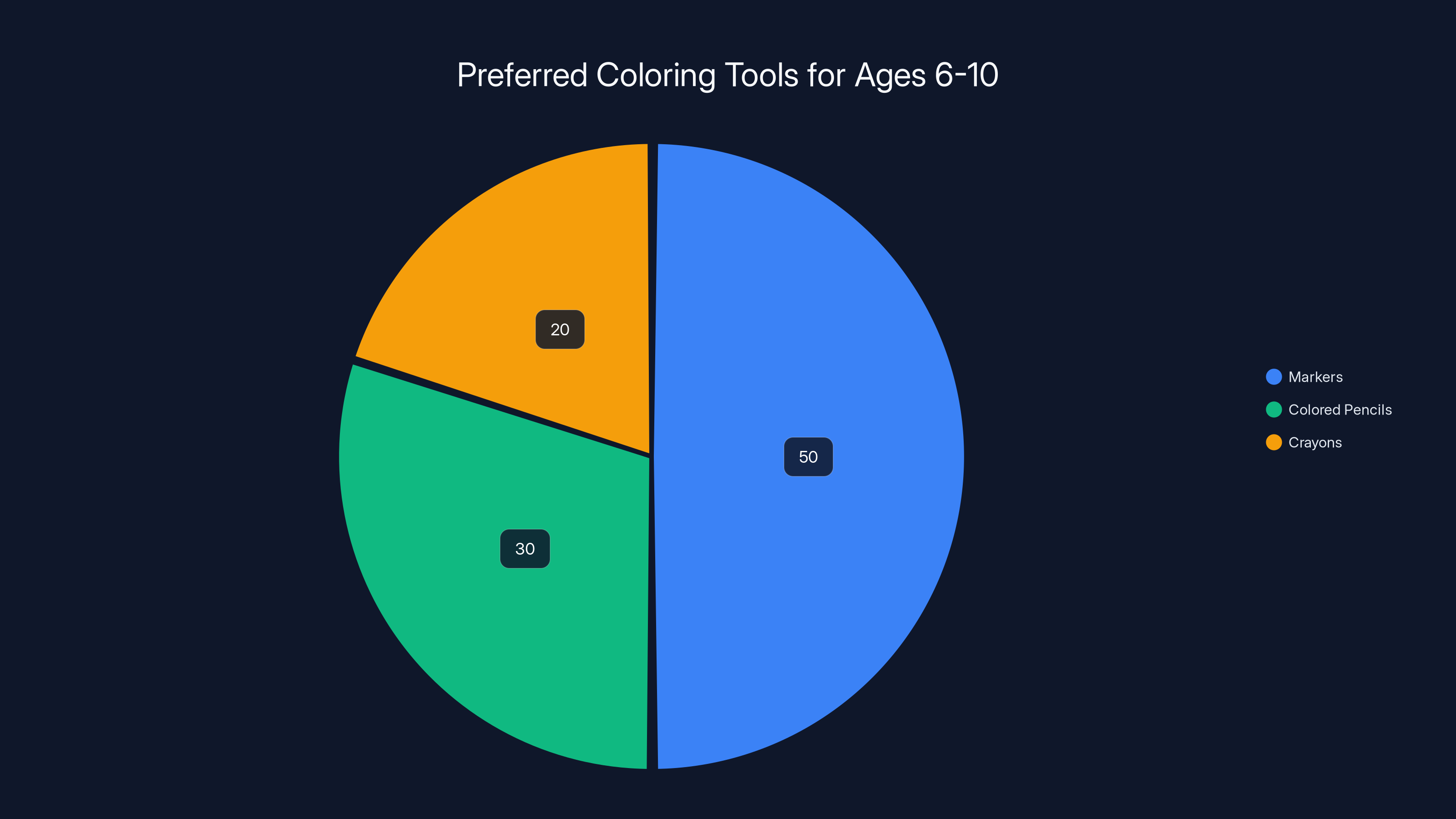
Estimated data shows that markers are preferred by 50% of kids aged 6-10 for their vivid colors and ease of use, followed by colored pencils and crayons.
Why Coloring Pages Matter for Holiday Engagement
There's solid psychology behind why coloring matters during the holiday season, especially when tied to beloved traditions like Elf on the Shelf. Kids live in a world of constant stimulation. Screens dominate their days. They're expected to sit still in classrooms for seven hours. They're bouncing between extracurricular activities, holiday parties, and family gatherings.
Coloring does something radical. It slows things down.
When a child sits down with a coloring page and markers or crayons, something shifts. Their breathing slows. Their focus narrows to the specific task at hand. There's no winning or losing, no right or wrong way to color (unless you're rigidly adhering to realistic color schemes, which most kids aren't). It's pure creativity with a defined structure.
For Elf on the Shelf specifically, coloring pages extend the engagement window. The elf appears on November 26th (or whenever your family starts the tradition). By mid-December, the novelty might be wearing off. Kids have seen dozens of scenarios. The morning discovery feels less exciting.
But a coloring page featuring that exact elf? In that exact scenario? Suddenly, there's a reason to engage with the character again. They're not just observing the elf. They're creating something.
This kind of engagement also supports cognitive development. Coloring improves fine motor skills, hand-eye coordination, and color recognition. It encourages decision-making (which colors go together? How should we shade this area?). For kids with anxiety or sensory sensitivities, the repetitive motion and focused attention can be genuinely calming.
Plus, there's the memory factor. A colored page becomes a keepsake. Years later, kids flip through old coloring pages and remember exactly where their elf was positioned that year, what colors they chose, who was sitting with them while they colored.
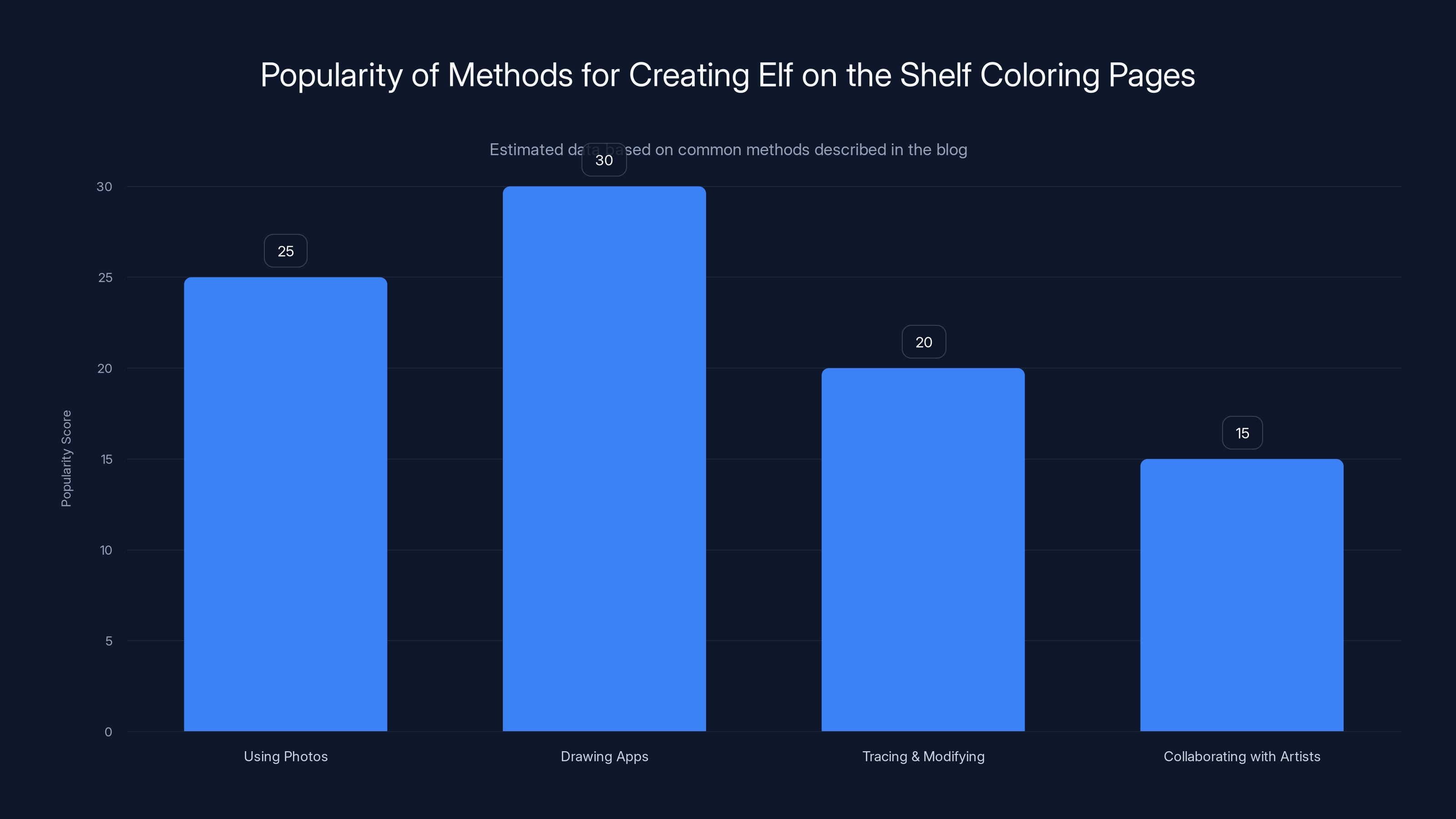
Using drawing apps is estimated to be the most popular method for creating custom Elf on the Shelf coloring pages, followed closely by using photos. Estimated data.
Simple Elf on the Shelf Coloring Pages for Young Children (Ages 3-6)
Young children need coloring pages with several key features: large spaces to color, bold outlines, minimal details, and images they can complete relatively quickly. A preschooler's attention span is precious—you want them to feel the satisfaction of finishing within 10-15 minutes.
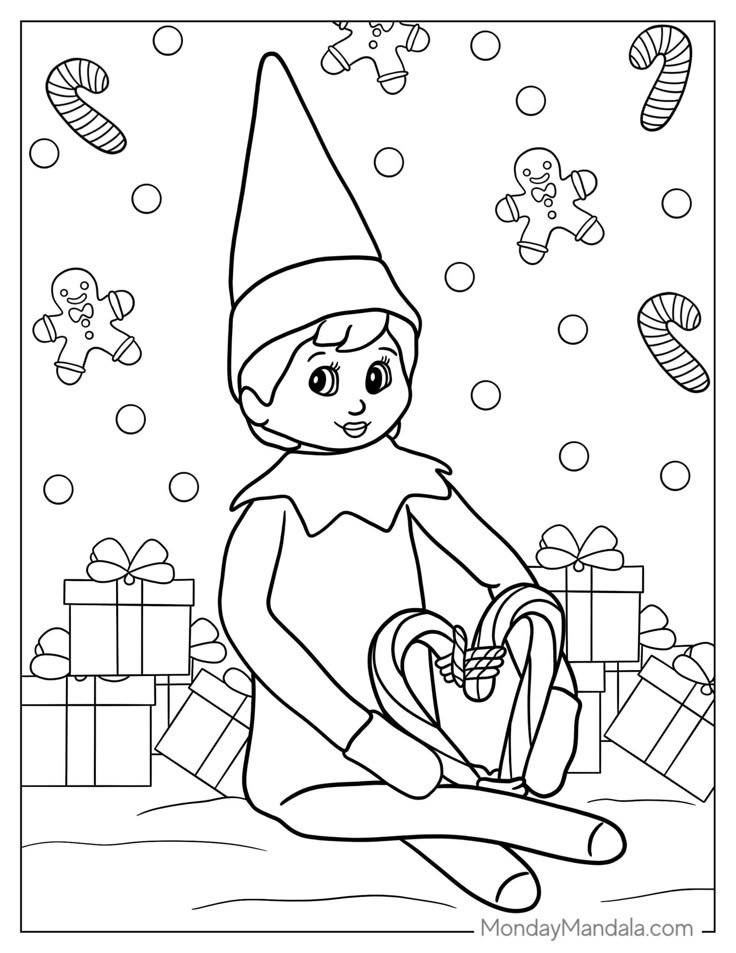
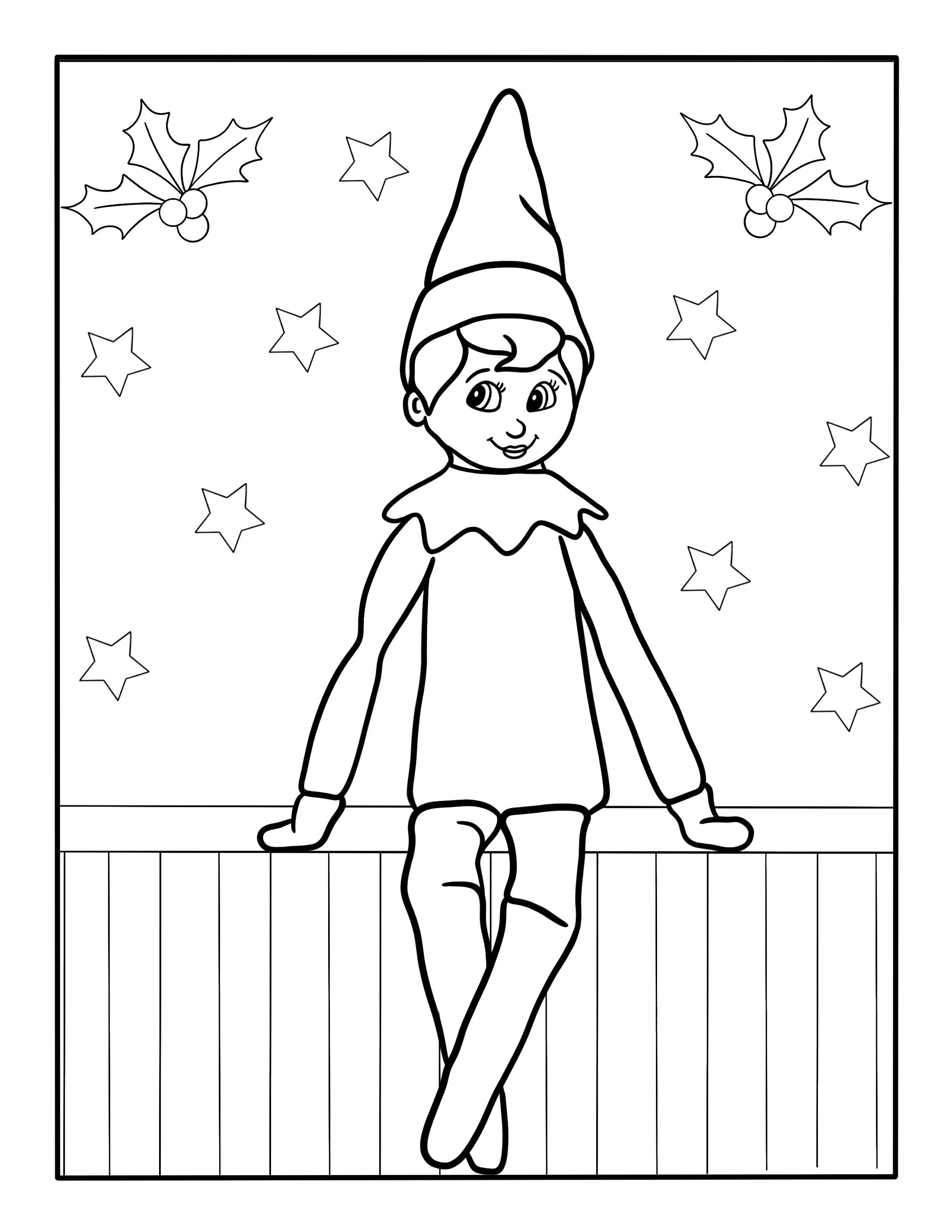
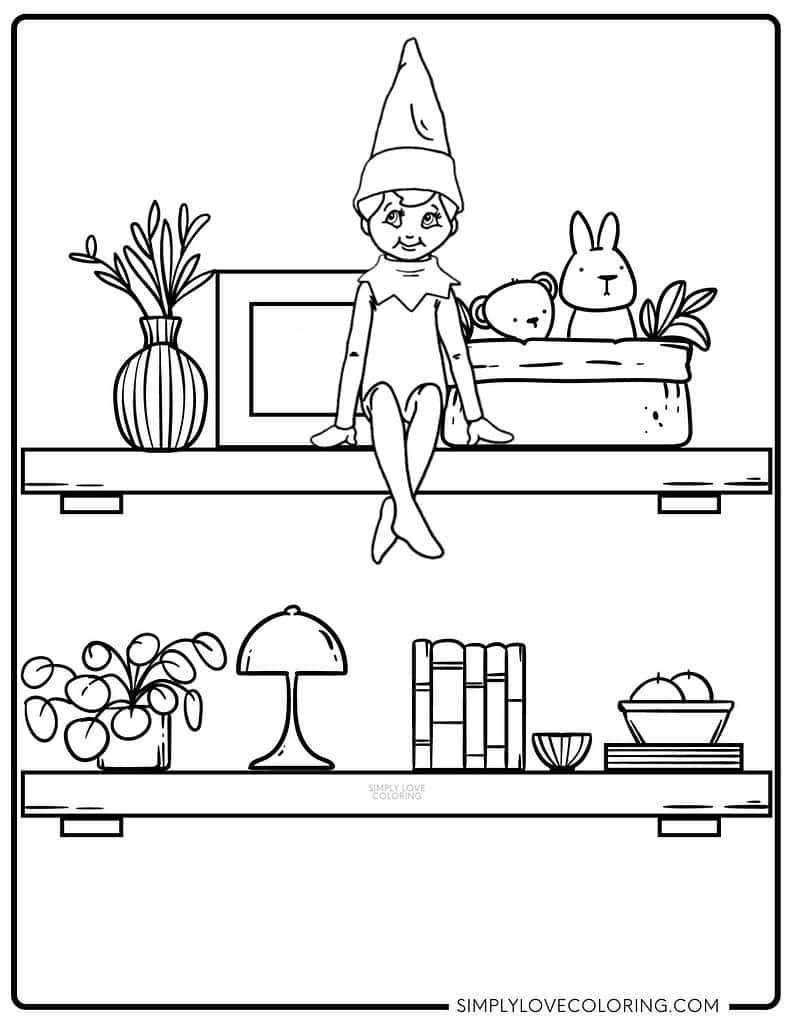
Look for pages featuring the Scout Elf in basic poses and simple scenarios. A smiling elf sitting on the shelf works perfectly. An elf holding a candy cane. An elf with simple geometric patterns on its outfit. The goal isn't artistic complexity—it's engagement and completion.
Many free coloring page sites offer simplified versions of Scout Elf scenes specifically designed for this age group. These pages typically feature:
Large colored spaces with outlines thick enough that a young child's hand control won't create significant slips outside the lines. Nothing derails a preschooler's enthusiasm faster than trying to color tiny intricate details and "messing up."
Familiar objects around the elf. A Christmas tree. A present. Candy canes. Ornaments. These give young children context for the scene and more variety in their coloring choices.
Minimal text. If there's any text on the page, keep it to simple statements: "Color Me!" or "My Elf on the Shelf." Definitely avoid pages with jokes or complex captions that require reading.
Bold, recognizable elf imagery. The Scout Elf should be clearly visible and proportionally large compared to other objects on the page. Young kids should immediately recognize it as "the elf."
One underrated option is making your own simplified pages if you can't find what you need. Take a photo of your family's Scout Elf in a simple pose, print it in black and white, and adjust the contrast to create a bold outline. Print it, and you've got a personalized coloring page featuring their actual elf.
For this age group, crayons work better than markers. They're easier to grip, harder to accidentally use on furniture, and come in familiar colors. Thick crayons designed for developing hands prevent frustration.
Intermediate Elf on the Shelf Coloring Pages (Ages 6-10)
This age group is where the fun really expands. Kids have better motor control, longer attention spans, and genuine interest in the Scout Elf narrative. They want pages that are more interesting than simple outlines but not so complex that they feel overwhelming.
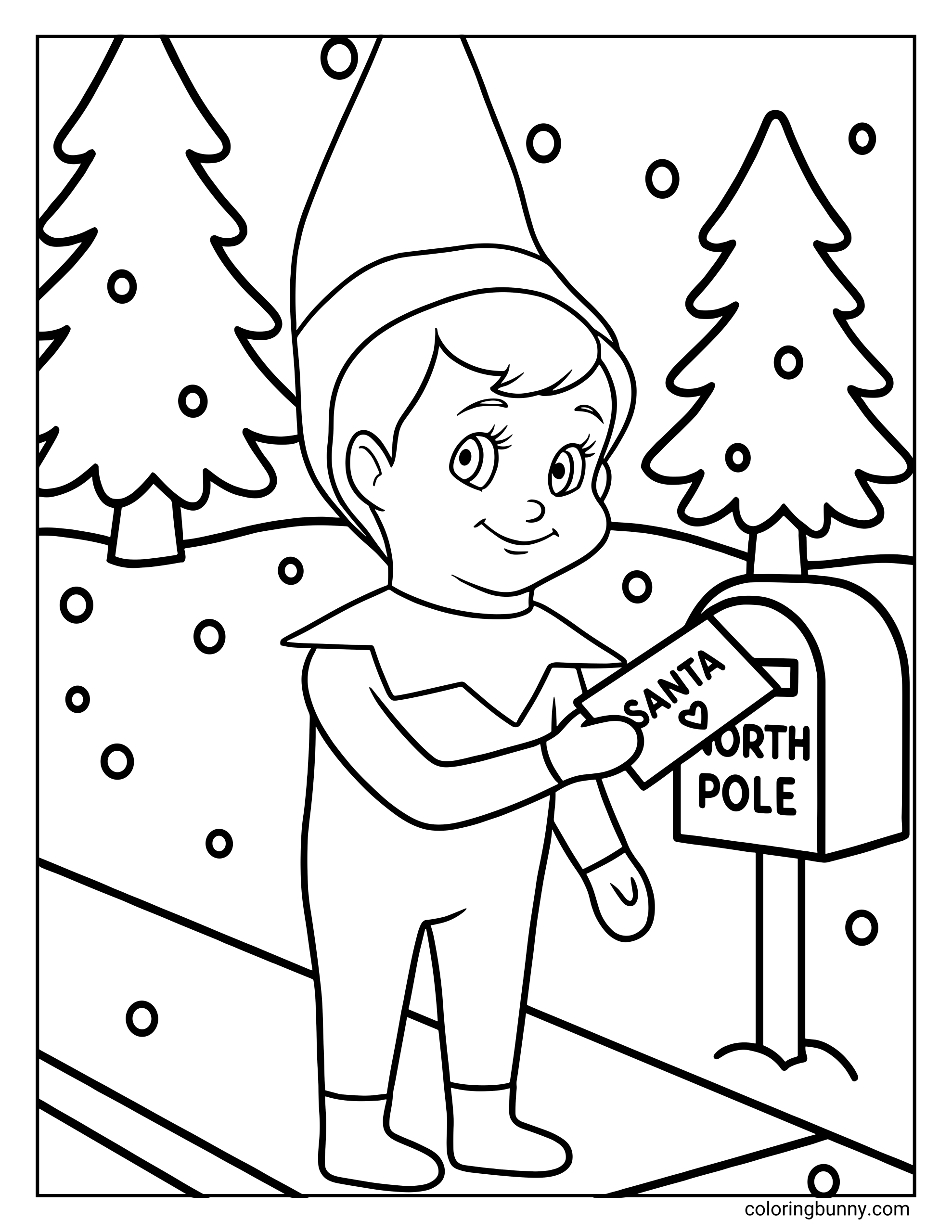
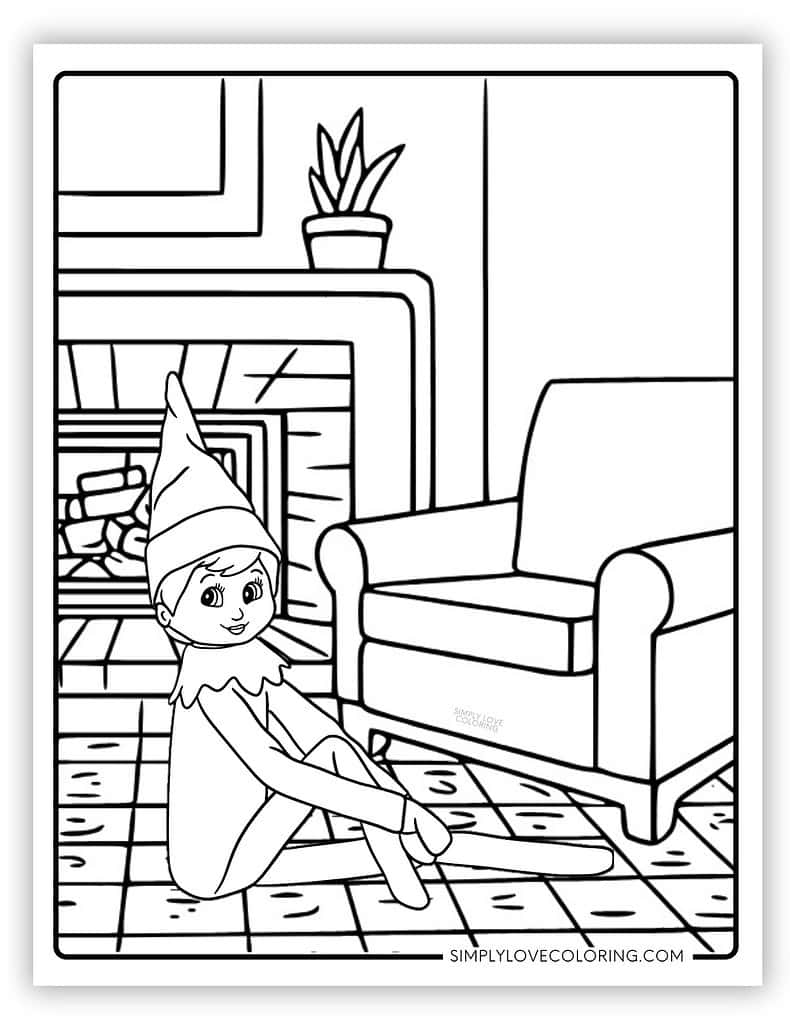
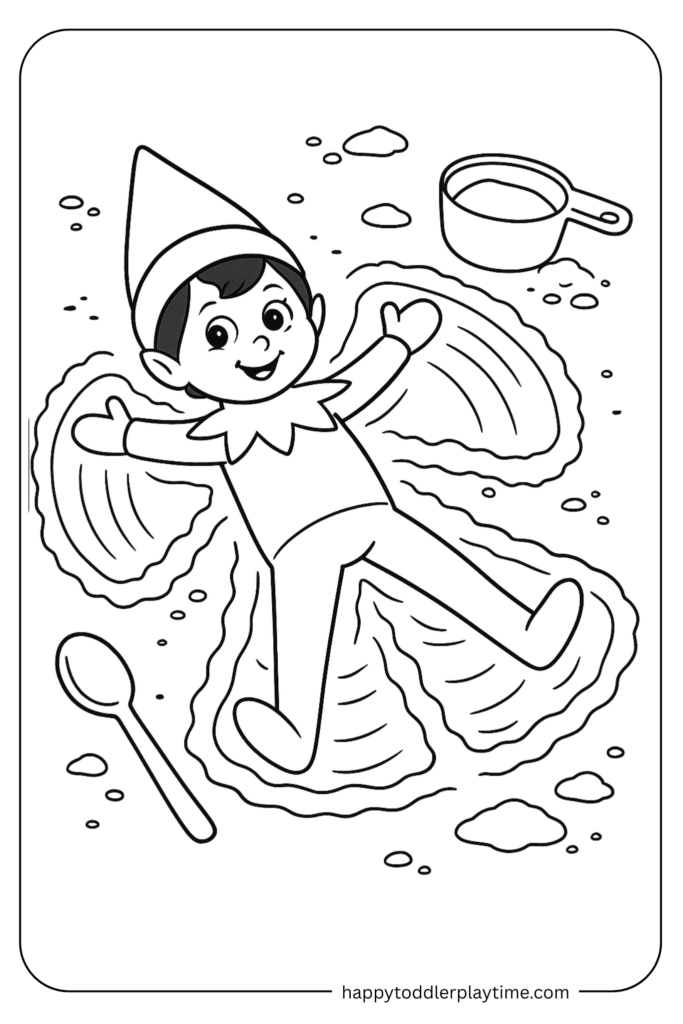
Intermediate pages typically feature Scout Elves engaged in activities: sledding down a staircase, swimming in a milk bath, zip-lining across the room, building a snow fort, riding a skateboard, or caught in other funny scenarios. The elf is still recognizable, but there's actual context and story happening.
These pages work well for several reasons. First, they encourage kids to think about the elf's story. Why is it sledding? What happens next? Second, they provide multiple areas to color: the elf itself, the background, objects, and scenery. A child can spend 20-30 minutes happily coloring and still feel like they're making progress.
Third, intermediate pages are still achievable. They don't require artistic skill or perfect precision. A seven-year-old can complete these pages and feel genuinely proud of the result.
At this level, kids typically prefer markers over crayons. Markers are faster, the colors pop more vividly, and there's something satisfying about the permanent color application. Colored pencils also work well for this age if you want slightly more subtle results.
Coloring together becomes social at this age. An older sibling and younger sibling can color the same page side-by-side, or kids can collaborate on creating a comic-style sequence showing their elf's daily adventures.
Consider offering "elf adventure prompts" alongside the coloring pages. After coloring, kids write or dictate a short story about what's happening in the scene. "Our elf is sledding because..." This combines coloring with literacy in a natural way.
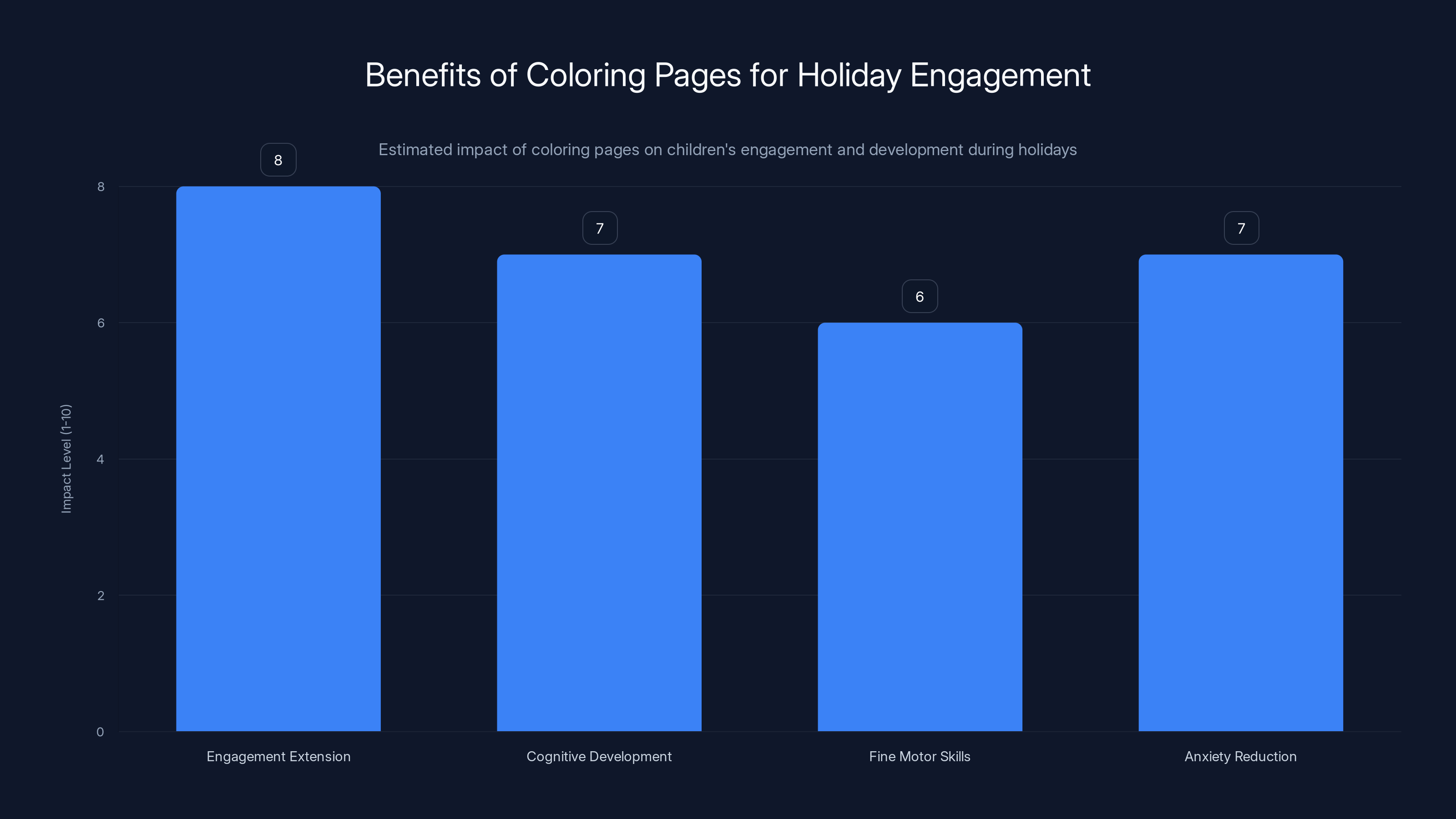
Coloring pages significantly enhance holiday engagement by extending interest in traditions like Elf on the Shelf and supporting cognitive and emotional development. Estimated data.
Advanced Elf on the Shelf Coloring Pages (Ages 10+)
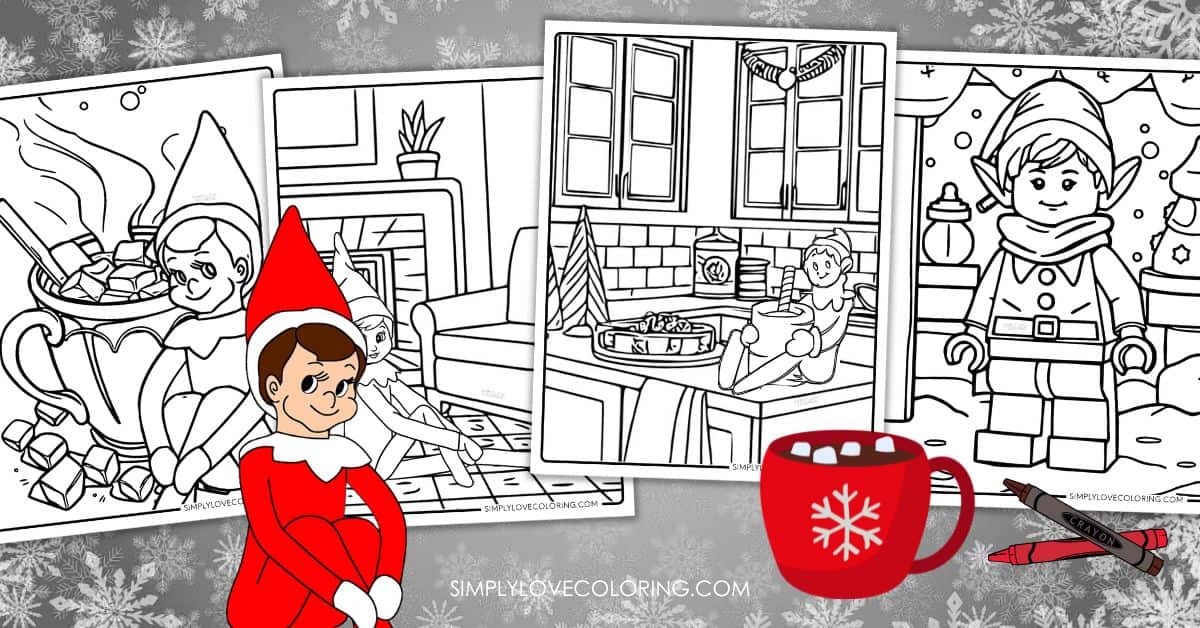
Older kids and teens might seem too cool for coloring pages, but the right design changes everything. Advanced coloring pages feature intricate details, complex backgrounds, and designs that appeal to artistic sensibilities. These pages work for detail-oriented kids, kids with anxiety who find coloring meditative, and surprisingly, many teens and adults.
Advanced Scout Elf pages might feature:
Detailed clothing and texture on the elf's body. Patterns on the costume, folds in fabric, shadows and highlights that create dimension.
Complex backgrounds. Not just a blank space, but full winter scenes, themed settings, or busy scenarios with multiple elements to color.
Fine line details that reward careful, precise coloring. Shading opportunities that let kids use multiple shades and gradients.
Mandala-style integration. Some advanced pages combine the elf with geometric patterns or mandala designs, creating a meditation-style coloring experience.
For this age group, colored pencils become the preferred tool. They allow for precise detail, layering, and blending. Quality matters more—student-grade colored pencil sets provide better pigmentation and smoother application than basic options.
Advanced pages also work brilliantly as stress relief. There's something about focusing on intricate detail work that quiets racing thoughts. If you have a teen dealing with holiday anxiety, school stress, or social pressures, an advanced coloring page and an hour of focused time can be genuinely therapeutic.
Consider framing advanced pages as potential gifts. A fully colored, beautifully completed page can be:
- Matted and framed as holiday decor
- Scanned and turned into custom wrapping paper for gifts
- Gifted to grandparents as a personalized keepsake
- Part of a memory book documenting the family's holiday season
Thematic Elf on the Shelf Coloring Pages: By Activity and Scenario
Elf on the Shelf scenarios are wonderfully diverse. Your elf might be caught in a food fight, tangled in Christmas lights, building a blanket fort, or creating ice skating rinks out of tape and plastic wrap. Different scenario types work better for different occasions and purposes.
Funny and Silly Scenarios
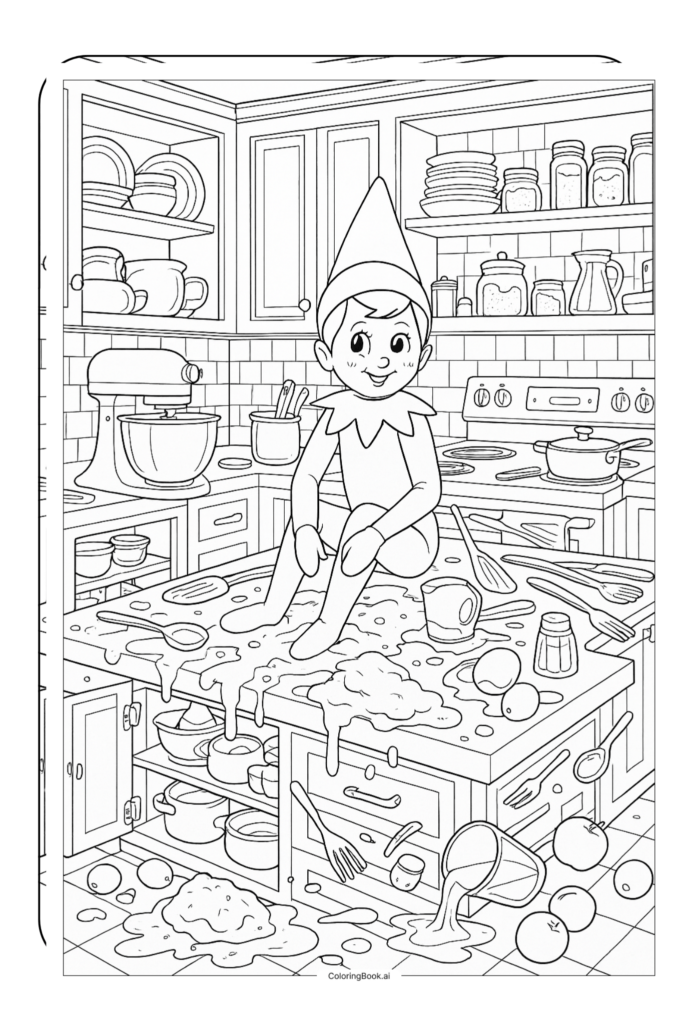
These pages feature elves in humorous, absurd, or slapstick situations. The elf covered in chocolate. The elf stuck in a marshmallow bag. The elf surrounded by candy canes. The elf hanging from the ceiling fan by a string.
Kids love these because humor is engaging and memorable. Silly scenarios also encourage kids to improvise their own funny elf setups, extending play beyond coloring.
Adventure and Exploration Scenes
Your elf isn't confined to the shelf. It might be jungle exploring, mountain climbing, skydiving, or treasure hunting through the house. Adventure pages feature dynamic poses, interesting backgrounds, and plenty of detail to color.
These work particularly well for active, imaginative kids who like stories and role-play. They inspire kids to create their own adventure narratives.
Holiday Activity Pages
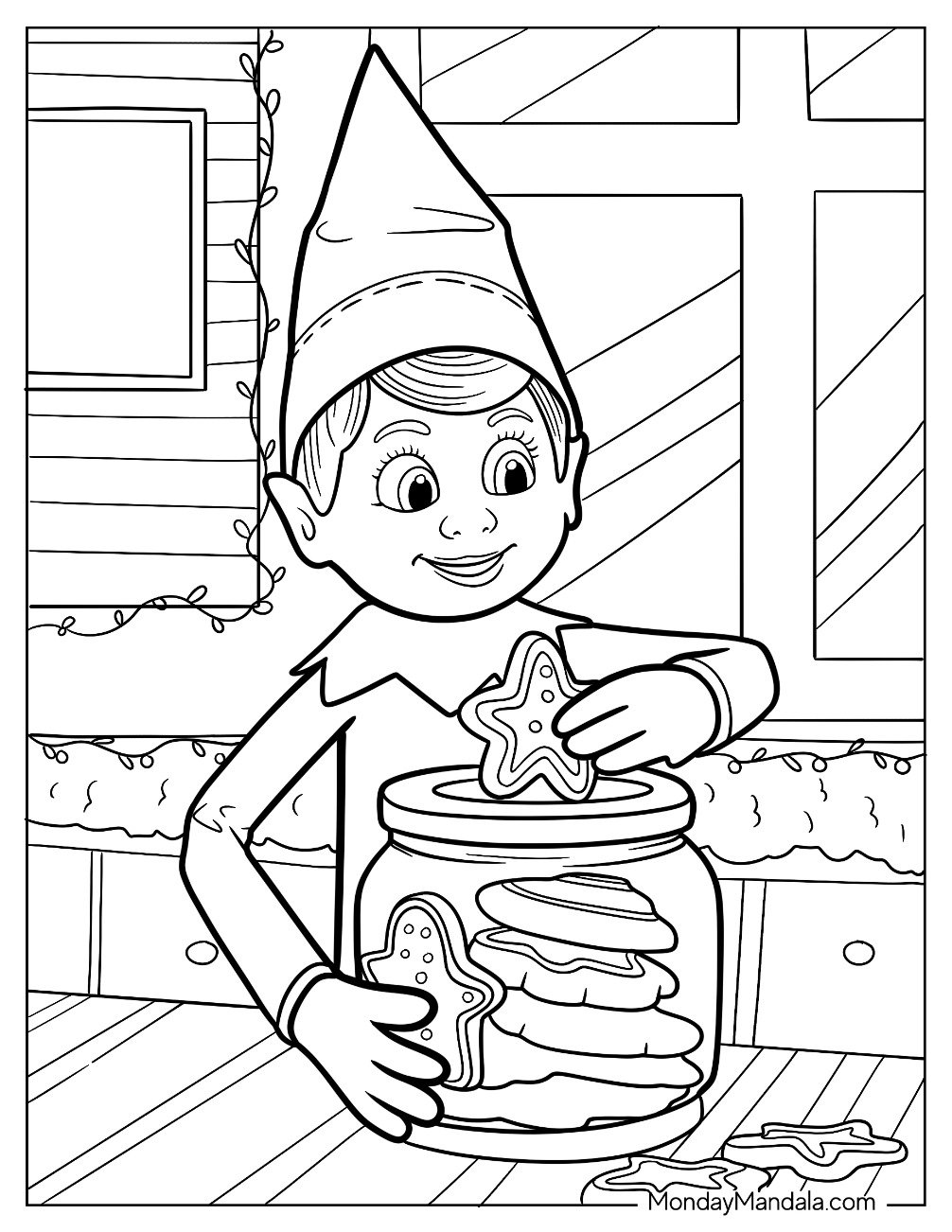
The elf baking cookies. The elf decorating a Christmas tree. The elf wrapping presents. The elf at a holiday party. These pages ground the elf in recognizable holiday activities, which many kids find comforting.
Holiday activity pages also work well in classroom settings if your child's teacher has an Elf on the Shelf tradition. They're seasonal without being strange or requiring explanation.
Winter and Snow Scenes
Snowflakes, sledding, ice skating, snow forts, and winter landscapes. These pages lean into the snowy aesthetics of the season and work particularly well if your family is in a cold climate experiencing actual snow.
Winter scene pages are also great for teaching kids about shading and contrast. White snow against gray clouds. Dark trees against white fields. These natural contrasts teach coloring technique.
Friendship and Family Pages
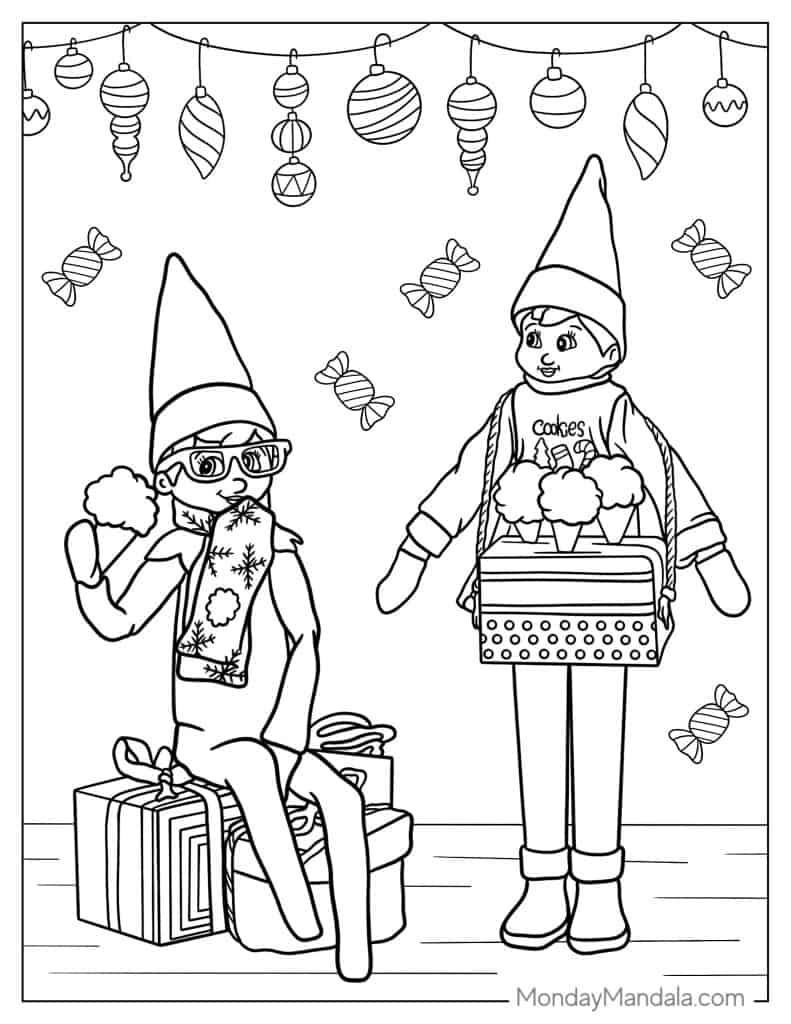
Pages showing multiple elves together, elves with other toys, or elves with family members. These pages celebrate relationships and community. They're particularly nice if your family has multiple Scout Elves or if the elf interacts with beloved stuffed animals.
Educational and Learning Pages
Some pages incorporate letters, numbers, shapes, or basic skills practice. An elf surrounded by alphabet letters. An elf with number-shaped candies. These pages serve double duty: coloring plus learning.
Educational pages work well for younger children still developing foundational skills or for families who want to sneak in a bit of learning during holiday break.

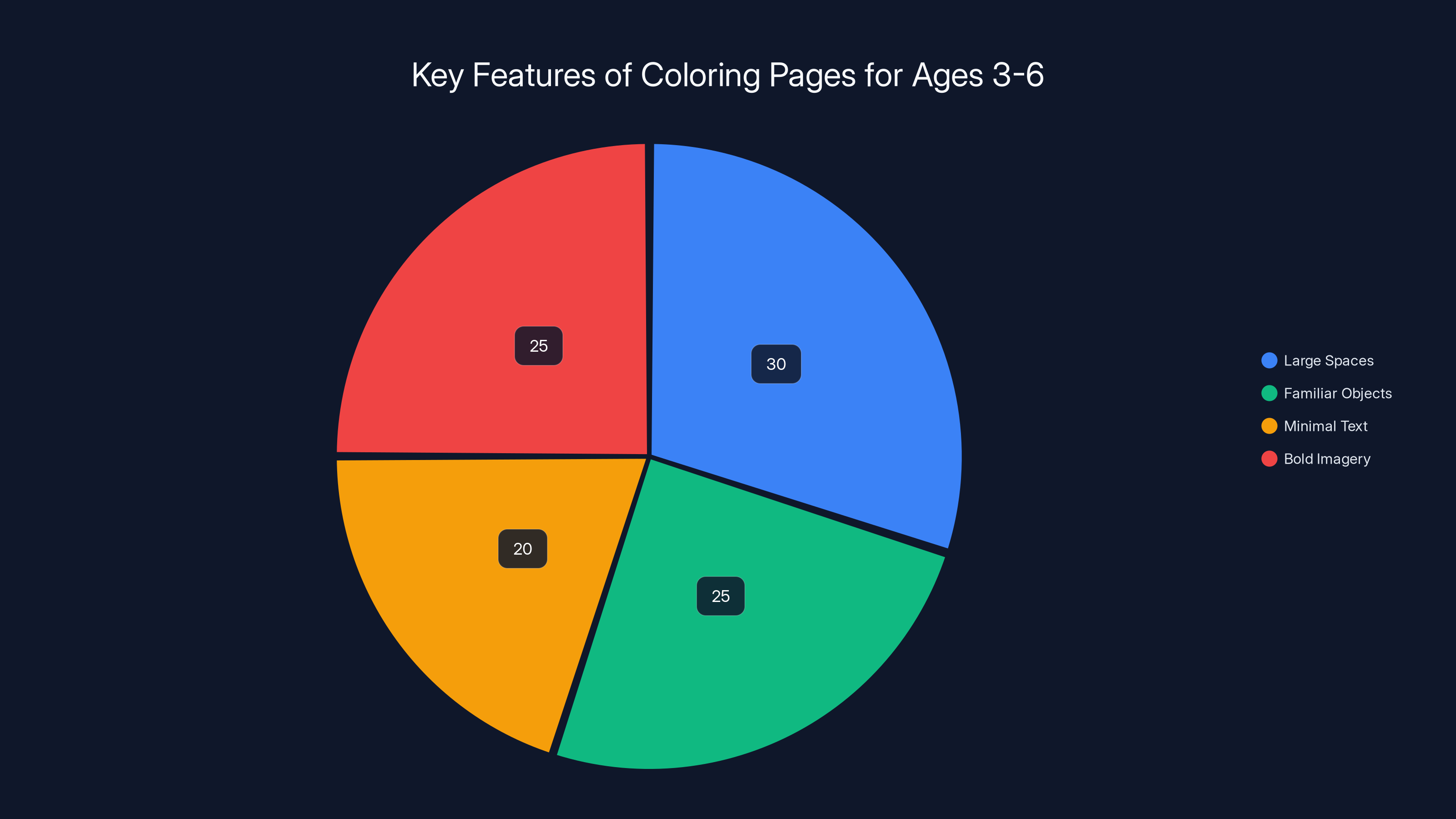
Estimated data shows that large spaces and bold imagery are crucial features for engaging young children in coloring activities, each accounting for about 25-30% of page design focus.
Where to Find Free Elf on the Shelf Coloring Pages
The internet is absolutely packed with free coloring pages. The challenge isn't finding them—it's finding quality pages without getting lost in sketchy websites or sites that require unnecessary registration.
Reputable Coloring Page Websites
Specialized coloring page sites like Coloring Bunny, Crayola, and similar platforms curate large collections of free printables, including Scout Elf pages. These sites typically organize pages by difficulty level, theme, and character. They're reliable, regularly updated, and worth bookmarking.
Benefits of using established coloring sites:
- Better organization. Pages are categorized, so you can filter by age-appropriateness or theme
- Quality control. Pages have been designed by artists and tested to print well
- No sketchy downloads. Legitimate sites prioritize user safety
- Print preview. You can see what the page looks like before printing
- Variety. A good coloring site might have 50+ Scout Elf pages in different styles
Pinterest and Social Media
Pinterest is essentially a visual search engine for coloring pages. A quick search for "Elf on the Shelf coloring pages" returns hundreds of options. Many are links to free downloadable PDFs from individual creators.
Benefits:
- Creative variety. Individual artists and teachers share their own designs
- Easy saving. Pin pages you like to a dedicated holiday board
- Community feedback. Comments tell you if a page is actually good and if the download works
Caution: Verify that links actually work before you need them. Some Pinterest links lead to broken pages or sites that have changed. Test downloads a week or two before you want to use them.
Teachers Pay Teachers and Educational Sites
Teachers often create Scout Elf coloring page bundles and share them. While some are paid, many teachers also offer free resources. Educational sites like Teachers Pay Teachers, Scholastic, and similar platforms host these materials.
Facebook Groups
Elf on the Shelf fan groups and parenting Facebook groups often share free coloring pages in their files or posts. These tend to be crowd-sourced, so quality varies. But you'll find some unique designs that aren't available elsewhere.

How to Print and Prepare Coloring Pages
Successfully printing coloring pages involves more than just hitting the print button. Small decisions dramatically impact the final product.
Paper Selection
Standard printer paper works fine for casual coloring, especially with crayons. It's what you have at home, it's cheap, and it gets the job done.
Cardstock is thicker and more substantial. Pages feel more special when printed on cardstock. Markers won't bleed through as easily. It's slightly more expensive but still affordable.
Heavyweight matte paper or coloring-specific paper provides the best experience, particularly for wet media like markers or watercolors. This is worth the investment if you're printing multiple pages and want them to hold up well during extended coloring sessions.
Avoid glossy paper. Markers and crayons don't adhere well to glossy surfaces. Your coloring won't look as vibrant or satisfying.
Printer Settings
Most coloring pages are designed for standard 8.5 x 11-inch printing. A few tips:
- Print preview first. Make sure the page layout is correct and the image isn't cutting off edges
- Adjust scale if needed. Some PDFs default to "shrink to page," which might make the image smaller than you want
- Use best quality setting if your printer allows it. Better quality looks better, and coloring pages benefit from crisp, dark lines
- Black and white printing is standard for coloring pages (versus color printing, which defeats the purpose)
Organization and Storage
Print all your pages at once and keep them in one place. A dedicated folder, a file holder, or even a decorative box works.
Organization strategies:
- By difficulty level. Put easy pages in one section, intermediate in another
- By theme. Holiday activities together, funny scenarios together
- By date. Print fresh batches weekly so the novelty doesn't wear off
- Rotating display. Keep a few printed pages visible on a bulletin board or table, where kids can grab them when bored
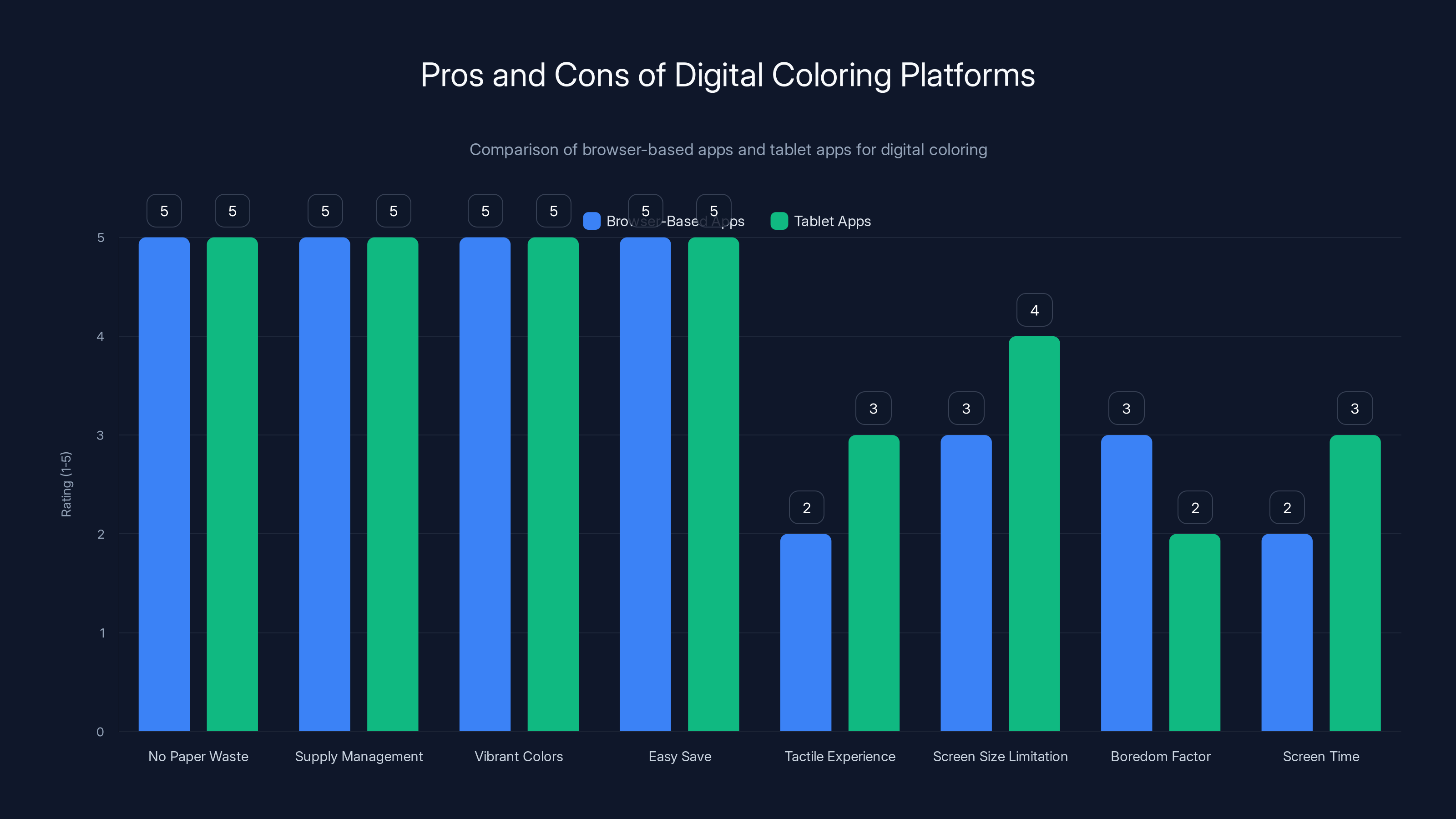
Digital coloring platforms offer vibrant colors and easy saving options, but they vary in tactile experience and screen size limitations. Estimated data based on typical user feedback.
Creative Uses Beyond Traditional Coloring
Once kids have colored their pages, the options expand far beyond storing them in a folder or throwing them away.
Custom Wrapping Paper
Scotch-tape multiple colored pages together to create one-of-a-kind wrapping paper. It's personalized, creative, and the recipient sees the effort and love that went into it. This works particularly well for gifting to grandparents or close family friends.
Tip: Back the paper with kraft paper for structural integrity if you're wrapping something larger.
Holiday Cards and Decorations
Fold a colored page in half to create a handmade holiday card. Add a message inside. Alternatively, trim and mat the page to create wall art. Tape colored pages to windows for festive displays. Hang them with string as garland.
Scrapbooking and Memory Books
Create a holiday memory book with one colored page per day or per week, annotated with family activities, memories, and reflections from that time period. Years later, this becomes a priceless keepsake.
Classroom or Community Sharing
Collect finished coloring pages and donate them to hospitals, nursing homes, or community centers during the holiday season. Finished pages brighten up communal spaces, and kids feel great knowing their artwork is making someone else happy.
Photography and Social Sharing
Photograph beautifully colored pages and share them on Instagram, Facebook, or your family blog. It's a way to document the holiday season without constantly posting photos of your house or family.
Lamination and Reusable Pages
Laminate finished colored pages or laminate blank pages and use dry-erase markers for reusable coloring. Kids can color, erase, and color again throughout the season.
Art Show or Gallery Display
Host a family "art show" where all the finished coloring pages are displayed like a gallery. Kids are invited to attend, stand by their work, and explain what they colored and why. It's surprisingly powerful for building confidence.
Age-Appropriate Coloring Techniques and Tips
Coloring sounds simple, but teaching kids effective techniques makes the experience better and the results more satisfying.
For Young Children (Ages 3-6)
Emphasize coverage over precision. The goal isn't coloring perfectly within lines. It's making the page colorful and finished-looking.
Teach color combinations. "Look, if we use light blue and dark blue together, it looks like ice." This introduces color theory naturally.
Build motor skills gradually. Start with big movements and large areas. Progress to smaller details and more control.
Celebrate effort, not perfection. "I love how colorful you made this! You chose so many pretty colors!" Versus "You colored outside the lines."
For Elementary-Age Children (Ages 6-10)
Introduce shading and dimension. "If we color one side of the elf darker, it looks like that side is in shadow, and the other side is brighter from the light." This teaches perspective and visual depth.
Experiment with mixed media. Combine markers, crayons, colored pencils, and glitter on the same page. This builds understanding of how different materials work and interact.
Encourage pattern creation. "What if we made stripes on the elf's shirt? Or polka dots? What design do you think looks best?"
Use coloring as meditation. If a child is restless or anxious, guide them toward focused coloring. "Let's just focus on coloring this one section and see how good we can make it look."
For Older Kids and Teens (Ages 10+)
Teach color theory basics. Complementary colors (opposites on the color wheel) create vibrancy. Analogous colors (next to each other) create harmony. Warm colors feel energetic; cool colors feel calm.
Develop observation skills. "Look at real photos of elf costumes. What colors do you see in the shadows? Real shadows aren't black—they might be dark blue or dark red."
Explore techniques. Layering colors, burnishing (blending), stippling (dots), hatching (lines), and dry brushing create different effects. Experimenting teaches art skills.
Connect to personal interest. "If our elf were in your favorite movie, what would it be doing? What would the colors look like?"
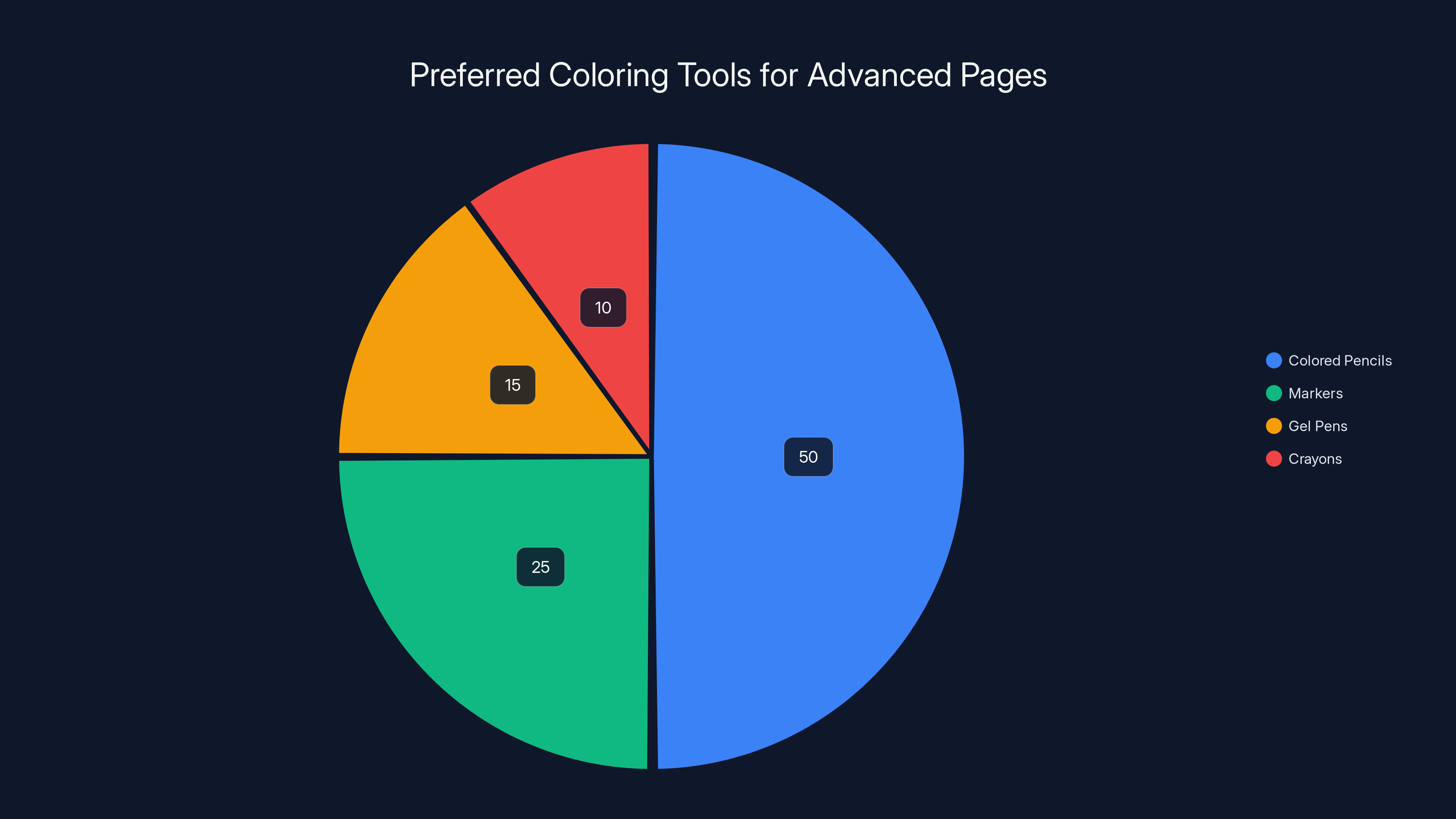
Colored pencils are the most preferred tool for advanced coloring pages due to their precision and blending capabilities. Estimated data.
Combining Coloring with Other Holiday Activities
Coloring works best as part of a larger holiday activity ecosystem, not as the sole entertainment.
Coloring + Storytelling
After coloring, kids narrate or write what's happening in their picture. This combines visual art with literacy, making the activity richer and extending engagement time.
Prompt examples:
- "Your elf looks like it's having an adventure. What just happened?"
- "Tell me a story about why your elf is in this position."
- "What comes next in your elf's story?"
Coloring + Dramatic Play
After coloring, kids recreate the scene with actual toys or stuffed animals. They act out the scenario, improvise dialogue, and expand the narrative. This bridges visual creativity with imaginative play.
Coloring + Craft Projects
Use colored pages as base layers for collage, cutting, and construction. Add actual supplies: glitter, stickers, pom-poms, yarn, and tape. This makes the activity multisensory and more tactile.
Coloring + Movement
Create a game where kids act out the elf's pose while you read the scene description. "Your elf is sledding down the stairs. Show me how the elf would move!" This combines coloring with physical activity and body awareness.
Coloring + Snacks
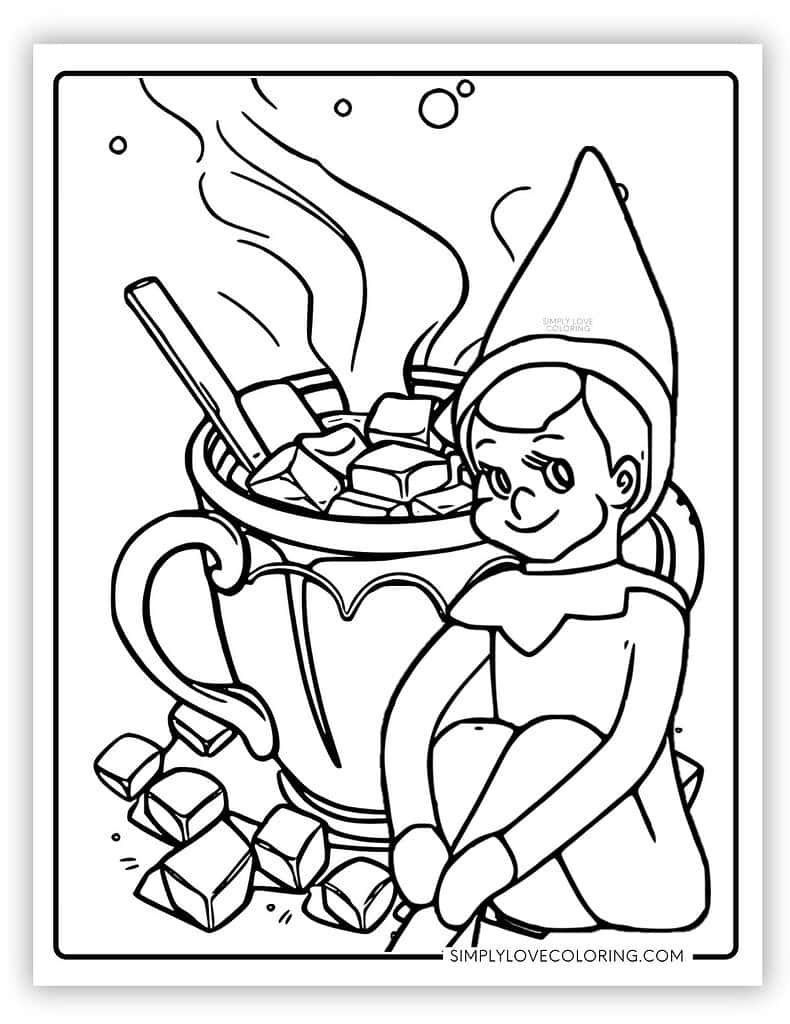
Make it cozy. Set up hot chocolate, cookies, or other treats. Create a comfortable coloring space with good lighting. Music in the background. This transforms coloring from a standalone activity into a full sensory experience.
Managing Coloring Supplies Efficiently
Having the right supplies available makes coloring more accessible and enjoyable.
Essential Supplies
Crayons (thick for young kids, regular for older kids) are the baseline. They're familiar, safe, forgiving, and affordable. Buy sets rather than individual crayons—variety matters.
Markers (washable for young kids) provide brighter colors and faster coverage. Quality matters more with markers. Cheap markers have weak pigmentation and dry out quickly.
Colored pencils (student grade for beginners, artist grade for serious young artists) allow for detail and blending. They're quieter than markers and less likely to stain furniture.
Combination approach: Keep multiple marker/crayon/pencil options available. Different kids prefer different supplies.
Storage Solutions
Clear containers so kids can see what's available without dumping everything out.
Drawer organizers or artist caddies for easy transport to the coloring space.
Labeled sections (crayons here, markers here, pencils here) make cleanup easier.
Rotation system: Not all supplies need to be out at once. Rotate markers every couple weeks to prevent them from drying out and to maintain novelty.
Supply Maintenance
Keep caps on markers and colored pencils. Dried-out markers are useless.
Store supplies tip-down so ink naturally flows to the tip.
Replace supplies seasonally. At the start of December, refresh with new markers if needed.
Teach responsibility. Kids who help maintain supplies develop better organizational habits.

Troubleshooting Common Coloring Challenges
Not every coloring session goes smoothly. Here are solutions to common problems.
Problem: Kids Color Outside the Lines
Solution: This is completely normal and not actually a problem. The goal of coloring is engagement and creativity, not perfect precision. If a child is bothered by it, try pages with thicker outline lines. If you're bothered by it, let it go. Outside-the-lines coloring doesn't mean failure—it means the child is focused and engaged.
Problem: Colors Look Muddy When Multiple Colors Are Layered
Solution: This happens when kids press hard with markers or use too many colors in one area. Teach lighter pressure. Suggest limiting to 2-3 colors per section. Or embrace the muddy look—sometimes that creates interesting, unique effects.
Problem: Markers Bleed Through Thin Paper
Solution: Use cardstock or heavier paper. Or place newspaper under the coloring page to catch bleed-through on the surface below.
Problem: Kids Get Bored Halfway Through
Solution: Take a break. Don't force completion. Or switch supplies (crayons to markers, markers to colored pencils). Or move the page to a different location. Sometimes a change of scenery reignites interest.
Problem: Coloring Causes Frustration or Anxiety
Solution: Identify the specific frustration. If it's perfectionism, reassure and refocus on the fun. If it's fear of making mistakes, offer "happy accidents" framing or messy pages where mistakes don't matter. If it's difficulty managing motor control, offer larger pages, thicker crayons, and shorter sessions.
Problem: Coloring Supplies End Up All Over the House
Solution: Establish a designated coloring station and supplies return ritual. After coloring, supplies go back in containers. Period. Consistency beats constant reminding.
Making Your Own Elf on the Shelf Coloring Pages
If you can't find exactly what you want, making custom pages is surprisingly easy and incredibly rewarding.
Using Photos
Take a clear photo of your Scout Elf in a fun pose. Using free online tools like Photoshop Express, Pixlr, or even basic image editors:
- Convert the image to black and white
- Increase contrast significantly (this creates bolder outlines)
- Adjust brightness/darkness until you have strong black lines on white background
- Print and adjust as needed
Your custom page features your actual elf, making it personal and special.
Using Drawing Apps
Apps like Procreate, Adobe Fresco, or even free options like Autodesk Sketchbook let you draw elf designs on a tablet. Export as PDF and print. If you have any artistic ability, this gives you complete creative control.
Tracing and Modifying
Find an existing elf coloring page you like. Print it large. Trace the outline onto blank paper. Modify the pose, add different accessories, or change the scenario. This hybrid approach lets you customize existing art.
Collaborating with Artists
If you know artists (teachers, friends, talented acquaintances), ask if they'd be willing to sketch elf designs for you. Many artists enjoy the creative challenge and would be happy to help. You could even commission a local artist to create a few custom designs.
Incorporating Coloring into Classroom and Group Settings
Teachers and group leaders can leverage Scout Elf coloring pages effectively in classroom and community contexts.
Classroom Holiday Parties
Set up a coloring station at holiday parties. Kids who arrive early or finish food before others have an engaging, quiet activity. Finished pages can decorate the classroom or go home as party favors.
Indoor Recess Activities
When weather keeps kids inside, coloring pages are perfect no-setup activities. No materials to manage, minimal cleanup, maximum engagement.
Fine Motor Skill Development
Teachers targeting fine motor skills can use coloring pages as structured practice. Pair pages with specific objectives: "Today we're practicing staying inside the lines" or "Today we're experimenting with blending two colors."
Classroom Decorations
Collect and display student-colored Scout Elf pages as classroom decor. This celebrates student work and creates festive atmosphere without requiring expensive decorations.
Holiday Gifts for Families
Bundle printed Scout Elf coloring pages with markers or crayons as class gifts for families. Budget-friendly, useful, and appreciated.
Inclusive Holiday Activities
Coloring is accessible to kids with varying abilities. Kids with learning disabilities, physical disabilities, autism spectrum traits, and sensory sensitivities can all participate at their own level. Unlike some activities that require specific skills or rules, coloring is genuinely inclusive.
Digital Coloring: Online Alternatives
Not every family wants to print pages. Digital coloring apps and websites offer alternatives.
Browser-Based Coloring Apps
Sites like Colorful, Coloring Online, and similar platforms let you color digitally using your mouse, trackpad, or touchscreen. Select a color, click or drag to color areas. It's instant and requires no supplies.
Pros:
- No paper waste
- No supply management
- Colors are vibrant and consistent
- Easy to save and revisit
- Works on phones, tablets, computers
Cons:
- Less tactile than physical coloring
- Smaller screen on phones limits detail work
- Kids might get bored faster with digital versions
- Eyes tire from screen time
Tablet Apps
Apps like Paper Parade, Copic Sketch, or kid-specific coloring apps (Disney Coloring World, etc.) offer guided coloring experiences with digital pencils and brushes.
Best for:
- Kids who are already comfortable with tablets
- Families wanting to reduce paper use
- Travel or situations where you don't have printing access
- Kids who enjoy digital art
Hybrid Approach
Mix digital and physical. Some sessions are printed pages and crayons. Some sessions are digital coloring on a tablet. Variety keeps the activity fresh.
Storing and Preserving Finished Coloring Pages
Once kids finish coloring, preserving the pages turns them into lasting memories.
Digital Preservation
Photograph or scan finished pages using a smartphone or scanner. Save digitally organized by year and month. This creates a permanent record that takes up no physical space.
Physical Storage
Flat files or poster tubes keep pages from getting creased. Scrapbook boxes organize pages by theme or date. Sheet protectors in a binder preserve pages while keeping them accessible.
Memory Books
Create annual memory books combining:
- Colored Scout Elf pages
- Photos of your elf's daily setups
- Notes about daily adventures
- Family reflections and memories
- Dates, temperatures, weather
A decade of these books becomes an incredible chronicle of your family's holiday traditions.
Framing Favorites
Frame or mat the most beautiful or meaningful pages. Display in the child's bedroom, the living room, or your home office. They become art, not just activities.
Sharing with Extended Family
Mail copies of finished pages to grandparents, aunts, uncles, and cousins. It's personal and meaningful. Recipients genuinely appreciate handmade creations from grandkids.
The Long-Term Impact of Creative Activities Like Coloring
It's easy to dismiss coloring pages as simple busywork, but research increasingly shows that regular creative engagement matters for childhood development.
Kids who engage regularly in activities like coloring show:
Improved emotional regulation. The focused, meditative quality of coloring actually reduces stress and anxiety. For kids with big feelings, coloring provides a safe outlet.
Enhanced problem-solving. Color choices, composition decisions, and technique experimentation are all problems to solve. Kids naturally develop creative thinking skills.
Stronger self-esteem. Completing a coloring page and displaying the finished work builds confidence. It's a concrete accomplishment.
Better motor skills. Fine motor development continues through elementary school. Regular coloring strengthens these skills in a fun, low-pressure way.
Increased patience and focus. Coloring requires sustained attention. Kids who practice regular coloring show improved ability to concentrate on other tasks.
Deeper engagement with stories and characters. When kids color characters they care about (like their Scout Elf), they develop stronger attachments and deeper understanding of those narratives.
The hidden benefit: creating memories. Years later, your child will remember not just that they colored pages, but the specific moments, who was sitting with them, what they were talking about, the songs playing in the background. These become precious memories that outlast the actual pages.
FAQ
What ages are Elf on the Shelf coloring pages appropriate for?
Elf on the Shelf coloring pages work for ages 3 and up, with age-appropriate difficulty levels. Very young children (3-5) benefit from simple designs with large spaces and thick outlines. Elementary-age children enjoy intermediate pages with more detail and complexity. Older kids and teens appreciate advanced pages with intricate detail work that engages them as meditation or art practice.
Are all Elf on the Shelf coloring pages free?
Most quality Elf on the Shelf coloring pages are completely free, available from sites like Coloring Bunny, Crayola, and Pinterest. Some teachers and artists sell premium packs on Teachers Pay Teachers or Etsy, but the free selection is vast enough that you don't need to purchase anything unless you want specialty designs or complete bundles.
What's the best paper to print coloring pages on?
Standard printer paper works fine for casual coloring, especially for young children using crayons. For better results, use cardstock (slightly thicker and more substantial) or heavyweight matte paper specifically designed for coloring. Avoid glossy paper because markers and crayons won't adhere well. The paper choice becomes more important if kids are using markers, which can bleed through thin paper.
Can adults color Elf on the Shelf pages?
Absolutely. Adult coloring has become a recognized stress-relief and mindfulness practice. Advanced Scout Elf coloring pages with intricate detail work appeal to adults seeking meditative, focused activities. Many adults color alongside their children, creating shared experiences and modeling that creative activities are for everyone, not just kids.
How can I encourage my child to color without forcing them?
Present coloring as an option, not a requirement. Create an inviting coloring station with supplies readily available and good lighting. Color alongside them sometimes. Connect coloring to stories or characters they care about (their Scout Elf). Use coloring for specific situations—rainy days, waiting rooms, before bed—rather than randomly throughout the day. Sometimes kids engage more when it's optional and positioned as a treat rather than assigned activity.
What should I do if my child gets frustrated while coloring?
First, validate the frustration. Ask what's bothering them specifically. If it's perfectionism, reframe the goal: "Let's just focus on making it colorful and having fun, not perfect." If it's difficulty with motor control, offer thicker crayons or larger pages. If it's anxiety about making mistakes, suggest messy pages where mistakes are intentional. Take breaks, switch to a different activity, and revisit coloring later. Sometimes the environment matters—different lighting, music, location, or supplies can eliminate frustration.
Can I laminate coloring pages for reuse with dry-erase markers?
Yes. Laminate blank coloring pages, then use dry-erase markers to color. Kids can color, erase, and color again. This reduces paper waste and extends the life of individual pages throughout the season. You can also laminate already-colored pages to preserve them as keepsakes, though the pages are no longer reusable after that.
Are there coloring pages for kids who don't celebrate Elf on the Shelf?
Yes. While this article focuses specifically on Scout Elf coloring pages, the broader coloring page universe is enormous. Kids interested in other characters, themes, or traditions have endless options. Many families skip Elf on the Shelf entirely and use other holiday traditions like Advent calendars, holiday books, or general Christmas activities to build excitement.
Conclusion: Creating Memories Through Coloring
Elf on the Shelf coloring pages might seem like a simple, insignificant part of holiday traditions. Just another activity to fill time. But when you step back and look at what's actually happening, it's more meaningful than that.
A child sits down with markers or crayons and a page featuring the magical elf that's been part of their December. They choose colors. They make decisions about what the scene should look like. They spend focused time with their imagination, their creativity, and maybe a parent or sibling sitting nearby.
That's not wasted time. That's time spent building confidence, developing motor skills, managing emotions, and creating memories that'll last decades.
The colored page becomes a record of that December. Years later, your child finds this page. They remember exactly what they were thinking while coloring it. They remember who was in the room, what music was playing, how the light came through the window. That's the real magic.
Whether you're a parent seeking quiet engagement activities for kids during the chaotic holiday season, a teacher looking for inclusive classroom activities, or a grandparent wanting to stay connected with grandkids across distance, Scout Elf coloring pages are a simple, effective, free tool.
Download your pages this week. Set them out with markers. See what happens when kids engage with their beloved Scout Elf in a new way. Celebrate whatever they create, perfect or gloriously messy. Frame favorites. Save the rest. Let the coloring extend the magic beyond December 25th.
The holiday season is hectic and overstimulating and expensive and demanding. Finding one simple activity that works—that kids actually enjoy, that doesn't require shopping or complicated setup, that extends your traditions and creates memories—that's the kind of win worth pursuing.
Your Elf on the Shelf is waiting on the shelf, performing daily adventures. Give kids a chance to engage with that character in a new way. The results might surprise you.
Key Takeaways
- Free Elf on the Shelf coloring pages are widely available from reputable sites and organized by difficulty level for ages 3 and up
- Coloring provides documented cognitive, emotional, and motor skill benefits for children while extending holiday engagement throughout December
- Strategic paper selection, supply organization, and creating inviting coloring spaces significantly increase kid engagement and satisfaction
- Finished pages have multiple creative reuses beyond storage: wrapping paper, decorations, gifts, memory books, and displayed wall art
- Blending coloring with storytelling, dramatic play, and other activities creates richer experiences than standalone coloring sessions
Related Articles
- Spinny's $160M Funding Round and GoMechanic Acquisition: India's Auto Market Consolidation [2025]
- DoorDash Food Tampering Case: Gig Economy Safety Crisis [2025]
- Rivian's Survival Plan Goes Way Beyond Cars [2025]
- Best IT Management Software 2025: Complete Guide & Alternatives
- Best Dictation & Speech-to-Text Software [2026]
- Obsidian vs. Notion: Complete Comparison [2025]


