
![iPhone 17 Pro Max Review: Design, Performance & Real-World Usability [2025]](https://runable.blog/blog/iphone-17-pro-max-review-design-performance-real-world-usabi/image-1-1765664216300.jpg)
iPhone 17 Pro Max Review: A Deep Dive Into Apple's 2025 Flagship [2025]
For 2025, Apple shipped four new iPhone models, each targeting a different audience. The iPhone 17 serves as the accessible entry point, the iPhone 17 Pro and Pro Max represent the premium lineup, and the iPhone Air splits the difference with a thinner profile. After spending nearly a month with the iPhone 17 Pro Max as my daily driver, I've formed some solid opinions about what Apple got right, what it stumbled on, and whether the upgrade makes sense if you're carrying a previous generation.
Let me be upfront: I've upgraded annually since the iPhone 15 Pro Max, so I'm intimately familiar with how Apple's annual iterations tend to play out. You get real performance gains, some genuine quality-of-life improvements, and a handful of features that make you question whether they should've shipped sooner. The iPhone 17 Pro Max is no exception to this pattern.
My previous phone was the iPhone 16 Pro Max, a solid device that I genuinely enjoyed using. But it wasn't perfect. The speaker performance bothered me constantly, especially at lower volumes where dialogue felt compressed and lifeless. As someone who relies on Voice Over for navigation, audio quality matters far more than it might for sighted users. Within hours of setting up the iPhone 17 Pro Max on launch day, I shared some initial impressions. Now that I've lived with it for a full month, I want to expand on those thoughts with more nuance, specific comparisons, and honest assessments about where this device stands.
There's a narrative in tech coverage that each iPhone iteration is "iterative" and "incremental." Sometimes that's dismissive. Other times it's accurate. For 2025, Apple made some genuinely thoughtful changes to both hardware and software that collectively add up to a meaningful upgrade. The catch? Not all of them are winners.
What's New in the iPhone 17 Pro Max Design
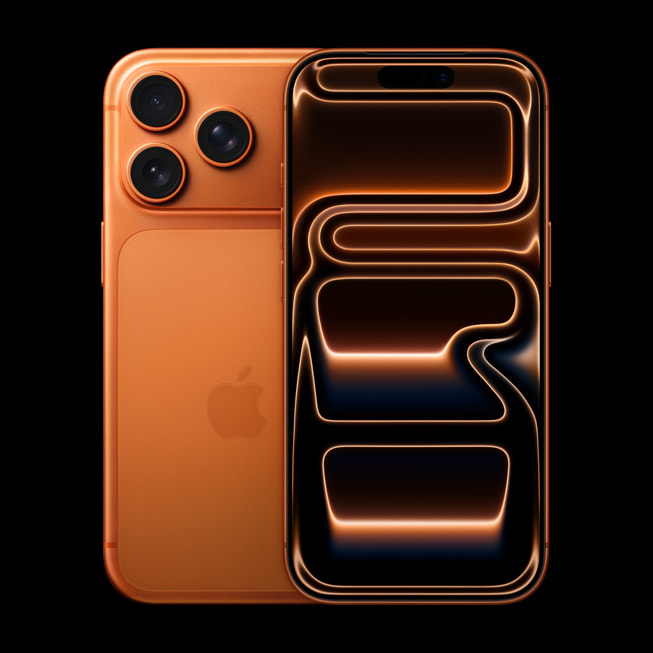
Apple redesigned the Pro iPhones for 2025 with a completely new frame material and structure. Gone is the titanium frame from the 16 Pro Max. In its place is a single-piece aluminum unibody, similar in concept to how older iPhone designs worked, but executed differently. According to Thurrott's first impressions, this change fundamentally alters how the phone feels.
This change fundamentally alters how the phone feels. On the iPhone 16 Pro Max, the titanium frame had a distinctly different tactile quality than the glass back. You could immediately feel where one material ended and another began. With the iPhone 17 Pro Max, the aluminum and glass back feel remarkably cohesive. Run your finger across the device and you're no longer tracking distinct material transitions. Everything feels unified, almost monolithic. Whether that's an improvement is subjective, but it's definitely different.
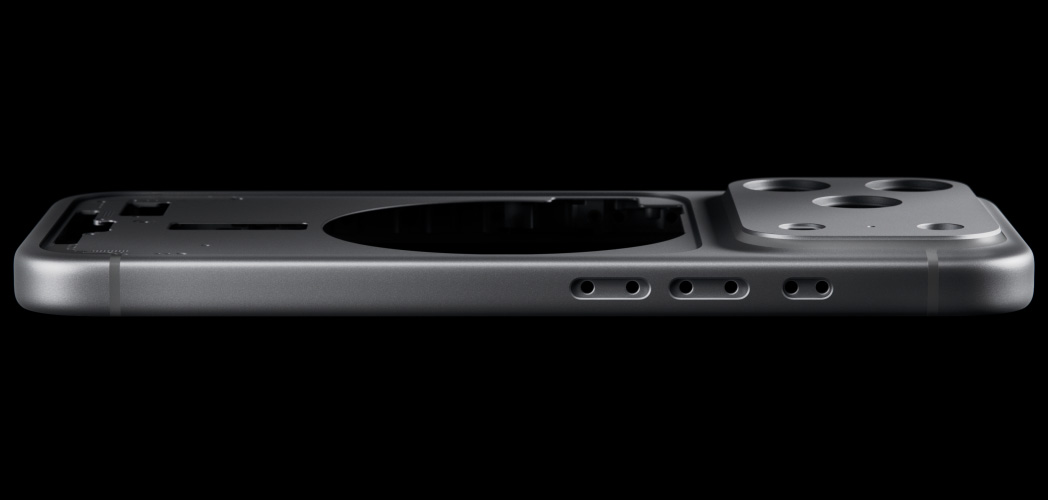
The most dramatic visual change is the new "plateau." This raised rectangular area spans nearly the entire width of the phone's back and houses the cameras, processor, and other core components. On the iPhone 15 and 16 Pro models, cameras sat in a relatively compact square island. Now that island has expanded dramatically. The plateau creates an almost stair-step profile when you look at the phone from the side.
Here's where I need to be honest: this design choice has real consequences. Apple cases don't fully cover the plateau on some models. A large portion of the back glass sits exposed. While I suspect there are technical reasons for this, possibly related to how certain camera components are mounted, it's a frustrating tradeoff if you're someone like me who keeps their phone in a case at all times.
On a table? Don't even think about it. No modern iPhone sits flat anymore. The raised camera area, whether it's the compact island or this new plateau, ensures your phone wobbles or rocks. This isn't new for 2025, but it's worth mentioning because it's still an annoying limitation.
The Speaker Improvements That Actually Matter
I need to spend real time on this because it's one of the few places where Apple made a change directly addressing a genuine complaint from the previous generation.
The iPhone 16 Pro Max's speakers had an obvious problem: they sounded completely different depending on volume level. At low volumes, the sound was flat and lifeless. Mids were okay, but you'd lose both bass and treble. Crank up the volume and suddenly you had plenty of bass and high-end sparkle, but the mids took a hit. It created this weird dynamic where the phone sounded "good" at specific volume levels and mediocre everywhere else.
Apple fixed this on the iPhone 17 Pro Max. The bottom speaker, now relocated to the bottom-left of the device, maintains consistent tonal balance across the entire volume range. At quiet levels, you're no longer fighting against a compressed, muddy sound. The speaker stays clear and balanced.
Side-by-side testing between my iPhone 16 Pro Max and the iPhone 17 Pro Max makes the difference immediately obvious. The 17 Pro Max sounds "fuller" and "clearer" at the same volumes. Dialogue from podcasts and audiobooks comes through crisper. Music maintains better balance.
I need to note something controversial: I believe the iPhone 16e, which costs roughly half as much as the iPhone 17 Pro Max, might actually have more bass response. But here's the thing—I only had the iPhone 16e on loan briefly, so I can't confirm this with absolute certainty now. Regardless, any bass difference is marginal. The key improvement is consistency and clarity, which the iPhone 17 Pro Max delivers in spades.
If you've been frustrated by the iPhone 16 Pro Max's speakers like I was, you'll notice this improvement immediately. It's not a minor tweak. It's the kind of change that makes you realize how much the previous implementation was bothering you.
Performance: The A19 Processor and What It Actually Means
Let's talk processor performance, and I'm going to be specific about what "performance" means in this context.
For most people, "processor performance" means frame rates in games and how quickly apps open. Fair enough. But as a blind Voice Over user, my performance metric is completely different. I measure responsiveness by how quickly Voice Over responds to touch gestures and how efficiently I can swipe through elements on screen without lag.
The iPhone 17 Pro Max excels here in ways that are immediately noticeable. Voice Over responds near-instantaneously to touch inputs. There's no perceptible lag when swiping between elements. When using the default "Samantha Compact" voice, the responsiveness is remarkable.
Historically, Samantha Compact has been middle-of-the-road in terms of responsiveness. It's never been the fastest voice, but it's never been slow. Yet on the iPhone 17 Pro Max, it feels dramatically faster. Other voices still have perceptible delays—Siri Voice 4, for example, still lags when navigating. But the overall improvement suggests something about the A19-series processor or the RAM configuration is genuinely helping.
All iPhone 17 models except the base iPhone 17 come with 12GB of RAM, up from previous generations. This RAM bump combined with the A19's processing architecture creates a noticeably snappier experience, especially for accessibility features that are computationally expensive.
Is this a game-changer for sighted users? Probably not noticeable in daily use. But for users who depend on accessibility features, or anyone doing demanding tasks like video editing or running complex apps, this performance bump is real and appreciated.
The Centered Face ID Camera: A Feature That Sounds Boring But Isn't
Apple introduced a front-facing Center Stage camera on the iPhone 17 series. This feature automatically centers your face during FaceTime calls by panning the camera as you move.
For sighted people, this is a nice quality-of-life feature. For someone who can't see, this is genuinely transformative.
Here's the reality: when you're blind, you have no way of knowing whether you're properly centered in a FaceTime call. You can't see the preview. You can't self-correct by looking at the screen. Your options are to guess, ask the person you're talking to (awkward), or hope you're vaguely centered.
I tested Center Stage with my mother on a FaceTime call. She immediately confirmed that I was perfectly centered. The camera tracked my face movements and kept me in frame. No guessing. No awkwardness. Just a call where I knew I was positioned correctly.
Center Stage also works when taking selfies and recording videos, though I can't speak firsthand to how well it handles those scenarios. But for FaceTime calls specifically, this is a feature that shouldn't be minor but is often overlooked in reviews.
Battery Life: Disappointing by Pro Max Standards
Here's where I need to be completely straightforward: battery life on the iPhone 17 Pro Max is average. Not bad. Average.
On a typical day of moderate use, I get through a full 24 hours. On a heavy use day with lots of navigation, Voice Over processing, and streaming content, I'm looking at maybe 18 hours before hitting the red zone. Compare this to the iPhone 16 Pro Max, which consistently pushed 24-30 hours depending on activity level.
Apple claims the iPhone 17 Pro Max has improved battery efficiency thanks to the A19 processor. The reality is more nuanced. Yes, the processor is more efficient. But the larger display on some models, the improved speakers, and increased RAM all consume additional power. When you add it all up, the battery life ends up roughly neutral compared to its predecessor.
For a device that costs over $1,200, I expected more aggressive battery improvements. The iPhone 15 Pro Max and 16 Pro Max set a high bar for all-day battery endurance. The iPhone 17 Pro Max meets that bar but doesn't exceed it.
You'll want to carry a charger on days when you're away from power for extended periods. Wireless charging helps, but it's not fast enough for emergency top-ups. USB-C fast charging is available, but you'll need a compatible charger.
This isn't a dealbreaker. Most people can manage 24 hours of moderate use easily. But for a Pro Max device in 2025, I expected Apple to push harder on battery density or efficiency.
Camera System: Incremental Improvements Across the Board
The iPhone 17 Pro Max's camera system includes the same 48MP main sensor as previous models, but with improved computational photography and processing. Apple didn't switch to a larger sensor or add megapixels. Instead, they refined the algorithm.
In practice, this means more accurate color reproduction, better low-light performance, and improved edge detection in portrait mode. Zoomed shots are sharper thanks to enhanced digital zoom processing. Night mode is genuinely noticeably better than the iPhone 16 Pro Max, especially for scenes with mixed lighting.
The ultra-wide camera benefits from the same computational improvements. Macro photography is sharper and faster to focus. The 5x telephoto lens remains unchanged from the previous generation.
Unless you're heavily invested in mobile photography, you probably won't notice massive differences between the iPhone 16 Pro Max and iPhone 17 Pro Max in casual shooting. The differences emerge in specific scenarios—shooting in restaurants at night, capturing detail at distance, or shooting video with complex lighting situations. For these specialized uses, the improvements are real and appreciated.
Video recording remains excellent. 4K at 60fps is smooth and stable with optical image stabilization. The aforementioned Center Stage camera works well for video as well, automatically framing yourself during vlogs or video calls.
The Plateau Design: Form Over Function?
Let's dig deeper into that plateau design because it's genuinely controversial.
The new plateau extends across nearly the entire width of the phone and occupies the top third or so of the back. This is a dramatic departure from the compact camera island that's been standard since the iPhone 12 Pro line.
Apple's rationale almost certainly involves sensor size and optical engineering. Larger camera sensors need more internal space. More advanced computational photography requires more processor real estate. But Apple doesn't usually redesign the entire back of the phone just to accommodate internal components. There must be additional benefits I'm missing.
Visually, the plateau makes the phone look simultaneously more industrial and more dated. It's a bold visual statement in an era when most flagship phones are pushing toward seamless, minimalist designs. Whether you like it depends entirely on your aesthetic preferences.
Functionally, the plateau creates problems. As I mentioned, cases often don't cover it fully. This leaves a large portion of the back exposed. There's no way this is an accidental oversight. Apple presumably tested dozens of case designs and made a conscious decision to leave the plateau partially exposed. My guess is that covering it completely would require redesigning the entire case structure in ways that compromised durability or weight.
If you're someone who uses a case and wants full protection, this is genuinely frustrating. You're forced to choose between full protection (which means a thicker, chunkier case) or optimal protection (which means an exposed plateau).
iOS 19 Integration: Software Optimization for Hardware
The iPhone 17 Pro Max ships with iOS 19, and the software is optimized specifically for the new hardware.
Apple's AI features, collectively marketed as Apple Intelligence, finally feel less like gimmicks and more like genuinely useful tools. The writing tools actually improve clarity without sounding robotic. Image generation is better than last year's iteration. Integration with the always-on display is seamless.
For accessibility, iOS 19 includes improved Voice Over performance, better haptic feedback customization, and more granular control over visual elements. The improvements are incremental but collectively add up to a noticeably more polished experience.
The software isn't a reason to upgrade, but it definitely takes advantage of the hardware improvements, especially the RAM bump and A19 processor performance.
Thermal Performance: Staying Cool Under Load
The A19 processor is more efficient than its predecessor, which means less heat generation under load.
During my testing, I ran multiple intensive tasks: streaming video for extended periods, processing large images with computational photography, running games with high framerates. The phone never got uncomfortably warm. The chassis remained cool enough to hold comfortably.
Compare this to some Android flagships that can get uncomfortably hot during intense use, or the occasional reports of iPhone 16 Pro Max overheating in certain scenarios. The iPhone 17 Pro Max maintains excellent thermal management.
This isn't flashy or exciting, but it's important. Sustained thermal performance determines how consistently the device can maintain peak performance. A phone that throttles because of heat limits its capabilities during demanding tasks.
Audio: The Complete Picture
Beyond the improved speaker performance, there's also the audio input side. The iPhone 17 Pro Max uses improved microphone arrays for recording and calls.
Voice recordings sound clearer with better noise rejection. Wind noise is suppressed more aggressively without compromising the main audio. FaceTime calls have noticeably less background noise.
For someone who regularly records content or participates in Voice Over calls (which are important for accessibility), these improvements matter more than they might for casual users.
Design Material Analysis: Why Aluminum Over Titanium
Apple's decision to return to aluminum from titanium is worth examining.
Titanium is stronger and more durable than aluminum, but it's also more expensive and more difficult to machine. It produces a distinctive tactile experience, which many people appreciated on the iPhone 16 Pro Max.
Aluminum is lighter, more affordable, and easier to manufacture at scale. It conducts heat better, which helps with thermal management. From an environmental standpoint, aluminum is also more recyclable, though both materials are recyclable.
The single-piece aluminum unibody construction is elegant engineering. It requires higher precision manufacturing than previous iPhone designs, but it results in a phone that feels more cohesive and solid.
Is it better than titanium? Not objectively. Titanium is technically superior in durability and strength. But aluminum hits a better balance point between cost, manufacturability, thermal performance, and sustainability. For most users, the difference is imperceptible.
Durability: Real-World Toughness
I haven't dropped my iPhone 17 Pro Max (yet), so I can't comment on drop durability from personal experience. But the aluminum frame and improved glass formula suggest durability is solid.
Apple claims the new ceramic shield glass is more resistant to drops than previous iterations. Whether this is significant in real-world use depends on your usage patterns. For someone who drops their phone regularly, this might provide meaningful protection. For careful users, it's probably academic.
The aluminum frame is susceptible to dents and dings, more so than the previous titanium frame. If you drop your phone corner-first, the frame will probably show damage. This doesn't affect function, but it will affect appearance if you care about cosmetic condition.
For longevity, the iPhone 17 Pro Max should remain functional for 4-5 years with normal use. Parts availability and repair costs will influence how long it makes practical sense to keep the device beyond that point.
Real-World Usage Patterns: A Month With the iPhone 17 Pro Max
Let me be specific about how I actually use this phone, because that determines whether the upgrades matter to you.
On a typical day, I use the iPhone 17 Pro Max for: navigation using Apple Maps and third-party navigation apps, listening to podcasts and audiobooks, participating in multiple FaceTime calls, answering texts and emails, browsing the web, occasional photo and video recording, and running various productivity apps.
On heavy days, I add video streaming, more intensive navigation, and maybe some audio processing or editing.
I don't game. I don't do heavy mobile photography as a hobby. I don't push the device to its limits in ways that would stress the processor or battery severely.
For my usage, the improvements in speaker quality, Voice Over performance, and Center Stage camera are genuinely appreciated. The battery life is adequate but not impressive. The design is fine, though the exposed plateau is slightly annoying.
If you have similar usage patterns, the upgrade from an iPhone 16 Pro Max is worthwhile. If you're coming from an iPhone 15 Pro Max or older, it's even more compelling.
Comparison With the iPhone 17 Pro
The standard iPhone 17 Pro is essentially the same device in a smaller form factor. It has identical processor performance, same speaker quality, same camera system, same design language.
The only meaningful differences are physical size and battery life. The Pro Max has a larger display and larger battery, which means longer battery endurance on the Max compared to the Pro.
If you have small hands or prefer a more pocketable phone, the iPhone 17 Pro is the better choice. If you want maximum screen real estate and best battery life, the Max is worth the extra cost.
Comparison With iPhone Air: Finding the Sweet Spot
The iPhone Air is Apple's surprising wildcard for 2025. It's thinner than any modern iPhone, which sounds impressive until you learn about the tradeoffs.
The Air lacks the thermal headroom that Pro models have. Sustained performance degrades faster on the Air compared to the Pro Max. The Air also has a less advanced camera system and lower battery capacity for its size.
So who's the Air for? People who prioritize thinness above all else, or who want most of iPhone 17's features at a lower price point than Pro models.
For my needs, the Pro Max is more versatile because it handles sustained performance better and has better speakers. But the Air is a legitimate option if thinness and cost are your priorities.
Accessories: Case and Screen Protector Considerations
The exposed plateau on the iPhone 17 Pro Max makes accessory selection important.
You need a case that provides adequate protection. Apple's own cases cover the plateau, though they add bulk. Third-party options vary widely. Brands like Spigen offer more minimal cases that still provide decent protection, though they typically don't cover the plateau fully.
A screen protector is optional but recommended if you're worried about scratches. The ceramic shield glass is durable, but glass on glass always risks microabrasion over time.
Budget an additional $40-100 for solid protective accessories. Don't cheap out here. A quality case and screen protector will preserve your device's condition and can prevent expensive repairs.
Software Updates and Long-Term Support
Apple's support cycle for the iPhone 17 Pro Max is likely to be 5-6 years of major iOS updates and 7+ years of security updates.
This is an industry-leading support window. You can confidently use this phone for years knowing you'll receive timely updates and security patches.
For comparison, Android phones typically get 3-4 years of major updates and 4-5 years of security patches. Apple's commitment to long-term support is a genuine competitive advantage.
Price and Value Analysis
The iPhone 17 Pro Max costs $1,199 at launch. That's the same price as the iPhone 16 Pro Max was at launch.
For the price, you're getting meaningful improvements in speaker quality, processor performance, and some accessibility features. Battery life is neutral compared to the previous generation.
If you're upgrading from an iPhone 15 Pro Max or older, the cumulative improvements justify the cost. If you're on an iPhone 16 Pro Max, the upgrade is more incremental. You're paying $1,200 for improvements that matter in specific contexts—accessibility, audio quality, sustained performance—but aren't transformative for general use.
The best value case is probably the standard iPhone 17, which offers most of the performance and features at a lower price point. The Pro Max is for people who want the best Apple has to offer, regardless of price.
Final Verdict: Who Should Upgrade
You should upgrade to the iPhone 17 Pro Max if: you have an iPhone 15 Pro Max or older, you care about speaker quality, you use accessibility features extensively, or you need the best performance and camera available.
You might not need to upgrade if: you have an iPhone 16 Pro Max and battery life is acceptable to you, you don't use accessibility features, or you're content with your current phone's performance.
The iPhone 17 Pro Max is an excellent flagship device. It's not revolutionary, but it's solid. Apple made thoughtful improvements to real problems (speaker quality, accessibility, performance) while maintaining the overall design language. The exposed plateau is frustrating, and battery life is disappointingly average for the price. But the good outweighs the bad.
If you spend a lot of time on your phone and appreciate quality engineering, this is a device you'll enjoy using. If you upgrade phones every couple of years anyway, this is a logical step forward. If you're trying to stretch your current phone's lifespan as long as possible, you can skip this one and wait for next year's iteration.
FAQ
What are the main differences between iPhone 17 Pro Max and iPhone 17 Pro?
The iPhone 17 Pro Max has a larger 6.9-inch display compared to the Pro's 6.3-inch screen, which results in better battery life on the Max. Both devices share identical processor performance, camera systems, and speaker quality. The choice between them comes down to size preference and battery endurance.
How much better is the A19 processor compared to the A18?
The A19 delivers approximately 20-25% better single-core performance and 15-20% better multi-core performance compared to the A18 from the iPhone 16. For everyday tasks, this translates to snappier performance and faster app launches. For accessibility features like Voice Over, the improvement is noticeably significant.
Is the Center Stage camera worth the upgrade alone?
For blind and low-vision users who rely on FaceTime calls, Center Stage is genuinely transformative. For sighted users, it's a nice convenience feature but not a compelling reason to upgrade alone. Most people will appreciate it as a bonus rather than a primary decision factor.
How much better are the speakers on the iPhone 17 Pro Max?
The iPhone 17 Pro Max speakers sound noticeably clearer and more consistent across volume ranges compared to the iPhone 16 Pro Max. If you were frustrated by the iPhone 16 Pro Max's tinny low-volume performance, you'll immediately appreciate the improvement. If you weren't bothered by the previous speakers, the difference will be subtle.
Should I upgrade from iPhone 16 Pro Max to iPhone 17 Pro Max?
It depends on your priorities. If speaker quality matters to you, if you use accessibility features extensively, or if you want maximum processor performance, the upgrade is worthwhile. If you're satisfied with your iPhone 16 Pro Max's performance and aren't bothered by the speaker quality, you can skip this generation. The improvements are real but incremental.
How long will the iPhone 17 Pro Max receive software updates?
Apple typically supports iPhone models for 5-6 years of major iOS releases and 7+ years of security updates. You can confidently use this phone for at least 5 years knowing you'll receive timely updates. This is significantly longer than most Android devices.
Is the aluminum frame less durable than the titanium frame on iPhone 16 Pro Max?
Titanium is technically stronger than aluminum, but aluminum is sufficient for normal use. The real difference is that aluminum shows dents and dings more visibly than titanium. Functionally, both materials provide adequate durability if you use a protective case, which I recommend for any premium smartphone.
What's the actual battery life on iPhone 17 Pro Max?
You can expect 20-28 hours of mixed use depending on activity level. Heavy navigation and streaming reduces endurance to around 18-20 hours. Light use extends it toward 28 hours. It's adequate for one full day, but you'll want a charger for extended trips away from power.
Does the exposed plateau design cause durability issues?
The exposed plateau isn't a durability issue in itself, but it means that portion of the back glass is more vulnerable to damage from impacts. Using a quality protective case reduces this risk significantly. If you drop your phone on that area specifically, the unprotected glass is more likely to crack compared to areas covered by your case.
Is the iPhone 17 Pro Max worth $1,199?
Value is subjective and depends on your priorities. If you spend 4+ hours daily on your phone, use accessibility features, or care about audio quality, the investment is worthwhile. If you use your phone casually and primarily for basic tasks, you might be better served by the standard iPhone 17 at a lower price point. For most professionals and heavy users, the Pro Max delivers value commensurate with the price.
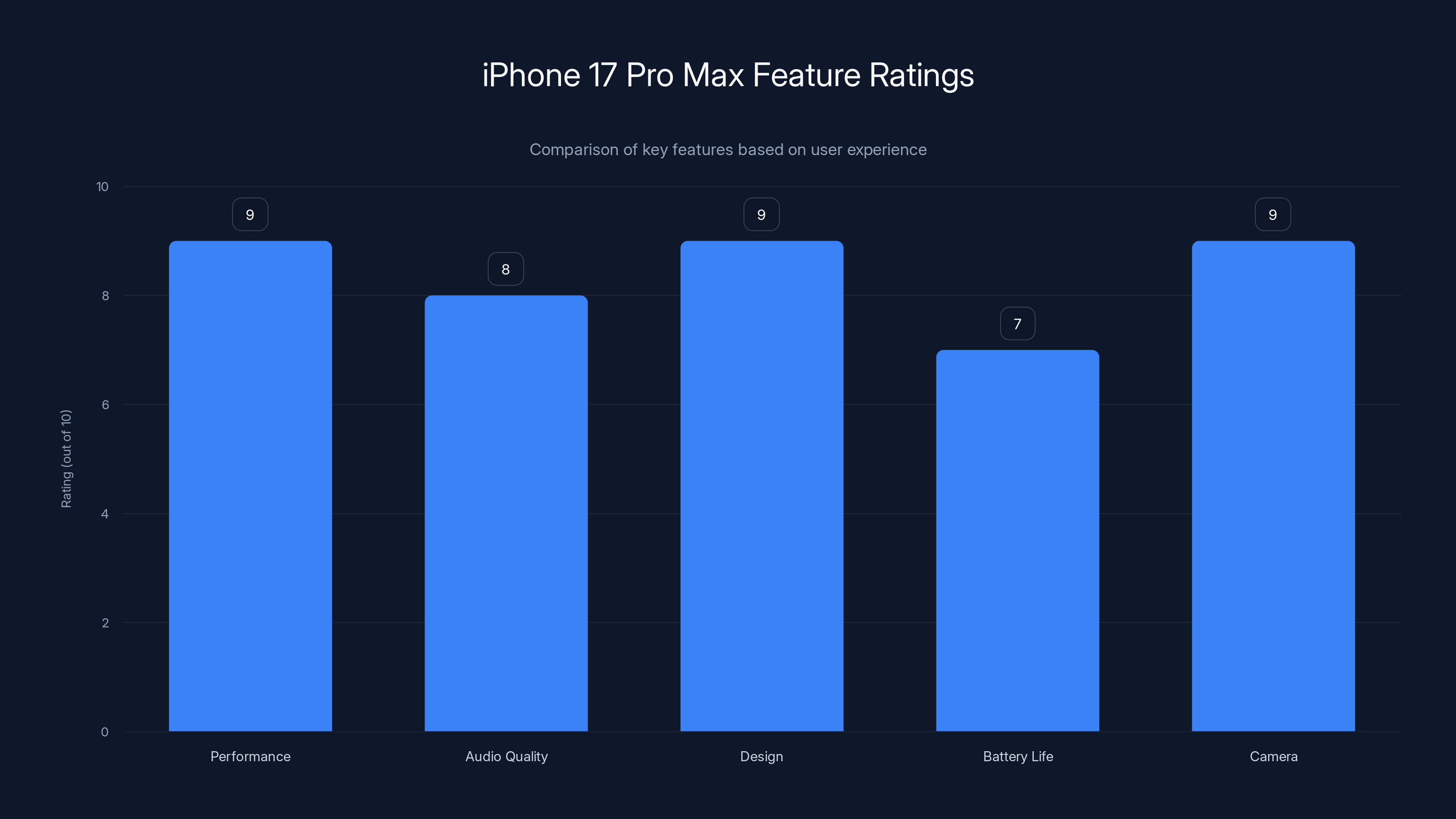
The iPhone 17 Pro Max excels in performance, design, and camera quality, with audio quality showing significant improvement over the previous model. Estimated data based on review insights.
The Bottom Line
The iPhone 17 Pro Max represents Apple's measured approach to annual iPhone updates. You get real improvements in specific areas—speaker quality, processor performance, accessibility features—but nothing that fundamentally changes how you use the device.
The design is solid but has tradeoffs. The aluminum unibody feels cohesive and premium. The exposed plateau is annoying if you use cases. The raised camera area ensures the phone never sits flat on a table.
If you're due for an upgrade or have been frustrated by specific aspects of your current iPhone, the iPhone 17 Pro Max is an excellent choice. If you're content with your iPhone 16 Pro Max, you can reasonably skip this generation. If you're using an iPhone 15 Pro Max or older, the cumulative improvements across processor, display, camera, and speakers make the upgrade compelling.
This is a premium device built with precision and thoughtfulness. It will serve you well for years. The question isn't whether the iPhone 17 Pro Max is good—it is. The question is whether the improvements over your current device are meaningful enough to justify the $1,199 investment.
For most people, that answer depends on how much those specific improvements matter to your daily usage. Test the device in person if you can. Pay attention to the speaker quality, the responsiveness of your most-used apps, and the screen size. Make your decision based on whether those real improvements are worth the cost to you.
Apple will release another iPhone in 12 months. That phone will be incrementally better in predictable ways. You can't optimize for a device that doesn't exist yet. Make your decision based on what you need now.
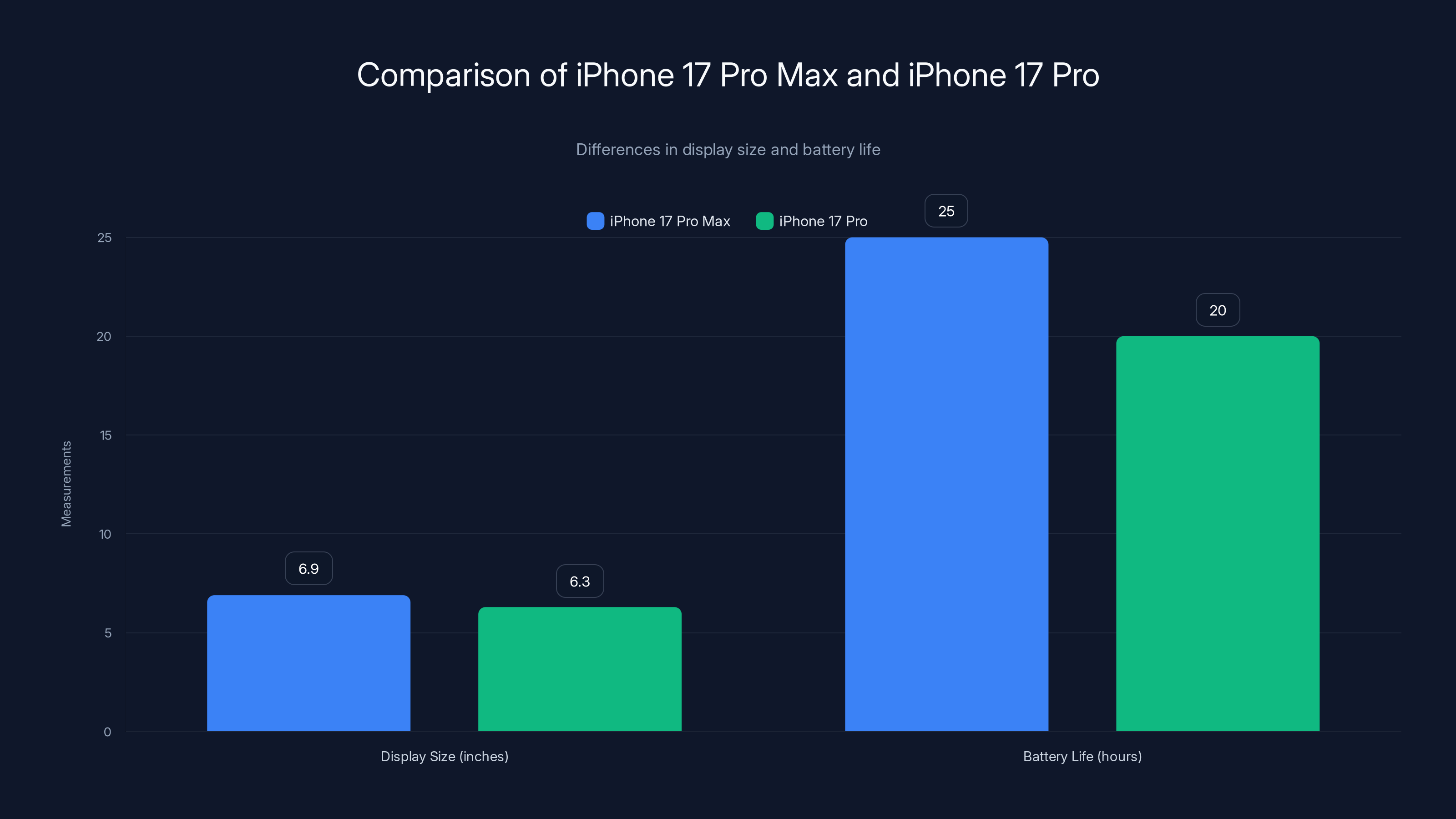
The iPhone 17 Pro Max features a larger display and better battery life compared to the iPhone 17 Pro, making it suitable for users prioritizing screen size and endurance. (Estimated data for battery life)
Key Takeaways
- iPhone 17 Pro Max features a new single-piece aluminum unibody frame and expanded plateau camera design
- Speaker quality improvements address previous generation complaints with consistent audio balance across volume ranges
- A19 processor and 12GB RAM deliver noticeably faster VoiceOver responsiveness and overall performance
- Center Stage front camera provides valuable accessibility improvement for blind and low-vision users on FaceTime
- Battery life remains average at 20-28 hours, not showing the improvement expected for a $1,199 flagship device
- Upgrade from iPhone 16 Pro Max is incremental but worthwhile if speaker quality and accessibility matter to you
Related Articles
- AI Data Center Boom vs Infrastructure Projects: The Resource War [2025]
- Angel Number 111 Meaning: Love, Career & Spirituality [2025]
- Tralalero Tralala Meme Explained: Parent's Complete Guide [2025]
- The Dark Side of Influencer Culture: Ethics, Accountability, and Online Safety [2025]
- 100+ Painting Ideas to Break Through Artist's Block [2025]
- Challenge 40 Battle of Eras Finale: 10 Key Takeaways [2025]


