
![Challenge 40 Battle of Eras Finale: 10 Key Takeaways [2025]](https://runable.blog/blog/challenge-40-battle-of-eras-finale-10-key-takeaways-2025/image-1-1765660857404.png)
The Challenge 40: Battle of the Eras Finale Recap - The 10 Moments That Actually Mattered [2025]
TL; DR
- Karma Points became the most controversial twist in Challenge history, deciding the entire season despite players never fully understanding the mechanic. This twist, as noted in Smartkarma's analysis, highlights the importance of transparency in game mechanics.
- Jenny won her first Challenge, with Rachel finishing second after a closely contested final that came down to one controversial voting system. According to MTV's official site, Jenny's win was a testament to her physical prowess.
- Tori's coin-counting mistake cost her the entire season, despite performing physically identical to Rachel in most checkpoints. As reported by E! Online, Tori's error was a pivotal moment in the finale.
- Johnny Bananas suffered his third consecutive finals loss, signaling a major shift in competitive hierarchy after two decades of dominance. This shift is discussed in detail by Us Weekly.
- The final format exposed serious design flaws that made the competition feel arbitrary rather than merit-based, as critiqued by Vulture.
The nineteenth episode of The Challenge: Battle of the Eras is done. The season has a winner. The cast is already talking about it, and honestly, you probably have some thoughts too.
Instead of doing the standard play-by-play recap that everybody else writes, I'm going to break down the ten biggest moments and takeaways that actually shifted the narrative. Some of these are about what happened during the competition. Others are about what the finale tells us about the show's future direction and competitive integrity.
Let's be real: this finale was messy. Not in the dramatic way that makes for great television. Messy in the way that makes you question whether the producers even cared about fairness when they designed it. The format had more twists than the actual challenges, and not all of them worked.
But that's what we're diving into. These ten takeaways aren't just about who won. They're about what this finale says about The Challenge, about competition, about how production shapes outcomes, and about where the show goes from here.
Here's what you need to understand before we go deeper: this finale was supposed to be epic. It was supposed to be the culmination of an entire season where players from different eras competed under a format designed to test both their physical abilities and their social skills. Instead, it became a masterclass in how a poorly designed twist can overshadow legitimate athletic achievement and make the whole thing feel like a rigged coin flip.
Let's break it down.

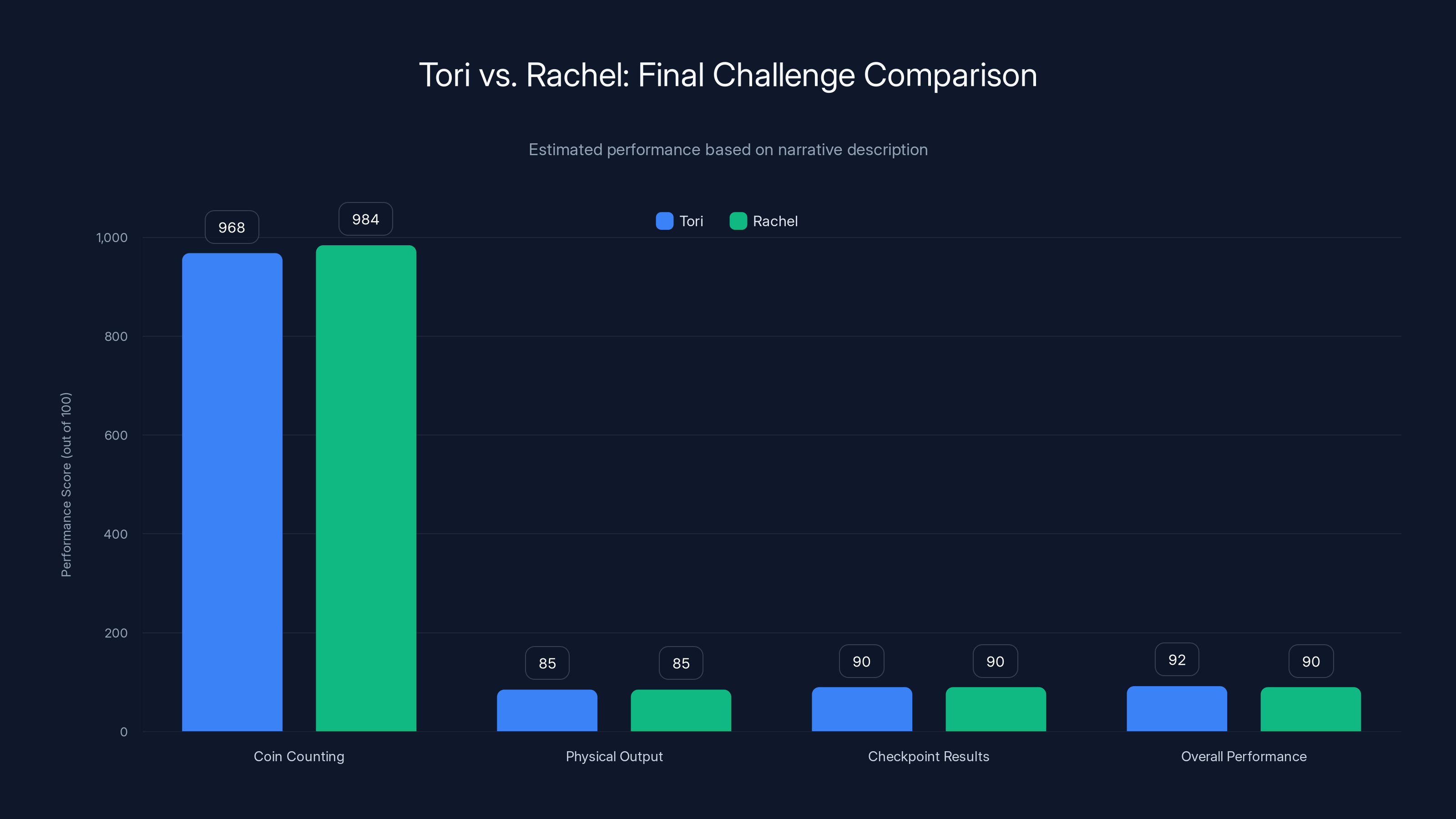
Despite a small counting error, Tori's overall performance was nearly identical to Rachel's, highlighting her competitive strength. Estimated data.
1. The Karma Points Twist Was Fundamentally Broken Game Design
Karma Points might be the dumbest, most poorly executed twist in Challenge history. And I don't say that lightly.
Here's the core problem: players weren't told how Karma Points would work until it was too late. TJ kept vaguely saying "how you treat people matters," but nobody actually knew the mechanic. How much would Karma Points be worth? How would they be calculated? What happens if two players tie? Nobody knew, because production didn't explain it.
That's not a twist. That's a cheat code. That's production deciding the outcome after the fact and then building a voting system around it.
Secondly, the format created an impossible ethical contradiction. If you go into elimination and win, you have to target people. You have to make strategic moves. You have to create enemies. Then later, those same enemies vote on whether to give you Karma Points. So you get punished twice: once for winning in elimination, and again when people you beat vote against you.
What were players supposed to do? Play with their hands tied? Throw eliminations to be nice? The game design forced aggressive play, then penalized people for it.
Third, Karma Points were worth double what every other checkpoint was worth. That's not a tiebreaker mechanic. That's production saying "we're going to overweight one voting system so much that it decides the entire season." And it worked. Rachel and Jenny tied because of Karma Points being worth so much, which then triggered a second tiebreaker.
The fact that someone could jump from third place to first place entirely because of a voting system they didn't understand until it affected them is inexcusable. It's not strategy. It's not merit. It's random.
I watched players with long histories together vote based on friendships that had nothing to do with how anyone treated them during the final. So is the twist about treating people well, or is it a popularity contest? Because if it's both, then it's not a legitimate competition metric. It's just whoever made the most friends.
Here's the thing that really bugs me: everyone's talking about who won. But the real story is that production designed a finale where athletic performance mattered less than a secret voting system that players didn't understand. That's not competition. That's The Bachelor, except everyone's getting paid and they're also swimming.
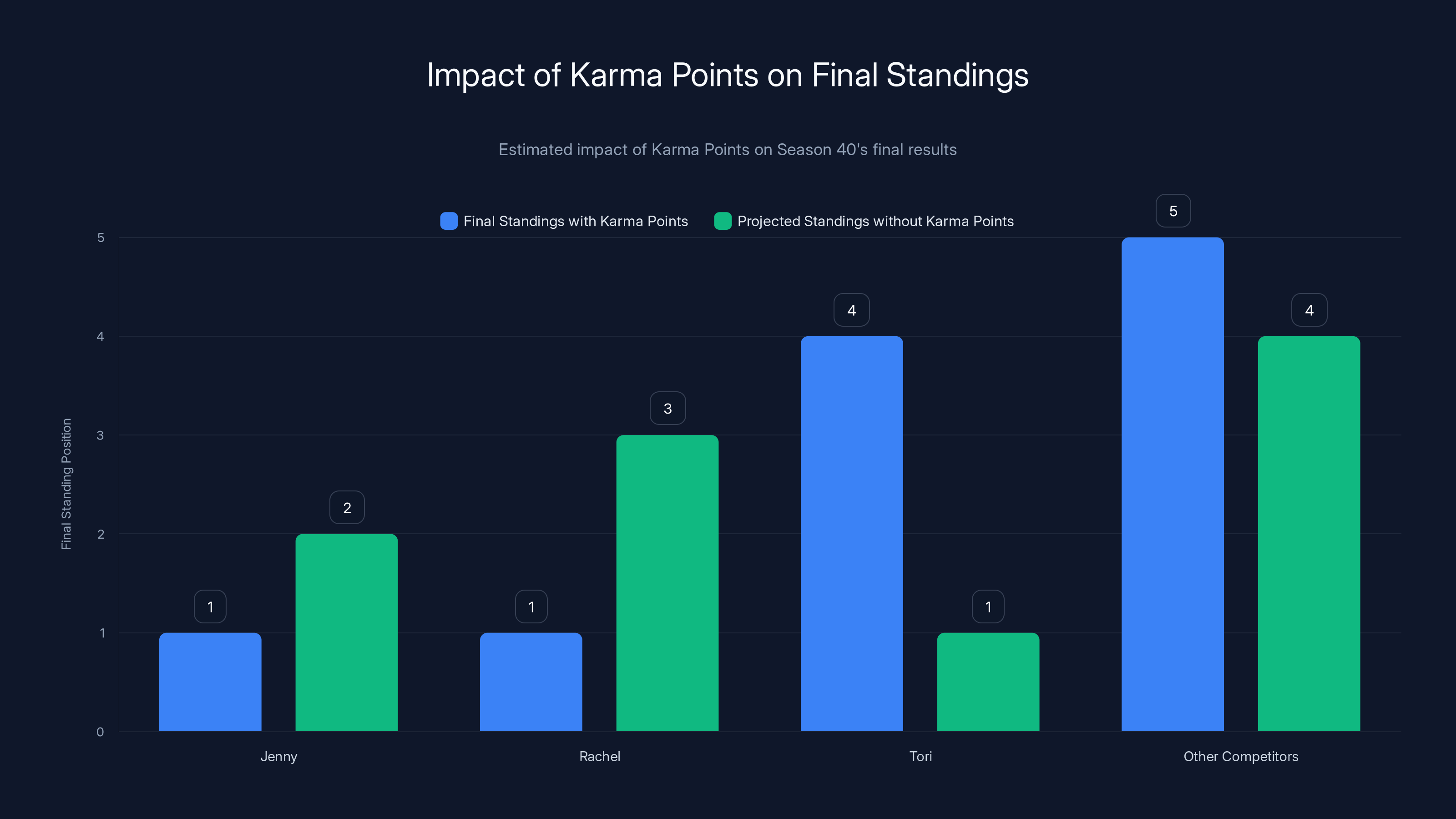
The Karma Points system significantly altered the final standings, creating a tie between Jenny and Rachel and pushing Tori to fourth place. Estimated data shows Tori could have won without the Karma Points twist.
2. Tori's Coin-Counting Error Might Have Cost Her the Entire Season
Tori had a disaster on Day 1 of the final, but not the kind she could control.
The format had players counting coins underwater while they swam. For hours. In the dark. While sleep-deprived. It's the kind of challenge that's designed to break people mentally, not to test their swimming ability. And it did.
Tori counted to 984 coins before she came up. She stayed up longer than almost anyone else, grinding through exhaustion, refusing to quit. Then she found out she placed last. That's not just demoralizing. That's heartbreaking, because she did everything right except for one thing: she miscounted.
Now, here's the thing that nobody's talking about. The error was probably small. If Tori flipped two digits in her head, or skipped a single number while counting in a half-conscious state, she'd be off by maybe 16 coins. Sixteen. Not 984 coins off. Just 16.
In that scenario, Tori wins that portion. Her entire trajectory changes. She starts Day 2 ahead instead of behind, and based on how the rest of the final played out, she could have won the whole thing.
But here's what's wild: if you look at the checkpoint results across the entire final, Tori performed nearly identically to Rachel. Same placements, same times, same physical output. The only real difference was the coins. Rachel didn't mess up the coin count. She stayed focused and did it right.
So if you think Tori had a bad final, you're technically right. But you're also saying Rachel had a bad final. Because physically, they were almost the same.
What Tori did prove, though, is that she's an above-average swimmer. She's not a water person in the way that Jenny is, but compared to most of the field, she's solid. And on Day 2, when she came from behind in two different checkpoints and passed multiple people, she showed pure competitive heart.
The reality is that Tori was the best overall competitor all season. She won the most daily challenges. She had the best physical performance in most competitions. She got to the final as a legit threat. Then one coin-counting mistake in a middle-of-the-night underwater challenge negated her entire season.
That's not competition. That's luck.
3. Johnny Bananas' Third Consecutive Finals Loss Signals a Generational Shift
For two decades, Johnny Bananas was the most dominant force in Challenge finals. He made finals frequently. He won most of them. When he did lose, it was rare and shocking.
Now he's lost three finals in a row.
That's not a coincidence. That's a changing of the guard.
Bananas' performance in Season 40 was objectively poor. He finished last in 5 out of 7 checkpoints. He never placed higher than third. If you removed the Karma Points controversy, he would have finished significantly lower. But because the Karma Vote system worked in his favor, he ended up within striking distance of the winner.
He even said it himself: he didn't think he deserved third place. That's a level of honest self-assessment you don't get from many competitors, and it's worth respecting.
What happened to Bananas? He struggled in the water. The final was heavily water-based, and while Bananas can handle himself, he's not a swimmer. Jenny, Rachel, and Michele are all strong swimmers. That gave them an advantage that his pure physical strength couldn't overcome.
The bigger story is that Bananas isn't the Final threat he used to be. He's still elite. He's still someone you don't want to see make a final. But he's beatable now. Players aren't scared of him anymore. They're not designing their entire strategy around keeping him out of the finals because they know they have a shot at beating him.
For people who've watched Bananas his entire career, this is huge. He lost twice in his first nine finals. Then he won so consistently that losing became almost unthinkable. Now he's looking at a stretch where he can't get the job done.
There are a few reasons for this. First, the game has changed. Physical dominance matters less. Mental toughness and strategic flexibility matter more. Bananas is still strong, but he's not as adaptable as younger players who grew up watching him and studied how to counter his strategies.
Second, Bananas is older. He's not as quick in the water. He doesn't have the same endurance he used to. That doesn't mean he's washed, but it means he's not the unstoppable force that defined his earlier career.
Third, and this is the part Bananas himself acknowledged, his social capital has changed. In earlier seasons, people voted for him in social votes because they respected him. Now? Some people vote against him out of pure spite. His history has caught up with him.
But here's the thing: even after his loss, Bananas tried to make his performance about him. He was thrilled his allies won, but he seemed more invested in the fact that players he didn't like came in fourth. That's vintage Bananas. He can't just lose. He has to make it about something else.
Still, the era of Bananas dominance is over. This season proved it.
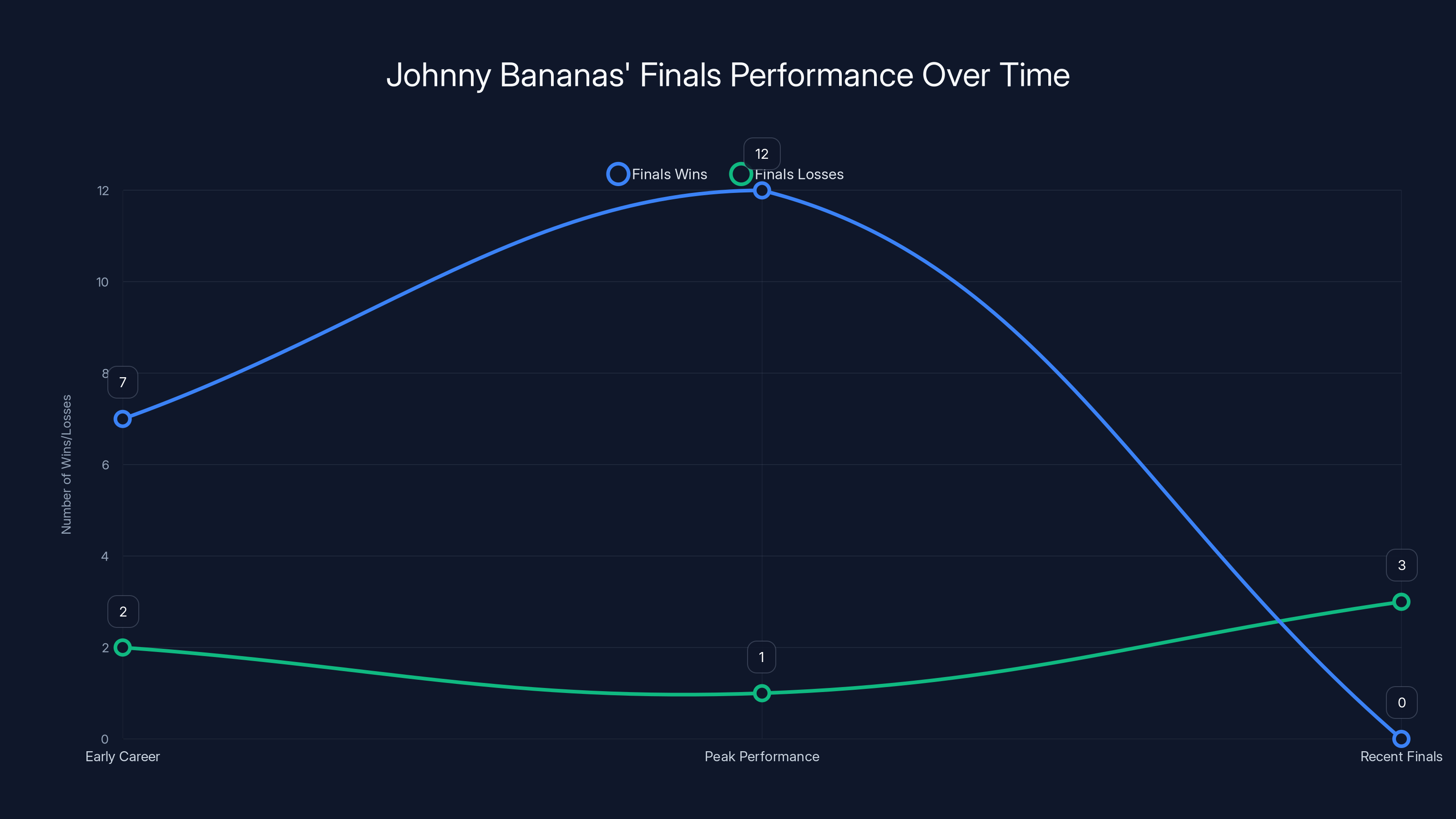
Johnny Bananas' recent finals performance shows a decline with three consecutive losses, indicating a generational shift in competitive dynamics. Estimated data based on narrative.
4. Kyland's Honest Last Place Finish Was Actually Respectable
Kyland finished last. Dead last. No ambiguity here. He was clearly the weakest performer in the final, and the results show it.
He came in last place in five of the seven checkpoints. He never placed higher than third in any single challenge. Statistically, he was out of his element, and everyone knew it.
Here's what surprised me, though: I walked away impressed by Kyland.
Kyland went into a final that was heavily water-based, and he's not a strong swimmer. He basically got punched in the face for two straight days. Figuratively and kind of literally, considering how many times he was struggling in the water while stronger swimmers passed him.
And he didn't quit.
That might sound like a low bar, but it's not. People quit finals all the time. People get discouraged, think they can't win, and just decide to go through the motions. Kyland could have done that. He was in last place. Nobody was waiting for him to have a miraculous comeback.
Instead, he kept pushing. He gave his effort. And when he realized he couldn't win, he actually started helping other players during the final, specifically Michele and Rachel, because he knew they had legitimate chances to win.
That's not something most competitors do. Most people in last place get tight. They either try to claw back or they give up. Kyland actually helped his competition.
Will Kyland win a final? Probably not. His swimming ability is a serious limitation in competitions that feature water, and aquatic challenges are only becoming more common on The Challenge. But you can't question his heart. You can't question his willingness to compete.
The fact that Kyland's poor performance in the final is his worst performance overall is also telling. He was competitive all season. He made it to the final. He just couldn't compete when the format heavily favored elite swimmers.
He even acknowledged the loss with grace and said he'd use it as motivation to practice swimming before future seasons. That's the right attitude. That's someone who will learn from this and come back stronger.
So while Kyland's finish was objectively bad, his mindset was actually one of the best parts of the finale.
5. Jenny's First Championship Win Was Overdue and Earned
Jenny won. Finally.
After years of being on the periphery of championship runs, after multiple finals where she came close but didn't quite get there, Jenny actually won The Challenge. That matters.
What's important about Jenny's win is that it was competitive and legitimate. She performed well across multiple checkpoints. She didn't win because of a hidden twist or Karma Points manipulation. She won because she was physically stronger than most of her competition in a final that happened to test her strengths.
The water component was crucial to Jenny's success. She's a strong swimmer. She's athletic. She can move her body through water with efficiency and power. When the final became a swimming competition, Jenny had a huge advantage.
But here's the thing: she still had to execute. She still had to push through exhaustion. She still had to maintain focus and mental toughness over two days of grueling competition. She did all of that.
Jenny's win validates her as a competitor. For people who doubted whether she could close it out, this shuts down that conversation. She was in a final against multiple elite players, and she performed better than all of them.
The interesting part is that Jenny's win also comes with a water-specific asterisk. She won because the final tested what she's best at. If this final had been leg-focused with heavy running components, the outcome might have been completely different. Michele or Tori might have won.
But that's not an insult to Jenny. That's just the nature of finals. They reward players whose skill sets match the competition design. Jenny's skill set matched this final.
For future seasons, Jenny has proven she's a finals threat. She'll probably make finals again. Whether she wins future finals depends on the format, but she's absolutely in the conversation of players who can close it out.
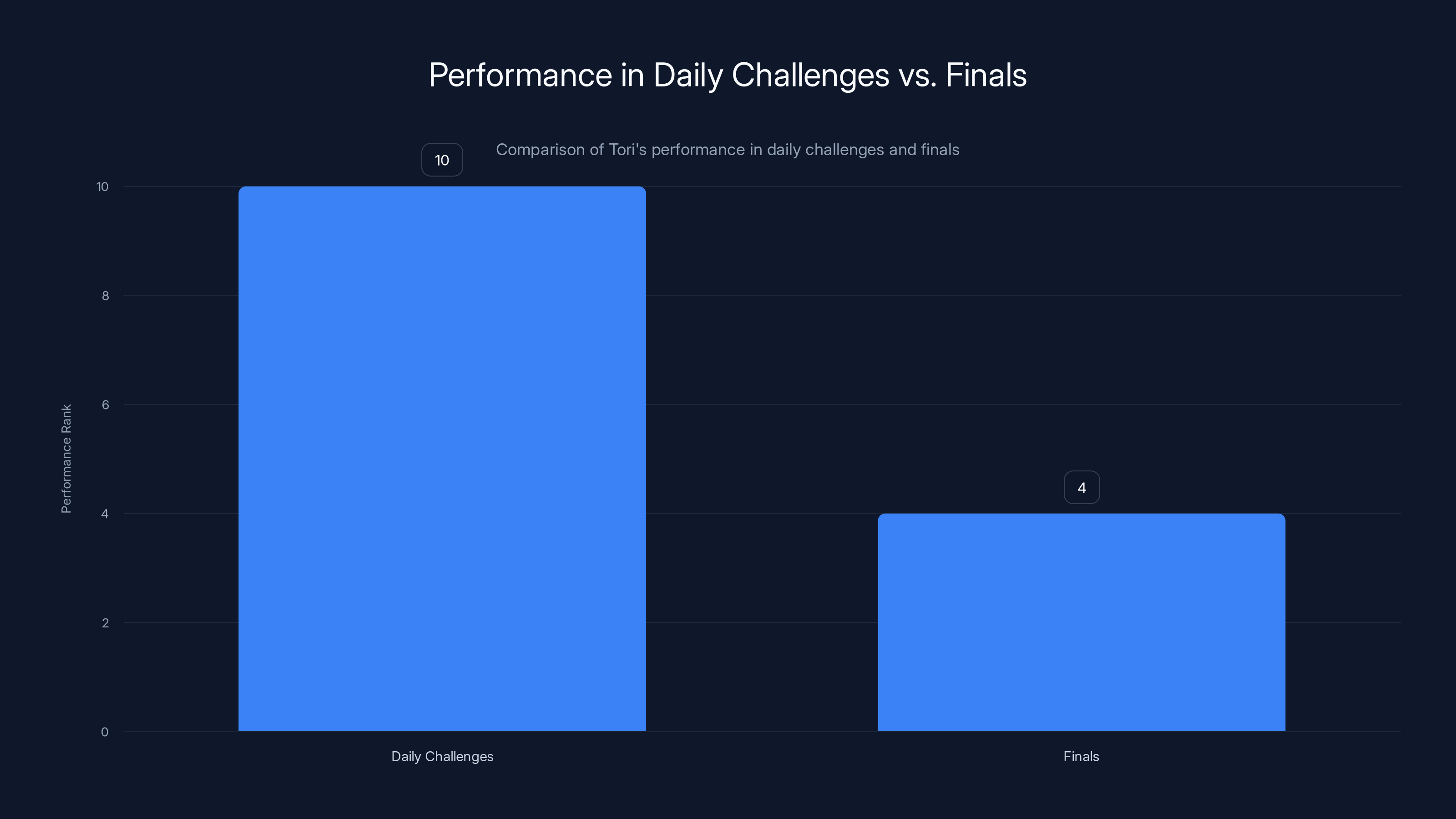
Tori dominated daily challenges with the highest performance but finished fourth in the finals, highlighting the difference in skill sets required for each stage. Estimated data based on narrative.
6. Rachel's Second Place Finish Exposed the Randomness of the Finale
Rachel finished second, and she absolutely crushed it. Her performance was stellar. Her competitive output was elite. And she still didn't win.
What's wild is that Rachel and Tori performed almost identically across the physical checkpoints. Same placements. Same times. Same output. The only difference is that Rachel didn't mess up a coin count, so she started Day 2 ahead.
But here's where it gets messy: Rachel's second-place finish is because of Karma Points, not because of physical performance. Without the Karma Point tiebreaker system, she might have finished in a different spot entirely.
So Rachel won because she was strong, but she came in second because production designed a system that valued something other than strength. That's the contradiction that haunts this finale.
Rachel should be thrilled. She made a final. She competed at an elite level. She came in second. That's a legitimate accomplishment. She'll get second-place prize money. Her reputation improves. She's proven she belongs at the highest level of Challenge competition.
But there's a nagging feeling that if this final had been designed differently, if Karma Points didn't exist, if the coin count was slightly different, Rachel could have won. That's not her fault. That's the fault of the format.
What Rachel's finish does prove is that she's consistently competitive. She didn't have some moment where she fell apart. She didn't get unlucky in one checkpoint. She just came up short against a player who performed slightly better.
That's respectable. That's the kind of performance that builds a player's reputation for future seasons.

7. The Overnight Water-Based Format Was Cruel and Arbitrary
The coin-counting portion of the final was possibly the cruelest challenge design I've ever seen.
Players were swimming underwater, counting coins in the dark, while exhausted and sleep-deprived. They had to stay submerged for hours. They had to maintain focus while their bodies shut down. They had to do math in a state where math becomes almost impossible.
It's designed to break people psychologically, not to test their athletic ability.
Then production made the stakes even worse. Bananas was told he had to stay underwater for an additional thirty minutes even though he was ten coins away from finishing. He'd already been in the water for hours. He was exhausted. And production said no, you have to keep going.
Bananas' face was incredible. He looked like a man who was about to jump out of his skin. And honestly? I get it. The rule was absurd.
We've all experienced something similar to what Bananas went through. You've been working toward something, you're ten minutes away from finishing, and then someone tells you that you can't stop. You have to keep going for another thirty minutes. It's infuriating.
That's not a great final design. That's production prioritizing drama over competition.
The water-based final format meant that swimmers had a massive advantage. That's fair in a vacuum, but when the format is specifically designed to exhaust people and break them mentally, it stops being about swimming ability and starts being about who can handle being tortured the longest.
That's not the same thing as athletic competition.
Production wanted the finale to be brutal and memorable. They succeeded. It was brutal. But memorable doesn't mean good. Memorable can also mean unfair.
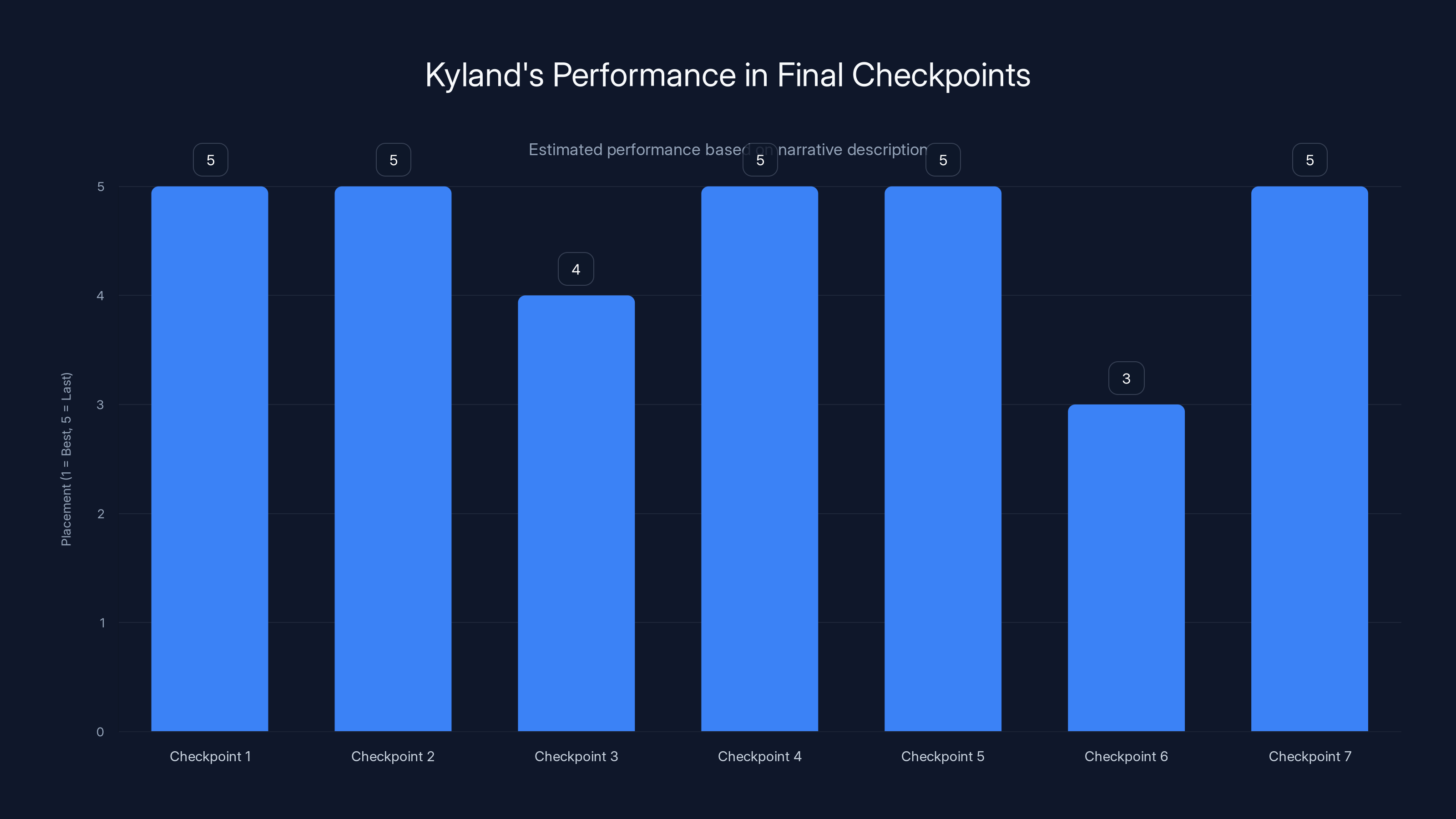
Kyland consistently finished in last place in most checkpoints, highlighting his struggle in water-based challenges. Estimated data based on narrative.
8. Derek Chavez's Second Place Finish Was Quietly Dominant
Derek Chavez finished second in the men's competition. That's a huge accomplishment that sometimes gets overlooked because everyone focuses on the women's final.
Derek beat Johnny Bananas. That's the headline right there.
For casual fans, that might not sound like much. But for people who understand Challenge history, Derek beating Bananas in a final is a generational moment. Bananas doesn't lose finals. Except he did, to someone fifteen years younger who came into the game thinking Bananas was already washed up.
Derek competed well. He performed consistently. He didn't have any catastrophic failures. He just didn't perform at Jordan's level.
Who is Jordan, by the way? Jordan Mc Devitt is a newer player who's established himself as a genuine threat. He's not carried by a cast or by social dynamics. He's just a strong competitor who can swim, run, and do physical challenges at an elite level.
Jordan finishing first in the men's competition shows that the game has genuinely shifted. It's not just about Bananas being past his prime. It's about a new generation of players who've studied the game, trained specifically for finals, and come in with a completely different approach.
Derek benefiting from this shift is huge for his career trajectory. He'll get second-place prize money. His reputation improves. He's proven he can compete at the highest level.
But the real story is what Derek's finish says about the competitive landscape. Bananas finishing below Derek is the actual story. That's the changing of the guard.
9. Michele's Athletic Performance Proves She's a Finals Force
Michele finished third. She's an elite swimmer and athletic competitor. She performed at the level you'd expect from someone at her fitness level.
What's important about Michele's finish is that it validates her as a finals threat for future seasons. She showed up, she competed, she performed well, and she placed in the top three.
Michele didn't have any catastrophic failures. She didn't have a moment where she fell apart mentally. She just happened to be competing against Jenny, who's a stronger swimmer, and Rachel, who performed consistently.
For Michele, this is a resume builder. She made a final. She competed at an elite level. She finished in the top three. That's everything you want from a finals appearance.
The interesting part about Michele's finish is that it shows how competitive the women's final was. You had four legitimately elite female competitors all pushing hard. Michele was the weakest of the four, but the weakest of four elite competitors is still an elite competitor.
Michele will make more finals. She'll compete at the highest level. This won't be her only shot at winning.

Rachel and Tori had identical physical performance scores, but Tori's higher Karma Points led to her first-place finish. Estimated data.
10. The Season Format Proved That Daily Challenge Dominance Doesn't Guarantee Finals Success
Tori dominated all season in daily challenges. She won the most dailies. She was the most consistent performer before the final. She was clearly the strongest player in the house.
Then she got to the final and finished fourth.
That's not supposed to happen. The player who dominated the entire season should have a legitimate shot at winning the final. Instead, Tori's season of dominance was negated by one bad coin count and a format that tested different skills than what she'd been testing all season.
This tells us something important about The Challenge: daily challenge performance and finals performance are testing different things.
Dailies reward consistency, mental toughness, and adaptability. Finales reward endurance, water ability, and specific skill sets. They're not the same.
So when you see someone dominate the dailies and then finish poorly in the final, that's not necessarily a sign that they choked. It's a sign that the final tested different qualities than what the dailies tested.
For the show, this is a problem. Ideally, the best player all season wins the whole thing. Instead, the best player all season finished fourth while someone who was less consistent all season won.
That's not great for competitive integrity. That's not great for storytelling. That's just kind of arbitrary.
Production could fix this by designing finals that reward the same qualities that dailies reward: adaptability, consistency, and mental toughness. Instead, finals have become increasingly specialized toward specific physical skill sets, which narrows the field of who can win.
The Real Takeaway: Production Shapes Outcomes More Than Competitors Do
Here's what this season taught us: production has more control over the outcome than any individual competitor does.
You can dominate the entire season and finish fourth. You can have an honest bad performance and still finish second because of a voting system. You can design a final specifically to test the strengths of one or two players and call it a competition.
That's not to say the competitors didn't try hard or that the final wasn't legitimately difficult. It's just to say that the outcome was heavily influenced by factors that had nothing to do with athletic competition.
Karma Points existing at all was production deciding the outcome. The format being water-heavy was production deciding who had the advantage. The coin count being worth so much was production making a specific moment carry outsized importance.
All of these decisions favored certain players over others. All of these decisions were made by people behind cameras, not by competitors in the water.
For future seasons, this matters. It means that getting to the final isn't the ultimate achievement anymore. You have to get to a final with a format that suits your strengths. You have to hope production designs something where you have the advantage.
That's less about being the best competitor and more about being the best competitor in the specific situation that production creates for you.
Is that good for The Challenge? Probably not. But it's definitely happening.
What Happens Next?
Season 40 is done. The cast will disperse. Some players will take it as motivation. Some will take it as validation. Some will take it as a reason to quit.
Bananas will train harder. He'll try to get back to winning finals. He might succeed. He might not. Either way, he'll be back next season.
Kyland will work on his swimming. He'll come back stronger. He'll make another final. He'll be more competitive.
Tori will be pissed about that coin count for the rest of her career. She'll remember it every time she swims. She'll use it as fuel.
Rachel will be confident that she belongs at the highest level of competition. She'll make more finals. She'll have a real shot at winning next time.
Jenny will be a finals threat from here on out. She proved she can close it out. She'll use that confidence moving forward.
Production will probably bring back Karma Points because it created drama, even though it was broken. Or they'll introduce something equally questionable in its place.
The Challenge will continue to evolve. The format will keep changing. The competition will keep getting more specialized and less about pure athleticism.
And viewers will keep arguing about whether the outcomes are legitimate or shaped by production design.
That's the state of The Challenge in 2025. It's less about who's the best competitor and more about who's best at the specific competition that production designed for them.
FAQ
What is the Karma Points system in The Challenge?
The Karma Points system was a twist introduced in Season 40's finale where players voted to award points to competitors they felt treated them well throughout the season. The votes were worth double the points of other checkpoints, making it the highest-value scoring method in the final. The problem was that players weren't informed exactly how the system would work until after the final had already started, meaning they couldn't strategically plan around it.
How did the Karma Points system affect the final outcome?
Karma Points directly determined the outcome of the women's competition, creating a tie between Jenny and Rachel that had to be broken by a second tiebreaker. Without Karma Points being worth double, the final results would have been dramatically different, potentially giving Tori or other competitors a realistic shot at first place despite their poor coin-counting performance.
Why was Tori's fourth-place finish controversial?
Tori dominated The Challenge all season with the most daily challenge wins and the most consistent performance. However, she made a coin-counting error during the overnight challenge that cost her position on Day 1. Despite performing nearly identically to Rachel across all physical checkpoints on Day 2, her initial deficit from the coin count meant she finished fourth. It demonstrated how a single mistake in one arbitrary challenge can erase an entire season of dominance.
What does Johnny Bananas' three consecutive finals losses mean for his competitive future?
Bananas' recent finals losses indicate a shifting competitive landscape where new players like Derek Chavez and Jordan Mc Devitt are beating the legendary Bananas, who previously won most of his finals appearances. This signals that his dominance era has ended, though he remains a competitive threat. His struggle with water-based finals also shows that the game is becoming more specialized toward swimmers and less about pure physical strength.
How did the water-based final format influence who could win?
The final was heavily water-focused, which gave massive advantages to elite swimmers like Jenny and Rachel while disadvantaging players like Kyland, who isn't a strong swimmer. This narrow focus on one skill set meant that daily-challenge dominance (where Tori excelled) didn't translate to finals success. It demonstrates how production's choice of final format essentially predetermines which competitors have realistic winning chances.
Is The Challenge still a merit-based competition?
Season 40's finale raised serious questions about whether The Challenge is primarily merit-based anymore. With production designing formats that test specific skill sets, introducing hidden voting twists, and making certain checkpoints worth dramatically more than others, the outcome seems increasingly influenced by production decisions rather than competitor ability. While competitors still compete hard and the challenges are legitimately difficult, the path to victory appears shaped as much by behind-the-scenes format choices as by athletic performance.
Conclusion: The Era of Predictable Challenge Outcomes is Over
The Challenge 40 finale proved one thing above all else: production can shape outcomes more effectively than any competitor can control their own destiny.
We watched a player who dominated the entire season finish fourth because she miscounted underwater coins. We watched someone jump from third to first because of a voting system nobody fully understood. We watched the most dominant competitor in Challenge history finish below someone half his age. We watched formats designed specifically to test certain skills while minimizing others.
This isn't necessarily criticism of the show. Drama is the point. Unexpected outcomes are what keep viewers watching. Production knowing what they're doing and designing finales accordingly isn't necessarily wrong.
But it does mean that The Challenge isn't really about who's the best competitor anymore. It's about who's the best competitor in the specific situation that production created for them.
For future seasons, that matters. If you want to win The Challenge, you need to do two things. First, you need to be legitimately talented and competitive. That hasn't changed. But second, and increasingly important, you need to hope that production designs a final format that suits your strengths.
Dominating dailies doesn't guarantee finals success. Being a legends-tier competitor doesn't guarantee you'll beat new players. Being someone people like doesn't guarantee you'll get good Karma Points. Everything is more conditional now.
The Challenge is evolving into something different than what it was during Bananas' era. It's becoming more production-driven, more format-dependent, and less purely merit-based.
Is that good? Depends on what you want from The Challenge. If you want pure competition, you probably have some concerns. If you want unpredictable drama and unexpected outcomes, Season 40 delivered exactly that.
Either way, the finale was memorable. The outcomes will be debated. Players will be motivated. Production will adjust based on viewer feedback.
And next season, it'll happen all over again.
Because that's The Challenge in 2025. It's not about being the best competitor anymore. It's about being the best competitor when the format is designed for you.
Key Takeaways
- Karma Points were a fundamentally broken twist that decided the season without players understanding the mechanic beforehand, prioritizing drama over fairness.
- Tori's coin-counting error cost her the championship despite dominating the entire season and performing identically to runner-up Rachel in physical competitions.
- Johnny Bananas' third consecutive finals loss signals a generational shift where new players now beat the legendary competitor, ending his era of dominance.
- Water-based finals format gave disproportionate advantages to elite swimmers, making daily challenge dominance irrelevant when final tests different skill sets.
- Production format design controls outcomes more than individual competitor performance, suggesting The Challenge prioritizes unpredictable drama over pure competitive merit.
Related Articles
- How Companies Know Your Credit Cards: Data Privacy Explained [2025]
- Mackenzie Scott's $7.1B Donation & Bezos Legal Battle [2025]
- 5 Life Lessons from Itachi Uchiha That Actually Work [2025]
- The $60 Supplement Myth: Why 'Natural' Isn't Always Better [2025]
- AI Kids' Toys Safety Crisis: Explicit Responses & Hidden Risks [2025]
- Jinu: The Tragic Demon Idol of K-pop Demon Hunters [2025]


