
![The Phenomenon of Demon Slayer: Kimetsu no Yaiba [2025]](https://runable.blog/blog/the-phenomenon-of-demon-slayer-kimetsu-no-yaiba-2025/image-1-1765551010873.jpg)
The Phenomenon of Demon Slayer: Kimetsu no Yaiba [2025]
The world of anime and manga has seen numerous titles rise to fame, but few have captured the global audience's imagination quite like "Demon Slayer: Kimetsu no Yaiba". What makes this series a standout? Is it the captivating story, the rich character development, or the stunning animation? Let's explore this phenomenon in depth.
TL; DR
- Global Impact: Demon Slayer has sold over 150 million manga copies and its anime adaptation has reached worldwide acclaim.
- Narrative Excellence: The storyline's intricate blend of action, emotion, and cultural elements sets it apart.
- Cultural Influence: The series has significantly influenced modern anime aesthetics and storytelling techniques.
- Technological Innovation: Ufotable's animation work has pushed the boundaries of what's technically possible.
- Future Prospects: With ongoing expansions in various media, the series is set to continue its influential trajectory.

Setting the Stage
In the world of "Demon Slayer," humans coexist with demons, entities born from humans who have consumed demon blood. This universe is a mix of historical and fantastical elements, set during the Taisho period in Japan. The protagonist, Tanjiro Kamado, embarks on a journey to avenge his family slaughtered by demons and to cure his sister Nezuko, who has been transformed into a demon.
The setting is meticulously crafted, blending real-world Japanese cultural elements with imaginative supernatural aspects. The series' historical backdrop provides a rich tapestry against which the fantastical narrative unfolds.
Plot Overview
The story begins with Tanjiro's family being slaughtered by demons, leaving only him and his sister Nezuko, who has been turned into a demon. Despite her transformation, Nezuko retains her human emotions and consciousness. Tanjiro becomes a demon slayer, joining a secret society dedicated to exterminating demons and protecting humanity.
Key Plot Points
- Tanjiro's Training: Under the tutelage of Sakonji Urokodaki, Tanjiro undergoes rigorous training to develop his skills and senses.
- The Demon Slayer Corps: The organization that Tanjiro joins is structured with distinct ranks and roles, each with unique responsibilities and powers.
- The Twelve Kizuki: These are the main antagonists, a group of powerful demons serving under the series' primary villain, Muzan Kibutsuji.

The Manga: Narrative and Artistic Brilliance
Written and illustrated by Koyoharu Gotouge, the "Demon Slayer" manga has garnered praise for its storytelling and art style. The manga spans 23 volumes, with each installment contributing to a larger, cohesive narrative.
Artistic Style
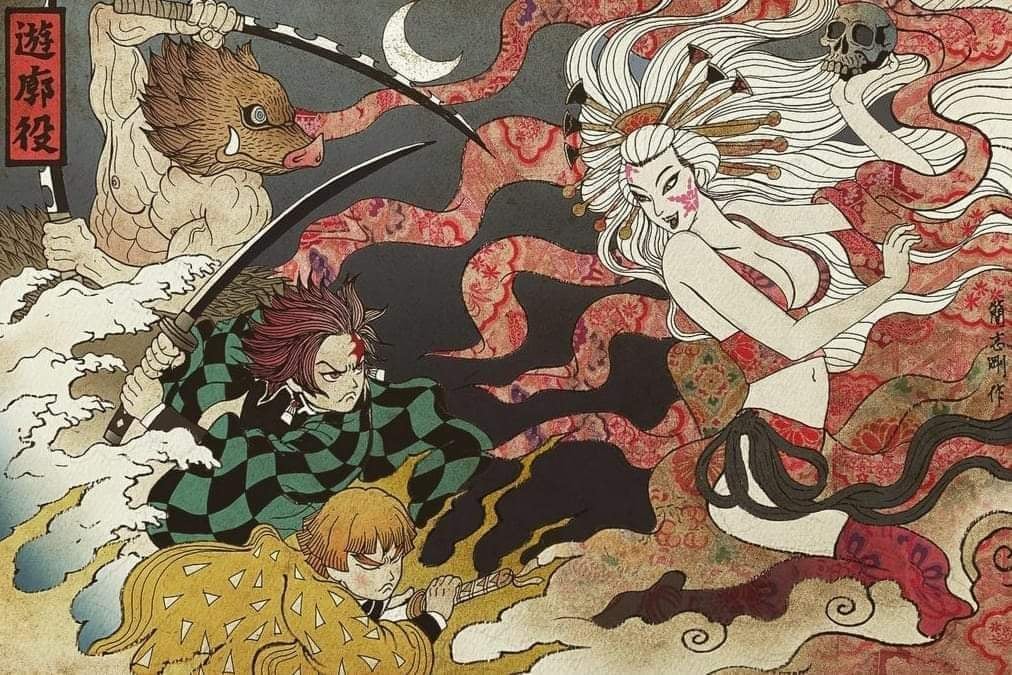
The manga's art is a blend of traditional Japanese aesthetics and modern manga techniques, characterized by its detailed character designs and dynamic action scenes. The use of traditional Japanese motifs, such as the hashira (pillars) representing the demon slayer leaders, adds cultural depth to the narrative.
Themes
"Demon Slayer" explores themes of family, sacrifice, and the struggle between good and evil. Each character's backstory is intricately woven into the larger narrative, providing depth and emotional resonance.
Anime Adaptation: A Visual Masterpiece
Produced by Ufotable, the "Demon Slayer" anime series has been lauded for its groundbreaking animation quality. The studio's use of 3D computer-generated imagery (CGI) blended with traditional animation techniques has set a new benchmark in the industry.
Animation Techniques
Ufotable's animation is characterized by its fluid action sequences and vibrant color palettes. The "Water Breathing" techniques used by Tanjiro are visually represented with stylized water movements inspired by traditional Japanese ukiyo-e art.
Soundtrack and Voice Acting
The soundtrack, composed by Yuki Kajiura and Go Shiina, complements the anime's emotional and action-packed scenes. The voice acting, led by Natsuki Hanae as Tanjiro, brings the characters to life with depth and authenticity.

Cultural Impact and Reception
Global Reach
"Demon Slayer" has surpassed cultural boundaries, becoming a global hit. Its success is reflected in the highest-grossing anime film of all time, "Demon Slayer: Mugen Train," which broke box office records in Japan and internationally.
Merchandise and Spin-offs
The series has expanded beyond manga and anime into a vast array of merchandise, including video games, novels, and stage plays. This diversification has helped maintain its popularity and reach a broader audience.
Common Pitfalls in Adaptation
Balancing Fidelity and Innovation
Adapting a beloved manga into an anime comes with challenges. The need to remain faithful to the source material while introducing innovative elements is a delicate balance.
Fan Expectations
Meeting the expectations of a passionate fanbase can be daunting. Consistency in quality and respect for the original work are crucial for success.
Future Trends and Recommendations
Technological Advancements
Emerging technologies in animation, such as AI-driven rendering and real-time graphics, are likely to further enhance the quality of future anime adaptations.
Expanding Narratives
With the success of "Demon Slayer," we can expect more cross-media expansions, including live-action adaptations and international collaborations, which could bring fresh perspectives to the narrative.
Conclusion
"Demon Slayer: Kimetsu no Yaiba" is more than just a series; it's a cultural phenomenon that has reshaped the landscape of anime and manga. Its blend of compelling storytelling, rich character development, and stunning visuals has set a new standard in the industry. As it continues to evolve and expand, "Demon Slayer" will undoubtedly leave a lasting legacy.

FAQ
What is the main plot of Demon Slayer?
The plot follows Tanjiro Kamado, a young boy who becomes a demon slayer after his family is slaughtered by demons, leaving only his sister Nezuko, who is turned into a demon.
How has Demon Slayer influenced the anime industry?
Demon Slayer has set new standards for animation quality and storytelling, influencing both current and future anime productions globally.
What are the main themes of Demon Slayer?
The series explores themes of family, sacrifice, and the struggle between good and evil, often focusing on personal growth and redemption.
How does the anime differ from the manga?
While the anime closely follows the manga, it enhances the story with high-quality animation, a compelling soundtrack, and additional character development.
What technological innovations were used in the anime?
Ufotable employed advanced CGI techniques and a unique blend of traditional animation to create visually stunning scenes, especially evident in the fight sequences.
What can we expect from future Demon Slayer projects?
Future projects might include more spin-offs, live-action adaptations, and collaborative international efforts that could broaden the series' appeal and narrative scope.
Key Takeaways
- Demon Slayer's manga has sold over 150 million copies worldwide, showcasing its massive global appeal.
- The anime adaptation by Ufotable is celebrated for its groundbreaking animation techniques, blending traditional art with CGI.
- Demon Slayer explores deep themes of family, sacrifice, and the moral complexities of good versus evil.
- The series has significantly influenced modern anime aesthetics and storytelling, setting new industry standards.
- Ongoing expansions into various media, including stage plays and video games, indicate the series' continuing influence.
- Technological advancements are likely to enhance future anime adaptations, with AI-driven rendering and real-time graphics.
- The series' success highlights the potential for cross-media expansions and international collaborations in storytelling.
- Demon Slayer's rich narrative and cultural elements provide a template for future anime and manga series.


