
Data centers’ energy demand threatens Trump’s “Made in America” plan - Ars Technica
Overview
Data centers’ energy demand threatens Trump’s “Made in America” plan
Squeeze on Rust Belt electricity bills threatens Trump’s manufacturing plan.
Details
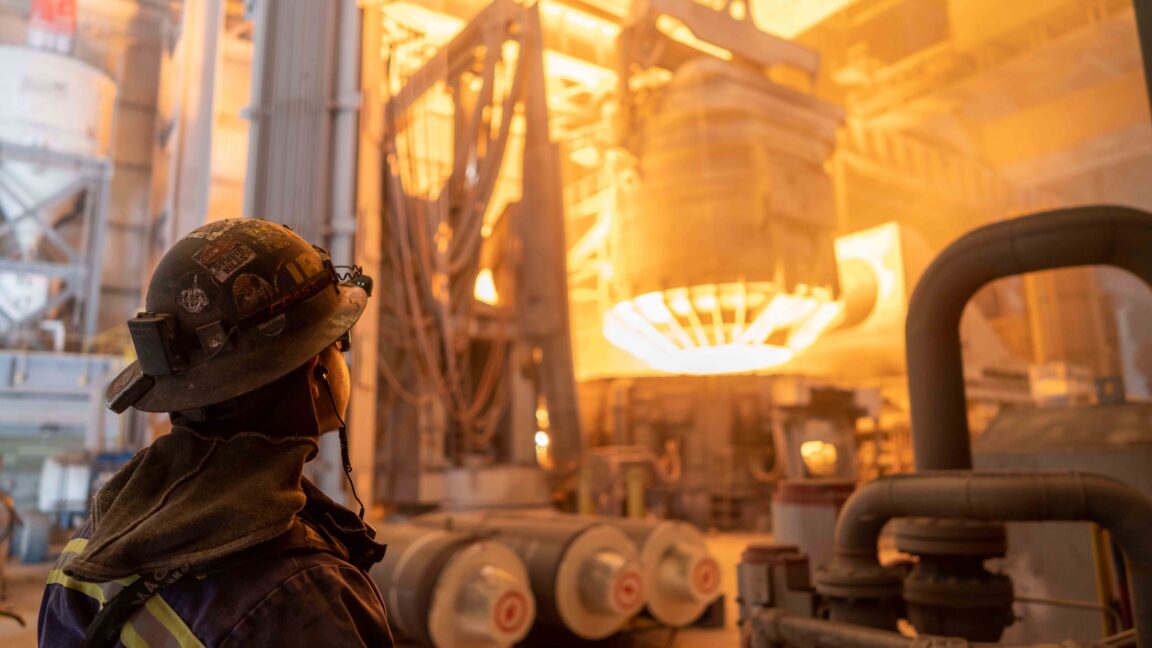
US manufacturers in many Rust Belt cities and towns are paying significantly higher electricity costs as growing energy demand from data centers strains the largest power grid operator in the United States. The resulting squeeze on profit margins for steelmakers and brick factories could further undermine President Donald Trump’s “Made in America” plan to revive US manufacturing, and it comes as Trump has simultaneously championed the tech companies behind the AI data center boom.
Factory electricity bills are generally rising faster than those for other business customers or residential customers, according to a Reuters analysis. It highlighted the example of the Belden Brick Company, a 141-year-old brick manufacturer in Ohio, whose electricity bills have soared from
Meanwhile, the Steel Manufacturers Association warned that US steel companies concentrated in the Rust Belt region served by PJM Interconnection are paying tens of millions of dollars in higher power costs per year. Electricity accounts for 20 to 40 percent of the total production costs of making steel.
Each electric arc furnace used in steelmaking has an operating power load between 40 and 200 megawatts, and the entire US steel industry draws up to 11 gigawatts of power at peak production across all facilities.
US steelmakers have benefited from data center construction’s requirements for an estimated 1 million tons of steel per year. But data center energy demand has also driven up operating costs for the US steel industry, according to the Wall Street Journal. The Ohio-based steelmaker Metallus described its electricity costs as having jumped by 70 percent since 2024, leading the company to pay an extra $15 million in energy costs annually.
The higher electricity costs for manufacturers coincide with many states in PJM territory having attracted large AI data center projects with substantial electricity needs. That data center growth has driven up PJM’s capacity prices—paid to power generators according to supply and demand forecasts—from
PJM has also forecast that electricity demand in its territory will surpass available supply by 6.6 gigawatts starting in 2027, which the Wall Street Journal describes as equivalent to more than six nuclear power plants.
Some US manufacturers have raised the prices paid by customers to partially offset their own rising electricity bills, or are even considering relocation of their businesses, Reuters reported. The Wall Street Journal highlighted warnings from steel industry executives that production outages could become more likely if local power grids are overwhelmed by demand. Such results would likely undercut the competitiveness and viability of US manufacturing, which the Trump administration claims to have prioritized despite the loss of 83,000 manufacturing jobs in Trump’s first year back in office.
The White House has touted getting Big Tech companies to pay for new power generation and transmission infrastructure by signing a Ratepayer Protection Pledge, which happens to lack any meaningful enforcement mechanism. The Trump administration also joined state governors in pushing PJM to hold a one-time backstop auction for purchasing new power supply capacity.
But the United States still faces huge challenges in building enough new power generation and transmission lines to support the energy needs of AI data center demand and US manufacturers, not to mention other businesses and residential customers. The Trump administration’s efforts to stop renewable energy projects involving wind and solar power have also not helped.
In 2025 alone, the United States saw the cancellation of power projects totaling 266 gigawatts of generation capacity—equivalent to 25 percent of America’s current electricity generation capacity and more than the total electricity generation of Texas, according to Michael Thomas, CEO of the Cleanview data platform that tracks renewable energy and data center projects. Clean energy projects accounted for 93 percent of those project cancellations.
The Trump administration’s cancellations of various wind power projects certainly represented one contributing factor. But other significant patterns included local opposition to renewable energy projects in states such as Ohio and Indiana that were also courting new data center development, along with a lack of new transmission lines leading to high interconnection costs for new clean energy projects, Thomas said. If US states and the federal government are hoping to support local manufacturing, they may need to start making different choices in addressing the rising energy costs of the data center boom.
-
FCC to end Biden-era rule that forces ISPs to list all their fees -
Secret Claude tracker shocks users after Anthropic’s anti-surveillance stance -
ULA's last six Atlas Vs can't launch anything besides Boeing's Starliner -
Katalyst's satellite rescue mission is now in pursuit of NASA's Swift -
The missing 500 million: Cosmic bombardment melted Earth's first crust
Ars Technica has been separating the signal from the noise for over 25 years. With our unique combination of technical savvy and wide-ranging interest in the technological arts and sciences, Ars is the trusted source in a sea of information. After all, you don’t need to know everything, only what’s important.
Key Takeaways
-
Data centers’ energy demand threatens Trump’s “Made in America” plan
-
Squeeze on Rust Belt electricity bills threatens Trump’s manufacturing plan
-
US manufacturers in many Rust Belt cities and towns are paying significantly higher electricity costs as growing energy demand from data centers strains the largest power grid operator in the United States
-
Factory electricity bills are generally rising faster than those for other business customers or residential customers, according to a Reuters analysis
-
Meanwhile, the Steel Manufacturers Association warned that US steel companies concentrated in the Rust Belt region served by PJM Interconnection are paying tens of millions of dollars in higher power costs per year


