
![As the 2026 World Cup Expands, So Does the Threat Surface [2025]](https://tryrunable.com/blog/as-the-2026-world-cup-expands-so-does-the-threat-surface-202/image-1-1782310087387.jpg)
As the 2026 World Cup Expands, So Does the Threat Surface
The 2026 FIFA World Cup is set to be a landmark event, with expanded teams and venues across North America. However, this expansion also presents a larger threat surface for cyber, physical, and operational security challenges. Let's dive into the complexities and strategies needed to protect such a massive global event.
TL; DR
- Increased Threat Surface: With more venues and digital touchpoints, vulnerabilities multiply.
- Cybersecurity Concerns: Expect heightened phishing, ransomware, and DDoS attacks.
- Physical Security Challenges: Managing crowds across multiple large venues requires advanced logistics.
- Operational Risks: Coordination between countries and agencies is critical yet complex.
- Future Trends: The rise of AI and IoT in security solutions will play a crucial role.

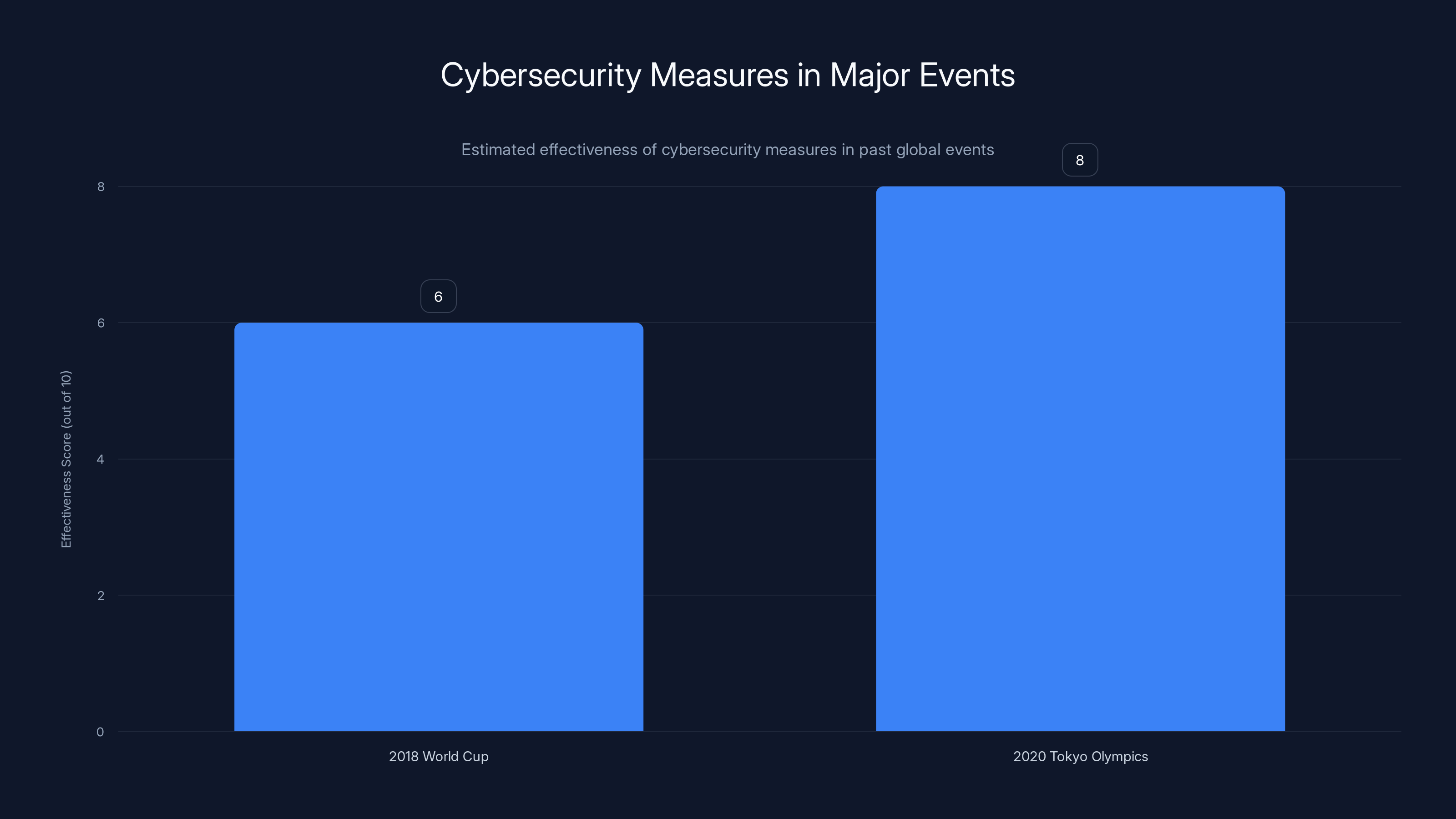
The Tokyo Olympics demonstrated higher cybersecurity effectiveness due to advanced AI integration, compared to the 2018 World Cup. Estimated data.
The Expanding Scope of the 2026 World Cup
The 2026 FIFA World Cup is unique, not just for its sporting significance but also for its unprecedented scale. With matches spread across three countries—USA, Canada, and Mexico—the event will host 48 teams in 16 cities. This expansion creates a complex web of logistical, operational, and security challenges, as highlighted by Los Angeles Times.
Increased Venues, Increased Risks
More venues mean more potential entry points for both physical and cyber threats. Each stadium represents a node in a larger network, one that cybercriminals and other malicious actors could exploit. The sheer number of people involved—from spectators to staff—compounds the challenge, as noted by Unit 42 by Palo Alto Networks.
Digital Infrastructure and Connectivity
Digital infrastructure will be at the heart of the World Cup's operations. Ticketing, broadcasting, and even food services will rely heavily on digital networks. As more services go online, the attack surface widens, providing more opportunities for cyber attacks, as discussed in IoT Insider.
Cybersecurity Threats: A Closer Look
Phishing and Social Engineering
During major events like the World Cup, phishing campaigns see a significant uptick. Attackers often use the event's branding to trick users into clicking malicious links. These campaigns can target fans, officials, and even corporate partners, as highlighted by Identity Week.
Ransomware Attacks
Ransomware attacks have been on the rise, and large events present lucrative targets. By potentially locking out critical systems, attackers can demand substantial ransoms. Ensuring robust backups and a quick recovery plan is essential, as discussed in HIPAA Journal.
Distributed Denial of Service (DDoS) Attacks
DDoS attacks aim to disrupt services by overwhelming them with traffic. For an event of this magnitude, even a brief disruption can cause chaos. Implementing DDoS mitigation strategies, like traffic filtering and rate limiting, will be key, as noted by Security Boulevard.
Advanced Persistent Threats (APTs)
APTs involve prolonged cyber attacks where hackers infiltrate systems to steal sensitive data or cause damage. These threats are often state-sponsored and require sophisticated detection and response strategies, as highlighted by BitSight.
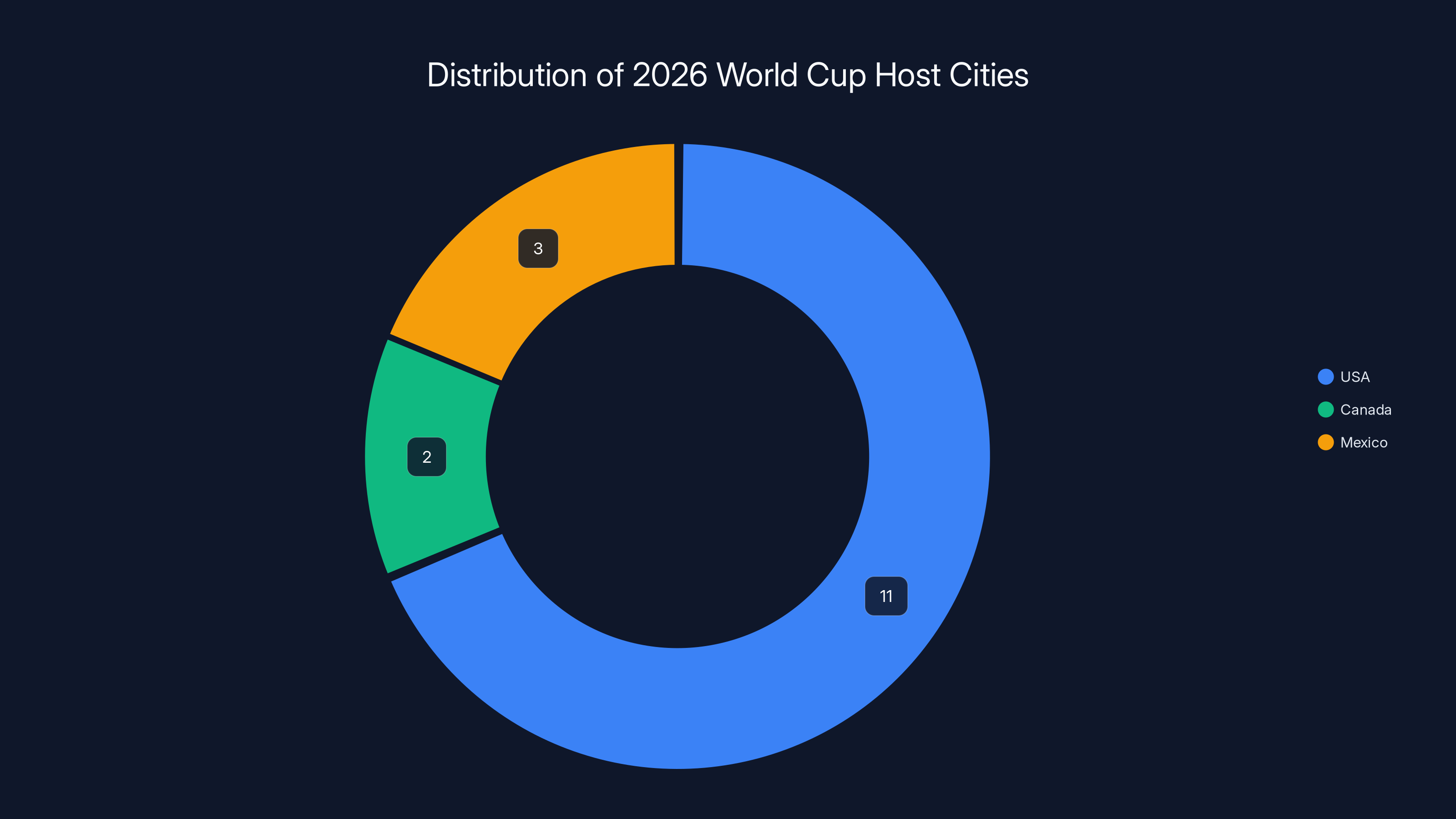
The USA will host the majority of the 16 cities for the 2026 World Cup, with 11 cities, while Canada and Mexico will host 2 and 3 cities respectively. Estimated data.
Physical Security: Managing the Masses
Crowd Control and Safety
Managing millions of fans across multiple venues requires meticulous planning. From entrance security checks to emergency evacuation procedures, every detail must be accounted for, as discussed by CYFIRMA.
Surveillance and Monitoring
Advanced surveillance technologies, such as facial recognition and AI-driven analytics, will play a pivotal role in maintaining security. However, these technologies must balance security needs with privacy concerns, as highlighted by Recorded Future.
Coordination Across Borders
With multiple countries involved, coordinating security efforts is a logistical feat. International cooperation between law enforcement and security agencies will be crucial, as noted by JD Supra.
Operational Challenges and Solutions
Supply Chain Security
The logistics of transporting goods and services across borders introduce another layer of complexity. Securing the supply chain against disruptions, whether accidental or malicious, is critical, as discussed in The New York Times.
Communication Systems
Reliable communication is the backbone of effective operations. Ensuring that communication systems are secure and resilient against interference will help maintain operational integrity, as highlighted by The Standard.
Emergency Response Protocols
In the event of an incident, having tested and proven emergency response protocols can save lives. Regular drills and cross-border coordination are necessary to ensure readiness, as noted by Al Jazeera.

Future Trends in Event Security
AI and Machine Learning
AI and machine learning will enhance threat detection and response capabilities. Predictive analytics can help identify potential threats before they materialize, as discussed in Nature.
Internet of Things (IoT)
IoT devices will be integral to the infrastructure of the World Cup. Ensuring these devices are secure from cyber threats will be a major focus, as highlighted by CYFIRMA.
Blockchain for Secure Transactions
Blockchain technology can offer secure, transparent, and tamper-proof transactions, which are critical for ticketing and vendor payments, as noted by Recorded Future.
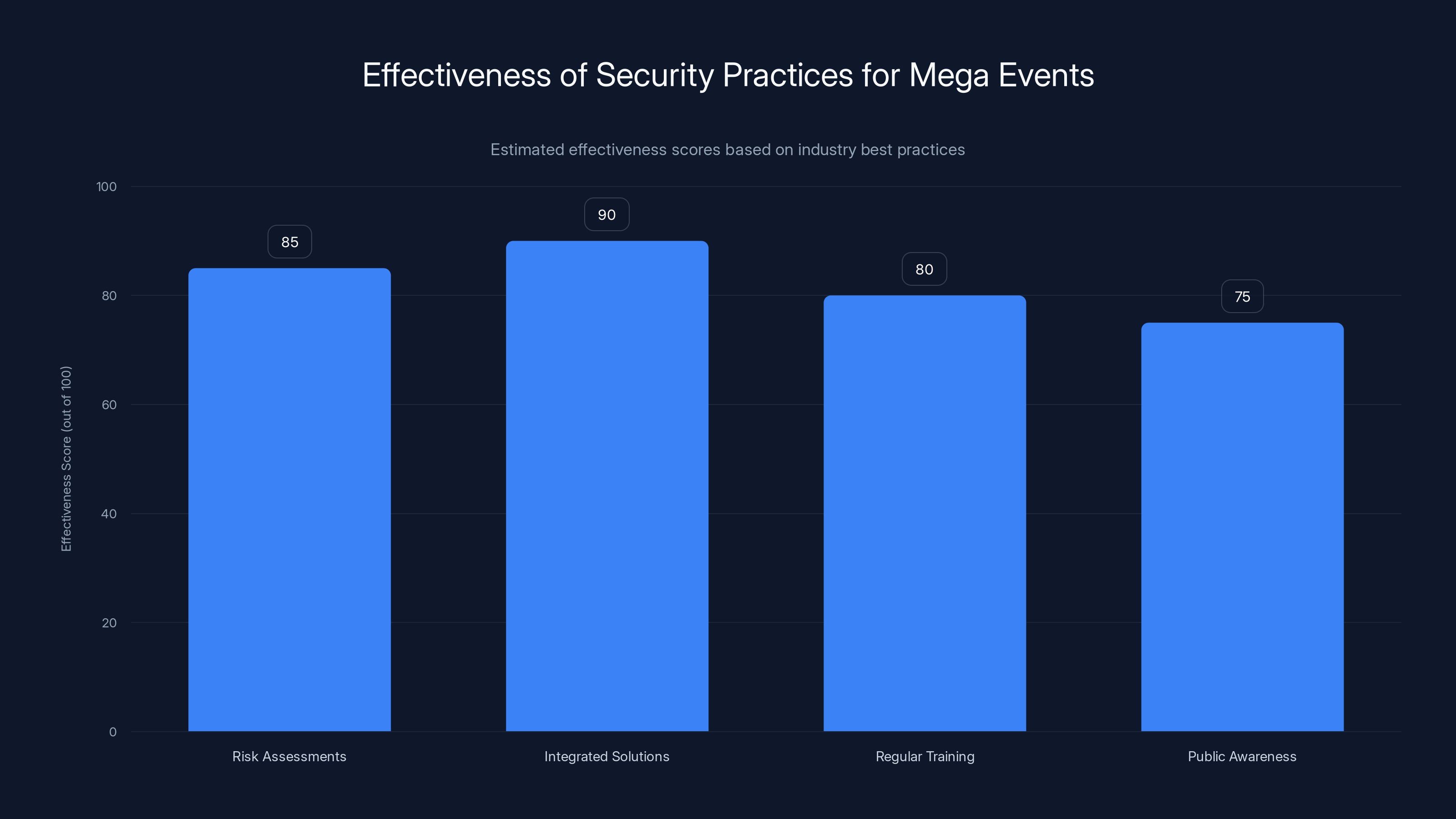
Integrated security solutions are estimated to be the most effective practice for securing mega events, with a score of 90 out of 100. Estimated data.
Best Practices for Securing Mega Events
- Comprehensive Risk Assessments: Conduct thorough assessments to identify potential vulnerabilities.
- Integrated Security Solutions: Use a combination of physical and cyber security measures.
- Regular Training: Ensure all staff are trained in security protocols and emergency procedures.
- Public Awareness Campaigns: Educate attendees on recognizing and reporting suspicious activities.

Common Pitfalls and How to Avoid Them
Underestimating Cyber Threats
It's easy to focus solely on physical security, but cyber threats can be just as damaging. Investing in robust cybersecurity measures from the outset is crucial, as highlighted by BitSight.
Fragmented Communication
Ensuring that all teams and agencies are on the same page can be challenging. Establishing clear communication channels and protocols is vital, as noted by JD Supra.
Overlooking Insider Threats
Insider threats can be difficult to detect but are often the most damaging. Implementing strict access controls and monitoring can mitigate these risks, as discussed in Recorded Future.
Case Studies: Lessons from Past Events
The 2018 World Cup in Russia
The 2018 World Cup faced numerous cyber threats, including phishing and DDoS attacks. Lessons learned include the importance of international cooperation and the need for constant vigilance, as highlighted by CYFIRMA.
The 2020 Tokyo Olympics
Despite the pandemic, the Tokyo Olympics managed to implement effective security measures, including extensive use of AI for surveillance and logistics. This event highlighted the importance of integrating technology into security planning, as noted by Nature.
Recommendations for Future Events
- Strengthen International Cooperation: Collaborate with international partners to share intelligence and resources.
- Invest in Technology: Leverage the latest technologies to enhance both physical and cyber security.
- Focus on Resilience: Prepare for the unexpected by developing robust contingency plans.
FAQ
What is the primary cybersecurity threat to the 2026 World Cup?
Phishing and ransomware attacks are expected to be the most prevalent cyber threats during the event, as discussed in Identity Week.
How can physical security be enhanced at large venues?
Implementing advanced surveillance systems and ensuring effective crowd control measures can enhance physical security, as noted by Recorded Future.
What role does AI play in event security?
AI helps in threat detection, predictive analytics, and operational efficiency, making it a valuable tool in event security, as highlighted by Nature.
How important is international cooperation for the 2026 World Cup?
It's crucial, as the event spans multiple countries, necessitating collaboration among various security agencies, as discussed in JD Supra.
What are some common pitfalls in securing large events?
Underestimating cyber threats and fragmented communication are common issues that need addressing, as noted by BitSight.
How can blockchain technology be used in the World Cup?
Blockchain can secure ticketing and vendor transactions by providing a transparent and tamper-proof ledger, as highlighted by Recorded Future.

Conclusion
The 2026 World Cup presents a unique set of challenges and opportunities in the realm of security. By understanding the complexities and implementing best practices, stakeholders can ensure a successful and secure event. As we move closer to this historic event, the focus must remain on innovation, cooperation, and vigilance.
Key Takeaways
- The 2026 World Cup's expanded scope increases both cyber and physical security risks.
- Phishing and ransomware are primary cybersecurity threats to watch for.
- Advanced surveillance and AI are key to managing physical security challenges.
- International cooperation is essential for coordinated security efforts.
- Emerging technologies like IoT and blockchain can enhance security measures.
Related Articles
- The Invisible Traffic Problem: Why AI Agents Are Your Biggest Blind Spot [2025]
- London's Climate Action Week: Navigating Unforeseen Heatwaves [2025]
- Unveiling the Best Amazon Prime Day Deals Under $100 [2026]
- Understanding the Impact of Social Media on Children: A Deep Dive into YouTube's Legal Battles [2025]
- The Future of Marketing: AI Agents Transforming Customer Engagement [2025]
- Google Home's Advanced Voice Recognition: What to Expect [2025]


