
![Unpacking the Debate: AI in Government Legislation [2025]](https://tryrunable.com/blog/unpacking-the-debate-ai-in-government-legislation-2025/image-1-1782331384373.jpg)
Introduction
In recent years, the intersection of artificial intelligence (AI) and government legislation has become a hotbed of discussion and debate. At the core of these discussions lies a fundamental question: How should AI be used in the legislative process? This question came to the forefront when a congresswoman was accused of using AI to draft a defense funding amendment, a claim she vehemently denied. This incident highlights the broader implications of AI in policymaking and the ethical, technological, and practical challenges that accompany its integration.
TL; DR
- AI in legislation: The potential and pitfalls of AI in crafting government policies.
- Ethical concerns: How transparency and accountability are critical to AI's role in government.
- Technical challenges: The current capabilities and limitations of AI in understanding legislative language.
- Best practices: Guidelines for ethical AI deployment in government settings.
- Future trends: How AI could transform legislative processes in the coming decade.

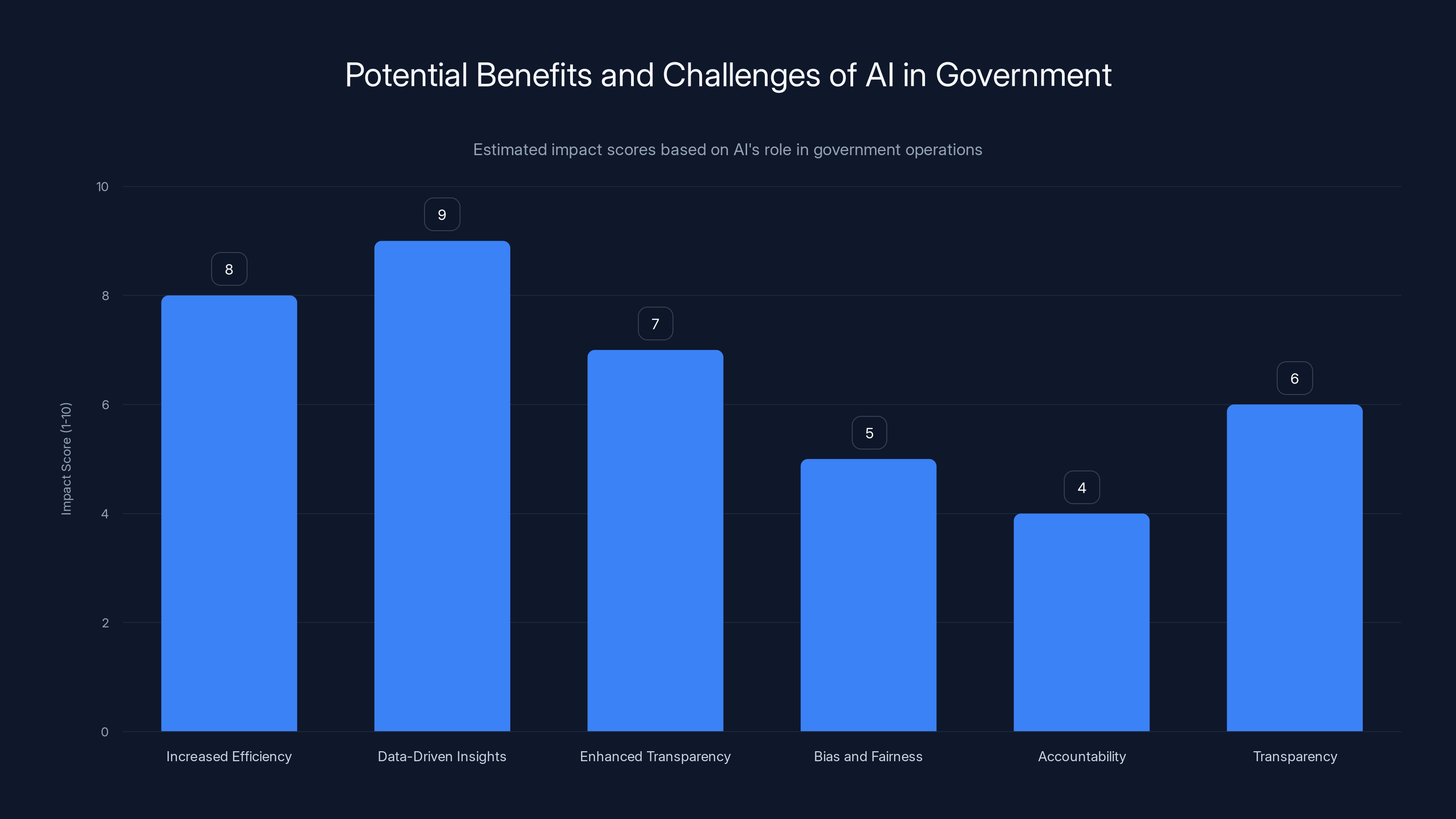
AI's potential benefits in government include increased efficiency and data-driven insights, with challenges in bias and accountability. (Estimated data)
The Role of AI in Government
AI has the potential to revolutionize government operations by automating routine tasks, analyzing vast datasets, and assisting in policy formulation. However, its role in crafting legislation is still a matter of intense debate. On one hand, AI can enhance efficiency and accuracy; on the other, it raises concerns about accountability and transparency.
Potential Benefits
AI can process and analyze large volumes of data far more quickly than humans, making it an invaluable tool for policy analysis. For instance, AI algorithms can evaluate the impact of proposed legislation by simulating various scenarios, helping lawmakers understand potential outcomes.
Key Benefits:
- Increased Efficiency: AI can automate the drafting of legislative documents, reducing time and human error. According to IBM's insights on AI in business, AI technologies significantly improve operational efficiencies.
- Data-Driven Insights: AI can analyze historical data to predict the outcomes of proposed policies. City Journal discusses how AI's data analysis capabilities are transforming decision-making processes.
- Enhanced Transparency: AI systems can provide detailed reports on the legislative drafting process, increasing public trust. The Snowflake AI governance framework emphasizes transparency as a core principle.
Ethical and Legal Implications
The use of AI in legislative drafting raises significant ethical concerns. These include the potential for bias in AI algorithms, the lack of transparency in AI decision-making processes, and the accountability of AI-generated content.
Challenges:
- Bias and Fairness: Ensuring AI systems do not perpetuate or exacerbate existing biases. Medscape highlights the risks of AI bias in various sectors, including healthcare.
- Accountability: Determining who is responsible for decisions made by AI systems. FAS advocates for human-centered AI decision-making to ensure accountability.
- Transparency: Making AI processes understandable for non-experts. FAS also discusses how governments can ensure transparency in AI procurement.
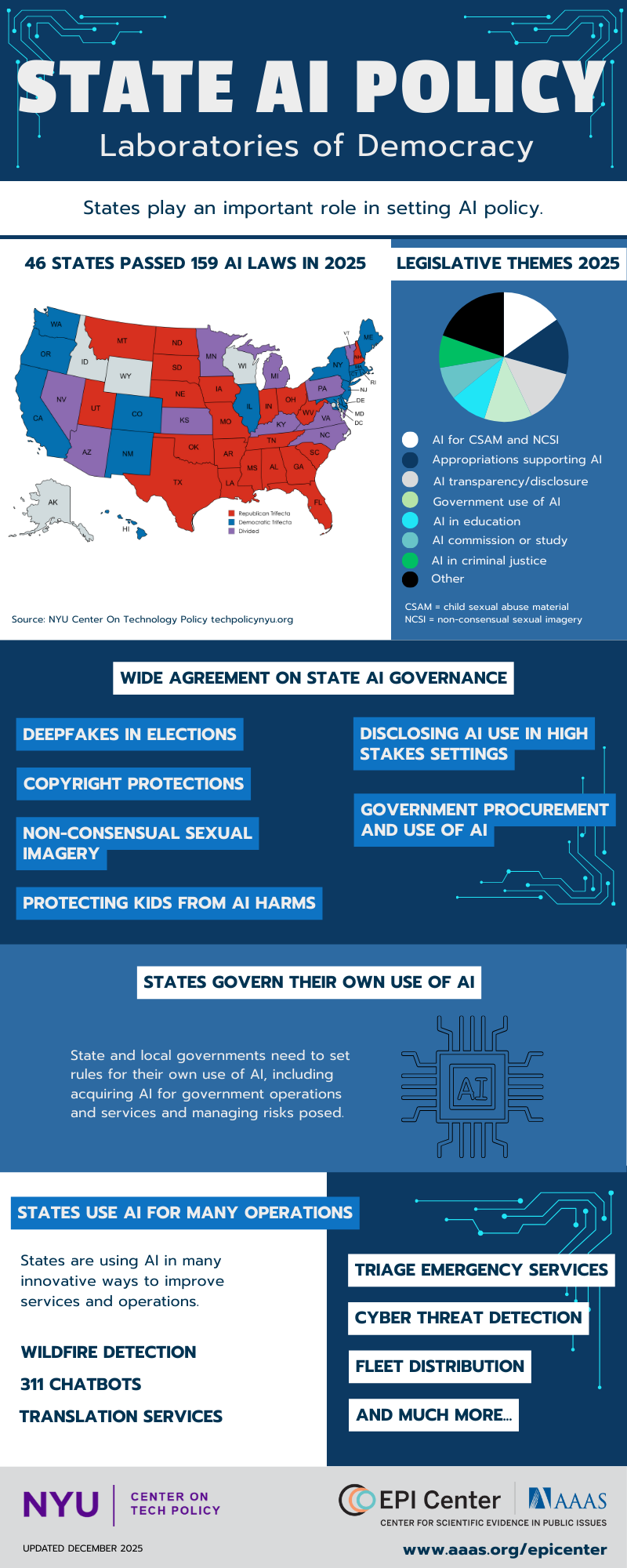
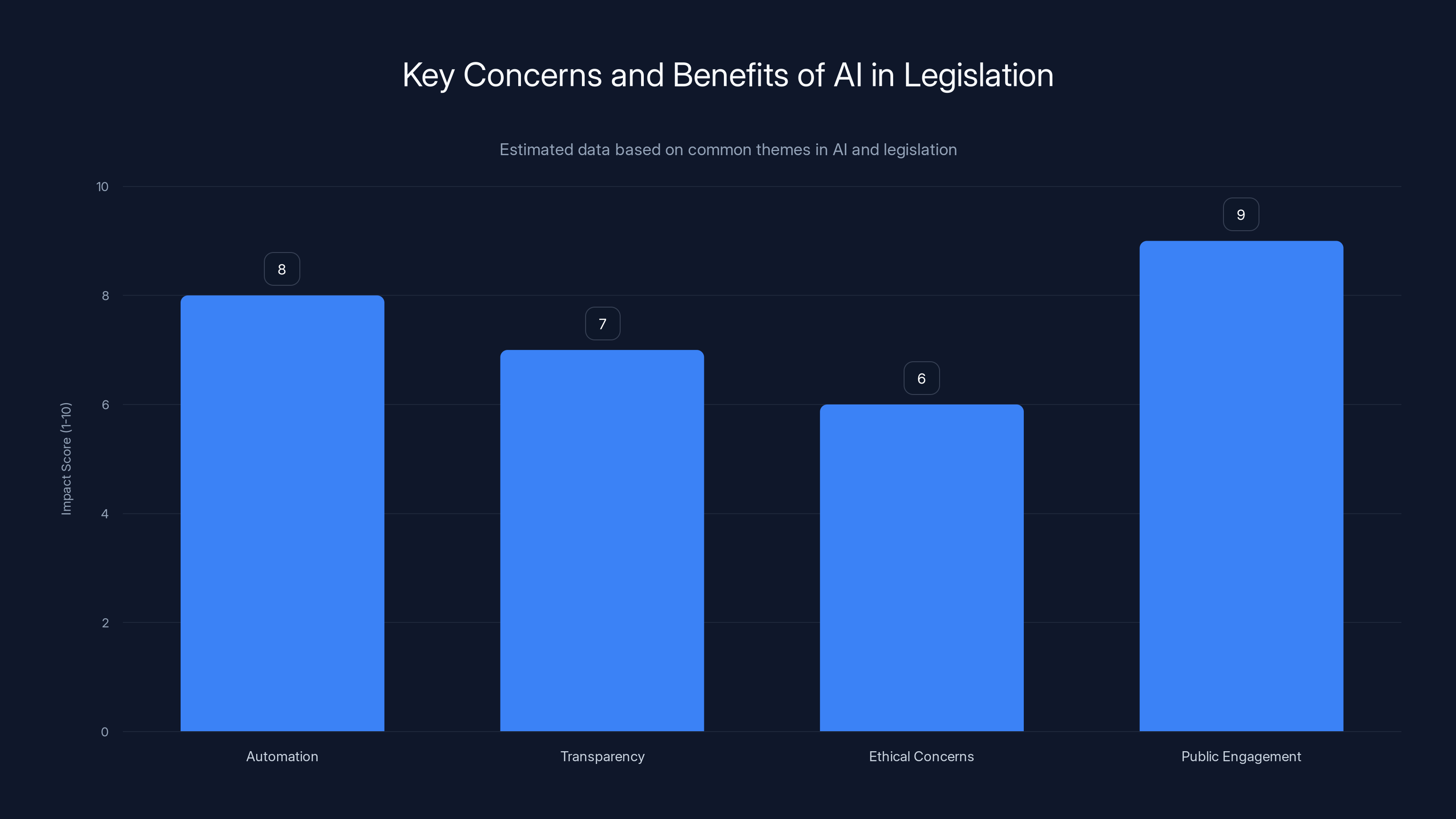
AI significantly enhances public engagement and automation in legislation, while ethical concerns remain a critical area requiring attention. (Estimated data)
Case Study: The Amendment Controversy
The controversy surrounding a congresswoman's alleged use of AI to draft a defense funding amendment serves as a case study for examining these issues. Critics argued that the use of AI in such a critical area could lead to uninformed decision-making and lack of accountability.
Outcome:
- The congresswoman denied the allegations, emphasizing that human oversight was maintained throughout the drafting process. Akin Gump discusses similar governance initiatives aimed at maintaining oversight in AI applications.
- This incident sparked a broader discussion on the appropriate role of AI in government.
Implementing AI in Legislative Processes
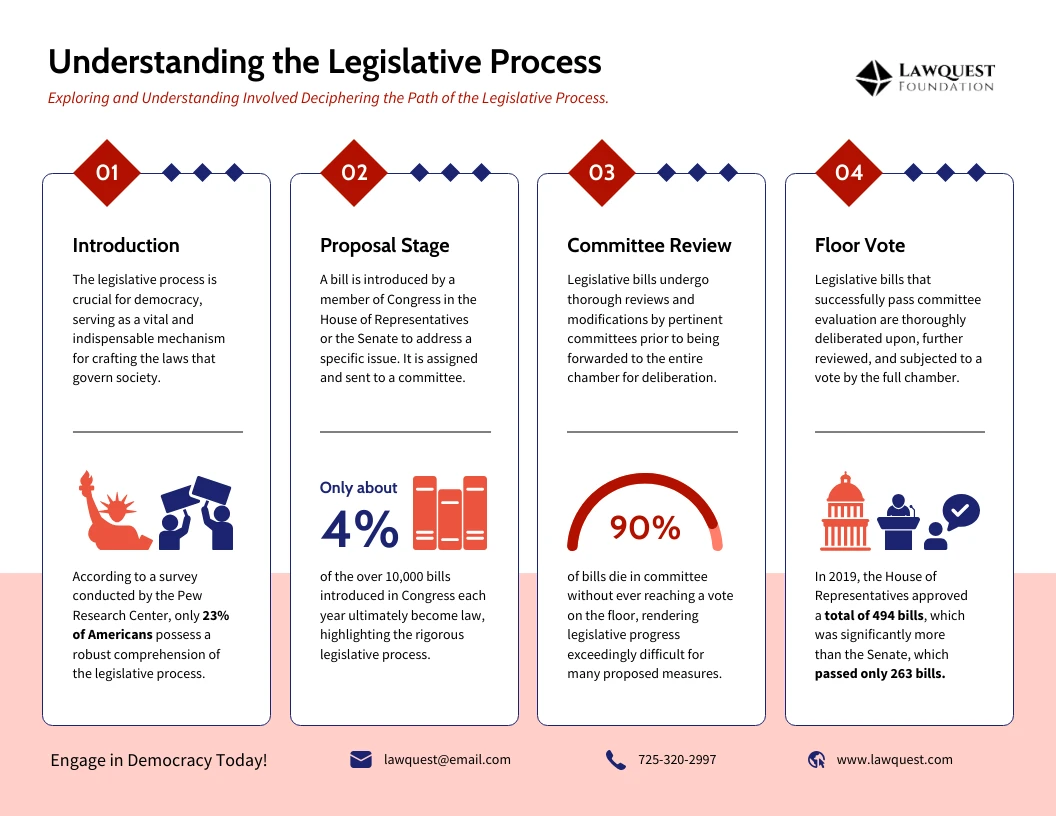
For AI to be effectively integrated into legislative processes, certain best practices should be followed. These include maintaining human oversight, ensuring transparency, and regularly auditing AI systems for bias and accuracy.
Best Practices
- Human Oversight: Always involve human experts in reviewing AI-generated content to ensure accuracy and relevance. Thomson Reuters emphasizes the importance of human oversight in legal AI tools.
- Regular Audits: Conduct periodic audits of AI systems to check for bias and ensure they are functioning as intended. Harvey AI discusses the necessity of regular audits in AI document management.
- Transparency Protocols: Implement clear protocols for documenting AI processes and decisions. The SCC Online blog highlights the importance of transparency in AI governance.
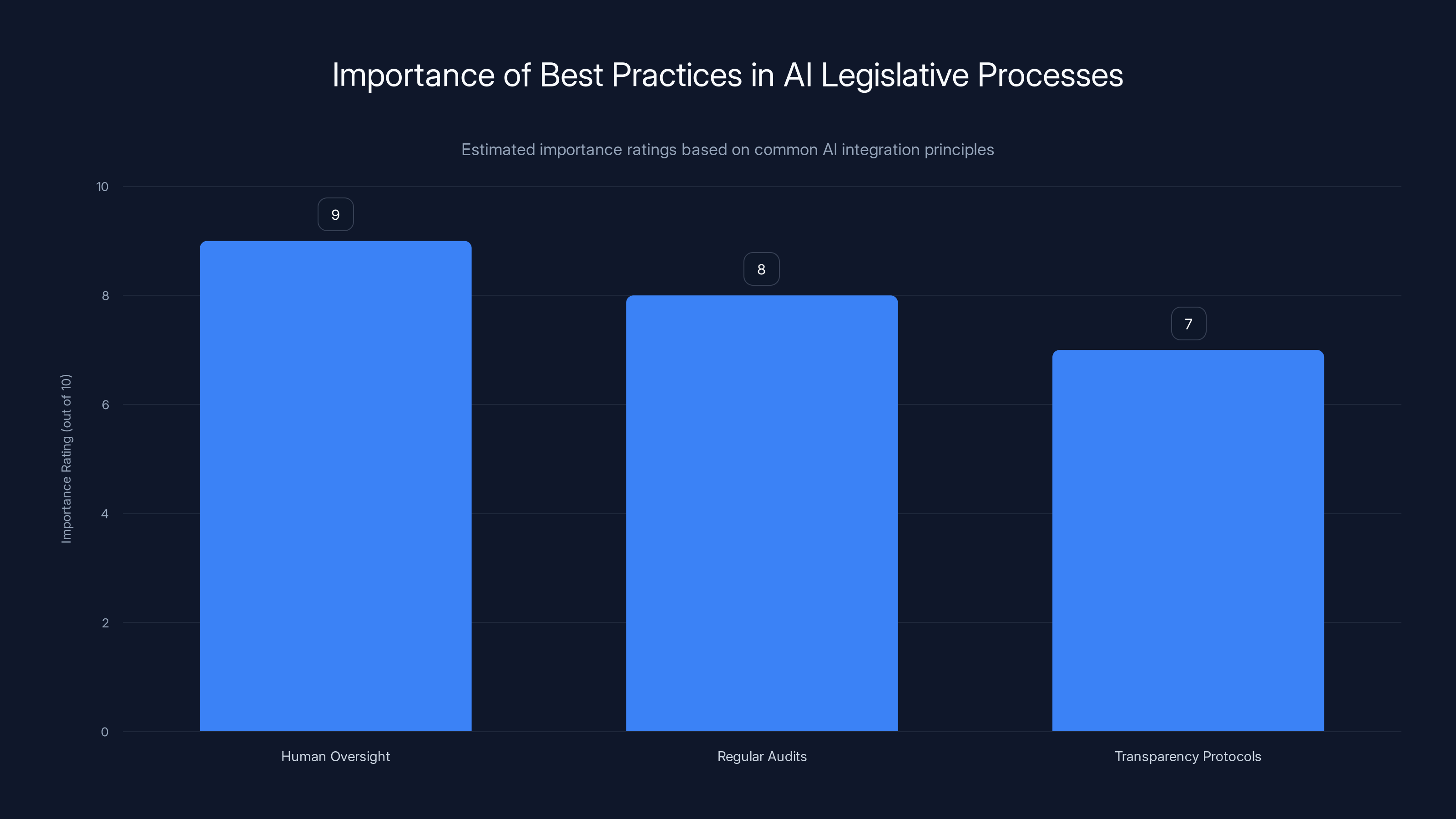
Human oversight is rated highest in importance for AI integration in legislative processes, followed by regular audits and transparency protocols. Estimated data.
The Future of AI in Legislation
The future of AI in government is promising but fraught with challenges. As AI technology advances, its role in legislative processes will likely expand. Key trends to watch include the development of more sophisticated AI algorithms, increased use of AI in policy analysis, and the potential for AI to enhance public engagement in the legislative process.
Future Trends:
- Advanced Algorithms: Development of AI systems capable of understanding complex legal language and nuances. Thomson Reuters explores the future of AI in legal contexts.
- Enhanced Public Engagement: AI tools that allow citizens to interact with and influence legislative processes. Amnesty International discusses the implications of AI on public engagement and privacy.
- Global Collaboration: International efforts to standardize AI governance in legislative contexts. Frontiers in Research Metrics and Analytics covers global collaboration efforts in AI governance.

Conclusion
The integration of AI into government legislation presents both opportunities and challenges. While AI can enhance efficiency and transparency, it also raises significant ethical and legal questions that must be addressed. By adopting best practices and preparing for future trends, governments can harness the power of AI to improve legislative processes while safeguarding democratic principles.
FAQ
What is AI's role in government legislation?
AI can assist in automating the drafting process, analyzing policy impacts, and providing data-driven insights to lawmakers. IBM provides insights into how AI is transforming business and government operations.
How does AI impact transparency in legislation?
AI systems can enhance transparency by providing detailed process reports and analysis, but they also require clear documentation to be understood by non-experts. FAS discusses the importance of transparency in AI procurement.
What are the ethical concerns of using AI in legislation?
Key concerns include bias in AI algorithms, accountability for AI-generated content, and the need for transparency in AI decision-making. Medscape highlights the risks of AI bias.
How can governments ensure ethical AI deployment?
By maintaining human oversight, conducting regular audits, and implementing transparency protocols in AI systems. Thomson Reuters emphasizes these best practices.
What future trends should we expect in AI and legislation?
Expect advancements in AI algorithms, increased public engagement through AI tools, and international collaboration on AI governance standards. Frontiers in Research Metrics and Analytics covers these trends.
How does AI enhance public engagement in legislation?
AI tools can facilitate citizen interaction with legislative processes, allowing for greater public input and influence on policy decisions. Amnesty International discusses the impact of AI on public engagement.

Key Takeaways
- AI has the potential to revolutionize legislative processes by increasing efficiency and transparency.
- Ethical concerns such as bias, accountability, and transparency must be addressed.
- Best practices include maintaining human oversight and conducting regular audits.
- Future trends point to more sophisticated AI algorithms and increased public engagement.
- The integration of AI in government requires careful consideration of ethical and legal implications.
Related Articles
- White House Urges Meta to Submit AI Models for Review: Understanding the Implications [2025]
- AI's Environmental Impact: Unveiling the Hidden Costs [2025]
- Understanding the Implications of the NTSB Investigation into the Texas Tesla Crash [2025]
- Unleashing Creativity: Figma's New AI Motion Graphics and Shader Tools [2025]
- Why the SwitchBot Battery-Powered Fan is a Must-Have for Smart Homes [2025]
- Why Wearable AI Must Reduce Cognitive Overload [2025]


