
![The Challenges and Future of Laptop Repairability: Insights on Apple and Lenovo [2025]](https://tryrunable.com/blog/the-challenges-and-future-of-laptop-repairability-insights-o/image-1-1775601308338.jpg)
The Challenges and Future of Laptop Repairability: Insights on Apple and Lenovo [2025]
The debate over device repairability has been spotlighted as consumers and advocacy groups push for more accessible and sustainable product fixes. In particular, Apple and Lenovo have caught the attention of analysts for their laptops' lack of repairability. While this scrutiny might seem like a niche concern, it has implications that ripple through environmental, economic, and technological domains. Let's dive deep into the factors influencing laptop repairability, what Apple and Lenovo's standings mean, and the potential future of repairable tech.
TL; DR
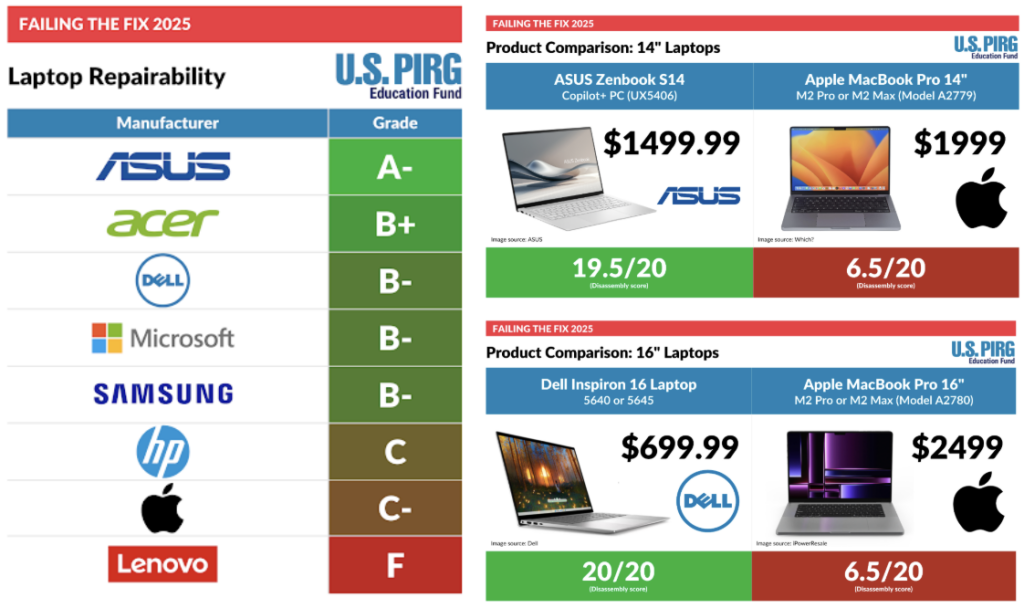
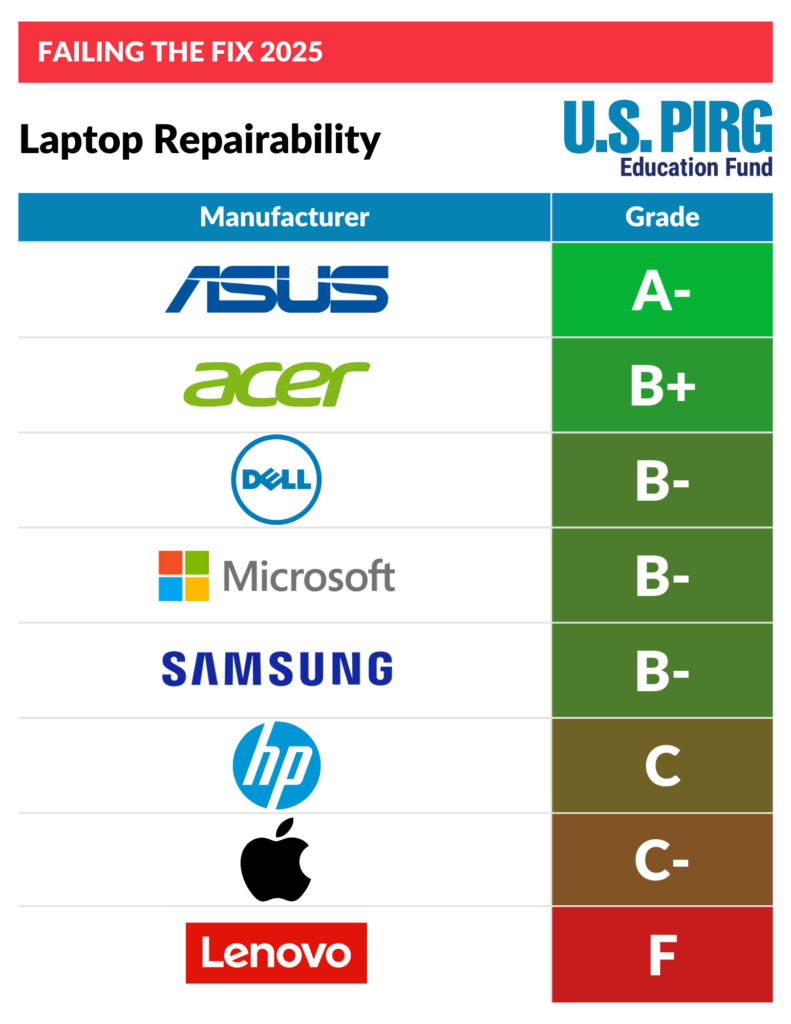
- Repairability Scores: Apple and Lenovo laptops received low repairability scores due to design complexities, as highlighted in a recent report.
- Right-to-Repair Movement: Advocacy groups push for legislation to improve repair access, supported by recent legislative efforts.
- Economic Impact: Repairability affects consumer costs and product longevity, as discussed in Vogue's analysis.
- Environmental Concerns: Better repairability could reduce e-waste significantly, according to the Geneva Environment Network.
- Future Trends: Innovations and regulations might change the landscape of device repairability.
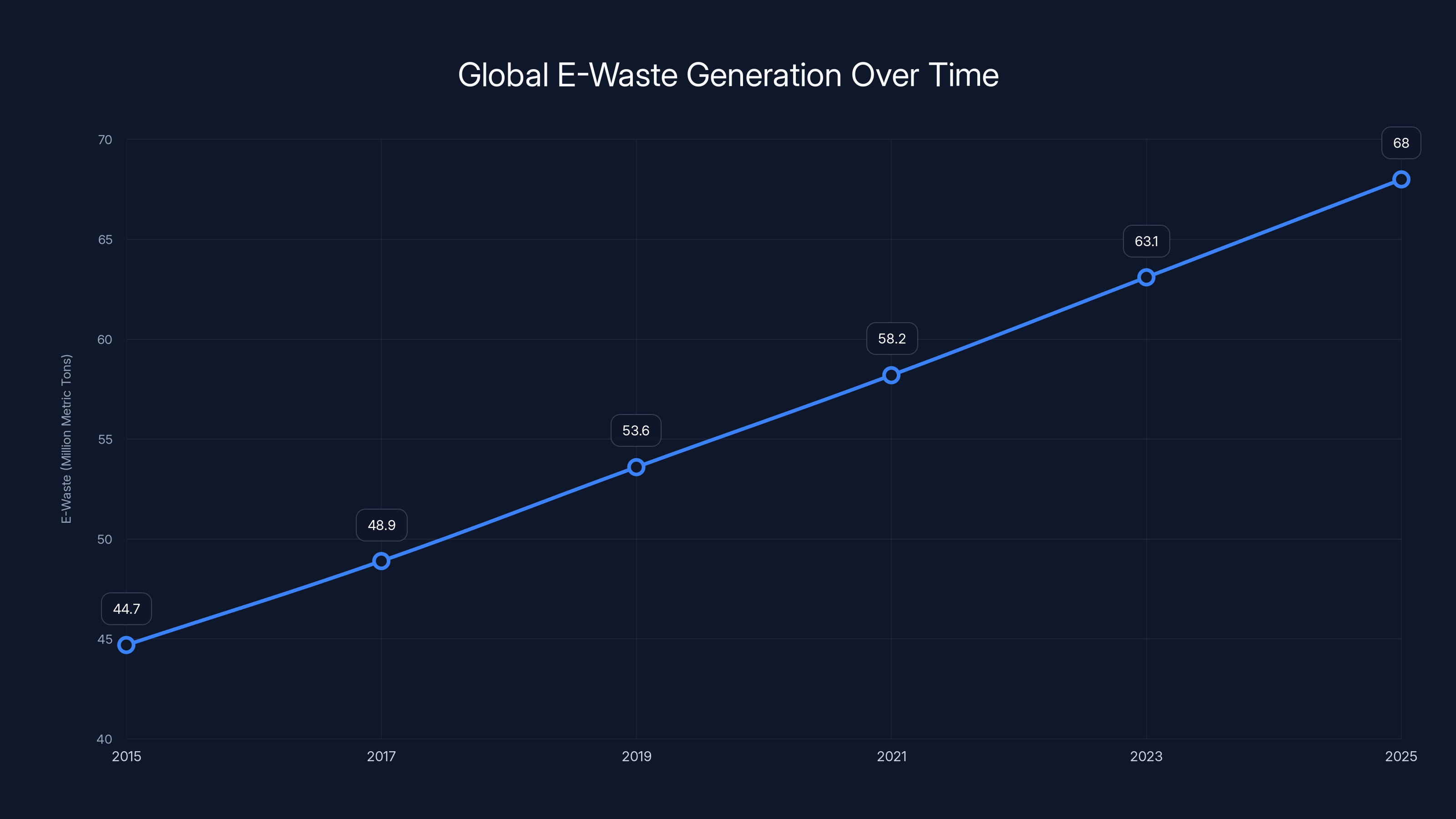
E-waste is projected to increase from 44.7 million metric tons in 2015 to 68.0 million metric tons by 2025, highlighting the growing environmental impact of non-repairable devices. Estimated data.
Understanding Laptop Repairability
Laptop repairability refers to how easy it is to disassemble a device, replace parts, and access repair manuals. These factors are critical for extending the lifespan of devices and reducing electronic waste. A laptop's repairability is often assessed by how readily available its parts are, the complexity of disassembly, and the openness of the manufacturer to provide repair documentation.
Why Repairability Matters
Repairability is not just a technical issue but also a consumer rights concern. When devices are easier to repair, they tend to have longer lifespans, which can save consumers money and reduce waste. Moreover, repairable laptops are more environmentally friendly, as they reduce the need for new device manufacturing, which in turn lowers carbon emissions.
The Case of Apple and Lenovo
Apple's Repairability Critique
Apple has long been criticized for the repairability of its products. The company's MacBooks, while renowned for their sleek design and performance, are often panned for being difficult to repair. This is due to several factors:
- Proprietary Screws: Apple uses specialized screws that require unique tools, making it hard for consumers and independent repair shops to open their devices.
- Component Integration: Many components, such as RAM and storage, are soldered onto the motherboard in Apple devices, making upgrades and repairs challenging.
- Limited Parts Availability: Apple controls the distribution of its replacement parts, restricting access for third-party repair services.
A recent development is the MacBook Neo, which marks a shift towards better repairability.
Lenovo's Repairability Challenges
Lenovo, a major player in the laptop market, has also faced criticisms similar to Apple. Although Lenovo's laptops are often praised for their business-friendly features, they have their own set of repair challenges:
- Complex Assembly: Lenovo laptops often have intricate internal designs that complicate disassembly.
- Limited Repair Manuals: While Lenovo provides some repair documentation, it is not as comprehensive or accessible as some consumers would prefer.
- Parts Accessibility: Like Apple, Lenovo limits the availability of certain replacement parts, hindering easy repairs.
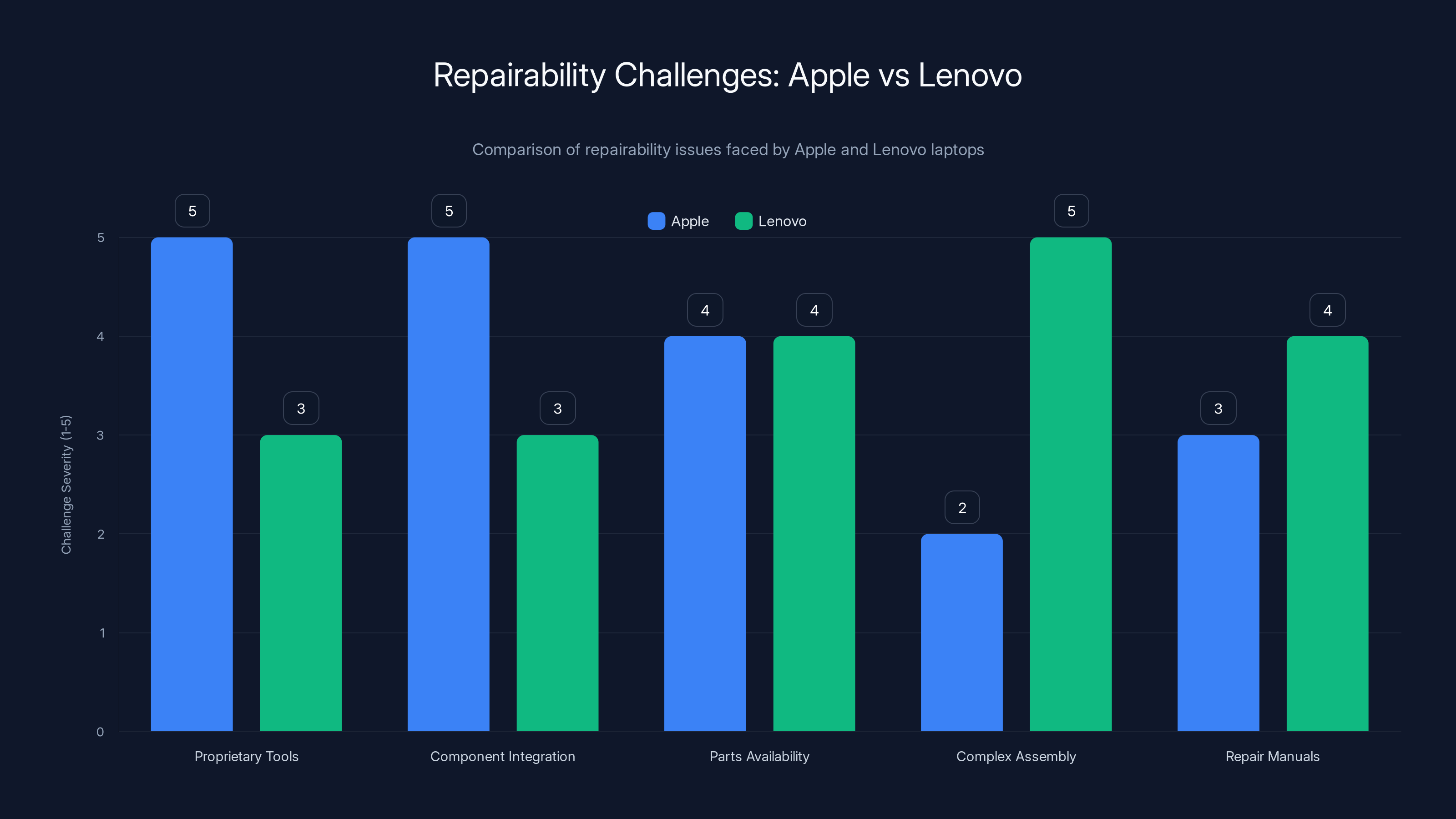
Apple faces significant challenges with proprietary tools and component integration, while Lenovo struggles more with complex assembly and less accessible repair manuals. (Estimated data)
Economic Implications of Low Repairability
The Cost to Consumers
When laptops are difficult to repair, consumers face higher costs. Instead of a simple part replacement, they might need to replace an entire device. This not only burdens the consumer financially but also contributes to a throwaway culture where devices are discarded rather than fixed.
Impact on the Repair Industry
The repair industry is also affected. Independent repair shops struggle to maintain profitability when they cannot easily obtain parts or repair documentation. This situation can stifle small businesses and reduce consumer choice.
Environmental Impact of Non-Repairable Devices
The environmental cost of non-repairable laptops is significant. E-waste is a growing problem, with millions of tons of electronic waste generated each year. Devices that are difficult to repair contribute heavily to this issue.
E-Waste Statistics
- Global E-waste: Approximately 53.6 million metric tons of e-waste were generated worldwide in 2019, and this number is expected to grow.
- Recycling Rates: Only about 17.4% of e-waste gets properly recycled, meaning a vast majority of it ends up in landfills.

The Right-to-Repair Movement
What is Right-to-Repair?
The right-to-repair movement advocates for legislation that requires manufacturers to provide consumers and independent repair businesses with access to necessary parts, tools, and information to repair their devices.
Legislative Efforts
Globally, there are increasing efforts to enact right-to-repair laws. In the European Union, regulations have been introduced that require manufacturers to make parts available for a minimum period after a product is released.
Industry Resistance
Many tech companies, including Apple and Lenovo, have resisted these changes, citing concerns over intellectual property and safety.

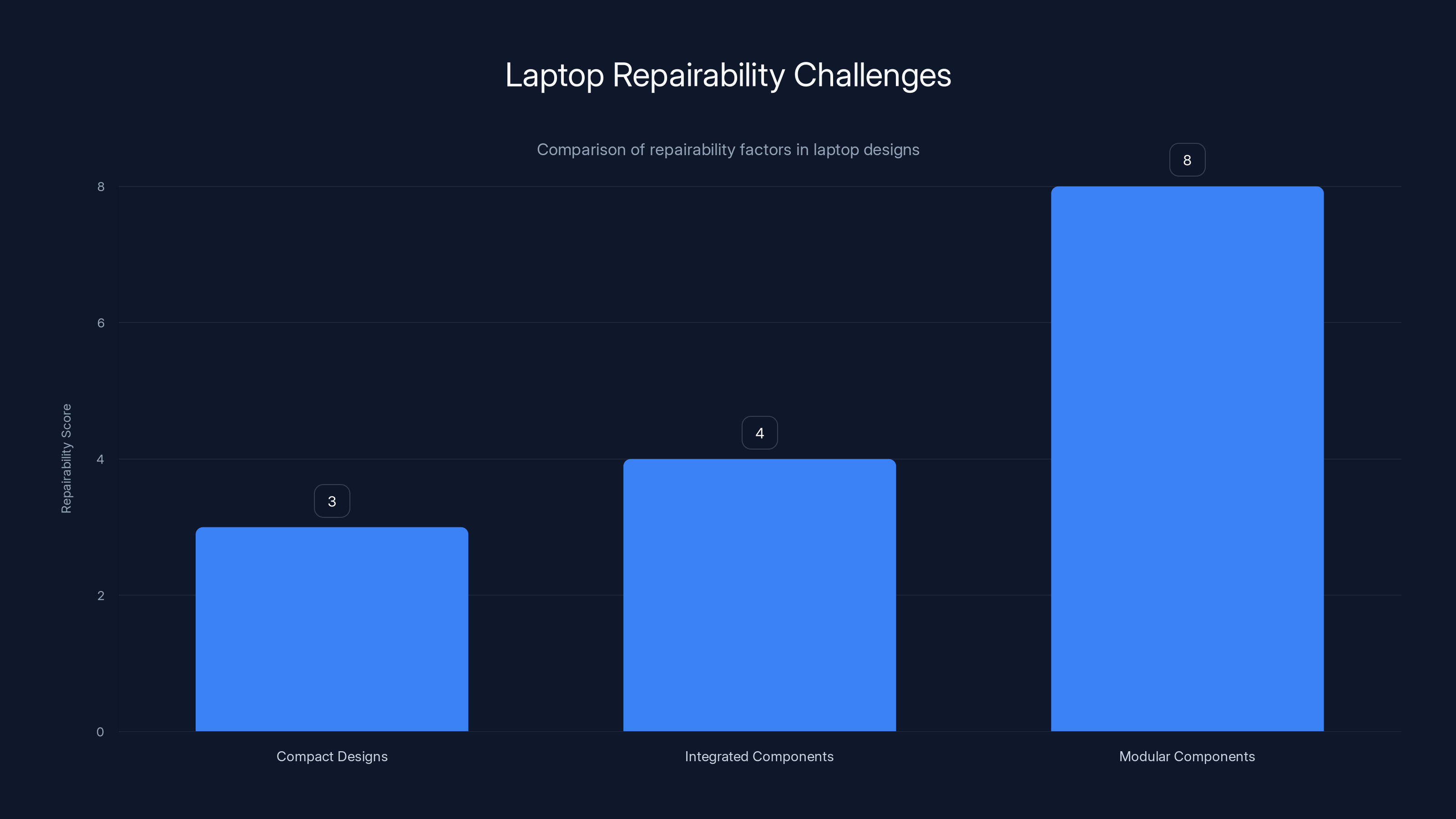
Modular components significantly improve repairability compared to compact and integrated designs. Estimated data based on typical industry trends.
Technical Challenges in Laptop Repairability
Design for Repair
One of the significant challenges in improving laptop repairability is the design itself. Manufacturers need to balance design aesthetics, performance, and repairability.
- Compact Designs: While consumers favor sleek and compact designs, these often make repairs more challenging.
- Integrated Components: As mentioned earlier, integrated components simplify manufacturing but complicate repairs.
Case Study: The MacBook Neo
Apple's recent release, the MacBook Neo, represents a shift towards better repairability. It features modular components that are easier to replace, addressing some of the criticisms faced by its predecessors.

Practical Steps for Consumers
Choosing Repairable Laptops
Consumers can play a role by choosing brands and models known for better repairability. Websites like iFixit provide repairability scores for various models, aiding in informed decision-making.
DIY Repairs
For tech-savvy consumers, DIY repairs are an option. However, they must be cautious and use the right tools to avoid voiding warranties or damaging the device further.
Professional Repairs
When DIY isn't feasible, seeking professional repair services is recommended. Choosing certified repair centers ensures quality work and preserves warranty claims.

Future Trends in Laptop Repairability
Modularity
The future of laptop repairability may lie in modular designs. These allow users to easily swap out parts like batteries, storage, and memory without needing technical expertise.
Manufacturer Policies
As consumer demand for repairable devices grows, manufacturers may adopt more transparent policies regarding parts and repair documentation.
Technological Innovations
Advancements in manufacturing technology could lead to new ways of designing products that are both high-performing and repair-friendly.
Common Pitfalls and Solutions
Pitfalls in DIY Repairs
- Warranty Voids: Opening devices can void warranties, so consumers should check terms before attempting repairs.
- Improper Tools: Using the wrong tools can damage sensitive components.
Solutions
- Use Manufacturer-Approved Parts: Ensure parts are compatible and approved to avoid issues.
- Follow Repair Guides: Utilize step-by-step guides from reputable sources to navigate repairs safely.
Conclusion
The repairability of laptops is a complex issue involving design, economics, and environmental considerations. While Apple and Lenovo currently face criticism for low repairability, the landscape is changing. Through consumer advocacy, legislative efforts, and technological innovation, the future may see a shift towards more accessible and sustainable tech products.
FAQ
What is laptop repairability?
Laptop repairability refers to how easy it is to disassemble and repair a laptop, including access to components and repair documentation.
Why are Apple and Lenovo criticized for repairability?
Both manufacturers are criticized for using proprietary parts and designs that make repairs difficult and limit access to repair information.
How does repairability affect the environment?
Better repairability can reduce e-waste by extending the lifespan of devices and decreasing the need for new manufacturing.
What is the right-to-repair movement?
The right-to-repair movement advocates for laws that require manufacturers to provide access to parts and information necessary for device repairs.
What can consumers do to improve repairability?
Consumers can support brands with higher repairability scores, use DIY repair guides, and advocate for right-to-repair legislation.
Key Takeaways
- Apple and Lenovo have low repairability scores due to design complexities.
- The right-to-repair movement seeks to make device repairs more accessible.
- Improved repairability could significantly reduce e-waste globally.
- Consumers can influence repairability trends through informed purchases.
- Future innovations may include modular designs and better policy transparency.
Related Articles
- Unfolding Delays: The Real Story Behind Apple's Foldable iPhone [2025]
- Apple's Foldable iPhone: Engineering Challenges and Future Outlook [2025]
- Apple's Foldable iPhone: A New Era in Smartphone Technology [2025]
- Mastering Wireless Charging: Satechi's 3-in-1 Travel Stand and the Future of Mobile Power [2025]
- Exploring the Latest MacBook Air: A Comprehensive Guide to Its Features and Value [2025]
- Revolutionizing Home Heating: From AirPods to Heat Pumps [2025]


