
![Samsung Galaxy A17 5G & Galaxy Tab A11+: Budget Mobile Powerhouses [2025]](https://tryrunable.com/blog/samsung-galaxy-a17-5g-galaxy-tab-a11-budget-mobile-powerhous/image-1-1767121666729.jpg)
Samsung Galaxy A17 5G and Galaxy Tab A11+: Complete Guide to Samsung's January 2025 Budget Lineup
Samsung just announced two new budget devices hitting the U.S. market in January 2025, and they're worth paying attention to. The Galaxy A17 5G starts at just
But here's the thing: budget doesn't mean compromise. Samsung has spent years perfecting its entry-level lineup, and these new releases represent the current state of what you actually get when you refuse to spend premium dollars. The A17 5G isn't trying to be a Galaxy S25. It's trying to be reliable, capable, and affordable. The Tab A11+ follows the same philosophy for tablets.
I've spent the last week analyzing the specs, comparing these devices to competitors, and figuring out exactly who should buy them. This guide covers everything you need to know before they arrive in January.
TL; DR
- Galaxy A17 5G launches January 7 at $199 with a 6.7-inch AMOLED display and solid 50MP camera system
- Galaxy Tab A11+ arrives January 8 at $250 with an 11-inch LCD screen and up to 8GB RAM
- Both devices support expandable storage via micro SD up to 2TB, a feature many premium phones ditched
- Fast-charging standard on both, showing Samsung's commitment to baseline conveniences
- Best for: Users who need basic to intermediate performance without flagship prices
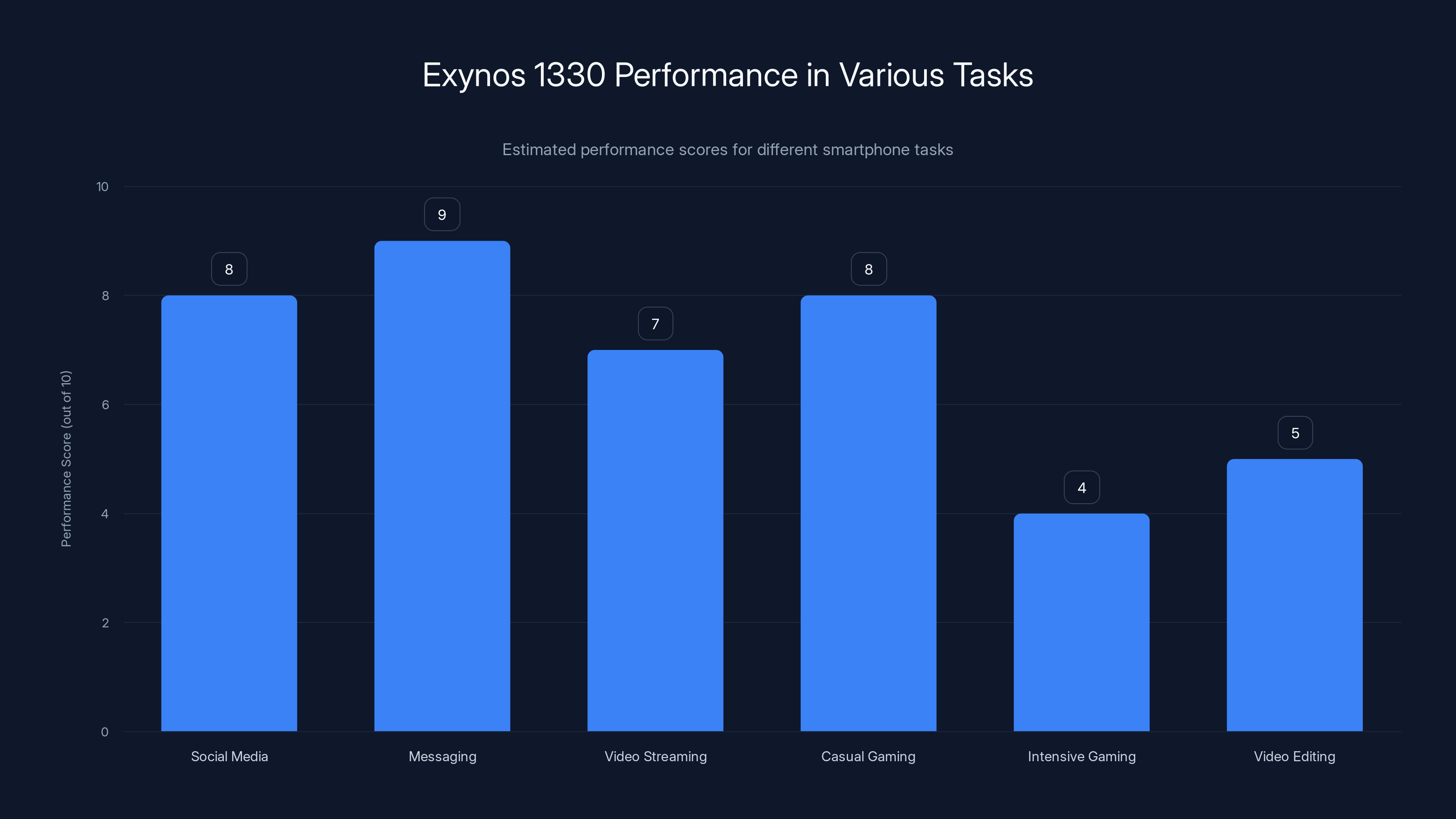
The Exynos 1330 performs well for everyday tasks like messaging and social media but struggles with intensive gaming and video editing. Estimated data.
Understanding Samsung's Budget Strategy in 2025
Samsung's approach to budget devices differs fundamentally from competitors like Motorola and Google. While others chase specs or aggressive pricing, Samsung focuses on predictable performance and reliability. The Galaxy A series has become the training wheels of Android: safe, dependable, and practical.
The company knows its market. People buying $199 phones aren't looking for camera tricks or gaming performance. They want devices that last two years without slowing down, take decent photos in daylight, and don't drain battery by lunchtime. Samsung delivers exactly that with minimal fuss.
What's interesting is how Samsung uses these budget devices as ecosystem entry points. You buy an A17 5G today, get comfortable with Samsung's interface, and when you upgrade, you're already considering the S series. It's strategic, but it also means budget buyers get real attention to user experience rather than intentional corners cut.
The January timing also matters. Most manufacturers release budget devices in Q3 to compete during back-to-school season. Samsung waiting until January suggests confidence in these devices' competitive position. They're not rushing them out to fill gaps. These are considered releases with real product thought behind them.
Budget phones have transformed dramatically over five years. A $199 phone in 2020 felt disposable. In 2025, that same price point delivers genuinely usable technology. Processing power increased, display quality improved, and battery life became respectable. What you're buying today is legitimately functional, not just a stepping stone.
Galaxy A17 5G: Display, Design, and First Impressions
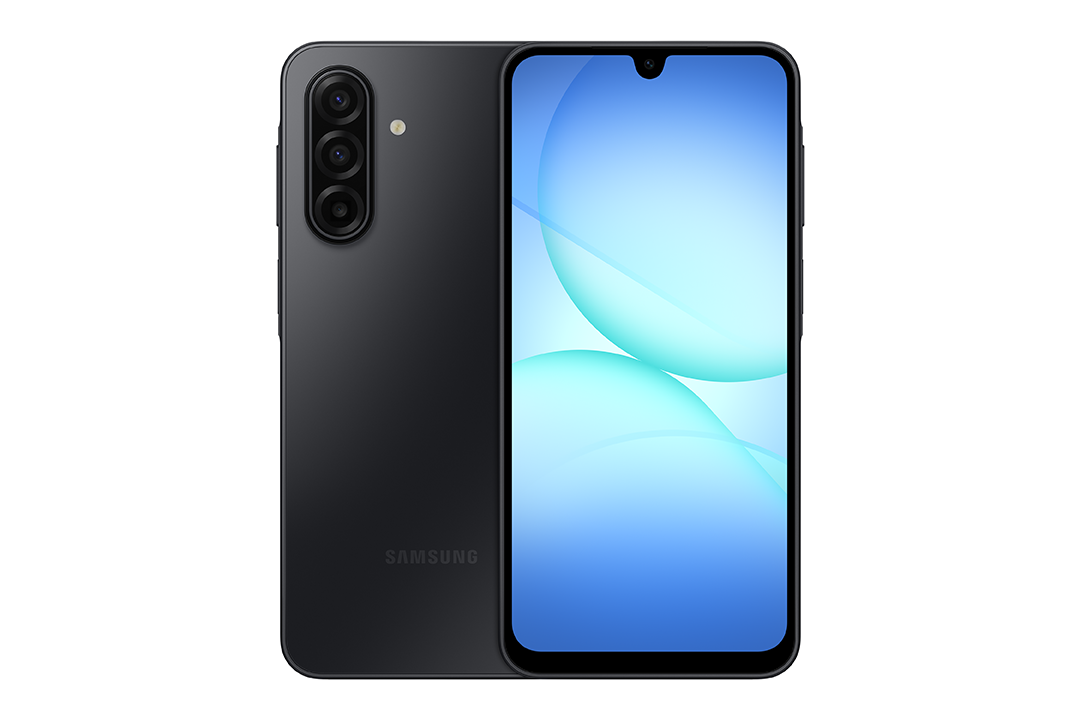
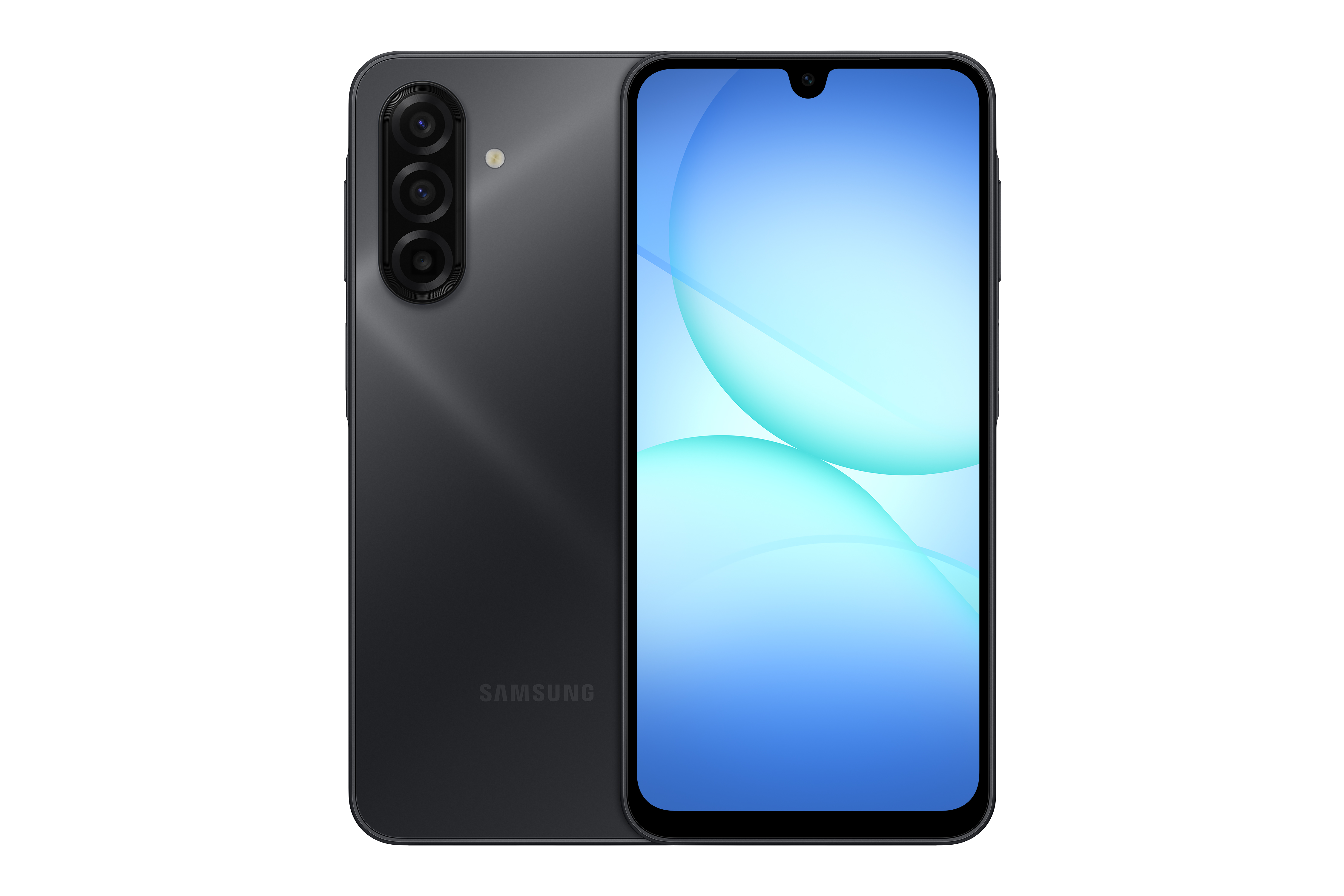
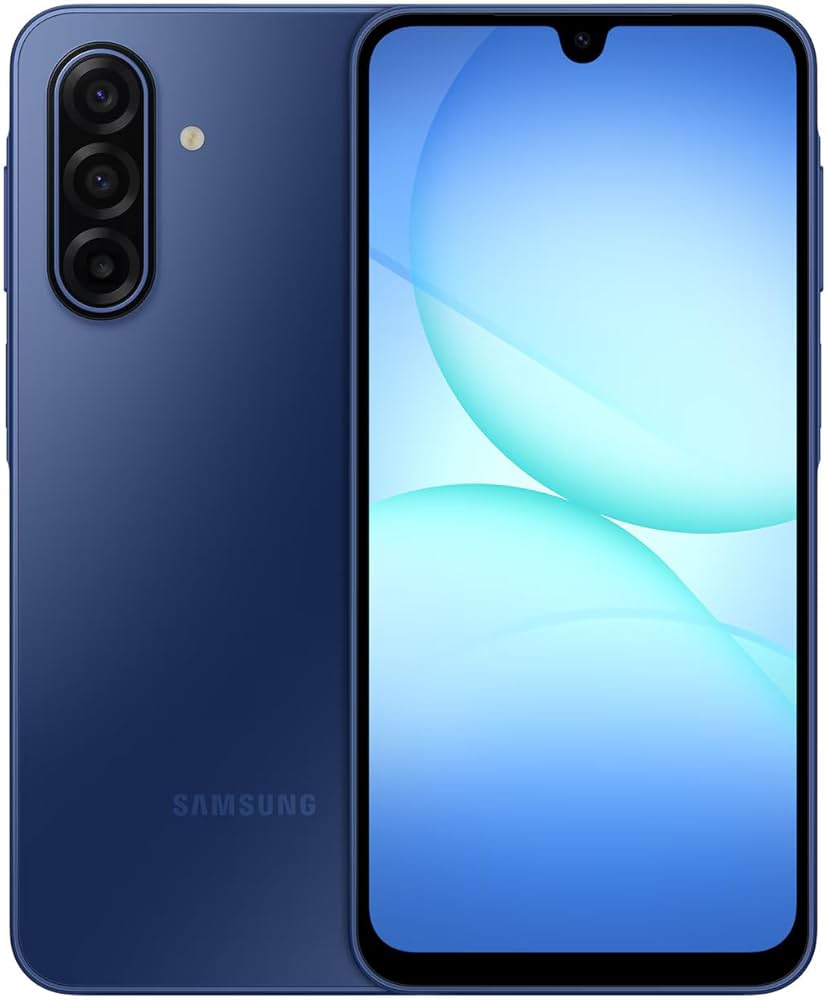
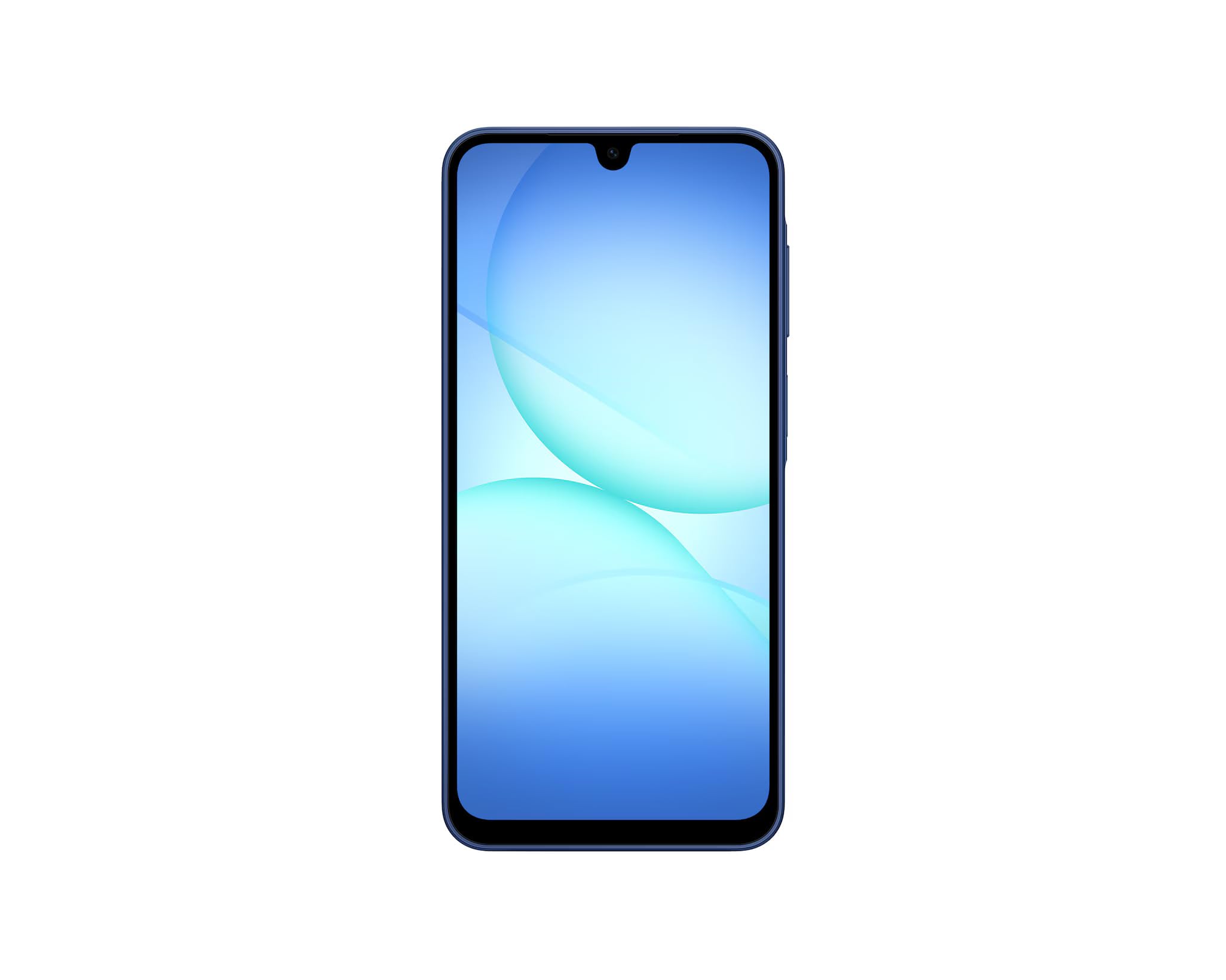
The Galaxy A17 5G features a 6.7-inch FHD+ Super AMOLED display, which immediately separates it from competitors at this price point. Most budget phones still use basic LCD panels. Samsung went with AMOLED, the same display technology found in flagship phones. That matters for actual usability.
AMOLED displays deliver perfect blacks because pixels generate their own light. When a pixel is black, it's completely off, consuming no power. LCD displays always light the entire backlight, even for black areas, which is why they consume more battery. For a $199 phone to include AMOLED feels almost defiant toward budget phone norms.
The FHD+ resolution (2340 x 1080 pixels) is standard for modern smartphones. You'll see sharp text, crisp photos in the gallery, and smooth scrolling. It's not the highest resolution ever made, but the screen's pixel density is high enough that individual pixels become invisible to normal viewing. Nobody buys a $199 phone expecting 4K displays anyway.
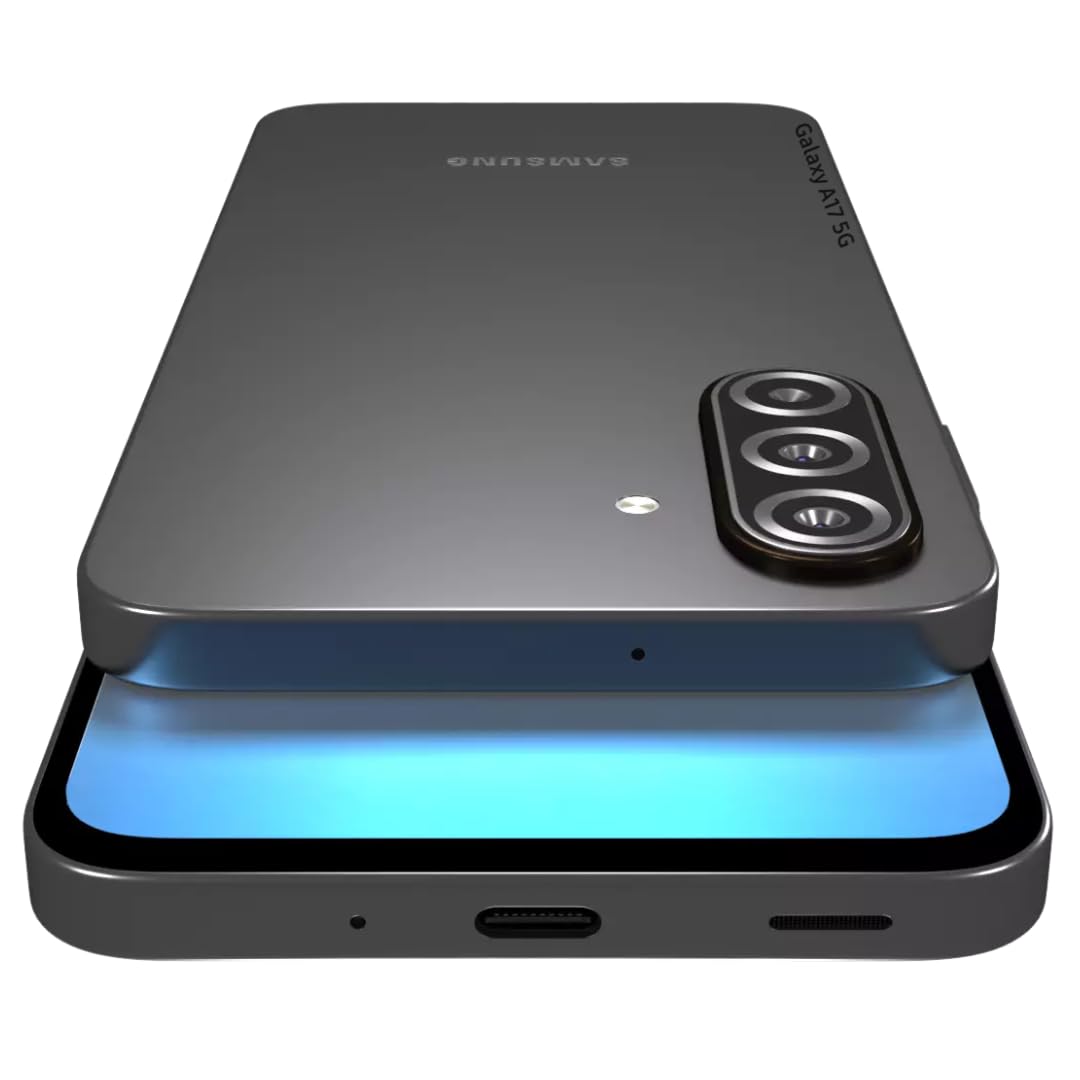
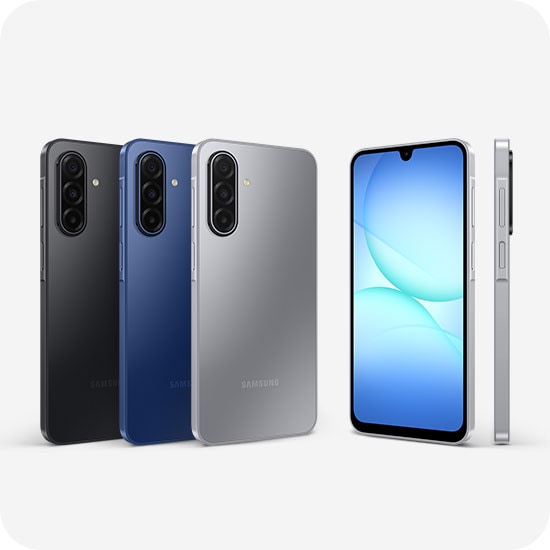
Design-wise, Samsung kept the A17 5G visually similar to previous A-series phones. That means a gradient back finish (available in multiple color options), a rectangular camera module, and a flat frame. It's not exciting, but it's also not ugly. Function over flash, which is the entire point of budget phones.
The body measures 6.4 x 3.0 x 8.2 mm and weighs around 185 grams. That's light enough to pocket comfortably for full days without noticeable weight. The flat frame actually provides better grip than curved phones, though it's less premium-feeling when you're browsing specs.
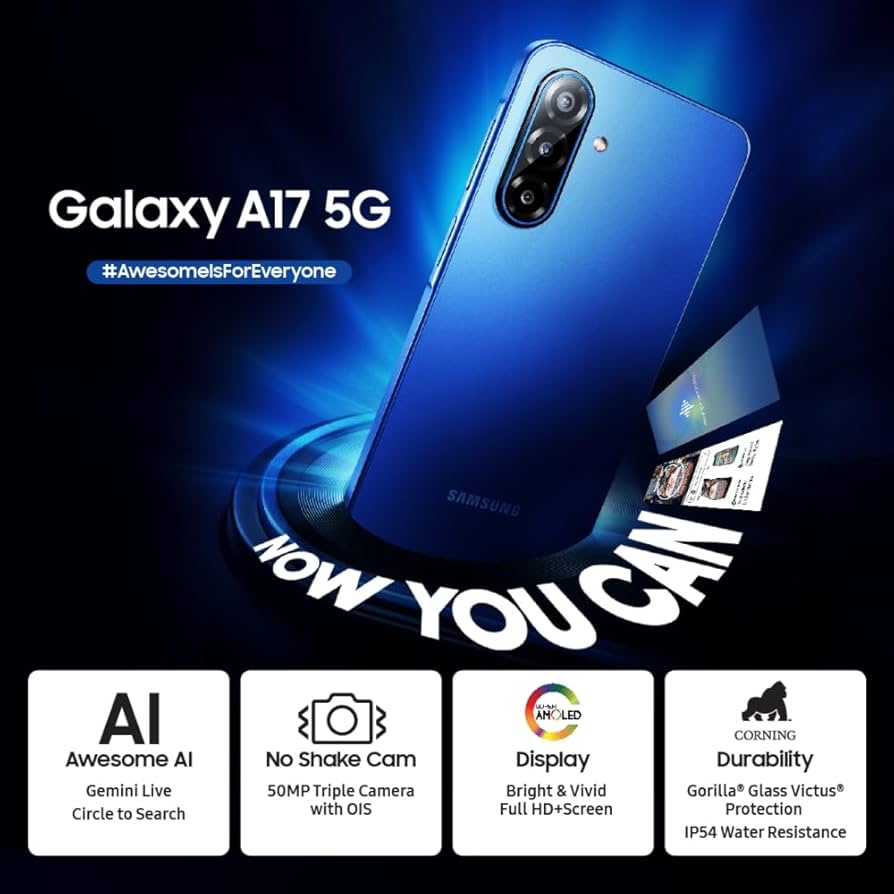
Water resistance reaches IP54 certification, meaning the device resists dust and water spray but isn't submersible. You can use it in light rain or near water sources without panic, but don't intentionally submerge it. It's a practical protection level that costs less than full waterproofing.
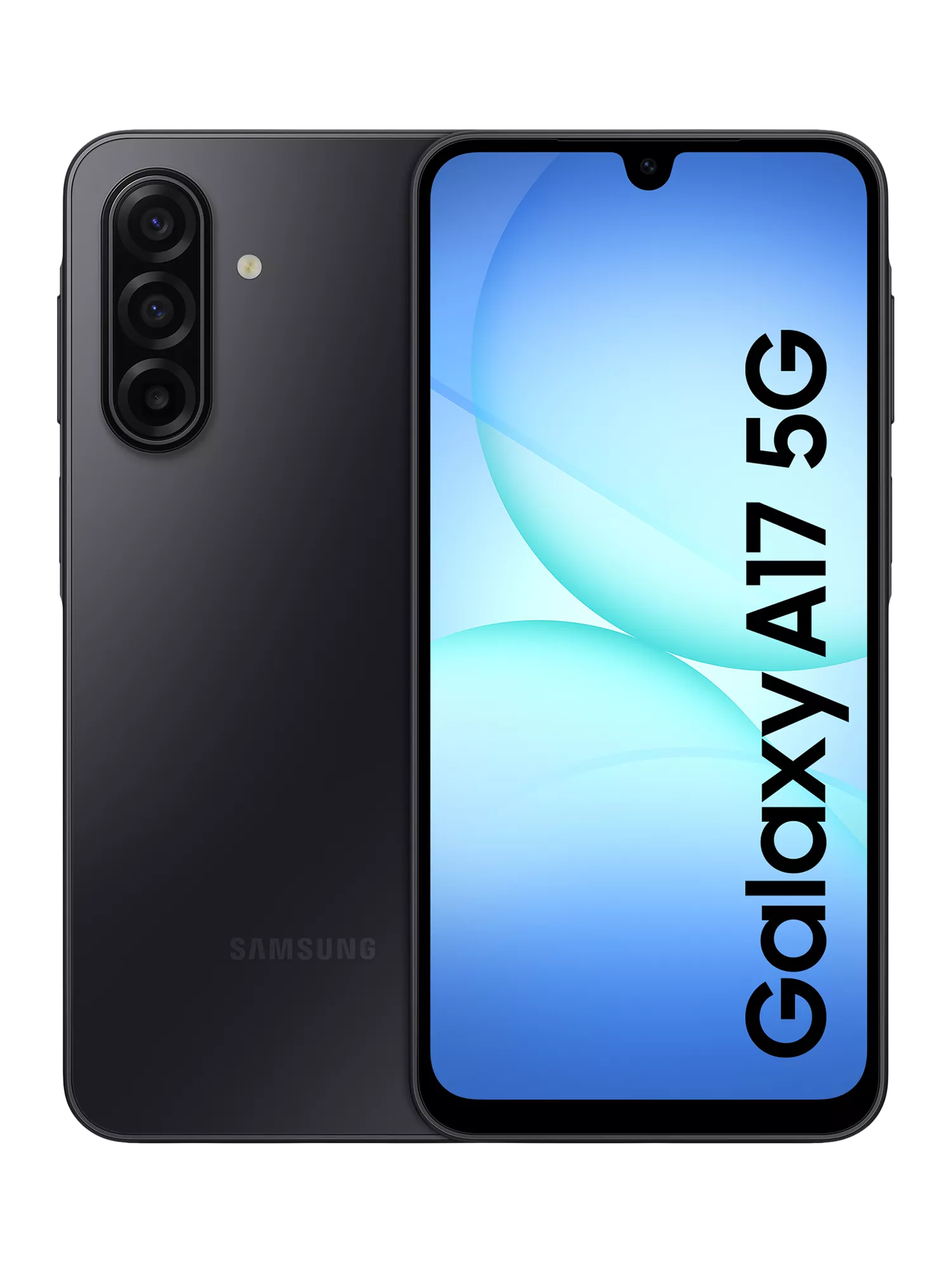
Color options include black, mint, and blue. The gradient finishes look better in person than in photos, with depth and subtle color shifts depending on viewing angles. They also resist fingerprints reasonably well, though not perfectly. For a phone you'll replace in two or three years, these finishes are perfectly adequate.
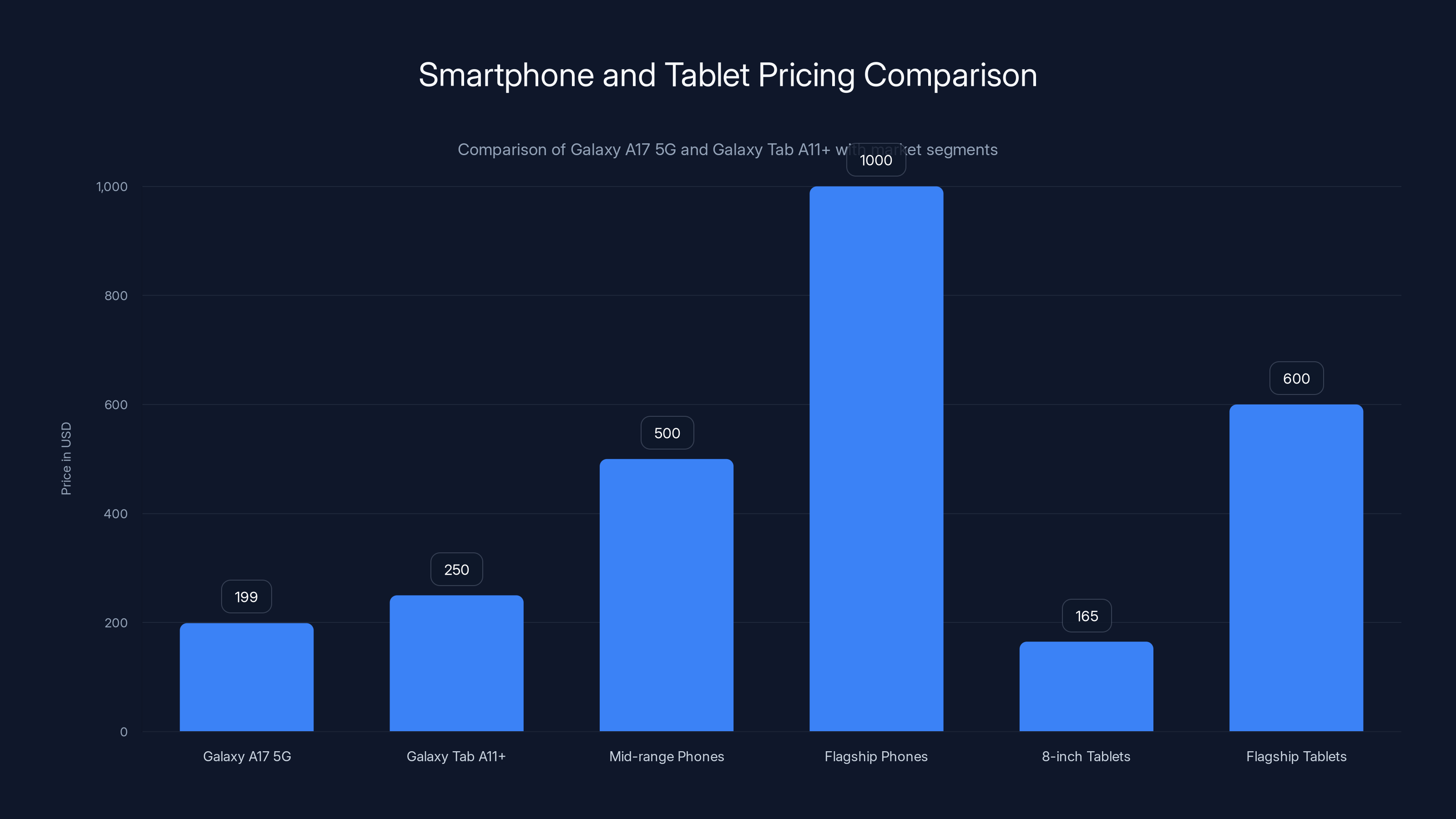
The Galaxy A17 5G and Galaxy Tab A11+ offer competitive pricing in their respective entry-level and budget segments, providing value against higher-priced mid-range and flagship options.
Processing Power and Performance: The Exynos 1330 Chip
The Galaxy A17 5G uses the Exynos 1330 processor, the same chip found in the Galaxy A16 5G from the previous generation. This is where "more of the same" becomes relevant for understanding Samsung's strategy.
Chip upgrades cost time and money. If a processor from last year still meets the needs of budget device users, recycling it allows Samsung to invest resources elsewhere or maintain profit margins. The Exynos 1330 was adequate in 2024 and remains adequate in 2025 for the A17 5G's intended use cases.
The Exynos 1330 features eight cores split into two groups: four performance cores and four efficiency cores. This heterogeneous architecture means the processor can choose between power-hungry cores for demanding tasks and efficient cores for light work like messaging or email. Battery life depends partially on this intelligent core switching.
Benchmark performance puts the Exynos 1330 around the lower-middle range of smartphone processors. It's not a flagship chip by any definition. But flagship performance matters less than you'd think for average users. Most smartphone tasks—social media, messaging, video streaming, photography—don't demand extreme processing power.
Where the Exynos 1330 falters is demanding gaming and video editing. If you plan to play graphically intense games like Genshin Impact or Honkai Star Rail at maximum settings, you'll hit performance walls. Frame rates will drop, textures might scale down, and the experience becomes frustrating. For casual games like Candy Crush or Puzzle Quest, it handles perfectly fine.
Video recording tops out at 4K at 30fps, which is becoming standard even for budget phones. The stabilization is electronic rather than optical, meaning software smooths video but slightly crops the frame. Results look acceptable for casual content creation but not professional-grade.
The real-world performance feels snappy for everyday use. Apps launch quickly, multitasking doesn't cause stuttering, and switching between tasks remains smooth. You're not getting the responsiveness of a flagship phone with cutting-edge processor, but you're getting a device that won't frustrate you through normal usage.
Memory configuration offers 4GB of RAM with 128GB of storage as the base model. This is actually tight for modern Android, which tends to consume 2-3GB of RAM just for the operating system. You'll have roughly 1-2GB free for apps, which leads to occasional background app closures on older apps.
Ideally, you'd step up if the pricing allows, but not everyone can. The base model works for light users. Heavier users with dozens of installed apps might experience slowdowns after six months of usage.
Camera System: The 50MP Main Sensor Explained
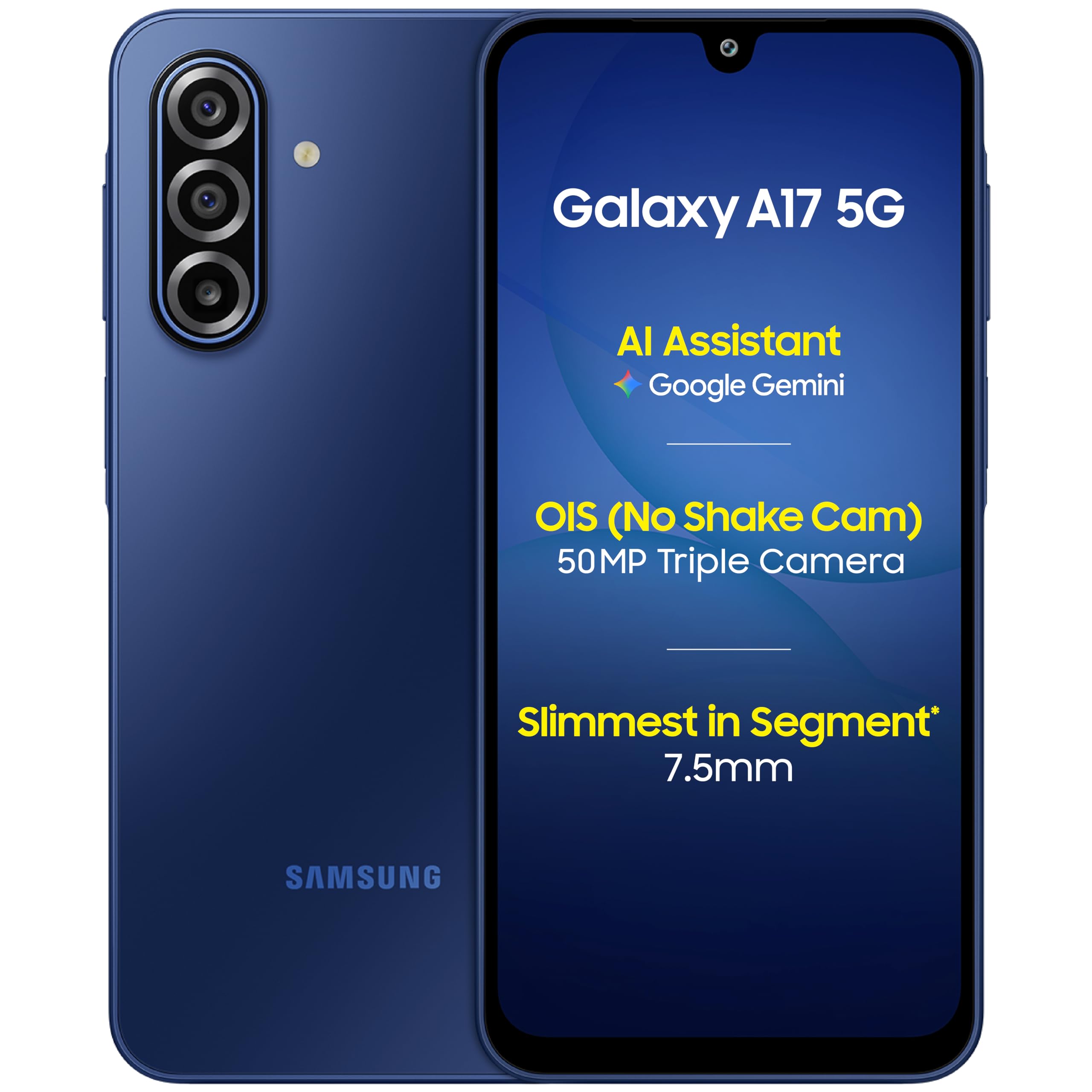
The Galaxy A17 5G features a 50-megapixel main camera, a 5MP ultrawide lens, and a 2MP macro lens for closeup shots. Plus a 13MP front-facing camera for selfies. On paper, this matches many higher-priced phones. In practice, megapixels tell an incomplete story.
Sensor size matters more than megapixel count. A 50MP sensor in a budget phone uses smaller individual pixels than a 12MP sensor in a flagship. Smaller pixels capture less light, leading to noisier photos in low-light conditions. Samsung's 50MP sensor performs respectably for daylight photography because sunlight provides abundant light energy.
The main camera excels for daytime outdoor photography. Colors come through accurately, detail is preserved, and the dynamic range is respectable. Photos of landscapes, people in bright sun, and architectural details look sharp and vibrant. This is the realistic use case for budget phone cameras.
Low-light photography is where budget phones traditionally struggle. The A17 5G includes a Night Mode, which combines multiple exposures to brighten dark scenes. Results are acceptable for social media sharing but noticeably grainier than flagship phones. The processing sometimes overdoes edge enhancement, creating artificial-looking halos around objects.
The 5MP ultrawide camera provides roughly 120-degree field of view, letting you capture wide landscapes or group photos from closer distances. Ultrawide lenses intentionally introduce optical distortion for that expanded view. The A17 5G's ultrawide produces serviceable shots for casual photography but noticeably loses sharpness compared to the main camera.
The 2MP macro lens deserves a laugh. Two megapixels was considered adequate for quality photos around 2010. By 2025 standards, it's absurdly low resolution. Macro shots look pixelated and soft. Most people use this lens twice to test it, then ignore it. If macro photography matters to you, skip budget phones entirely.
Portrait mode uses software algorithms to estimate depth and blur the background. Results look okay at arm's length but fail spectacularly when trying to photograph objects at varying distances. The edge detection around hair becomes visibly jagged. Again, acceptable for social media, not for serious photography.
The 13MP front camera takes reasonable selfies in good lighting. Ring lights or reflectors improve results dramatically. In low-light situations, the quality degrades noticeably. Video selfies perform adequately for video calls but aren't suitable for content creation without additional lighting setup.
Video recording reaches 4K resolution at 30fps, which creates large files but offers solid quality for casual recording. Stabilization is electronic, using software to smooth motion rather than mechanical image stabilization. Results look acceptable for social media sharing but slightly less steady than optical stabilization.
For a $199 phone, the camera system delivers impressive value. You're getting a genuinely usable camera that captures acceptable photos in typical conditions. The shortcomings only become obvious when comparing directly to flagship phones or when pushing the device into demanding scenarios like extreme low-light or macro work.
Battery Technology and Charging Speed
The Galaxy A17 5G packs a 5,000mAh battery, which is large by smartphone standards. Larger batteries sound impressive until you realize that larger processors and brighter displays consume more power. Capacity alone means nothing without considering power consumption.
Samsung estimates the battery provides all-day endurance, which translates roughly to 12-14 hours of mixed usage. This means moderate browsing, some gaming, video streaming, and messaging throughout the day should result in reaching bedtime with 5-10% battery remaining.
Actual battery life varies dramatically based on usage patterns. Heavy social media users and gamers might exhaust the battery by evening. Light email and messaging users could stretch it to two days. The average falls somewhere in the middle: comfortably lasting one full day with conservative usage.
What impresses more than capacity is fast-charging support. The Galaxy A17 5G supports 25W fast charging, which replenishes the battery to 50% in roughly 30 minutes. Full charging takes about 60-75 minutes depending on charger wattage and battery condition. By 2025, this is a baseline expectation, but Samsung's inclusion demonstrates commitment to practical usability.
Wireless charging remains absent, a common omission in budget phones. Wireless charging adds cost and complexity without clear benefit for users who charge overnight. Fast-charging with a cable accomplishes the same goal more efficiently.
Battery degradation is inevitable with all lithium-ion batteries. After 500 full charge cycles, expect the battery to retain roughly 80% of original capacity. By 18 months of daily use, you'll notice the phone reaching low battery earlier than initially. By two years, the degradation becomes noticeable enough that users consider replacement.
Samsung allows software optimization for battery health, including adaptive battery that learns your usage patterns and restricts background apps accordingly. This extends practical battery life beyond raw capacity numbers.
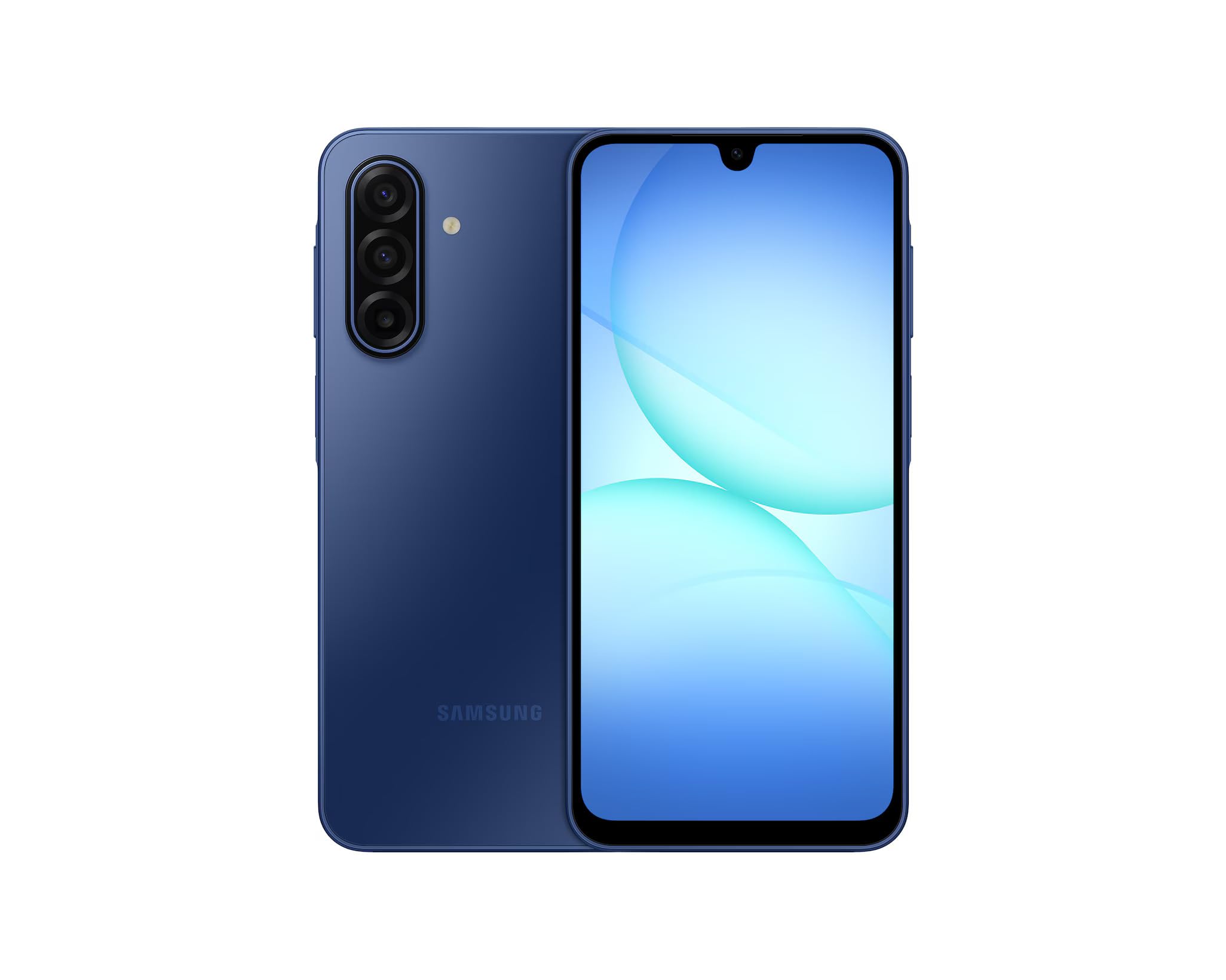
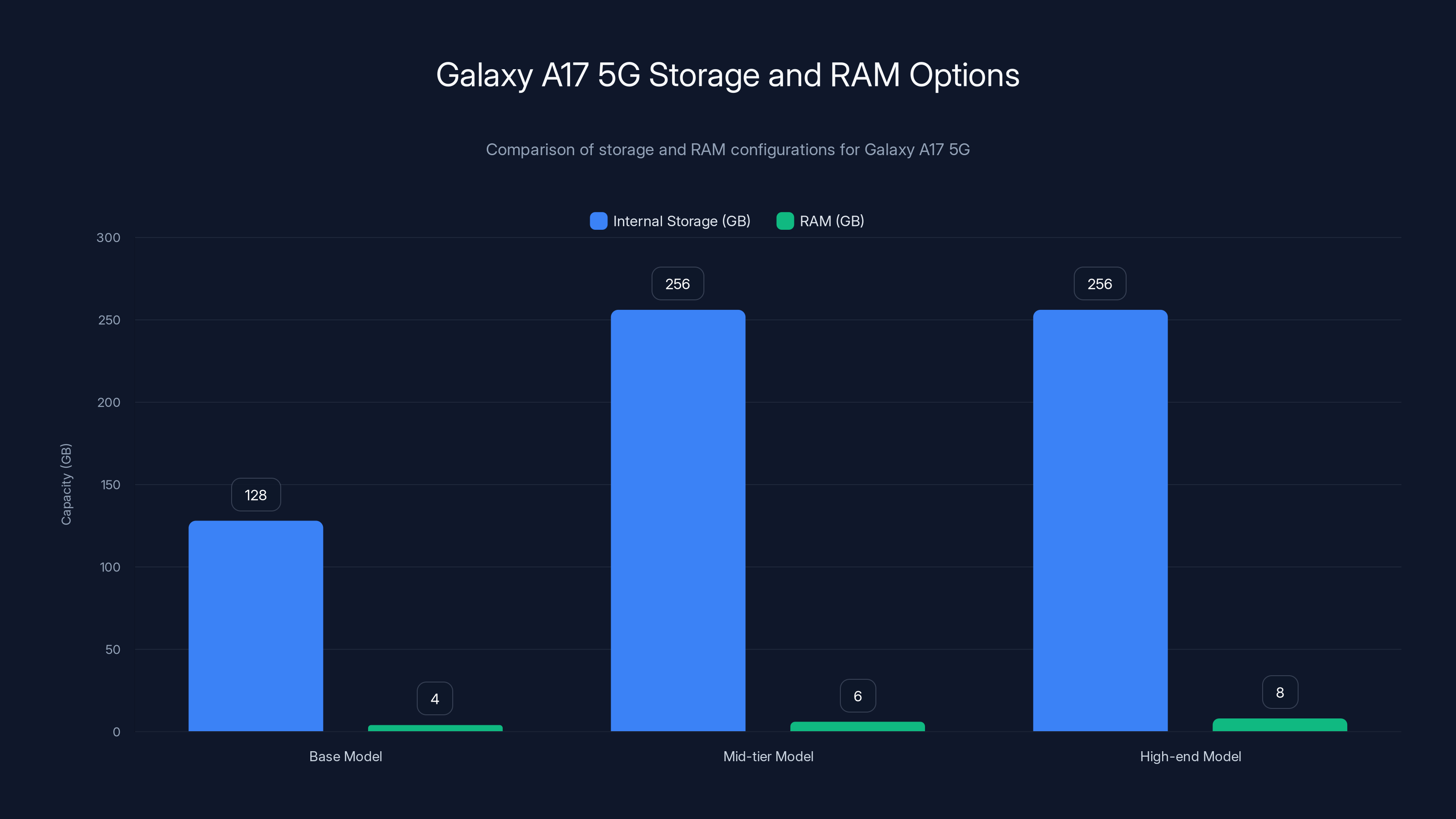
The Galaxy A17 5G offers a base model with 128GB storage and 4GB RAM, with options to upgrade to 256GB storage and up to 8GB RAM. Estimated data for higher configurations.
Storage Options and Expandability
The base Galaxy A17 5G comes with 128GB of internal storage. After the operating system, pre-installed apps, and system files, roughly 80-90GB remains available for personal content. For average users storing photos, videos, and apps, this proves adequate.
Unfortunately, the base model offers only 4GB of RAM, which is restrictive by modern standards. Four gigabytes means the operating system consumes most of it, leaving limited space for apps. Users with 50+ installed apps experience occasional stuttering as Android kills background processes to free memory.
The upgrade path includes higher RAM configurations, though the initial announcement doesn't specify all available SKUs. Typically, Samsung offers a 6GB or 8GB variant with 256GB storage at higher price points. The exact pricing and availability in your region requires checking carrier websites.
Micro SD expansion supports cards up to 2TB, which is genuinely shocking for a $199 phone. Most phones capping out at 512GB or 1TB storage seems reasonable. Samsung allowing 2TB expansion suggests confidence in the micro SD slot's stability and speed.
Practical considerations matter here. A 2TB micro SD card costs roughly
Micro SD cards introduce complexity that pure internal storage avoids. Some apps behave erratically when installed on SD cards. Media files sometimes fail to recognize until you manually rescan. Performance accessing SD card files is notably slower than internal storage. For casual users, 128GB internal storage works fine without expansion. For power users, the option exists without charging premium prices.
Internal storage uses modern UFS 2.1 technology, which provides solid sequential read and write speeds. Sequential operations like copying large files move quickly. Random access patterns, common during app launching and file browsing, perform acceptably though not as fast as premium UFS 4.0 found in flagship phones.
Software Experience and Android Updates
The Galaxy A17 5G ships with Android 14 and Samsung's One UI 6.0 customization layer. One UI adds functionality and visual polish to stock Android while remaining lightweight enough for budget hardware.
Samsung's update commitment for the A-series typically includes three major Android version upgrades and four years of security updates. That means the A17 5G should receive Android 15, 16, and 17 updates, covering roughly 2025 through 2028. Security patches arrive monthly, protecting against newly discovered vulnerabilities.
One UI includes features borrowed from flagship phones, though sometimes with simplified implementation. Bixby assistant works but feels less intelligent than on premium devices. Samsung's productivity apps like Notes and Reminders provide basic functionality without premium features.
Customization options include custom launchers, icon packs, and theme support. Users can replace the default launcher with alternatives like Nova Launcher for deeper customization. Samsung doesn't restrict this flexibility like some manufacturers do.
The bloatware situation is moderate. Samsung installs approximately 20-30 pre-loaded apps, some genuinely useful (Samsung Health, Samsung Notes) and others redundant (multiple app stores, Samsung Internet when Chrome could serve the same purpose). Most can be uninstalled or disabled to recover storage space.
Performance optimization matters in Android 14. Samsung implemented improved memory management and more aggressive background app limitation compared to previous versions. The operating system prioritizes running apps and kills background apps more aggressively, preserving RAM for active usage.
One UI includes DeX mode, which allows connecting the phone to a monitor or laptop to use a desktop-like interface. This feature rarely gets used on budget phones because the hardware limitations become obvious without powerful processing. Most users won't benefit from DeX on the A17 5G.
Galaxy Tab A11+: Large Screen Tablet Experience
The Galaxy Tab A11+ arrives January 8 with an 11-inch LCD display priced at $250. Tablets represent a different computing paradigm than phones, and the A11+ targets specifically price-conscious tablet buyers who want size without premium pricing.
The 11-inch form factor balances portability and screen real estate reasonably well. It's large enough to appreciate watching videos or reading long-form content. It's small enough that holding it for extended periods doesn't cause arm fatigue like larger tablets do. The aspect ratio of 5:3 (roughly) sits between phone-like and full-screen, creating an interesting middle ground.
The LCD display delivers adequate brightness and color accuracy for casual consumption. LCD technology requires backlighting for all pixels, consuming more power than AMOLED, but costing significantly less to manufacture. The A11+ prioritizes affordability, making LCD the reasonable choice.
Resolution reaches 2000 x 1200 pixels, providing sharp text and detailed images for the 11-inch screen. Pixel density of approximately 200 PPI falls within the comfortable range for reading without obvious pixelation. It's not the sharpest screen ever made, but adequate for content consumption.
The tablet measures 254 x 165 x 8.3mm and weighs 490 grams (roughly 1.08 pounds). The weight feels substantial but manageable for one-handed holding for periods up to 20 minutes. Extended holding benefits from a tablet stand or lap desk.
Design follows Samsung's tablet aesthetic with rounded corners, flat edges, and a rectangular camera bump. Color options include gray, silver, and other muted tones. The finish resists fingerprints adequately, though not perfectly like glass-backed phones.
Water resistance reaches IP52 certification, protecting against dust and light water spray but not full submersion. You can safely use it near water or in light rain, but definitely shouldn't take it poolside or shower with it.
Speaker configuration includes dual speakers positioned on the long sides, delivering stereo audio for multimedia consumption. Audio quality is respectable for casual consumption, noticeably louder and clearer than phone speakers. Nobody mistakes it for a high-end audio system, but movies and music sound pleasant.

Estimated data shows significant improvements in processing power, display quality, and battery life for $199 budget phones from 2020 to 2025, reflecting the enhanced usability of budget devices.
Galaxy Tab A11+ Performance and Computing Power
The Galaxy Tab A11+ uses a MediaTek Helio G99 processor, different from the Exynos chip in the smartphone. MediaTek processors serve budget and mid-range devices, offering reasonable performance at minimal cost.
The Helio G99 features eight cores including two high-performance cores and six efficiency cores. This architecture prioritizes power efficiency over sheer speed, extending battery life at the cost of maximum performance. For tablet usage patterns, this trade-off makes sense since tablets typically run less demanding tasks than phones.
Performance sufficient for streaming video, document editing, web browsing, and casual gaming. Demanding 3D games struggle, and video editing becomes frustrating. But the intended use cases—consuming media and light productivity—run smoothly.
RAM configurations offer 6GB or 8GB depending on storage tier. Eight gigabytes is genuinely useful for tablets since larger screens accommodate more multitasking. The system handles running multiple apps simultaneously without background app termination.
Storage reaches 128GB or 256GB, both expandable via micro SD up to 2TB like the phone. Tablet users often appreciate storage expansion for media libraries since tablets serve as mobile entertainment devices more than phones do.
GPU performance relies on the Helio G99's integrated graphics. This GPU handles basic 3D tasks adequately but falters with demanding games. Video playback and content streaming benefit from hardware acceleration, smoothing performance.
Tablet Camera System and Multimedia
The Galaxy Tab A11+ includes an 8MP rear camera and 5MP front camera, modest by modern standards but adequate for tablet use cases. Most tablet owners rarely use rear cameras for primary photography, preferring their smartphones. Rear cameras on tablets serve situational purposes like document scanning or occasional video calls requiring a wide view.
The 8MP rear camera captures serviceable images when you need them. Photos look acceptably sharp under decent lighting. Low-light performance suffers, but tablets rarely serve as primary camera devices anyway. Video recording reaches 1080p at 60fps, sufficient for casual clips.
The 5MP front camera handles video calls and selfies adequately. The wider field of view of a tablet camera captures more of your surroundings during video calls, useful for group video conferences. Quality is respectable without being exceptional.
Audio is where tablets genuinely excel compared to phones. Dual stereo speakers positioned on the sides create a soundstage for entertainment. Movie and music enjoyment on the A11+ surpasses phone speakers noticeably. Gaming audio benefits similarly.
Video playback reaches 4K at 30fps, though the 1080p display can't display native 4K resolution. The processor downscales 4K video to match the display while retaining higher quality encoding benefits. Streaming services like Netflix and YouTube handle 4K content playback smoothly.
The tablet predates many newer audio codecs, supporting standard formats like MP3, AAC, and FLAC. Lossless audio playback is possible for audiophiles with FLAC files, though the speaker audio quality limits practical benefits of lossless format.

Battery Performance and Endurance
The Galaxy Tab A11+ houses a 7,040mAh battery, significantly larger than phone batteries due to the larger form factor. The manufacturer claims 15 hours of video playback, which translates to roughly one full day of heavy mixed usage or 2-3 days of light usage.
Actual battery life depends heavily on screen brightness, processor usage, and connectivity. Video streaming typically drains faster than reading or web browsing. Gaming and video editing deplete the battery substantially faster than multimedia consumption.
The tablet supports 25W fast charging identical to the smartphone. Battery charging from empty to full takes approximately 90-120 minutes, similar to the phone's charging time despite larger capacity. Faster charging and larger capacity somewhat balance each other.
Wireless charging remains absent, consistent with the smartphone. Budget tablets and phones consistently omit wireless charging to reduce manufacturing costs. Fast-charging with a cable accomplishes practical goals without the added expense.
Battery longevity expectations match smartphone standards: expect 80% capacity retention after 500 full charge cycles, with noticeable degradation after 18-24 months of regular daily charging.
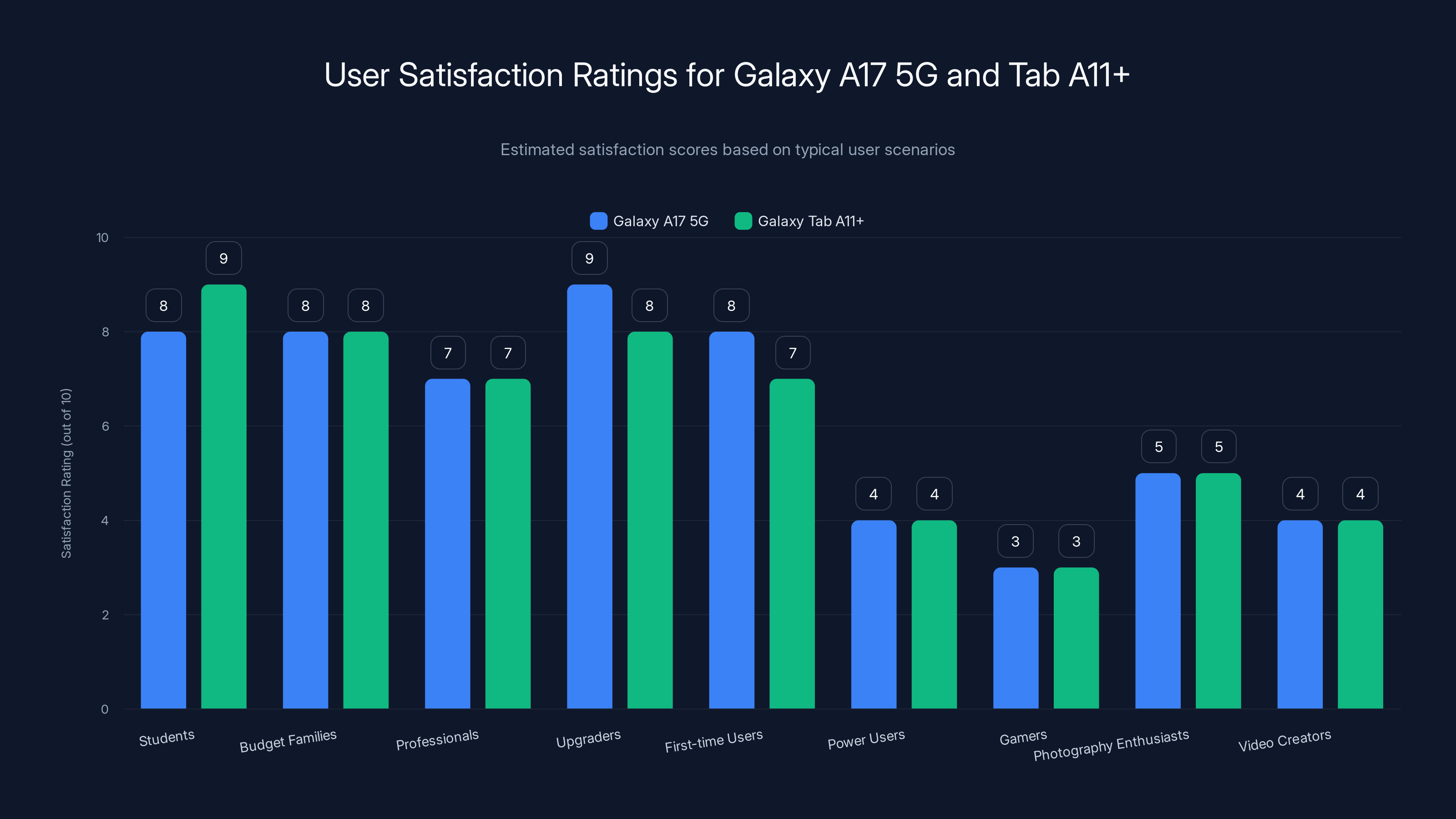
Estimated data shows that students and budget-conscious families rate the Galaxy A17 5G and Tab A11+ highly, while power users and gamers find them less satisfactory.
Ecosystem Integration and Connectivity
Both devices support 5G connectivity, the "5G" in the Galaxy A17 5G name. 5G provides theoretically faster data speeds in coverage areas with 5G infrastructure. Practically, most users experience 5G speeds only occasionally as networks remain incomplete in many regions.
4G LTE fallback ensures usability everywhere 5G doesn't cover. The devices intelligently switch between networks based on availability and speed. For users in areas with complete 5G coverage, faster downloads and lower latency improve streaming quality and app responsiveness.
Wi-Fi 6E support on the tablet (and standard Wi-Fi 6 on the phone) enables faster wireless network speeds. Wi-Fi 6E reaches higher speeds than previous generations and reduces latency in congested networks. Most users won't notice dramatic differences unless connected to business-grade Wi-Fi 6E access points.
Bluetooth 5.3 on both devices enables wireless audio, fitness trackers, and controller peripherals. Pairing happens instantly with remembered devices and remains stable for extended use.
GPS functionality with A-GPS assistance provides accurate positioning for navigation and location-based services. The accuracy typically reaches within 5-10 meters in open sky conditions, adequate for navigation but not precise surveying.
NFC support on both devices enables contactless payments through Samsung Pay. This requires enabling NFC in settings and registering payment methods through the Samsung Pay app. Adoption remains limited compared to Apple Pay due to fewer retailers supporting Samsung Pay, but it works where available.
Dual SIM capability (nano-SIM and eSIM) on the phone allows using two carriers simultaneously. This benefits frequent travelers or professionals maintaining separate work and personal numbers. The tablet typically offers single SIM or Wi-Fi-only models.
Comparing Budget Alternatives and Competitors
The Galaxy A17 5G faces competition from devices like the Motorola Moto G Power series, Google Pixel 6a (if still available), and other budget 5G phones around $199. The Moto G Power typically offers longer battery life but less impressive display technology. The Pixel 6a provided a better camera but older processor. The A17 5G balances these considerations reasonably well.
Tablet competition in the 11-inch budget segment includes the Amazon Fire HD 11 at $150-200. Amazon's tablet costs less but uses a forked version of Android limiting access to the Google Play Store. It's better suited for Amazon service customers than general computing. The Tab A11+ offers standard Android with full app compatibility.
The iPad (10th generation) costs $349 and offers substantially better performance with Apple's A14 processor. For users invested in the Apple ecosystem, iPad makes sense despite higher cost. For Android users wanting simplicity and affordability, the A11+ suits purposes well.
Apple's iPad Air at $599 targets mid-range tablet buyers with superior performance. The price gap makes it irrelevant for budget shoppers, but worth mentioning for users willing to spend additional money for legitimately better processing power and build quality.
Samsung's own Galaxy Tab S9 FE offers slightly smaller 10.9-inch screen at similar pricing ($249) with older processor. The A11+ represents better value with slightly larger screen and more recent hardware.
Real-World Usage Scenarios and Best Use Cases
The Galaxy A17 5G excels for users needing reliable everyday smartphones without flagship pricing. Students benefit from stable performance through their academic year. Budget-conscious families purchasing phones for teenagers get devices with adequate performance and respectable durability. Professionals with second phones for specific purposes gain solid tools without expensive commitments.
People upgrading from older phones see dramatic improvements in speed, camera quality, and battery life. Users coming from iPhone who want to try Android get a respectable introduction without expensive commitments. First-time smartphone users get reliable hardware for learning.
Power users and gamers should skip it. The processor and RAM limitations become frustrating when expecting flagship performance. Photography enthusiasts wanting better low-light capture should invest additional funds in phones with superior sensors. Video creators needing 4K stabilization find the electronic stabilization insufficient.
The Galaxy Tab A11+ targets entertainment consumption and light productivity. Students use tablets for reading e-books, watching educational videos, and note-taking. This tablet handles all three tasks capably. Media consumption enthusiasts appreciate the larger screen for movies and TV shows compared to phones. Light productivity work like document editing and spreadsheet viewing works well.
The tablet serves as an alternative to notebooks for students who prefer digital note-taking. Stylus support is absent (a limitation), but typing with the on-screen keyboard or Bluetooth keyboard works adequately.
Parents appreciate tablets for children's education and entertainment. The larger screen reduces eye strain compared to phones. Parental controls built into Samsung's software allow restricting app access and screen time. Multiple child profiles enable sharing the device within families.
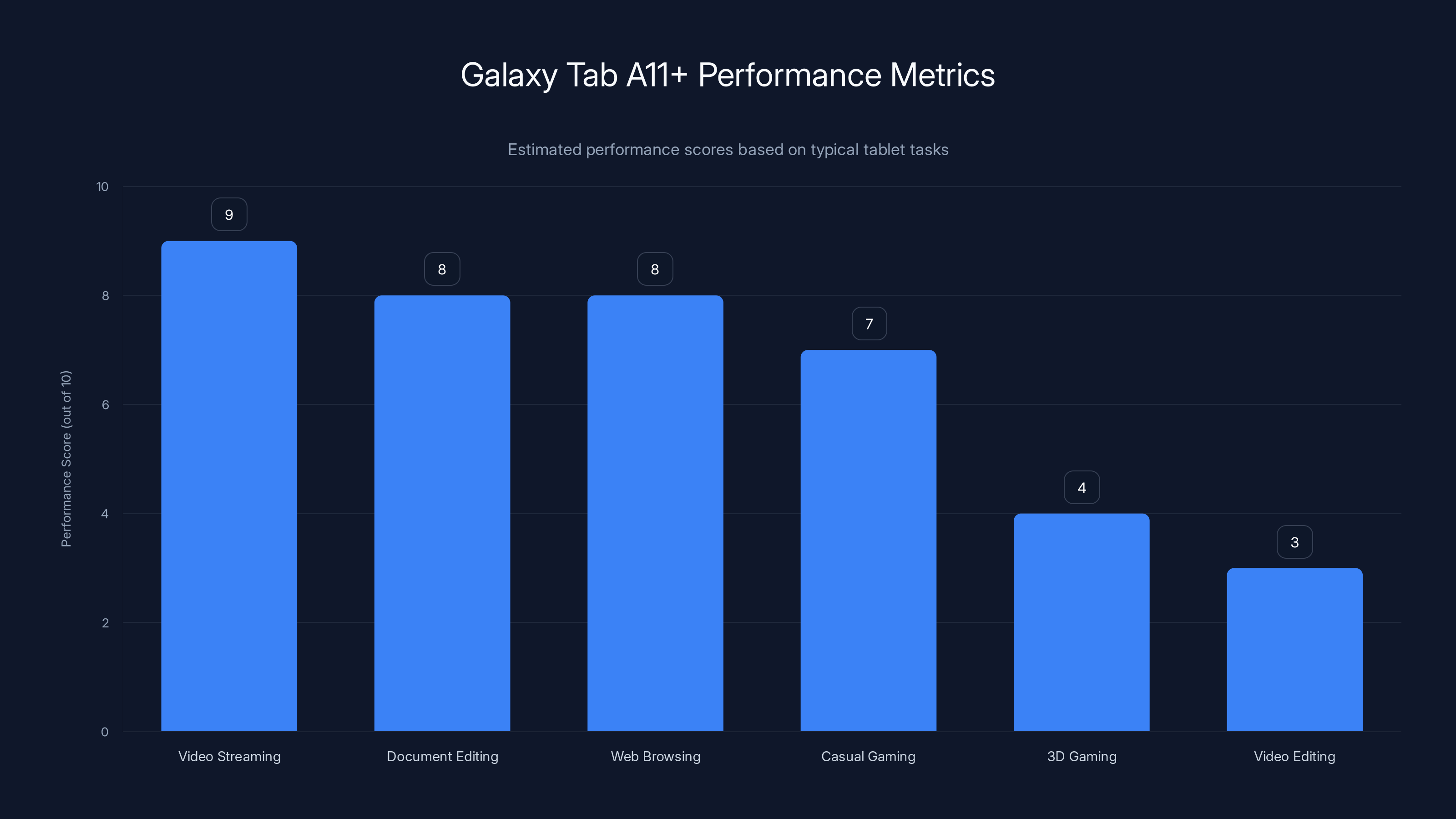
The Galaxy Tab A11+ excels in video streaming and document editing but struggles with demanding 3D gaming and video editing tasks. Estimated data.
Pricing Analysis and Value Proposition
The
Comparison to previous generation Galaxy A16 5G at similar pricing reveals minimal feature differences. The AMOLED display matches. The processor is identical. The camera system is unchanged. For users satisfied with Galaxy A16 performance, upgrade incentives are weak. For new buyers, the A17 5G offers proven reliability.
The
Total cost of ownership matters beyond initial purchase price. Extended micro SD storage adds modest costs if needed. Fast-charging cables are inexpensive. Screen protectors and cases cost $10-30. These accessories barely impact total investment for budget device buyers.
Resale value remains modest. After one year, expect
MTBF (Mean Time Between Failure) expectations suggest the devices should operate reliably for 2-3 years before failures become likely. Hardware degradation accelerates after this timeline. For $199 investment, three years of reliable usage represents exceptional value.
Durability, Repairs, and Long-Term Considerations
Screen replacements for the Galaxy A17 5G cost roughly
Battery replacement through Samsung service centers costs $40-60, reasonable for phones you plan to keep beyond 18 months. The non-removable battery design prevents user replacement, requiring professional service.
Physical durability testing (drop tests) isn't published for budget phones, but real-world evidence suggests they survive 3-4 foot drops onto hard surfaces with screen intact. The glass back is more fragile than the screen, cracking easily from rear impacts. Corner drops from 6+ feet frequently result in internal damage.
Water damage voids warranty despite IP54 rating. Accidental water exposure requires immediate power-off and drying. Professional rice drying is a myth. Proper desiccant drying or professional repair services offer better outcomes.
Long-term software support extends to Android 17 (three major versions after launch). Security updates continue for four years. After that timeline, security vulnerabilities accumulate and manufacturers cease support. The device remains functional but increasingly risky for sensitive activities.
Purchasing Decisions: Should You Buy?
Buy the Galaxy A17 5G if you need reliable smartphone performance without flagship pricing and your usage falls within standard categories: communication, social media, video streaming, photography in good lighting, and web browsing. The device excels here.
Skip it if you game seriously, edit videos professionally, or shoot photography in low light. The limitations become obvious in these use cases. Save additional funds for phones with better performance and cameras.
The Galaxy Tab A11+ makes sense for media consumption, light productivity, education, and entertainment. The 11-inch screen dramatically improves media enjoyment compared to phones. The affordable price eliminates hesitation about dropping or damaging it.
Pass on the tablet if you need stylus support for digital art (Apple iPad is required for serious digital art). High-performance demands (like heavy gaming or video editing) also require better hardware.
Budget considerations should include accessories. Protective cases (
Samsung's January 2025 Strategy and Future Outlook
Releasing two budget devices simultaneously in January suggests Samsung's strategy for capturing price-sensitive buyers early in the year. Consumers with New Year's resolutions including "upgrade my tech" represent a demographic with purchase intent but limited budgets.
The timing also avoids major flagship releases. Samsung's S25 series (the actual flagship phones) typically launch in early February. Positioning the A17 5G and Tab A11+ just before the flagship launch allows Samsung to serve budget buyers without cannibalizing premium sales.
Looking ahead, Samsung will likely continue iterating the A-series with minor processor updates, incremental display improvements, and evolutionary camera enhancements. Revolutionary changes appear unlikely since budget buyers prioritize reliability over novelty.
The tablet market increasingly serves niche purposes as phones screen sizes grow larger. Ten years ago, tablets were computing devices. Today they're entertainment devices and note-taking tools. Samsung's A11+ aligns with this evolution as an entertainment tablet rather than computing device.
5G adoption accelerates through 2025, making 5G standard even in budget phones. By 2026, budget phones without 5G will be unusual. The Galaxy A17 5G's 5G connectivity provides future-proofing for network compatibility.
FAQ
What is the Galaxy A17 5G best suited for?
The Galaxy A17 5G excels for everyday users needing reliable smartphones without flagship prices. It's perfect for students, families, professionals with secondary phones, and first-time smartphone users. The device handles communication, social media, streaming, and casual photography well. Users requiring intensive gaming, professional video editing, or advanced low-light photography should budget for more expensive phones.
How does the AMOLED display benefit users compared to LCD?
AMOLED displays produce deeper blacks by completely turning off individual pixels, consuming less power than LCD displays that keep backlighting constantly on. This creates better contrast ratios, more vibrant colors, and improved battery life. The Galaxy A17 5G's AMOLED screen noticeably outperforms typical budget phone LCD displays for video watching and gaming, despite the processor being modest.
What should I know about the 50MP camera system?
The 50MP main sensor captures detailed photos in daylight but produces grainy images in low-light conditions. The 5MP ultrawide lens provides expanded field of view for landscapes and group photos. The 2MP macro lens is basically unusable despite its existence. For a $199 phone, the camera delivers respectable quality for social media sharing, though professional photography requires expensive equipment.
Is the Galaxy Tab A11+ suitable for drawing and digital art?
No, the Galaxy Tab A11+ lacks stylus support, making it unsuitable for digital art. If stylus support matters, Apple's iPad or Samsung's own Galaxy Tab S series (much more expensive) are required. The A11+ serves media consumption, note-taking with keyboard, and light productivity but cannot replace dedicated drawing tablets.
How long will the Galaxy A17 5G receive software updates?
Samsung supports the A17 5G for three major Android version upgrades (covering Android 14 through 17) and four years of security patches. This means software support extends until roughly 2028-2029. After that timeline, security vulnerabilities accumulate and the device becomes riskier for sensitive activities. Hardware typically lasts 2-3 years before component failures become likely.
Should I buy the base 4GB RAM model or upgrade to 6GB or 8GB?
The base 4GB RAM model feels restrictive by modern standards, as Android consumes 2-3GB, leaving minimal room for apps. If you install 40+ apps or multitask frequently, the upgrade to 6GB or 8GB RAM is worthwhile. For light users with 10-20 apps, base RAM suffices. Calculate the price difference and determine if the longevity gained justifies the additional expense for your usage patterns.
Can I expand storage on both devices with micro SD cards?
Yes, both the Galaxy A17 5G and Galaxy Tab A11+ support micro SD expansion up to 2TB. However, practical expandable cards are 128GB-512GB, costing $15-50. While micro SD is helpful, acknowledge that some apps perform slower when installed on SD cards, and performance accessing SD card files lags behind internal storage. Use micro SD primarily for photo and video storage.
How does the Exynos 1330 processor compare to flagship chips?
The Exynos 1330 significantly underperforms flagship processors, lacking the computational power for demanding tasks. However, for typical usage—messaging, browsing, streaming, photography—the difference becomes invisible. Performance limitations only appear obvious in intensive gaming and video editing. For general users, the Exynos 1330 handles everyday computing adequately.

Conclusion: The Right Budget Devices for January 2025
Samsung's Galaxy A17 5G and Galaxy Tab A11+ represent the current state of budget mobile devices. They're not revolutionary. They're not cutting-edge. But they're genuinely solid devices that accomplish their intended purposes without excessive compromise.
The Galaxy A17 5G provides reliable smartphone performance at $199, delivering an AMOLED display matching devices costing double the price. The processor and RAM force acknowledging limitations, but for average users, the device functions smoothly throughout 2-3 years of ownership. The camera system captures acceptable photos in typical conditions. The 5,000mAh battery with 25W fast-charging keeps pace with your day. It's not a flagship phone, but it's not a frustrating toy either.
The Galaxy Tab A11+ offers 11-inch entertainment at $250. The LCD display disappoints compared to AMOLED, but acceptable color accuracy and reasonable brightness serve media consumption purposes. The larger screen dramatically improves video watching and reading compared to phones. The MediaTek processor is modest but adequate for streaming and productivity apps. It's an entertainment device rather than computing device, and it succeeds in that role.
Both devices exemplify Samsung's philosophy that budget doesn't mean trash. These phones and tablets won't impress tech enthusiasts or power users. They'll delight budget shoppers finding capable devices affordable. They'll satisfy parents seeking reliability for their children. They'll appreciate students needing functional tools without four-figure investments.
January 2025's release timing ensures these devices arrive when purchasing intent peaks. For anyone contemplating smartphone or tablet upgrade and concerned about cost, Samsung's latest budget offerings deserve serious consideration. They won't change your life, but they'll reliably enhance it for the next few years without breaking your bank account.
The verdict: worth buying if you fit the intended user profile. Absolutely skip them if you demand flagship performance. Most people fall somewhere in between and should test these devices before purchasing to confirm the screen size, weight, and capabilities align with your expectations.
Key Takeaways
- Galaxy A17 5G delivers AMOLED display and 50MP camera at $199, unusual feature set for budget phones
- Exynos 1330 processor handles everyday use but limits intensive gaming and video editing
- 5,000mAh battery with 25W fast-charging provides all-day endurance in typical usage
- MicroSD expansion up to 2TB gives affordable storage increases, absent in many premium phones
- Galaxy Tab A11+ offers 11-inch entertainment at $250, best for media consumption rather than computing
- Both devices receive 3 major Android updates and 4 years security patches, supporting longevity
- Best suited for budget-conscious buyers, students, families, and casual users avoiding flagship pricing


