
![OneXSugar Wallet: The Foldable Retro Handheld Gaming Device [2025]](https://tryrunable.com/blog/onexsugar-wallet-the-foldable-retro-handheld-gaming-device-2/image-1-1767132613065.jpg)
Introduction: The Future of Handheld Gaming Looks Retro
The handheld gaming market has exploded over the past few years. What started as a niche community of emulation enthusiasts has blossomed into a competitive landscape where companies are pushing the boundaries of what's possible in a pocket-sized device. But innovation doesn't always mean bigger screens or faster processors. Sometimes it means rethinking the fundamental design of how we fold, carry, and interact with gaming handhelds.
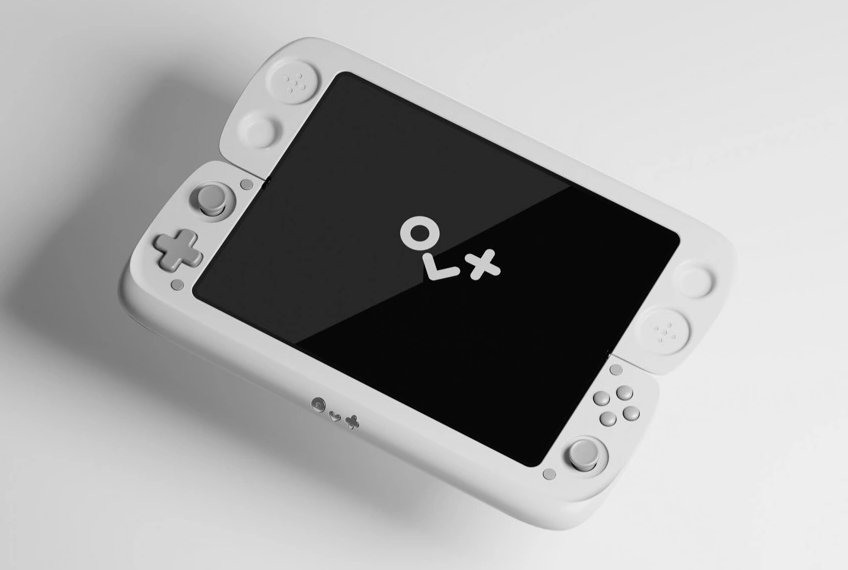
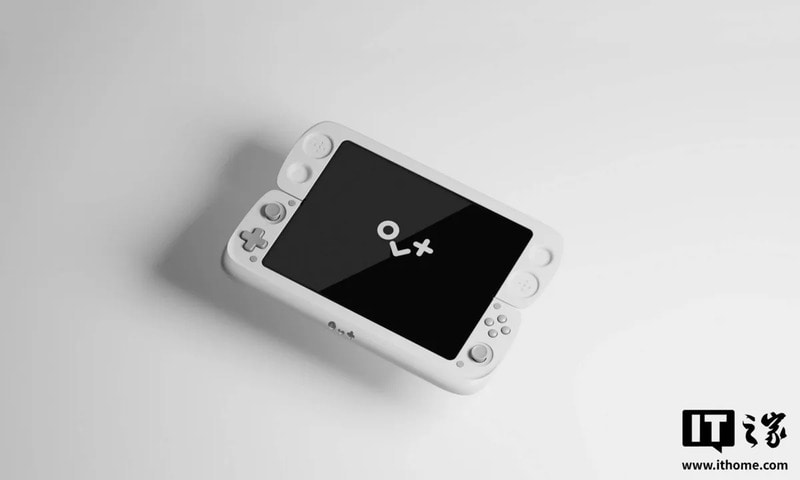
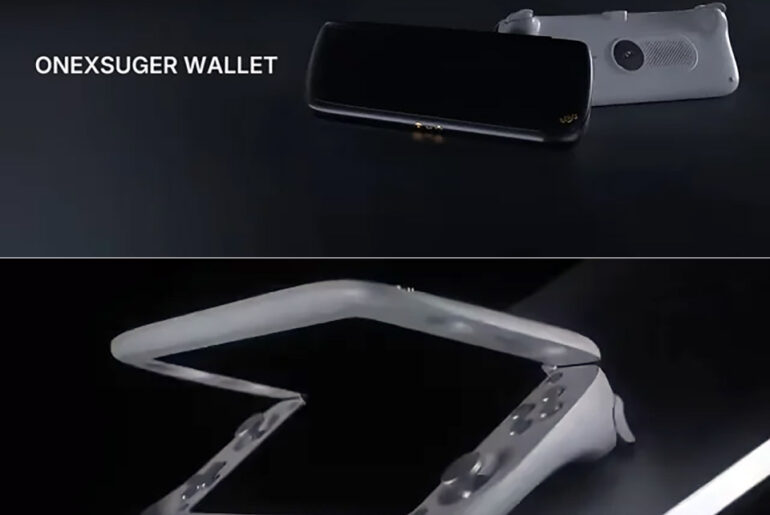
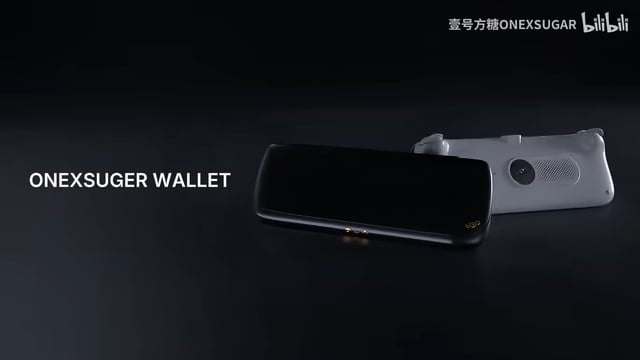
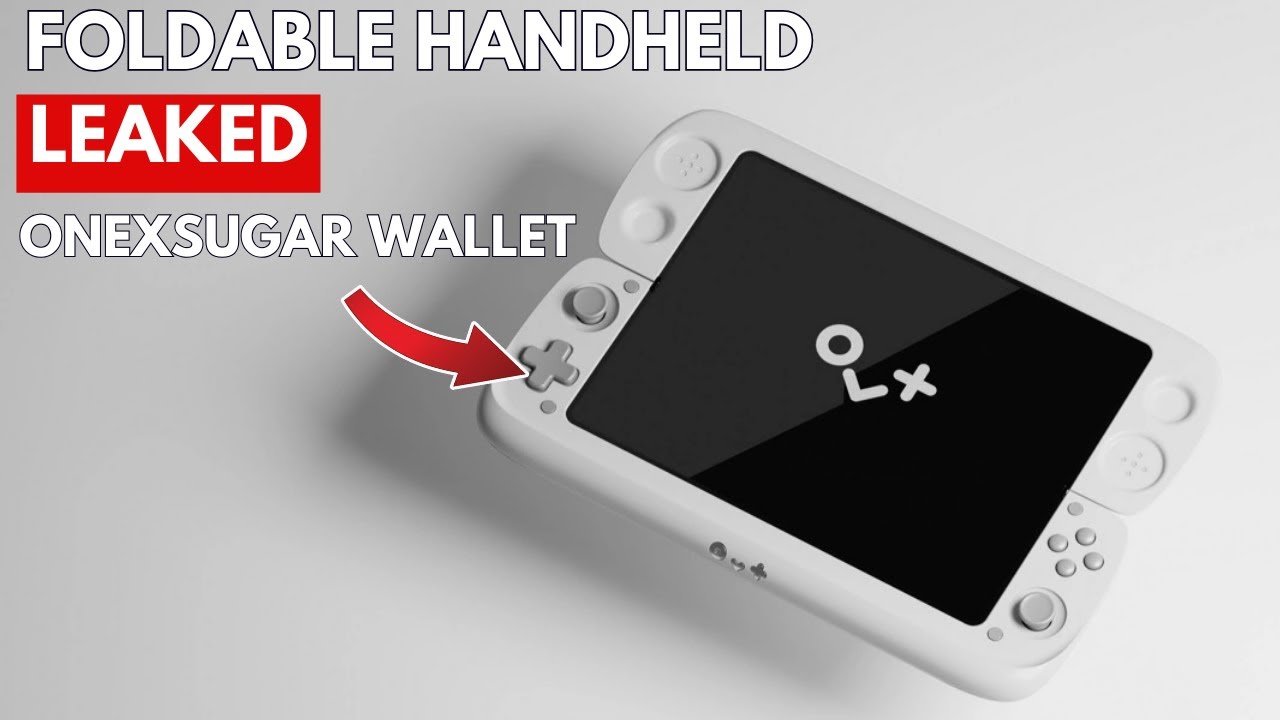
Enter the One XSugar Wallet, an upcoming Android-powered gaming device that represents one of the most interesting form factor experiments we've seen in recent years. Unlike traditional dual-screen handhelds that stack displays on top of each other, the Wallet takes a different approach entirely. It features a single, large 8.01-inch OLED display with a 4:3 aspect ratio that folds in half, transforming from a compact pocket device into a gaming powerhouse.
The device was first teased in a 54-second video posted to Bilibili, the Chinese video-sharing platform, giving us our first glimpse of this unconventional design. What makes the Wallet particularly fascinating isn't just the foldable screen concept. It's the asymmetrical analog stick layout, the focus on retro gaming, and the sheer audacity of One XPlayer as a company to tackle a form factor that even tech giants like Samsung have struggled to perfect.
But here's where we need to pump the brakes a little. Foldable screens are still relatively new technology, and durability concerns are real. The device hasn't been released yet, pricing is unknown, and the gaming community is rightfully cautious. This isn't your typical gaming handheld announcement. It's a bold bet on a form factor that could either revolutionize portable gaming or become a cautionary tale about pushing innovation too far, too fast.
In this comprehensive guide, we'll break down everything we know about the One XSugar Wallet, examine the technology behind it, address the legitimate durability concerns, and explore what this device means for the future of retro gaming handhelds. Whether you're a hardcore emulation enthusiast, a casual gamer, or someone who's just curious about where portable gaming is headed, there's plenty here to explore.
TL; DR
- Innovative Form Factor: The One XSugar Wallet uses a single 8.01-inch OLED foldable screen with a 4:3 aspect ratio instead of dual screens
- Android-Powered Gaming: Runs Android OS with an asymmetrical analog stick layout, D-pad, and four action buttons for retro game compatibility
- Display Technology: Features 2,480 x 1,860 resolution delivering crisp visuals for classic games and emulation
- Durability Questions: Foldable screen reliability remains uncertain, with limited long-term durability data from any manufacturer
- Pricing and Release: No official pricing announced, though One XPlayer's previous dual-screen model cost $799, suggesting premium positioning
- Market Context: Represents a growing trend of innovative form factors in the competitive retro handheld gaming space

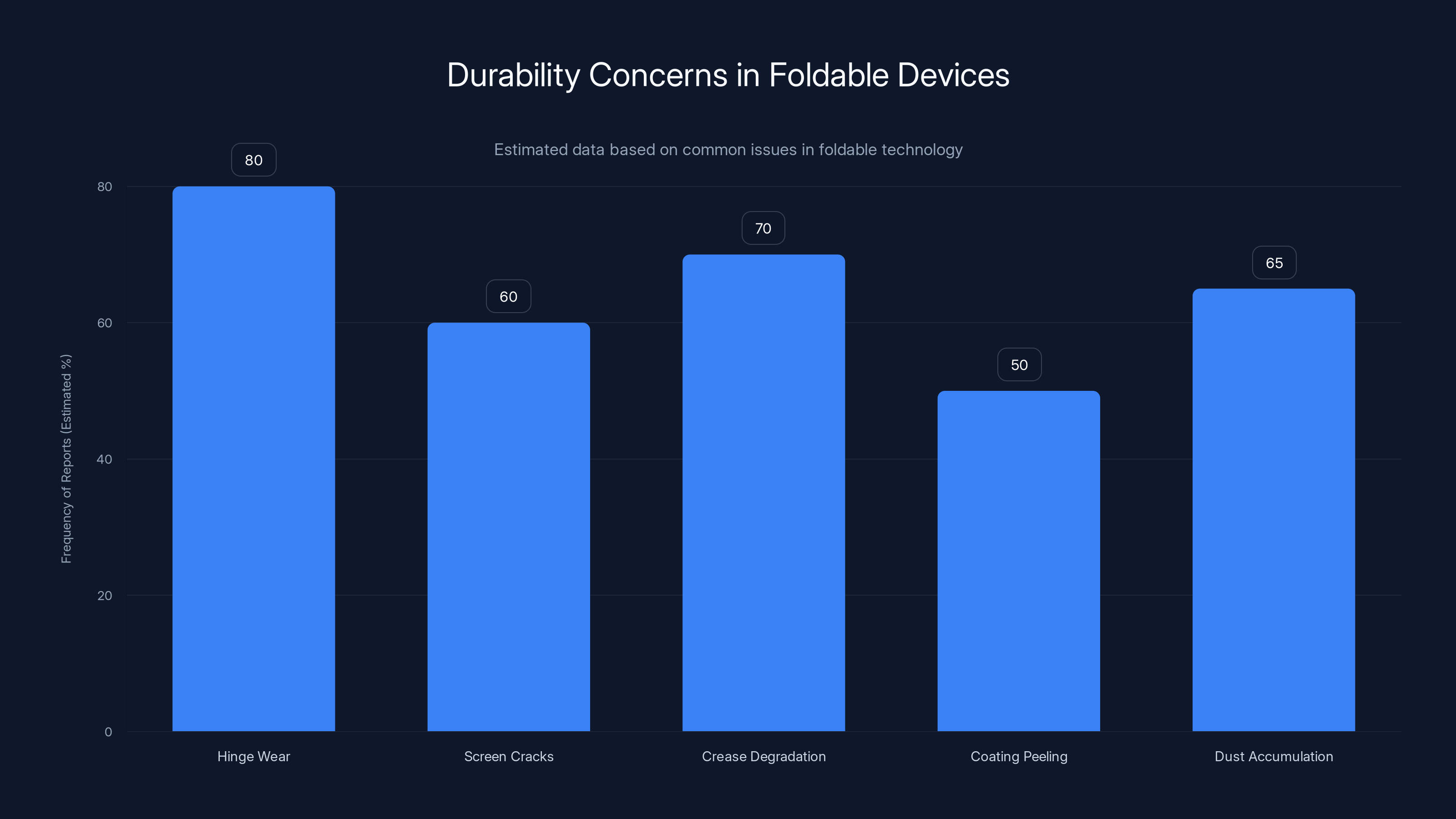
Estimated data shows hinge wear and crease degradation as the most frequently reported issues in foldable devices, highlighting key durability concerns.
What Is the One XSugar Wallet?
The One XSugar Wallet is an upcoming portable gaming device developed by One XPlayer, a company that has made a name for itself by creating unconventional handheld devices. At its core, the Wallet is designed to be a retro gaming machine. Think emulation of classic consoles like the NES, SNES, Game Boy, and Sega Genesis. But the Wallet approaches this concept from a completely different angle than most of its competitors.
Instead of mimicking the Nintendo Switch or other traditional dual-screen designs, the Wallet embraces foldable screen technology. When folded, it's compact and pocket-friendly. When unfolded, it reveals a large 8.01-inch OLED display that provides plenty of screen real estate for gaming. This single-screen approach is fundamentally different from One XPlayer's previous offerings, which typically featured two separate displays.
The device runs Android, which is a significant choice for a gaming handheld. Android provides flexibility and access to the Google Play Store, though most users will likely be more interested in emulation applications and specialized gaming software. The screen's native 4:3 aspect ratio is particularly clever for retro gaming, as it matches the aspect ratio of many classic games perfectly, eliminating the need for letterboxing or distortion.
One XPlayer has positioned the Wallet as part of their expanding lineup of unconventional gaming devices. The company clearly doesn't want to compete directly with mainstream gaming handhelds. Instead, they're experimenting with form factors that push boundaries and appeal to enthusiasts who want something different from the mainstream market.
The Technical Specifications Explained
Understanding the technical specifications of the One XSugar Wallet requires breaking down each component and explaining why it matters for gaming performance and user experience.
The 8.01-Inch OLED Foldable Display
The display is the star of this device, and for good reason. At 8.01 inches, it's larger than most phones but smaller than a typical tablet. The OLED technology is particularly important because it means each pixel produces its own light. This results in perfect blacks (since pixels can turn completely off), exceptional contrast ratios, and vibrant colors. For retro games, which often use bold, simple color palettes, OLED is actually ideal.
The 2,480 x 1,860 resolution translates to approximately 291 pixels per inch when the screen is unfolded at 4:3 aspect ratio. That's more than enough pixel density to display classic games crisply without visible pixelation, even when the games themselves use much lower resolutions. When you're playing a Game Boy game at 160x 144 resolution blown up on this screen, it will look sharp and clean.
The 4:3 aspect ratio is the real genius here. Most modern displays use 16:9 or 16:10 aspect ratios, which creates awkward black bars when displaying classic games that were designed for 4:3 screens. The Wallet's native 4:3 ratio eliminates this problem entirely, allowing games to fill the entire screen naturally.
Resolution and Pixel Density
Let's do some quick math on what these specs mean in practical terms. A Game Boy Color's resolution was 160x 144 pixels. On the One XSugar Wallet's screen, that same 160x 144 image would be scaled up significantly. If we scale it to fill most of the 4:3 display, we're looking at roughly a 10-12x magnification factor. At 291 ppi, this scaling still maintains sharpness and clarity.
Compare this to older emulation devices that might have had 480x 272 screens. Those had roughly 204 ppi. The Wallet actually provides a better visual experience for retro games through higher pixel density, which means less visible pixelation and smoother scaling algorithms.
The Asymmetrical Analog Stick Layout
The placement of analog sticks matters more than most people think. The video revealed an asymmetrical layout, which likely means one analog stick is positioned differently than the other. This is actually quite common in gaming handhelds because different types of games benefit from different stick placements.
For retro gaming, this matters less than for modern 3D games, but it still affects ergonomics and comfort during extended play sessions. An asymmetrical layout might place one stick in a more accessible position while the other is positioned for less frequent use. This design choice suggests the developers thought carefully about how people actually hold and use gaming devices.
D-Pad and Action Buttons
The presence of both a D-pad and analog stick is essential for a retro gaming handheld. Classic games were designed around directional input via D-pads, and many players have strong preferences for D-pad controls over analog sticks for 2D games. The four action buttons (likely arranged in the standard A, B, X, Y pattern) provide compatibility with games across multiple console generations.
The fact that these controls are "standard unmarked" (meaning they're not labeled with function names) suggests they'll be software-configurable. This flexibility is crucial for emulation, where you need to map different game controller schemes to the physical buttons.
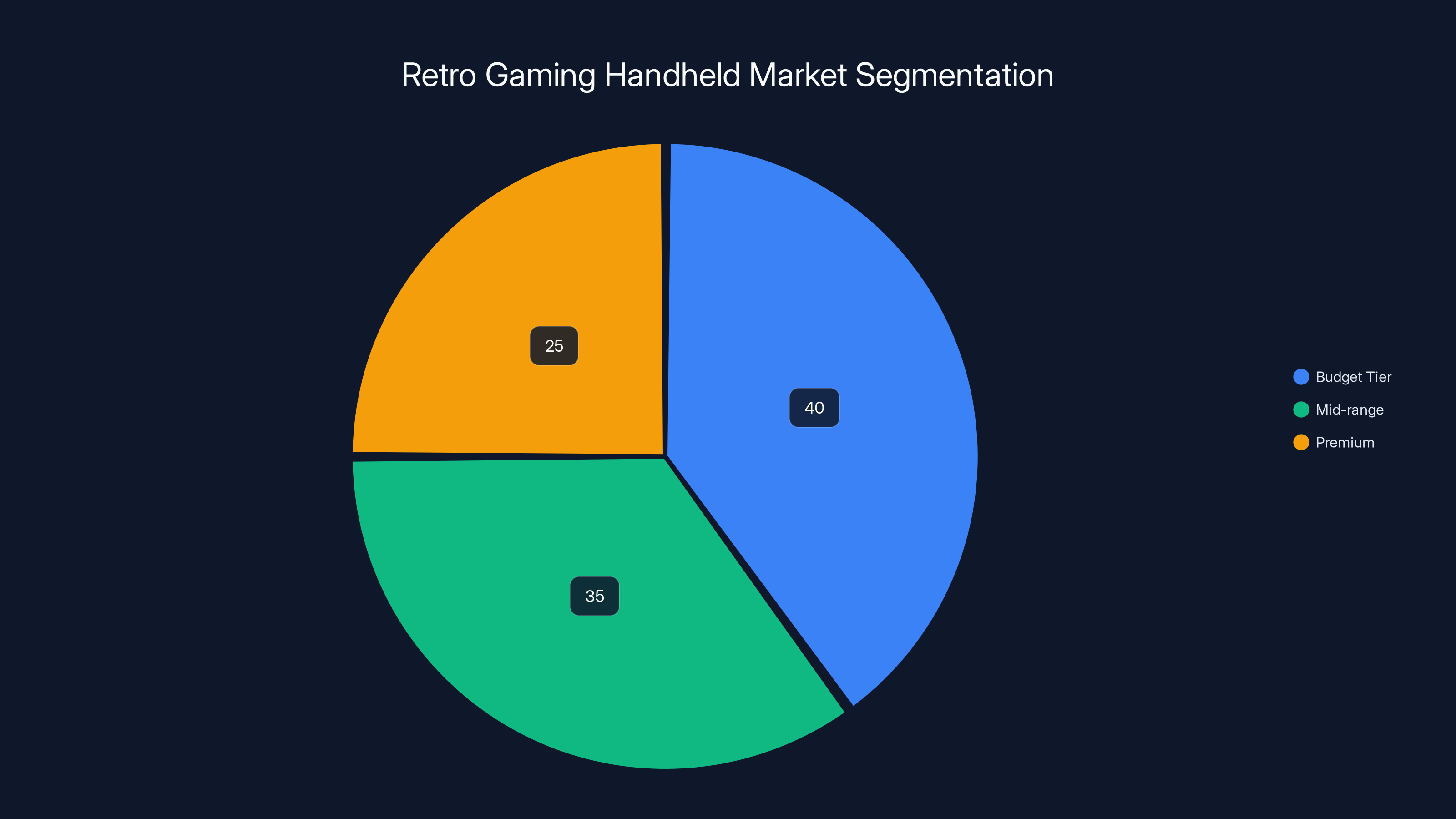
The retro gaming handheld market is segmented into budget, mid-range, and premium tiers, with budget devices holding the largest share. (Estimated data)
Understanding Foldable Screen Technology
Foldable screens are the cornerstone of the One XSugar Wallet's design, but they're also the biggest source of concern and skepticism from potential buyers.
How Foldable Screens Work
Modern foldable screens use flexible OLED technology. Unlike traditional LCDs or rigid OLEDs, these displays use plastic substrates instead of glass. The pixels themselves are created with materials that can flex and bend without breaking. A mechanical hinge supports the fold, with the screen material carefully folded along a designated crease.
The engineering challenge is significant. The display needs to fold thousands of times without developing cracks or dead pixels. The crease itself creates a visible line down the middle of the screen. Material scientists have developed special coatings and materials to address this, but it remains an imperfect solution.
When Samsung released the Galaxy Z Fold series, they pioneered much of the technology that companies like One XPlayer are now using. However, even Samsung's devices, which cost $1,700-2,000 and receive extensive support, have experienced durability issues. Cheaper devices using similar technology often have higher failure rates.
The Durability Question
This is where the One XSugar Wallet raises serious red flags. Foldable screens have shown durability issues even from established manufacturers. The hinge mechanism can wear out, the screen material can develop cracks or dead pixels, and the protective coatings can scratch or peel.
Samsung provides multi-year warranties on Galaxy Z Fold devices because they've invested billions into R&D and quality control. One XPlayer is a much smaller company. If something goes wrong with your One XSugar Wallet's screen, getting a replacement might be extraordinarily difficult. Spare parts availability could be limited. Warranty support for a device in the Western market might be spotty at best.
The video teaser doesn't show repeated folding tests or durability demonstrations. This is telling. If One XPlayer had confidence in the screen's longevity, they would probably showcase that. Instead, the brief teaser focuses on the novelty factor and form factor.
Historical Context of Foldable Gaming Devices
The Nintendo DS, released in 2004, proved that gamers embrace foldable form factors. The DS was hugely successful, with over 75 million units sold. It used a simple clamshell hinge design with two rigid screens. However, the DS's durability issues were famous. Loose hinges, broken screens, and worn-out fold mechanisms were common problems after years of use.
The Game Boy Advance SP, released in 2003, also used a hinged clamshell design with similar durability challenges. These devices taught the industry that hinges are stress points that require careful engineering. The One XSugar Wallet's foldable screen represents a similar engineering challenge, but with the added complexity of a flexible display instead of rigid screens.
One XPlayer's Track Record and Company Background
Understanding One XPlayer as a company helps contextualize the One XSugar Wallet announcement.
Previous Products and Design Philosophy
One XPlayer is best known for creating unconventional gaming devices. Their most famous product is the One XPlayer, a Windows-based handheld gaming computer that runs full desktop games. They've also created devices with dual screens, unusual form factors, and unique features. The company clearly positions itself as a "weird device" manufacturer willing to take design risks.
Their previous dual-screen handheld, mentioned in the source material as retailing for
The company's approach is fundamentally different from mainstream gaming device manufacturers. They're not trying to capture the casual gaming market or compete with Nintendo. They're building devices for enthusiasts, modders, and emulation communities who value innovation and unique designs over proven reliability.
Company Size and Support Infrastructure
One XPlayer is significantly smaller than companies like Nintendo, Sony, or even Valve. This means their customer support infrastructure is different. While they do offer support for their devices, the depth and speed of support might not match what users get from larger companies.
For a product with an uncertain form factor like the foldable-screen Wallet, company size matters tremendously. If issues arise, a small company might struggle to provide replacements or fixes quickly. This doesn't necessarily mean the Wallet will be a bad product, but it means buyers should go in with clear eyes about what they're purchasing from.
Market Positioning
One XPlayer operates in the retro handheld market, but at the premium end of the spectrum. They're not competing with budget devices like the Anbernic RG35XX (which costs under
This positioning suggests that One XSugar, the brand name used for this particular device, is One XPlayer's way of experimenting with a sub-brand or trying to reach a slightly different market segment. The name "Wallet" emphasizes the portable, pocket-friendly form factor when folded.
The Retro Gaming Handheld Market Landscape
To understand where the One XSugar Wallet fits, we need to examine the broader retro gaming handheld market.
Market Growth and Trends
The retro handheld market has experienced explosive growth since around 2020. The Anbernic RG351 started a revolution in affordable, emulation-focused handhelds. Since then, dozens of companies have entered the space, creating devices at all price points.
Market segments roughly break down as follows:
- Budget tier ($50-150): Anbernic, Miyoo, Retroid Pocket
- Mid-range ($200-400): Analogue Pocket, various Linux-based handhelds
- Premium ($500+): One XPlayer's high-end devices, specialized portables
The Wallet would occupy the premium segment if pricing is similar to One XPlayer's previous $799 device. This positioning makes sense given the innovative foldable screen technology.
Competitor Landscape
Key competitors in the retro handheld space include:
Analogue Pocket is probably the closest competitor to the Wallet in terms of premium positioning. It costs around $200-300 and uses innovative FPGA technology to run classic games. However, it's smaller and uses traditional rigid screens.
Retroid Pocket devices offer Android-based gaming at lower price points, with the Retroid Pocket 4 Pro costing around $300. These compete on value and software ecosystem rather than hardware innovation.
Various Linux-based handhelds like the Pi Boy XRS or community-built devices offer different approaches to portable gaming. Many use Raspberry Pi or similar single-board computers.
Upcoming competition from larger companies could emerge. If Samsung or another tech giant decided to create a gaming-focused foldable, it would dwarf the One XSugar Wallet. However, that's not currently on the market.

The OneXSugar Wallet excels in retro gaming optimization and portability, but durability and repair options remain significant concerns. Estimated data.
Design Analysis: What We Can Learn From the Teaser
The brief Bilibili video tells us more than you might initially think. Let's break down the design choices revealed.
Folded vs. Unfolded Form Factor
When folded, the Wallet likely measures somewhere around 4-5 inches tall and perhaps 3 inches wide, based on typical foldable dimensions and the 8.01-inch screen size. This makes it genuinely pocket-sized, comparable to a large phone. When unfolded, it becomes roughly 8 inches by 6 inches, which is sizeable but still handheld.
This form factor offers advantages over traditional clamshell designs. The Wallet's single screen means there's no dead center bezel dividing the play area (like the gap between screens on the Nintendo DS). Games fill the entire visual field when unfolded.
However, this also means the hinge is exposed to more stress. With dual screens, each screen absorbs some stress independently. With a single flexible screen, all stress concentrates on the fold line.
Ergonomic Considerations
The asymmetrical analog stick layout suggests careful thought about ergonomics. When playing retro games, you need access to directional controls and action buttons. The stick positions need to be reachable without awkward hand contortions.
Holding an unfolded 8-inch device requires support on both sides. The proportions matter significantly for comfort during extended gaming sessions. A device that's too wide or too tall becomes fatiguing to hold.
When folded into "Wallet" mode, the device should be comfortable to hold with one hand, though extended gameplay would likely require two-handed operation or using a stand.
Visual Design Language
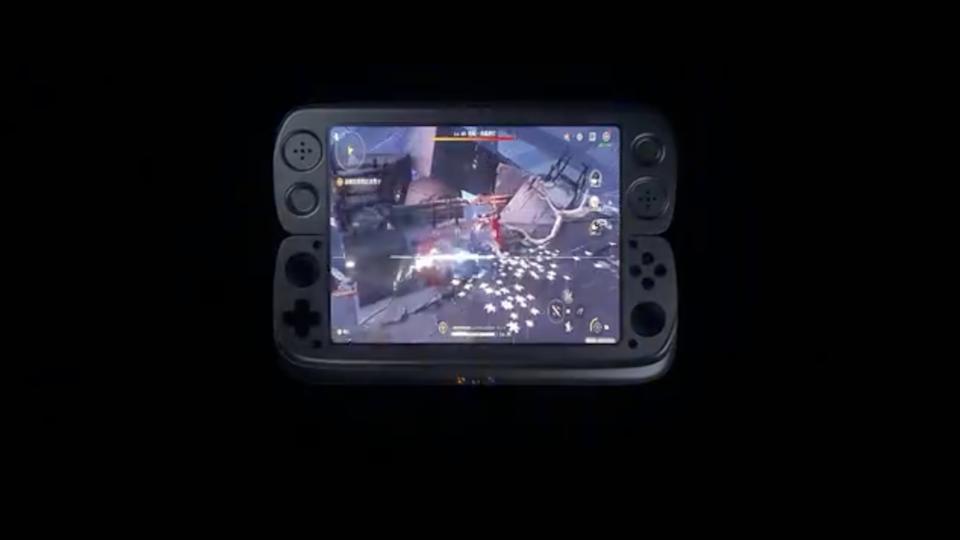
From the teaser images, the Wallet appears to have rounded corners and a sleek, modern aesthetic. The bezels appear minimal, maximizing screen real estate. This is consistent with One XPlayer's previous design language.
The color scheme appears to be dark/black, which is typical for gaming devices. Dark colors hide dust and fingerprints better than light colors, and they create a more "serious" aesthetic appropriate for a premium gaming device.

Android Operating System for Gaming
Choosing Android as the operating system is significant and requires examination.
Why Android?
Android is open-source, customizable, and widely supported by emulation developers. It allows One XPlayer to customize the user interface specifically for gaming without paying licensing fees to Microsoft (Windows) or Apple (iOS). Android also provides access to the Google Play Store, though serious gaming users will likely sideload emulation apps instead.
Android is the standard choice for other Android-based gaming handhelds like the Retroid Pocket devices. The ecosystem of emulation software is mature and well-developed.
Emulation Software Ecosystem
On Android, the main emulation platforms are apps like Retroarch, which supports dozens of classic console emulators in a single app. Specialized emulators for specific systems like PPSSPP (PSP), Dolphin (Game Cube/Wii), and PCSX2 (PS2) are also available.
The advantage of Android is that developers can update these apps frequently without needing permission from device manufacturers. This keeps the software current and bug-free.
Potential Drawbacks of Android
Android wasn't designed primarily as a gaming OS. Windows-based handhelds can run more complex games because Windows games assume more processing power. Linux-based systems can be optimized more aggressively for specific hardware.
Android's overhead might impact the Wallet's ability to run more demanding emulation tasks. However, for retro gaming (which is the stated focus), modern Android hardware is more than powerful enough.
Another consideration is fragmentation. Android devices vary widely in hardware and software versions. The Wallet's experience depends heavily on One XPlayer's customizations and optimization.
Screen Technology Deep Dive
The OLED screen deserves deeper technical examination.
OLED vs. Other Display Technologies
OLED (Organic Light-Emitting Diode) produces light at the pixel level. Each pixel is essentially a tiny light source. This allows perfect contrast (pixels turn completely off for black), incredible color saturation, and viewing angles that don't suffer from color shift.
LCD (Liquid Crystal Display) uses a backlight that shines through a liquid crystal layer. LCDs can't achieve pure blacks because the backlight is always on at some level. However, LCDs are more durable and less prone to burn-in.
IPS (In-Plane Switching) is a type of LCD with better viewing angles and color accuracy than older TN panels.
For a gaming device, OLED is objectively superior for image quality. However, the trade-off is durability. OLED is more prone to burn-in and can degrade over time with heavy use.
The 4:3 Aspect Ratio Advantage
Most modern screens are 16:9 or 21:9. The 4:3 ratio is actually rarer now, but it's perfect for retro gaming. Here's why:
- NES games: Typically 256x 224 pixels, which is roughly 16:14 (close to 4:3)
- SNES games: Often 256x 224, same as NES
- Game Boy: 160x 144, exactly 4:3
- Arcade games: Many used 4:3 or close to it
- CRT televisions: Traditional arcade cabinets and old TVs used 4:3
When a 4:3 game is displayed on a 4:3 screen without scaling artifacts, it fills the screen naturally. This is why the Wallet's aspect ratio choice is so smart for retro gaming specifically.
Resolution and Scalability
The 2,480 x 1,860 resolution on an 8.01-inch OLED works out to approximately 291 ppi. For comparison:
- iPhone 15 Pro: 460 ppi
- iPad (10th gen): 264 ppi
- Samsung Galaxy Tab S9: 274 ppi
The Wallet's resolution is definitely good enough for sharp, clear gaming. At 8 inches, the higher resolution prevents pixelation and provides smooth text rendering if the device ever displays UI elements.
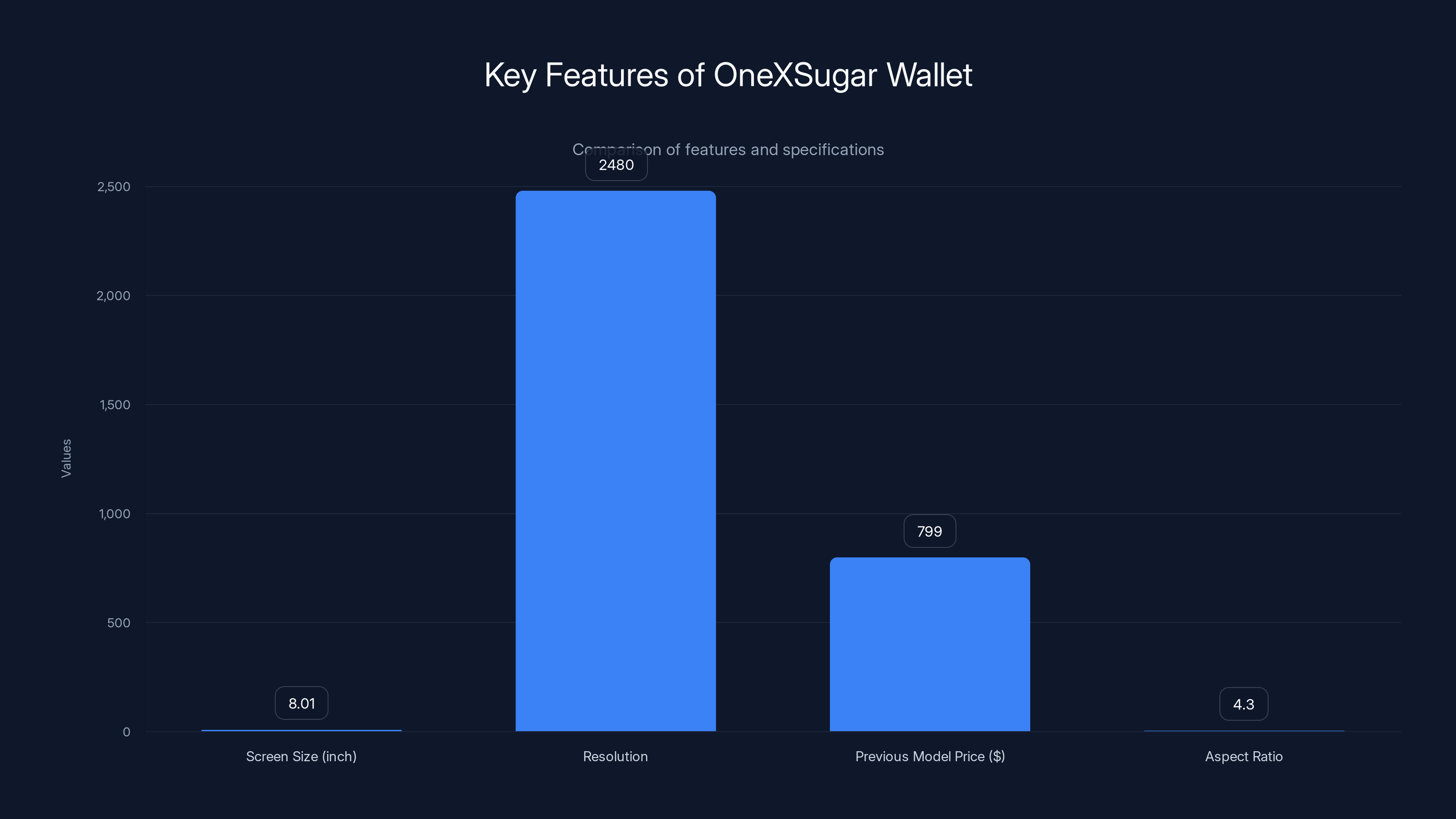
The OneXSugar Wallet features an 8.01-inch OLED foldable screen with a high resolution of 2,480 x 1,860, suggesting a premium product similar to its predecessor priced at $799. Estimated data based on previous model pricing.
Pricing and Value Proposition
While official pricing hasn't been announced, we can make educated guesses based on available information.
Reference Points from One XPlayer's Catalog
One XPlayer's previous dual-screen gaming handheld retails for $799. This device, while feature-rich, was criticized for limited battery life and lack of significant software optimization at launch.
If the One XSugar Wallet uses premium components (OLED screen, foldable technology, decent processor), it could easily cost
For comparison, Samsung's Galaxy Z Fold series costs $1,800-2,000. However, that includes Samsung's massive R&D investment and support infrastructure. A smaller company like One XPlayer could potentially produce a foldable gaming device at lower cost, though probably not significantly cheaper.
Value Analysis
Determining value depends on your priorities:
Strong value if you...
- Are an enthusiast willing to pay premium prices for innovative designs
- Want the biggest possible screen in a pocket-sized form factor
- Don't need extensive warranty support or prefer independent repair communities
- Specifically want Android-based gaming with the 4:3 aspect ratio
- Are willing to accept some durability risk for design novelty
Poor value if you...
- Want proven reliability and long-term durability
- Need responsive manufacturer support
- Are on a budget (cheaper retro handhelds exist)
- Want guaranteed spare parts availability
- Prefer devices with extensive testing and reviews before purchase
Durability and Longevity Concerns
This is the critical section where we need to be honest about the Wallet's biggest weakness.
Historical Foldable Device Reliability
Samsung's Galaxy Z Fold series has been on the market since 2019. Over that time, durability issues have been documented:
- Hinge wear: The hinge can loosen after extended use, leading to wobbly operation
- Screen damage: The flexible OLED can crack from impact, sometimes resulting in non-repairable damage
- Crease visibility: The crease can become more pronounced with use
- Coating peeling: Protective layers can peel, exposing the underlying materials
- Hinge dust intrusion: Dust can accumulate around the hinge and affect operation
Even with Samsung's quality control and engineering resources, these issues are real. A smaller manufacturer's first attempt at a foldable gaming device is almost certainly less refined.
The Lack of Long-Term Data
We simply don't have enough long-term data on consumer foldable devices yet. The Samsung Galaxy Z Fold series is the only major consumer foldable in wide circulation, and even that's only been widely available since 2021 (four years ago). Long-term durability data typically requires 5-10 years.
For a first-generation product from One XPlayer, you're essentially beta testing. If you purchase one, you're accepting the role of an early adopter with all the associated risks.
Repair and Support Challenges
If your Wallet's screen breaks or the hinge fails, what happens? One XPlayer would need to either:
- Replace the entire device
- Replace just the screen (would require specialized equipment and training)
- Repair the hinge (might be impossible if it's integral to the chassis)
Small manufacturers often don't maintain repair infrastructure. You might be told that repair isn't possible and offered a discount on a new device instead.
The Water Resistance Question
Foldable devices are inherently more difficult to seal against water ingress. With the hinge constantly flexing, it's harder to maintain a waterproof seal. The source material doesn't mention any water resistance rating for the Wallet.
This means gaming in wet environments (beach, rain, poolside) is probably not advisable. This limits the device's utility compared to phones or tablets that might have IP67 or IP68 ratings.

Software and User Interface Considerations
Beyond the hardware, the software experience matters tremendously.
Customization Possibilities
Android's open nature allows extensive customization. One XPlayer can create a completely custom interface optimized for gaming handhelds. They might include a custom launcher that displays games and emulators in a controller-friendly way.
We don't have specific information about the Wallet's software yet, but One XPlayer's previous devices have included thoughtful software customizations.
Emulation Software Compatibility
Since the Wallet runs standard Android, it should support all major emulation software:
- Retroarch: The most popular all-in-one emulator, supporting dozens of systems
- PPSSPP: PSP emulation
- Dolphin: Game Cube and Wii emulation
- PCSX2: PS2 emulation
- Citra: 3DS emulation
- Specialized emulators for individual systems
Android emulation software is mature, well-maintained, and regularly updated. This is a significant strength of the Android platform.
Gaming Input Configuration
The asymmetrical button and stick layout will require software to handle input mapping. Different games need different button schemes. For example, SNES games might map A/B/X/Y buttons differently than N64 games.
Emulation software like Retroarch handles this through profiles, but One XPlayer's custom software might provide even more granular control and easier profile switching.
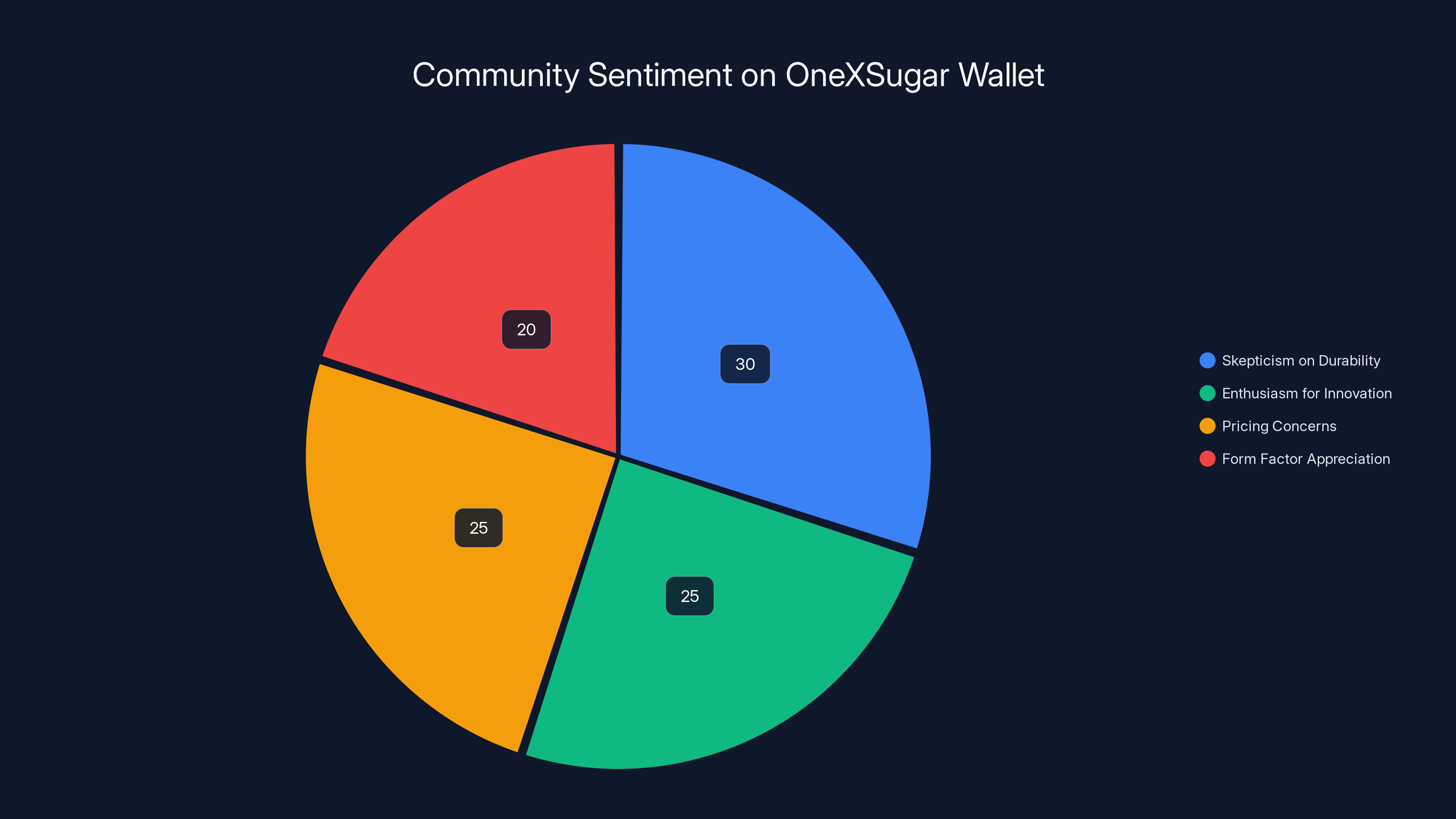
Estimated data shows that skepticism on durability is the most prevalent sentiment, followed by enthusiasm for innovation and pricing concerns.
Battery Life and Power Consumption
The source material doesn't provide specific information about battery capacity or power consumption. However, we can make some educated assessments.
Screen Power Draw
OLED screens are generally more power-efficient than LCD screens at average brightness levels because they don't require a constant backlight. However, they use more power when displaying bright images (since every pixel produces its own light).
Retro games typically use lower color depths and less complex graphics than modern games, potentially resulting in lower power consumption compared to a modern gaming handheld.
An 8-inch screen is notably larger than many handhelds, which increases overall power draw compared to smaller devices.
Processor Efficiency
Without knowing the specific processor, we can't estimate performance. However, modern mobile processors (likely something like a Qualcomm Snapdragon or similar) are reasonably efficient for emulation tasks.
Retro emulation doesn't require cutting-edge processors. Even mid-range mobile chips can handle PSP and Dreamcast emulation. This suggests the Wallet might achieve decent battery life despite its large screen.
Realistic Expectations
Most gaming handhelds achieve 3-8 hours of battery life depending on screen brightness, game complexity, and power consumption. The Wallet probably falls somewhere in that range, likely 4-6 hours for typical usage.
Foldable devices present unique battery layout challenges. The large screen might be powered by a single large battery, or potentially by multiple batteries in different sections. The design choice here affects overall capacity and charging speed.

Processor and Performance Capabilities
The source material doesn't specify which processor the Wallet uses. However, we can discuss what would make sense.
Likely Processing Power
For retro gaming, even modest modern processors are overkill. A mid-range processor like the Qualcomm Snapdragon 7 Gen 1 (found in many affordable gaming phones) could easily handle:
- 8-bit emulation (NES, SNES, Genesis): Negligible load
- 16-bit emulation (PlayStation 1, Saturn): Minimal load
- Handheld emulation (Game Boy, GBA, DS): Minimal load
- PSP emulation: Moderate load
- Game Cube/Wii emulation: Moderate to heavy load
- PS2 emulation: Heavy load (might struggle)
Since One XPlayer is a premium device manufacturer, the Wallet probably includes a reasonably powerful processor. Something like a Snapdragon 8 Gen 2 or Mediatek Dimensity flagship chip is plausible.
Thermal Considerations
Large, powerful processors generate heat. The Wallet's foldable design might create thermal challenges. A large OLED screen in the folded position could trap heat from a processor, leading to potential throttling or performance reduction.
Designers would need to address this through thermal management, possibly including vapor chambers, thermal pads, or clever air circulation. Without details on this, we can't assess how well the device handles sustained gaming sessions.
The Foldable Gaming Market's Future
Does the One XSugar Wallet represent the future of gaming handhelds, or is it a niche curiosity?
Arguments for Foldable Gaming Becoming Mainstream
Form factor advantages: Foldable screens enable pocket-sized devices with large screens. This is genuinely useful.
Screen technology improving: OLED foldable screens are getting more durable every year. In 5-10 years, durability might not be a major concern.
Market demand: If consumers embrace foldable phones, gaming handhelds using the same technology might follow.
Precedent from phones: Samsung's investment in foldable phone technology creates a supply chain and expertise that other device makers can leverage.
Arguments Against Widespread Adoption
Durability skepticism: Until foldable screens prove they can last 5+ years in heavy use, mainstream consumers will be cautious.
Competitive disadvantage: Non-foldable handhelds can be more durable, cheaper, and potentially offer better performance in the same form factor.
Niche market: Gaming handhelds are already a niche product. Foldable gaming handhelds are a niche within a niche.
Engineering complexity: Foldable devices require significantly more sophisticated engineering than traditional designs. This increases cost and risk.
Proven alternatives: Traditional clamshell designs work well, are proven reliable, and are simpler to manufacture.
Most Likely Scenario
Foldable gaming handhelds will probably remain a premium niche product. They'll appeal to enthusiasts and early adopters willing to pay for innovation. However, the mainstream retro gaming market will likely continue with traditional screen designs.
Similarly to how foldable phones remain premium products despite theoretical advantages, foldable gaming handhelds will likely occupy the high-end of the market rather than dominating it.

The OneXPlayer foldable device has strong innovative and practical aspects but faces challenges with durability, support, and pricing. Estimated data based on narrative insights.
Comparison With Existing Alternatives
How does the Wallet stack up against actual alternatives available now?
vs. Analogue Pocket
Analogue Pocket ($200-300, FPGA-based handheld)
Advantages for Wallet:
- Larger screen (8.01 vs. ~3.5 inches)
- More flexible software (Android vs. limited OS)
- Better for multi-system gaming
Advantages for Analogue Pocket:
- Proven reliability (available since 2022)
- Significantly lower cost
- Uses FPGA (more authentic emulation)
- Smaller/more portable when not gaming
vs. Retroid Pocket 4 Pro
Retroid Pocket 4 Pro ($300, Android-based handheld)
Advantages for Wallet:
- Larger screen
- Innovative design
- Better OLED display
Advantages for Retroid Pocket:
- Lower cost
- Proven design (previous generations available)
- Better support infrastructure
- Less risk of durability issues
vs. One XPlayer's Previous Devices
If One XPlayer's previous $799 dual-screen handheld is still available, how does the Wallet compare?
The Wallet likely offers:
- Simpler design (one screen instead of two)
- No bezel gap (continuous screen)
- Better 4:3 aspect ratio for retro gaming
The previous device offers:
- Proven design
- Dual screens for specific gaming scenarios
- Already released and reviewable
Market Reception and Community Response
What's the gaming community saying about the One XSugar Wallet announcement?
Skepticism on Durability
Community response across Reddit (r/SBCGaming), YouTube, and forums has been cautiously skeptical. The most common concern is durability. As one Reddit comment noted, "I barely trust a folding screen from a company like Samsung, if anything ever goes wrong with the screen you're gonna get 0 support."
This sentiment echoes a real concern: support and repairs. A device costing $700+ with a potentially fragile screen component needs robust support. One XPlayer's support reputation is... mixed.
Enthusiasm for Innovation
Despite durability concerns, the community appreciates the innovation. Creating a foldable gaming handheld is genuinely impressive engineering. Many enthusiasts respect One XPlayer for attempting something different rather than copying existing designs.
This enthusiasm is tempered, though. "Respecting the attempt" is different from "I'll buy one on day one." Most comments suggest waiting for reviews and durability reports from actual users.
Pricing Concerns
Comments frequently mention pricing uncertainty. If the Wallet costs
Form Factor Appreciation
Several comments praise the pocket-friendly form factor when folded. Gaming enthusiasts appreciate having a device that fits in a wallet-sized package but unfolds to a generous screen. This is a genuine advantage over larger, traditional handhelds.

The Announcement Strategy: Why Bilibili?
One XPlayer announced the Wallet on Bilibili, a Chinese video platform, rather than announcing to Western media first. This tells us something important.
The Chinese Market Significance
Bilibili is one of China's largest video platforms. One XPlayer is likely prioritizing the Chinese market for this device, at least initially. This makes sense because:
- Retro gaming community: The Chinese retro gaming community is substantial and enthusiastic
- Foldable technology acceptance: Chinese consumers have been more receptive to experimental form factors
- Existing customer base: One XPlayer probably has strong Chinese sales
- Manufacturing proximity: Operating in China with a China-focused initial launch is logistically sensible
Western availability might come later, if at all. This is important for potential buyers in North America or Europe to understand. The device might be harder to purchase and support outside China.
Import Considerations
If you want a Wallet as a Westerner, you might need to:
- Purchase through international electronics retailers
- Deal with potential warranty issues in your home country
- Face shipping costs and import duties
- Experience language barriers in support communications
These practical considerations add hidden costs and friction to ownership.
When Will It Release?
The source material provides no official release date. However, based on industry patterns:
Timeline Speculation
Current stage: Announcement/teaser phase Next phase: Likely showing at CES or other gaming events (early 2025?) Then: Pre-order phase (possibly spring 2025) Launch: Summer or fall 2025 seems plausible
However, this is pure speculation. Gaming devices often face delays. If One XPlayer encounters any durability issues during final testing, the launch could slip significantly.
Pre-Order Strategy
When pre-orders open, the initial batch will likely sell out quickly among enthusiasts. The second and third batches might experience longer wait times if manufacturing constraints exist.
If durability issues emerge from the first batch in the wild, later pre-orders might be canceled. Conversely, positive reviews could create backlog demand.
Demand Factors
The Wallet will likely appeal to:
- One XPlayer's existing customer base
- Retro gaming enthusiasts with disposable income
- People fascinated by foldable technology
- Collectors of unusual gaming devices
- Tech journalists and YouTube reviewers seeking novelty content
This is a fairly niche audience, but a profitable one at premium price points.
Alternatives Worth Considering
If the Wallet's uncertain release date and durability concerns worry you, what alternatives exist?
If You Want Large Screen + Retro Gaming
Analogue Pocket with Dock: The Dock version ($300-400) connects to external displays, giving you a large-screen retro gaming experience. It's not as convenient as an integrated screen, but it's proven and durable.
iPad + Apple Arcade: Not specifically retro, but excellent for gaming with a large screen.
Existing Android Gaming Tablets: Devices like the iPad Air or Samsung Galaxy Tab provide large screens for emulation software. Less specialized, but more versatile.
If You Want Foldable Gaming
Currently, no other consumer foldable gaming handhelds exist besides the Wallet. You could use a Samsung Galaxy Z Fold as a gaming device by sideloading emulation software, but it's not optimized for gaming.
If You Want Pocket-Sized Gaming
Miyoo Mini Plus ($80-100): Genuine pocket device with excellent software library and proven reliability
Retroid Pocket 4 Pro ($300): Step up in power and features
Analogue Pocket ($200-300): Premium pocket device with FPGA-based emulation
Steam Deck (if you want modern games): Different use case entirely, but pocket-ish with larger screen when docked
The Innovation Angle: Is It Worth the Risk?
The fundamental question for potential buyers: Is the Wallet's innovative design worth accepting the durability risks?
Who Should Consider It
You should consider buying if:
- You have disposable income and can afford to lose $700+ without major hardship
- You're genuinely interested in testing new form factors
- You're comfortable being an early adopter with all associated risks
- You appreciate One XPlayer's design philosophy
- You want the novelty and uniqueness of owning an experimental device
- You can accept that support might be limited
You should avoid if:
- You want proven reliability and durability
- You need responsive customer support
- You're on a budget
- You want something you can confidently use for 3-5+ years
- You prefer to buy after seeing extensive user reviews
- You need warranty support in your specific country
The Early Adopter Tax
Being an early adopter means paying a premium (financially and in risk) for the privilege of having a device before everyone else. You're essentially funding the development costs for future, better versions.
Future iterations of foldable gaming handhelds will be better, cheaper, and more reliable. The One XSugar Wallet's durability issues will inform later designs. You're paying to participate in that learning process.
Industry Implications and Copycat Potential
The source material mentions the possibility of copycat products. This is worth examining.
Why Companies Might Copy This
If the Wallet succeeds commercially (sells reasonably well despite durability questions), other retro handheld manufacturers will probably attempt similar designs. Why? Because it proves there's market demand for larger screens in portable form factors.
But copying a foldable screen design isn't trivial. You need:
- Access to foldable OLED screens (limited suppliers)
- Engineering expertise in hinge design
- Quality control and testing infrastructure
- Capital to tool manufacturing
Smaller manufacturers like Anbernic or Retroid Pocket might not have these resources. Larger companies like Nintendo or Valve could implement foldable designs if they wanted, but they might not prioritize handheld form factors.
More Likely Alternatives
Rather than copying foldable designs, competitors might explore other innovative form factors:
- Curved or edge-to-edge screens
- Modular controller systems
- Hybrid form factors (part clamshell, part foldable)
- Different aspect ratios (more devices with 4:3 screens)
Innovation in form factor is valuable because it differentiates products. One XSugar's Wallet might inspire creativity even if direct copies don't emerge.
The Honest Assessment
Let's be frank about what we're looking at here.
What's Good
Genuinely innovative design: The foldable 4:3 OLED screen is smart engineering that solves real problems in retro gaming.
Appropriate technology: OLED's color and contrast properties are actually ideal for retro games with their bold color palettes.
Practical form factor: Pocket-sized when folded, generous screen when unfolded. This is actually useful.
Strong community interest: Despite skepticism, there's genuine enthusiasm for this product in the gaming community.
First-mover advantage: One XPlayer might establish itself as the company that successfully brought foldable gaming handhelds to market.
What's Concerning
Unproven durability: Foldable screens are new technology. We simply don't have years of data on their longevity in gaming devices.
Small company support: One XPlayer is wonderful at innovation but limited in support infrastructure compared to Nintendo or Valve.
Unknown pricing: At $700+, it's competing with genuine alternatives. Price matters significantly.
No Western support guarantee: Bilibili announcement suggests China-first launch. Western buyers might struggle with warranty and support.
First-generation risk: This is One XPlayer's first foldable device. Iteration zero always has surprises.
Limited details: The 54-second teaser provides minimal technical information. Much remains unknown.
The Verdict
The One XSugar Wallet is a fascinating product that deserves respect for its ambition and engineering. It's also a product that potential buyers should approach with caution. It's not a device for mainstream consumers. It's for enthusiasts willing to accept risk for innovation.
Will it revolutionize retro gaming? Probably not. Will it influence future handheld designs? Absolutely. Will it inspire imitators? Possibly, but probably not exact copies.
Most importantly, if you're considering purchasing one, wait for real-world reviews from users who've owned it for at least 3-6 months. Screen durability, hinge wear, software stability, and battery longevity all matter. A 54-second teaser tells you nothing about these practical realities.

Future of Portable Gaming Form Factors
Beyond the Wallet specifically, what does its existence tell us about gaming handheld evolution?
Form Factor Experimentation
The gaming industry is in an experimentation phase with handheld form factors. No single design has dominated the way clamshell did in the 2000s or the tablet form factor did in the 2010s.
This creates opportunity for unusual designs. Companies willing to take risks can carve out niches. The Wallet represents this trend of "let's try something weird and see if it works."
Screen Technology as Differentiator
Screen technology is becoming THE differentiator for gaming handhelds. Processor power is mature. Battery technology is mature. Design is mature.
But screens? Screens can still innovate. Aspect ratios, refresh rates, OLED vs. LCD, foldable vs. rigid, variable refresh rates, local dimming for LCD, haptic feedback integrated into screens. These are opportunities for differentiation.
The Wallet exploits this by using foldable OLED with an optimized aspect ratio. Future competitors will probably focus on screen technology as well.
Durability Becoming a Selling Point
Ironically, because devices like the Wallet raise durability concerns, future products might differentiate on durability. "This device is warrantied for 5 years of heavy use" becomes a legitimate marketing angle.
Smaller companies might position themselves as the "reliable alternative" to innovative-but-fragile devices. This creates a market dynamic where different products serve different buyer psychographics.
Modular and Customizable Designs
Long-term, we might see more modular gaming handhelds where you can upgrade components, swap screens, or customize controls. This would address durability concerns by making repairs and upgrades possible.
One XPlayer has already shown interest in modular designs. This trend might accelerate if foldable screens prove problematic.
Sustainability and Environmental Considerations
An overlooked aspect of gaming handhelds is their environmental impact.
E-Waste Concerns
If the Wallet's screen fails after 2-3 years, what happens to the device? The entire product becomes e-waste. A large foldable OLED screen is not easily recyclable or repairable.
Compare this to the Analogue Pocket, designed to last decades. Or to devices with replaceable screens or modular designs.
From an environmental perspective, a durable device you use for 5-10 years is superior to an innovative device with a 2-year lifespan.
Manufacturing Impact
Foldable screens require complex manufacturing processes. Energy consumption during production is higher than traditional screens. The supply chain is less mature, meaning more waste and less optimization.
If the Wallet becomes successful, manufacturing scale could improve efficiency. But initial production probably generates more environmental impact per device than producing traditional handhelds.
Right-to-Repair Implications
Foldable technology raises right-to-repair questions. If a screen fails, can you repair it yourself? Can you find spare screens? Or are you stuck with an e-waste device?
This is an area where consumer pressure might push manufacturers toward more repairable designs. The Wallet might spark conversations about repairability in gaming handhelds.
FAQ
What is the One XSugar Wallet and what makes it different from other gaming handhelds?
The One XSugar Wallet is an upcoming Android-powered retro gaming handheld featuring an innovative 8.01-inch OLED foldable screen with a 4:3 aspect ratio. Unlike traditional dual-screen handhelds or single-screen devices, the Wallet uses a single flexible OLED display that folds in half, transforming from a pocket-sized device when folded to a full-screen gaming device when unfolded. The 4:3 aspect ratio is particularly clever because it matches the native aspect ratio of most classic games, eliminating the black bars that appear on modern 16:9 handhelds. This combination of foldable technology with an optimized aspect ratio for retro gaming makes it genuinely unique in the current handheld market.
How does the foldable screen technology work in the One XSugar Wallet?
The Wallet uses flexible OLED technology, where each pixel produces its own light, allowing the display to bend along a central hinge line without breaking. Unlike traditional LCD screens that require a rigid backlight, OLED pixels are created on a plastic substrate with special materials that can flex and bend. A mechanical hinge supports the fold, and manufacturers have developed protective coatings to protect the screen material during the folding motion. When folded, the device becomes compact and pocket-sized; when unfolded, it reveals a large 8.01-inch display with 2,480 x 1,860 resolution, delivering approximately 291 pixels per inch for sharp, clear gaming visuals.
What are the main durability concerns with the One XSugar Wallet's foldable screen?
Foldable screens are relatively new technology, and durability concerns are legitimate. Real-world data from foldable phones like Samsung's Galaxy Z Fold series shows issues including hinge wear causing loose operation, screen cracks from impact, visible crease degradation over time, protective coating peeling, and dust accumulation around the hinge affecting performance. Even Samsung, with massive R&D resources, hasn't completely solved these problems. One XPlayer is a smaller company without Samsung's support infrastructure, meaning if your Wallet's screen fails, replacement could be difficult or impossible. Long-term durability data simply doesn't exist yet for consumer foldable devices, making the Wallet's longevity uncertain. Most gaming community comments emphasize waiting for real-world durability reports from early users before purchasing.
What gaming systems can the One XSugar Wallet emulate and how well?
The Wallet runs Android, giving it access to mature emulation software including Retroarch (supporting dozens of systems), PPSSPP for PSP games, Dolphin for Game Cube and Wii, PCSX2 for PS2, and Citra for 3DS games. The device should handle 8-bit systems (NES, SNES, Genesis) flawlessly with virtually zero performance impact. It will likely run 16-bit emulation and handheld systems (Game Boy, GBA, DS) without issues. PSP and Game Cube emulation should work adequately depending on the processor's specific performance. PS2 emulation is more demanding and might require compromises. The 4:3 aspect ratio specifically benefits games designed for that ratio, displaying them without scaling artifacts or black bars that would plague 16:9 handhelds. The exact processor specifications haven't been announced, so actual performance remains uncertain.
How much will the One XSugar Wallet cost and when will it be available?
Neither official pricing nor release date has been announced. However, One XPlayer's previous dual-screen gaming handheld retails for
How does the One XSugar Wallet compare to alternatives like the Analogue Pocket or Retroid Pocket 4 Pro?
The Wallet offers a significantly larger screen (8.01 inches vs. approximately 3.5 inches for Analogue Pocket and 4.3 inches for Retroid Pocket 4 Pro), providing more immersive gameplay. The 4:3 OLED display is superior for image quality and aspect ratio optimization compared to the Retroid Pocket's 4.3-inch LCD screen. However, the Analogue Pocket (
Is the One XSugar Wallet worth buying for serious retro gaming enthusiasts?
The answer depends on your priorities and risk tolerance. The Wallet is worth considering if you have disposable income, genuinely enjoy testing new form factors, appreciate One XPlayer's design philosophy, and can comfortably lose $700+ without financial hardship. The innovative foldable screen with optimized 4:3 aspect ratio is genuinely useful, and the pocket-sized folded form factor solves a real problem in portable gaming. However, avoid purchasing if you need proven durability, responsive customer support, budget pricing, or long-term reliability guarantees. The smart approach is waiting 3-6 months after launch for extensive user reviews addressing real-world durability, screen longevity, hinge wear, software stability, and battery performance. Being an early adopter means paying a premium and accepting risk; waiting for data means missing the novelty but gaining certainty.
What does the One XSugar Wallet reveal about the future of gaming handhelds?
The Wallet demonstrates that gaming handheld manufacturers are moving beyond incremental improvements into form factor experimentation. It shows screen technology is becoming the primary differentiator as processor power and battery technology reach maturity. The device's existence validates market demand for larger screens in portable packages, which might inspire other innovative form factors from competitors. However, the Wallet's uncertain durability will likely inform future designs toward more repairable and modular approaches. Long-term, we'll probably see continued innovation in aspect ratios, foldable technology becoming more reliable as manufacturing matures, and possibly increased focus on durability as a marketing differentiator. The Wallet probably won't spark exact copies, but it will influence design philosophy across the industry.
What practical considerations should potential buyers understand about the One XSugar Wallet?
Potential buyers should understand that the Bilibili announcement indicates China-first launch, possibly making Western purchase and support problematic. You might need to import the device internationally, handle warranty issues without manufacturer support, and communicate with support in Chinese. The unproven foldable screen technology means the device is essentially beta software for handheld gaming. There's no water resistance rating, making it unsuitable for gaming in wet environments. Spare screen replacement or hinge repair might be impossible, making any durability issue potentially permanent. The announced specifications are minimal, leaving processor power, battery capacity, and exact software features unknown. Most importantly, the device doesn't exist in user hands yet, meaning all claims are theoretical. Practical realities only become apparent after thousands of units are sold and users provide real-world durability, performance, and support feedback.
Conclusion: Innovation Comes With Strings Attached
The One XSugar Wallet represents an fascinating moment in handheld gaming evolution. It's a product that deserves respect for its engineering ambition, yet caution regarding its practical implementation. One XPlayer has taken a genuine risk creating a foldable gaming handheld at a time when foldable screen technology is still proving itself in consumer electronics.
What makes the Wallet special isn't just the foldable screen itself. It's the thoughtful optimization for retro gaming. The 4:3 aspect ratio directly addresses a real problem that retro gaming enthusiasts face with modern 16:9 handhelds. The OLED display technology is actually ideal for classic games with their bold color palettes and simple graphics. The pocket-sized form factor when folded solves genuine portability concerns. These aren't gimmicks. They're functional design choices that demonstrate One XPlayer understands their audience and has thought carefully about how to serve that audience.
Yet the durability concerns are equally real and equally important. Foldable screens in consumer devices are still new. Even Samsung, with billions of dollars in R&D and arguably the best engineering talent on the planet, hasn't completely solved foldable screen durability issues. One XPlayer is a smaller company entering a space where larger companies are still figuring things out. If something goes wrong with your Wallet's screen, repair options will be limited. Support might be slow or unresponsive. Spare parts availability could be nonexistent.
This creates a fundamental tension: the Wallet is innovative and exciting, but it's also risky and uncertain. These aren't contradictory statements. They're both true simultaneously.
For potential buyers, the smart move is patience. Let the early adopters take the risk. Let them report back on actual durability, screen longevity, hinge wear, thermal performance, battery life, and software stability. In 3-6 months, you'll have real data instead of theoretical specifications. At that point, you can make an informed decision about whether the Wallet is worth its inevitable premium price.
For the gaming industry more broadly, the Wallet represents a trend worth watching. Handheld form factors are diversifying. No single design is dominating. Companies are experimenting with different approaches to solve different problems. Some experiments will fail. Others will influence the entire industry. The Wallet might be either, or neither. But its existence pushes the conversation forward, raising questions about what gaming handhelds could be rather than accepting what they currently are.
The retro gaming handheld market was once a niche of enthusiasts emulating classic games on whatever hardware they could repurpose. Now it's a competitive market with dozens of manufacturers, each competing on different axes. Some compete on price, some on accuracy, some on ecosystem, some on design. One XPlayer is competing on innovation and form factor.
Whether the One XSugar Wallet becomes a market success or a cautionary tale, it's already accomplished something important: it's shown that foldable screens can be applied meaningfully to gaming handhelds, that the 4:3 aspect ratio resonates with the community, and that there's appetite for unconventional designs in this space. That's enough to justify its announcement even if the product itself never ships.
But for your money? Wait. Let other people pay the early adopter tax. Let them test durability. Then decide if the Wallet is worth the premium price and inherent risks. In the world of gaming handhelds, patience usually pays off.
Use Case: Document your gaming device benchmarks and durability tests with AI-powered reports that automatically compile your gameplay data and performance metrics.
Try Runable For Free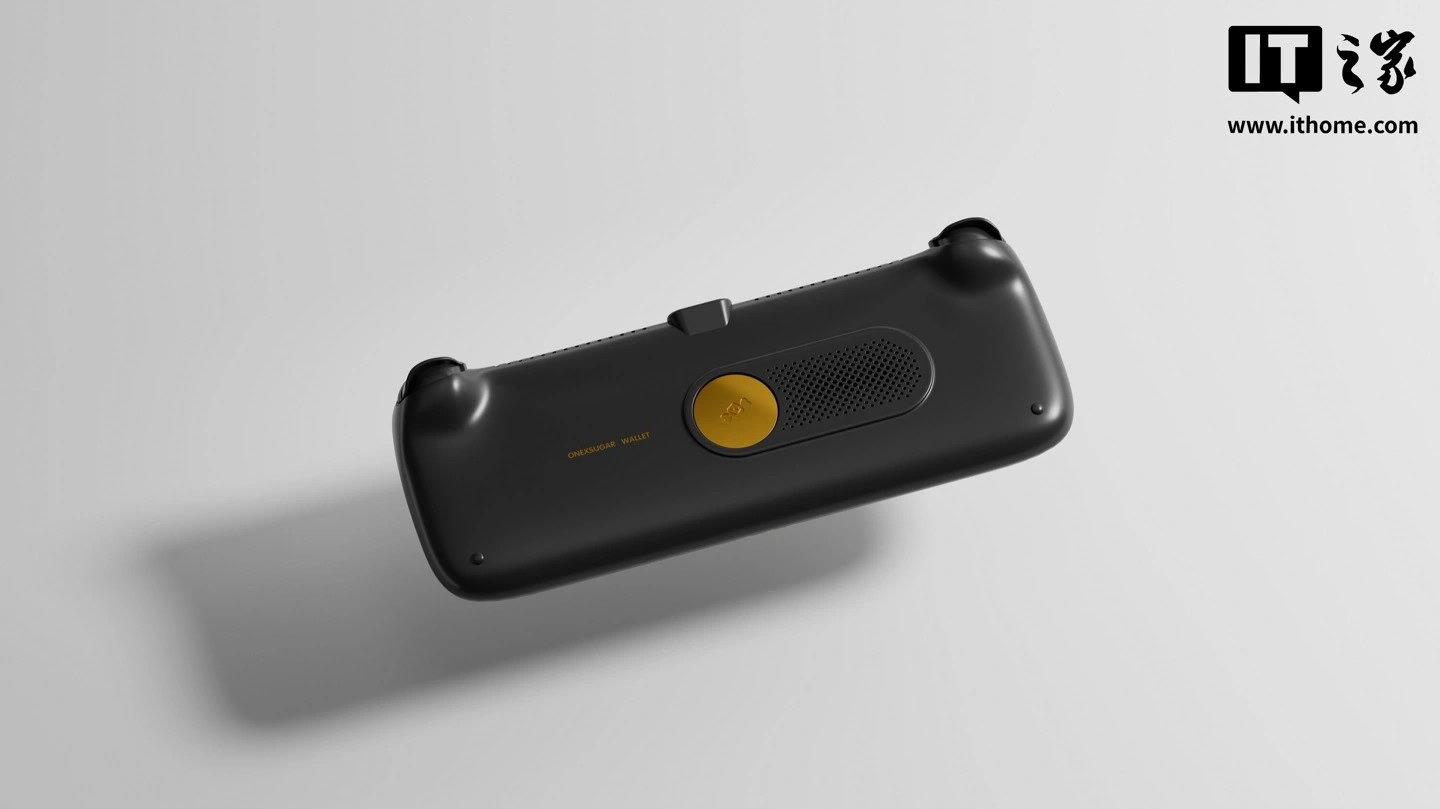
Key Takeaways
- The OneXSugar Wallet uses an 8.01-inch OLED foldable screen with 4:3 aspect ratio optimized for retro gaming without black bars
- Foldable screen durability remains uncertain—even Samsung's premium Galaxy Z Fold series experiences hinge wear, cracks, and coating issues
- The Wallet likely costs 799 dual-screen device, making it a premium product for enthusiasts only
- Real-world durability data won't exist for months; smart buyers should wait for user reviews before purchasing this unproven technology
- The innovative form factor demonstrates industry trends toward screen technology and design differentiation rather than processor upgrades
Related Articles
- Epilogue's SN Operator: Turn Your PC Into a Super Nintendo [2025]
- Retroid Pocket 6: PS2 Gaming on a Handheld Device [2025]
- OneXSugar Wallet: The First Folding OLED Gaming Handheld [2025]
- Commodore 64 Ultimate Review: Is This Retro Remake Worth It? [2025]
- Nintendo Power Glove: The Failed Controller That Shaped VR [2025]
- Ayaneo Pocket Vert Game Boy Remake: Complete Guide [2025]


