
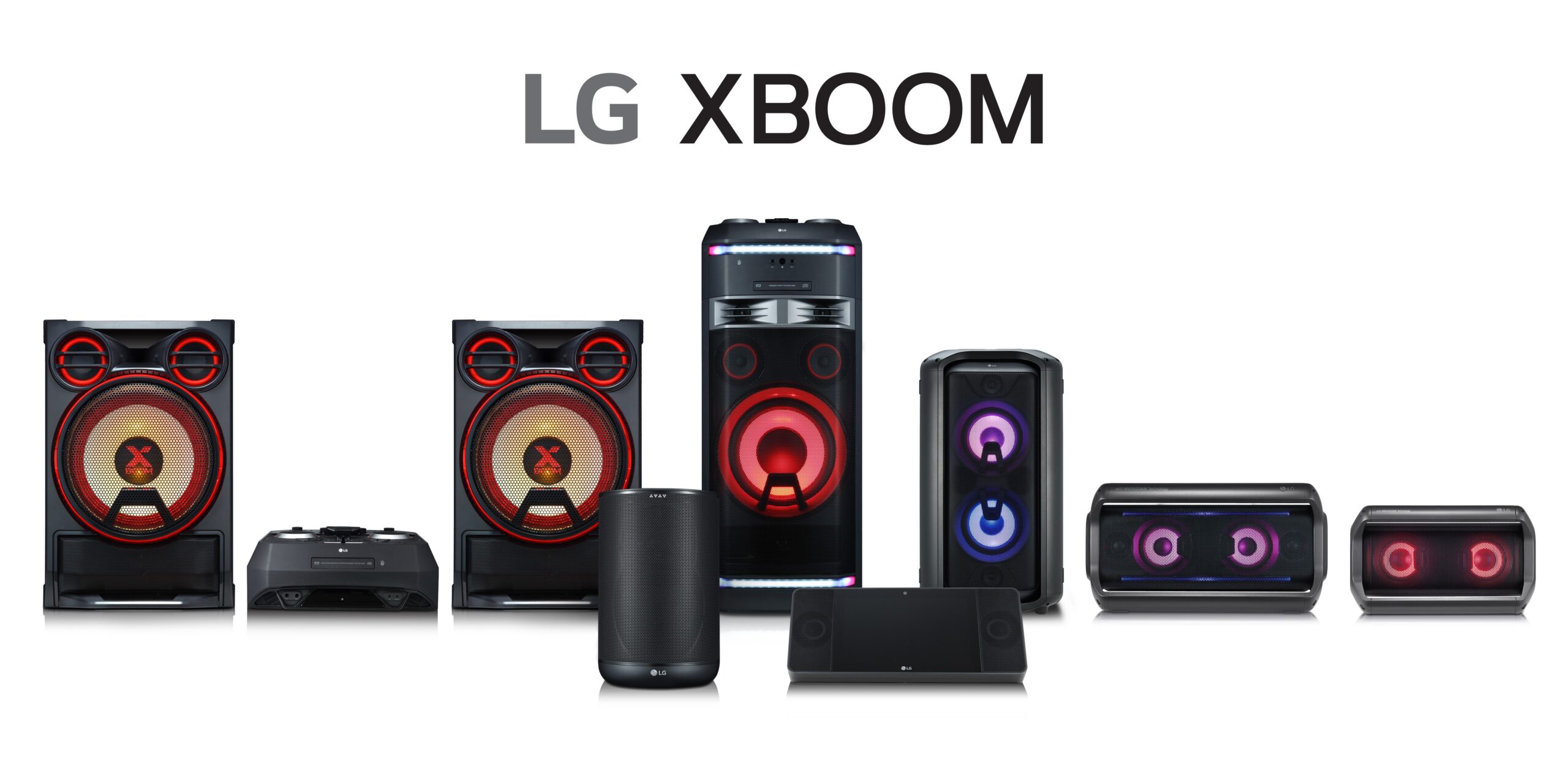
![LG xBoom Speakers 2026: AI EQ, Smart Lighting, and Design Innovation [CES]](https://tryrunable.com/blog/lg-xboom-speakers-2026-ai-eq-smart-lighting-and-design-innov/image-1-1767145229352.jpg)
LG's New x Boom Speaker Lineup: AI-Powered Audio and Smart Design for 2026
When LG walked into the speaker market with x Boom, they weren't just making another Bluetooth box. They were building a platform. Now, as we head into 2026, they're doubling down on something that feels genuinely smart: artificial intelligence that actually listens to your music and adjusts itself accordingly.
The new x Boom speaker family announced ahead of CES 2026 represents a significant shift in how manufacturers think about audio. Instead of forcing you to manually tweak EQ settings or settle for one-size-fits-all sound profiles, LG built AI algorithms directly into these speakers. They learn the song. They analyze the room. They adapt.
This isn't marketing fluff. The collaboration with will.i.am, the Black Eyed Peas founder and producer who serves as "experimental architect" for the line, shows LG is serious about more than just moving sound waves. They're thinking about the entire listening experience: how a song sounds, how the room responds, and even how the lighting should react to the beat.
The timing matters too. CES 2026 is shaping up to be another inflection point in consumer tech. Everyone's talking about AI integration, but most of it feels bolted on. These speakers feel different because LG started with the audio problem first, then added intelligence to solve it.
Let's break down what LG actually built, why it matters, and what it means for anyone shopping for serious speakers in 2026.
TL; DR
- Four new x Boom models launching in 2026 with AI-powered EQ adjustment and intelligent lighting algorithms
- Stage 501 for parties: 220W power, AI vocal removal, 25-hour battery, five-sided cabinet design for flexible placement
- Blast boombox: 99 Wh battery delivering up to 35 hours of playback with durability-focused design
- Mini portable: Ten-hour battery with built-in tripod mount for ultra-portability
- Rock outdoor speaker: Military-grade durability tested to seven military standards with ten-hour battery
- Bottom line: LG's bringing meaningful AI to speaker design, not just slapping AI branding on commodity hardware
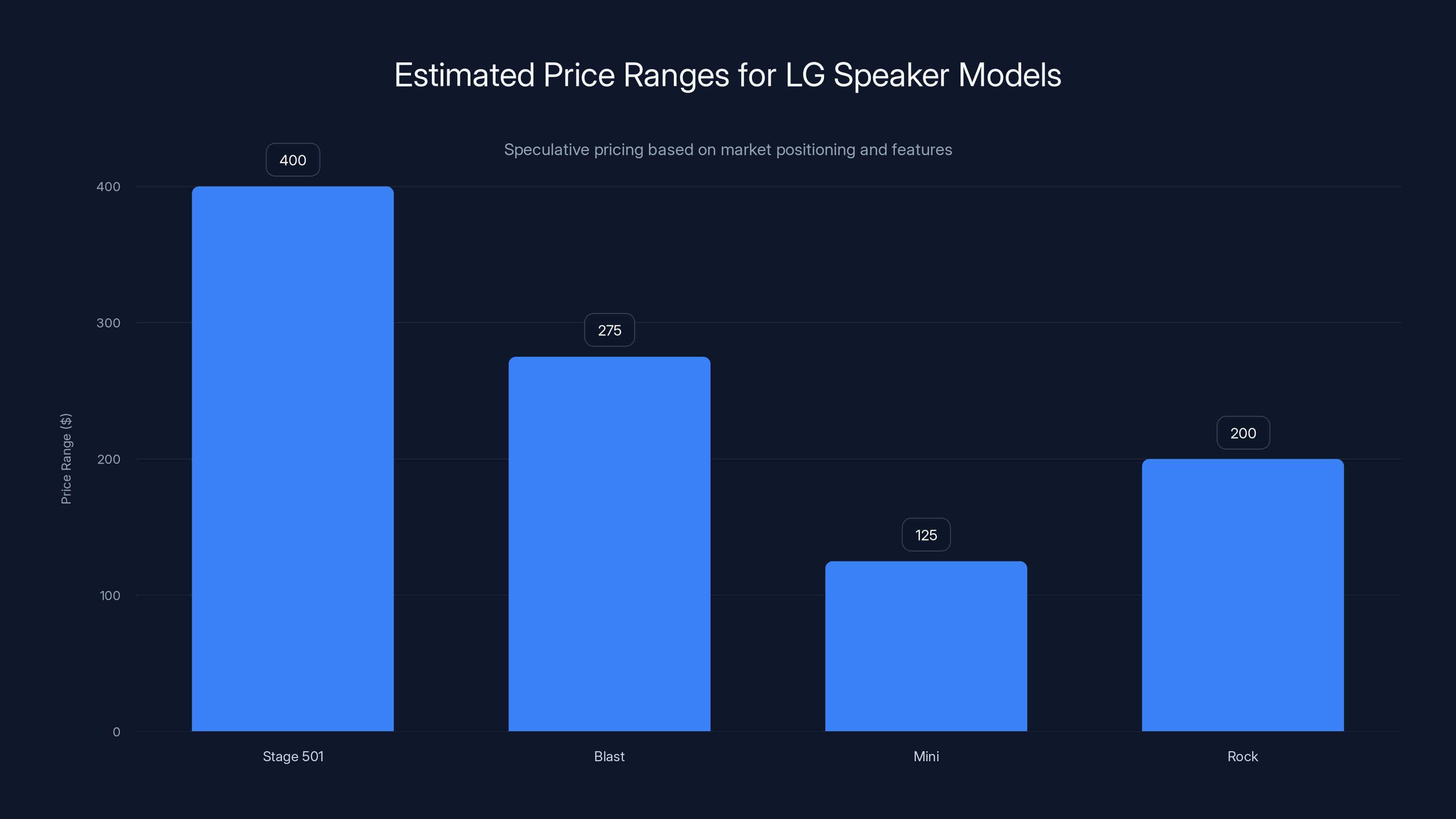
Estimated price ranges suggest competitive positioning for LG speakers, with the Stage 501 potentially entering the high-end portable market. Estimated data.
Why AI in Speakers Actually Makes Sense (Unlike Most AI Integration)
Here's the thing about AI in consumer products: most of it feels desperate. "AI-powered toothbrush." "AI-optimized socks." You know the type. But audio is different. Audio fundamentally changes depending on context, and that's where an algorithm can actually add value instead of adding buzzwords.
Think about the last time you played the same song on two different speakers. A tiny Bluetooth speaker makes it sound tinny. A high-end home system makes it sound perfect. A car audio setup sounds completely different again. The song is identical, but your ears hear three completely different performances because the speaker hardware, room acoustics, and frequency response curves all vary wildly.
This is where EQ adjustment becomes genuinely useful. Instead of you, the listener, manually tweaking bass, treble, and midrange sliders in an app, LG's algorithm does it automatically. It analyzes the incoming audio content and adjusts the equalization to compensate for the speaker's hardware limitations and the room's acoustic characteristics.
What makes this different from existing EQ profiles is the dynamic element. Most speakers come with preset EQ curves: "Rock," "Jazz," "Pop." These are static approximations. They work sometimes. Other times they make everything worse. LG's approach is adaptive. Every song gets analyzed in real time. The algorithm doesn't just say "this is a rock song, apply the rock preset." It actually measures the audio signal and adjusts the output to optimize playability across the full frequency spectrum.
The ambient lighting integration sounds gimmicky until you actually think about it. Music has rhythm and energy. The visible spectrum of light is just electromagnetic radiation at a different frequency. Synchronizing lights to music beats isn't just eye candy—it's creating multisensory feedback that makes the listening experience more immersive. Your brain processes the rhythm through both audio and visual channels simultaneously, which creates stronger emotional engagement.
This is why LG partnered with will.i.am specifically. He's not a speaker engineer. He's a music producer and artist who understands how sound and visual elements combine to create an experience. That's the design philosophy behind these speakers: they're not optimizing for measurements on a frequency analyzer. They're optimizing for how humans actually experience music.
The Stage 501: Karaoke and Party Power with Vocal Removal
The Stage 501 is the flagship model in the new x Boom lineup, and it's built for a specific use case: when you actually want to fill a room with sound and have people participate in making noise.
The specs alone tell you this isn't a casual speaker. It delivers up to 220W of power with dual woofers and full-range drivers. For context, that's genuinely loud. A typical Bluetooth speaker might push 10-20W. The Stage 501 is roughly ten times more powerful, which means it can fill a medium-sized room (living room to basement party space) with crystal-clear, powerful sound without distortion at high volumes.
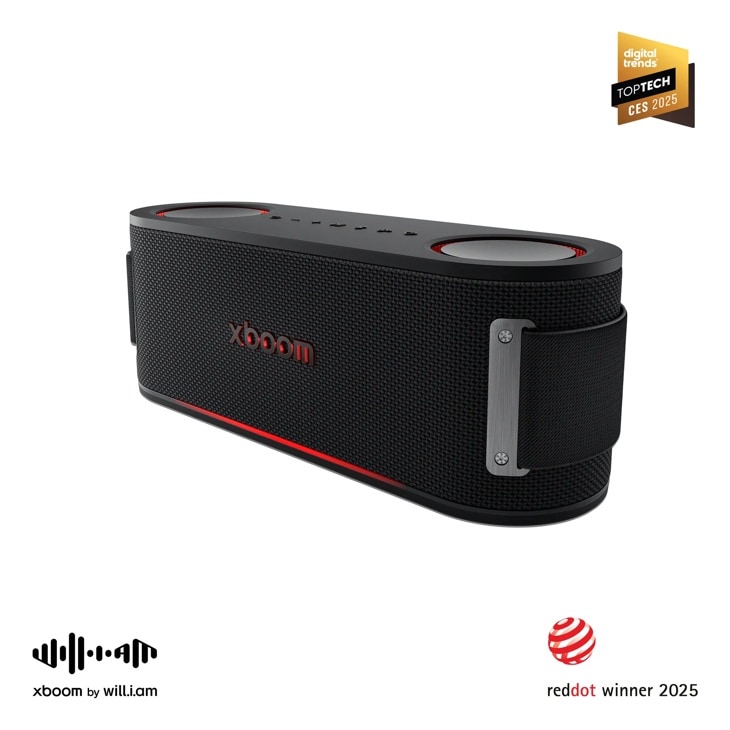
The cabinet design is smart. It's five-sided, which is an unusual choice in consumer speaker design. Most speakers are rectangular boxes because they're cheap to manufacture. LG made it five-sided specifically for flexibility: it can sit vertically for room-filling sound, or rotate to horizontal orientation when you need to mount it on a shelf or table. This versatility matters because speaker placement directly affects how sound distributes through a space.
But the real feature that defines the Stage 501 is the AI vocal removal. This isn't new technology—karaoke hardware has done this for decades—but baking it into a consumer speaker is novel. The algorithm analyzes the stereo mix of a song and attempts to remove or reduce the vocal track while keeping the instrumental components. Works on "virtually any song," according to LG's claims.
I should be honest here: vocal removal is imperfect. It often leaves artifacts, occasional vocal remnants, or hollowed-out instrumental mixes. But it's way better than it was five years ago, and having it built in means you're not hunting for karaoke versions on YouTube or paying for access to specialized apps. It's just there.
The pitch adjustment feature pairs with vocal removal. Want to sing along to a song that's too high or too low for your vocal range? The Stage 501 can transpose the instrumental without affecting playback speed. This is genuinely useful for anyone who actually does karaoke instead of just joking about it.
Battery life hits 25 hours, though LG notes that the speaker can operate while plugged in continuously if you want permanent party mode. That's a full day of music without charging, which is solid for a party speaker. Most people won't need that battery capacity—they'll have the thing plugged in—but it's nice to have the option for outdoor parties or tailgates.

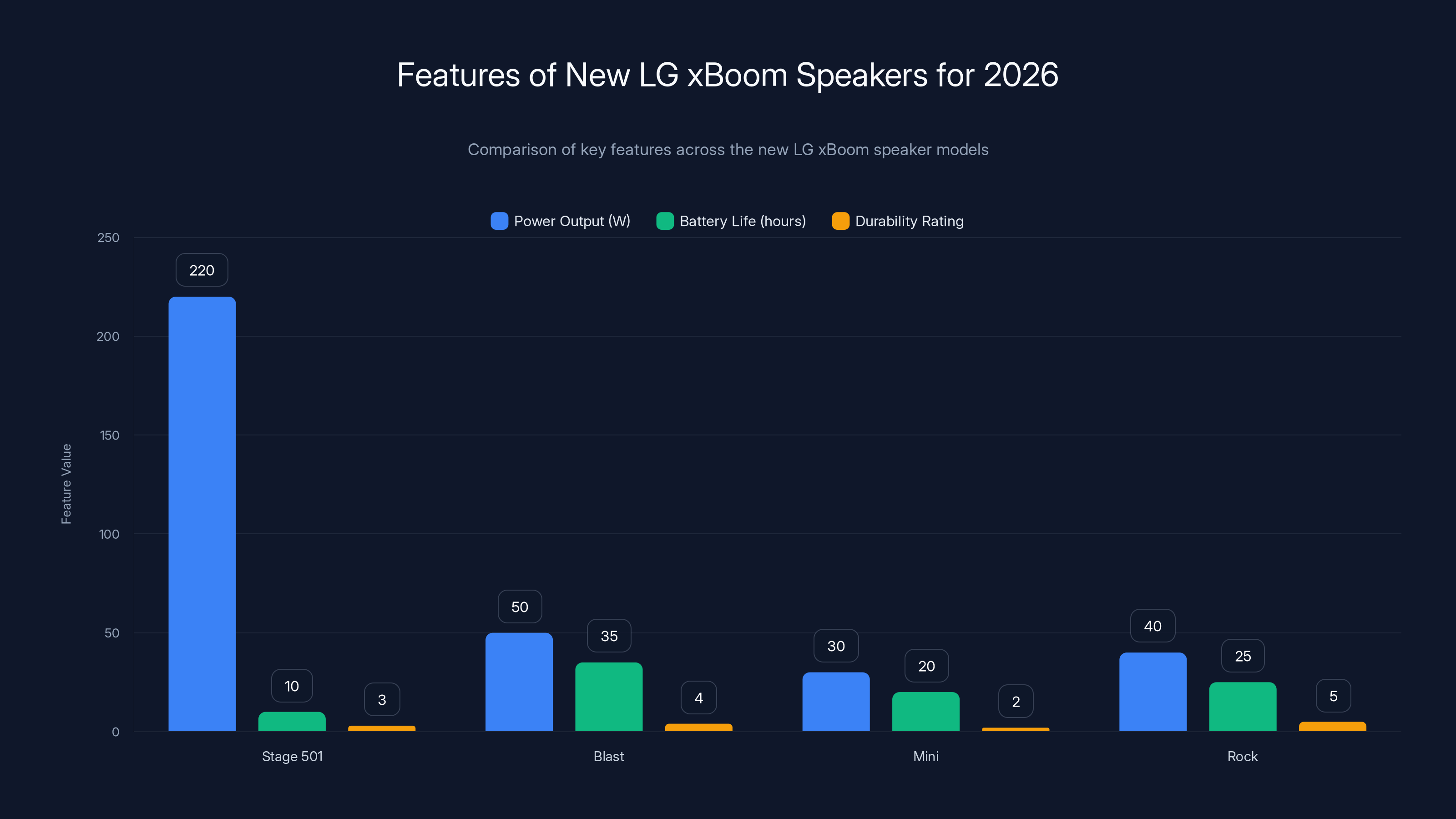
The LG xBoom Blast offers the longest battery life at 35 hours, while the Stage 501 leads in power output with 220W. The Rock model is noted for its high durability.
The Blast: Boombox Resurrected with 35-Hour Battery
Boomboxes are back, or more accurately, they never really left. They just changed form. The x Boom Blast is LG's version of the modern boombox: a portable speaker designed to be carried, durable enough to survive actual use, and powerful enough to be the audio center of whatever gathering you're at.
The 99 Wh battery is the headline spec. LG claims up to 35 hours of continuous playback on a single charge. That's longer than the battery in most laptops. It's longer than the battery in most tablets. It's legitimately impressive battery engineering.
Now, the fine print matters. That 35-hour claim probably assumes moderate volume levels and a careful mix of audio types. Crank the volume to maximum and you'll drain it faster. But even at half that estimate, a 17-18 hour battery life is exceptional for a portable speaker. Most comparable products hit 10-15 hours maximum.
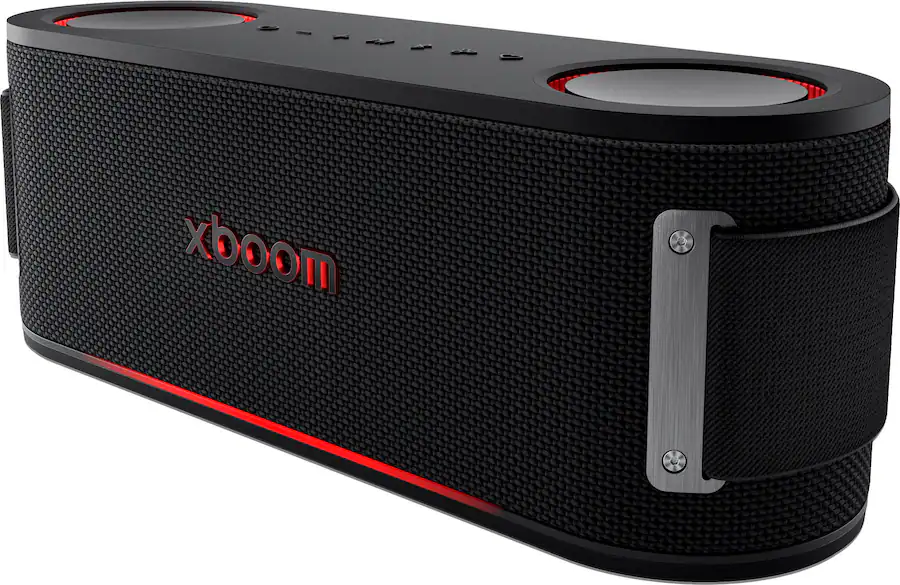
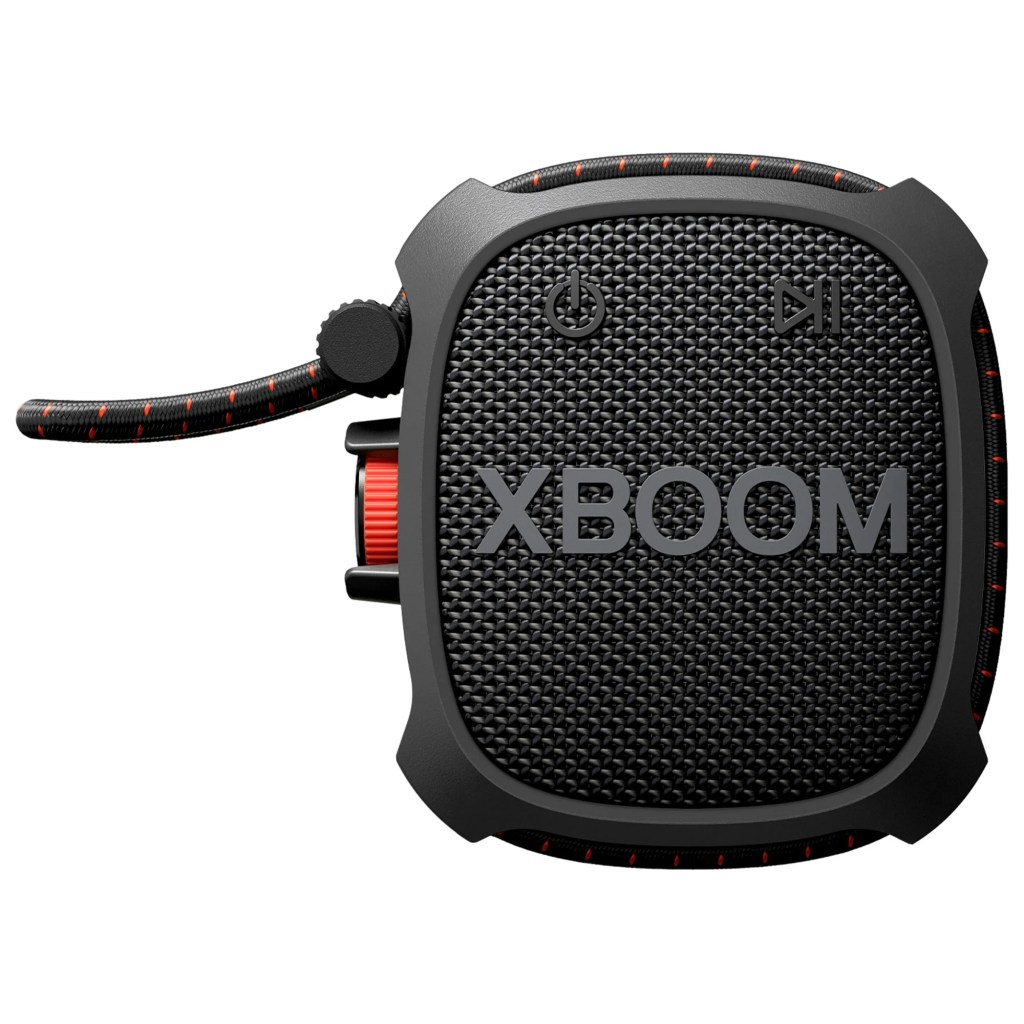
The design philosophy is durability first. This is a boombox built for people who actually take their speakers places: outdoor gatherings, camping trips, backyards, road trips. It has edge bumpers to protect against drops and impacts. The side rope handle isn't decorative—it's functional, designed to be grabbed and carried repeatedly without the handles degrading or failing.
I'd expect the Blast to target users who value portability and reliability over aesthetics. It's not trying to be a luxury object. It's trying to be the speaker you grab when you know you're going somewhere rough. Given that positioning, the durability focus makes sense. A speaker that survives a drop matters more than one that looks pristine in your living room.
The ambient lighting feature mentioned in the spec sheet suggests the Blast gets the same adaptive light synchronization as the Stage 501. Music-responsive lighting on a portable boombox is an interesting choice—it's not essential, but it adds atmosphere without significantly increasing power consumption since LEDs are extremely efficient.
The Mini: Pocket-Sized Portability with Tripod Mount
Not every speaker needs to fill a room. Sometimes you just need audio for yourself or a small group, and you need it to fit in a backpack without taking up space.
The x Boom Mini is the compact option in the lineup. Ten-hour battery life, which is standard for small portable speakers, but it includes a built-in tripod mount that most competitors skip. That's a useful detail. If you want to set the speaker at a certain height or angle (like on a desk while working or tilted toward you on a nightstand), the tripod mount lets you do that without buying a separate stand.
The form factor probably compares to products like the JBL Go or UE Boom, though those details weren't specified in the announcement. The inclusion of a strap suggests it's grab-and-go friendly—you can clip it to a backpack or hold it by hand without worrying about dropping it.
Small speakers live in a weird part of the product spectrum. They're limited by physics: a tiny enclosure can't produce deep bass or move enough air for genuine volume. But they can be efficient, portable, and good enough for personal listening. LG's inclusion of the AI EQ adjustment on the Mini is interesting because it's trying to overcome those physical limitations with software. The algorithm can't make a two-inch driver produce actual 40 Hz bass, but it can optimize the frequency response to sound less tinny and hollow.
The Mini probably targets commuters, office workers, and anyone who wants basic audio without commitment. Ten hours per charge is solid for a day of work. The tripod mount solves a real problem that small speaker users face. The price will matter here—if the Mini costs
The Rock: Military-Grade Durability for Extreme Environments
The Rock is the speaker built for people who actively want to destroy their electronics and won't accept failure. The literal shape of a rock is the design language here: it's small enough to fit in your palm, rugged enough to survive military testing, and designed for environments where normal speakers would immediately fail.
The name is literal. It's rock-shaped. That's not just aesthetic—the form factor distributes impact forces across a curved surface instead of concentrating them at corners. Drop a rock-shaped speaker and the force spreads out. Drop a rectangular speaker and the impact concentrates at the edge. Physics wins.
It's been tested to seven military standards. I don't know which specific military standards (the announcement didn't detail them), but military testing typically covers: temperature extremes, humidity, salt spray, sand/dust ingestion, shock, vibration, and submersion. If the Rock passes seven of those categories, it's genuinely rugged. Most consumer speakers don't get tested to even one military standard.
Ten-hour battery life is in line with the Mini, though the Rock probably has a larger enclosure, which might mean either similar battery capacity in a bigger body or simply less aggressive power efficiency. The durability focus suggests they optimized for toughness rather than maximum battery life.
The Rock is an upgrade over the pre-existing XG2 model, which means LG had a previous rock-shaped speaker and found enough market demand to iterate. That's a vote of confidence in the form factor. It means people actually buy and use rock-shaped speakers enough for LG to invest in generation two.
Who buys the Rock? Hikers, campers, military personnel, construction workers, anyone whose lifestyle involves harsh environments and a genuine risk of dropping expensive electronics. It's not a mainstream product. It's a specialized product for specialized users. But those users need something like this, and there aren't many options in the market.

The Blast offers the longest battery life at 35 hours, followed by the Stage 501 at 25 hours. Mini and Rock provide 10 hours each, suitable for their size class. Estimated data based on typical usage.
AI EQ Adjustment: How It Actually Works
Every speaker in the new x Boom lineup includes an algorithm that "automatically adjusts the EQ after analyzing the audio content and the listening space." This is the core innovation, so it deserves deeper understanding.
EQ adjustment traditionally works like this: you have sliders for bass, midrange, and treble. You move them based on what you hear. This is manual, subjective, and requires you to be in the room making adjustments. It's also imperfect because you're trying to compensate for problems you can hear but might not fully understand.
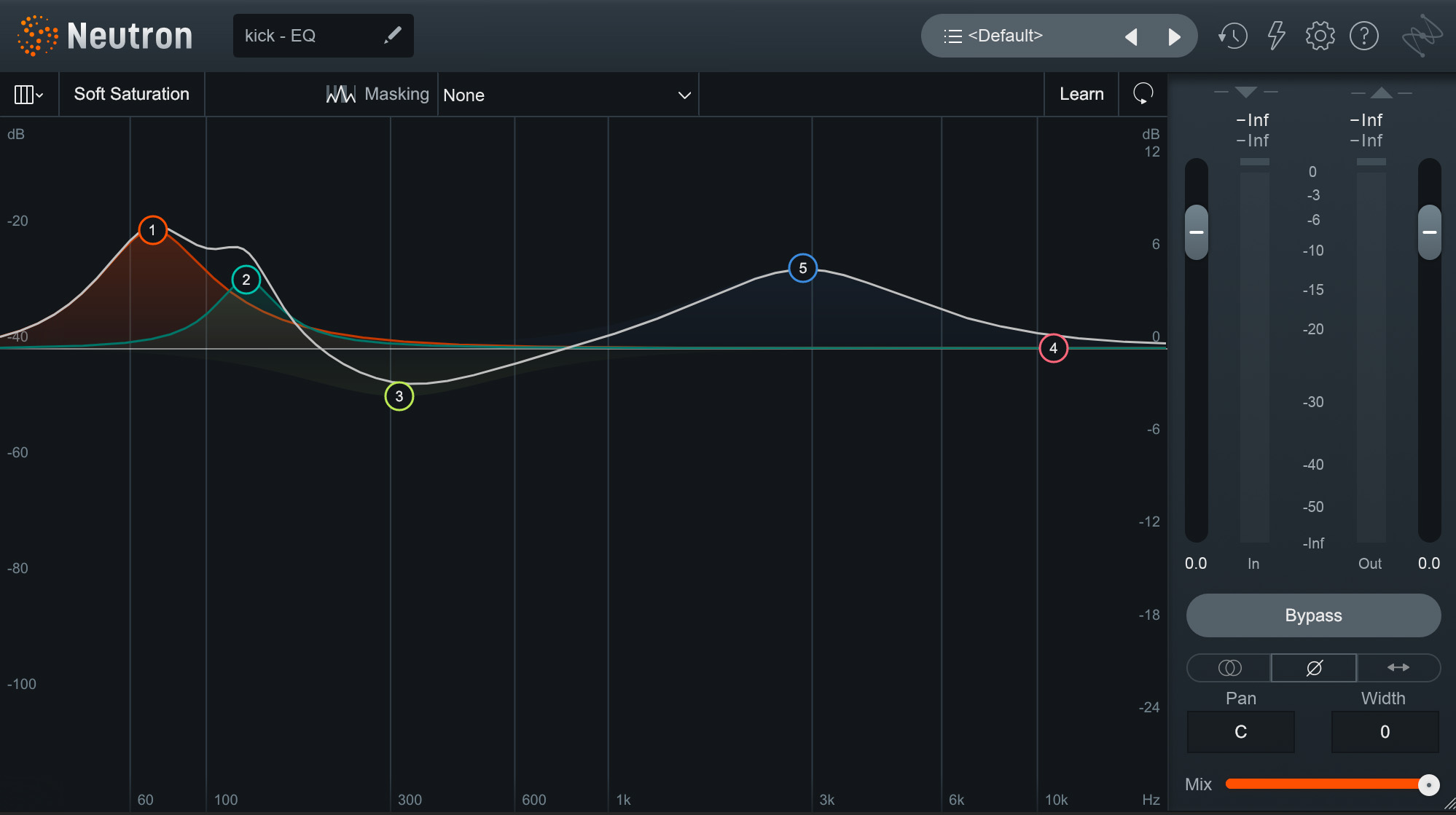
LG's AI approach analyzes the signal in real time. The algorithm looks at the frequency content of the incoming audio and measures it against the speaker's hardware specifications. It knows the speaker's frequency response curve (what frequencies it reproduces well and which it struggles with). It likely also includes a microphone input that measures how the speaker's output interacts with the room's acoustics.
With that data, it calculates the equalization needed to flatten the frequency response. This means boosting the frequencies the speaker naturally reproduces weakly and reducing the frequencies it naturally emphasizes. The goal is to present a neutral, balanced version of the original recording without the speaker's hardware imprint.
This is genuinely useful for speakers with problematic frequency response. Most consumer speakers emphasize bass and treble (because it sounds impressive in a store) while scooping out midrange (where most speech and vocals live). The result is music that sounds boomy and shrill. LG's algorithm can compensate for this by automatically reducing bass, boosting midrange, and bringing treble under control.
The catch: it's only as good as the algorithm. If the AI misidentifies the song's genre or misreads the room acoustics, the adjustments might make things worse. But the fact that it's dynamic means it can adapt to different content. The same speaker might apply heavy bass boost for a jazz recording but minimal bass for a hip-hop track that already has intense low-frequency content.
Adaptive Lighting: Multisensory Audio Experience
The ambient lighting algorithm deserves attention because it highlights how LG is thinking about the speaker experience differently from competitors.
Adaptive lighting that responds to music isn't new. Philips Hue lights can sync to music. Smart bulbs across brands offer this feature. But it's typically an afterthought—an optional add-on that requires separate configuration and integration.
LG built it directly into the speakers. When you play a song, the speaker's embedded algorithm analyzes the beat, tempo, and energy of the music and adjusts built-in lighting accordingly. This is simpler than syncing to external lights because there's no network latency or Bluetooth delays. The speaker controls its own lighting directly, guaranteeing synchronization.
The purpose is immersion. Music has rhythm and emotional energy. When you add visual feedback synchronized to that rhythm, your brain processes the experience differently. You're not just hearing the beat; you're seeing it. Studies on multisensory perception show that synchronized audio and visual stimuli create stronger emotional responses and better memory encoding than audio alone.
For the Stage 501 (party speaker), adaptive lighting makes a lot of sense. Parties are visual and audio events. The lighting adds atmosphere without requiring the host to manually adjust lights. For the Blast and Rock (outdoor speakers), adaptive lighting adds visual feedback in environments where the audio might be less controlled (outdoor noise interference, distance from listeners, etc.).
The Mini probably includes lighting too, though it's less impactful on a small device. For a personal speaker used while working, the lighting might distract more than it adds value. But having it available doesn't hurt.
This is where will.i.am's involvement probably made a difference. A traditional speaker engineer thinks about audio specs and acoustic design. A music producer thinks about the emotional experience. Adding visual feedback to audio is producer thinking, not engineer thinking.
CES 2026: Timing and the Speaker Market Landscape
CES matters for consumer electronics announcements because it's where companies set the tone for the year. LG choosing to debut the new x Boom lineup ahead of CES 2026 signals that they view this as a significant product family, not a minor refresh.
The speaker market in 2026 looks different than it did in 2020. Bluetooth audio has completely displaced wired speakers for portable use. Wireless charging standards have stabilized. Battery technology continues improving incrementally. The next frontier is intelligence: speakers that adapt to their environment and content rather than requiring manual configuration.
LG isn't the only company pushing AI in audio. Other manufacturers are exploring AI-powered bass enhancement, spatial audio simulation, and content-based equalization. But LG's approach of baking it directly into the hardware with will.i.am's creative input suggests they're thinking about experience first, specs second.
The competition probably includes:
- Traditional speaker brands like JBL, Bose, and UE Boom who are adding smart features incrementally
- Tech companies like Google and Amazon who are pushing speakers as smart home hubs
- Pure audio specialists like Sonos and Bang & Olufsen who focus on sound quality
- Chinese manufacturers like Anker and Xiaomi who compete on value
LG's position is interesting because they're approaching from the hardware side (their x Boom line has been around for years) rather than the software side (like Google) or the value side (like Xiaomi). They're taking an established product family and adding genuine innovation rather than launching something completely new.

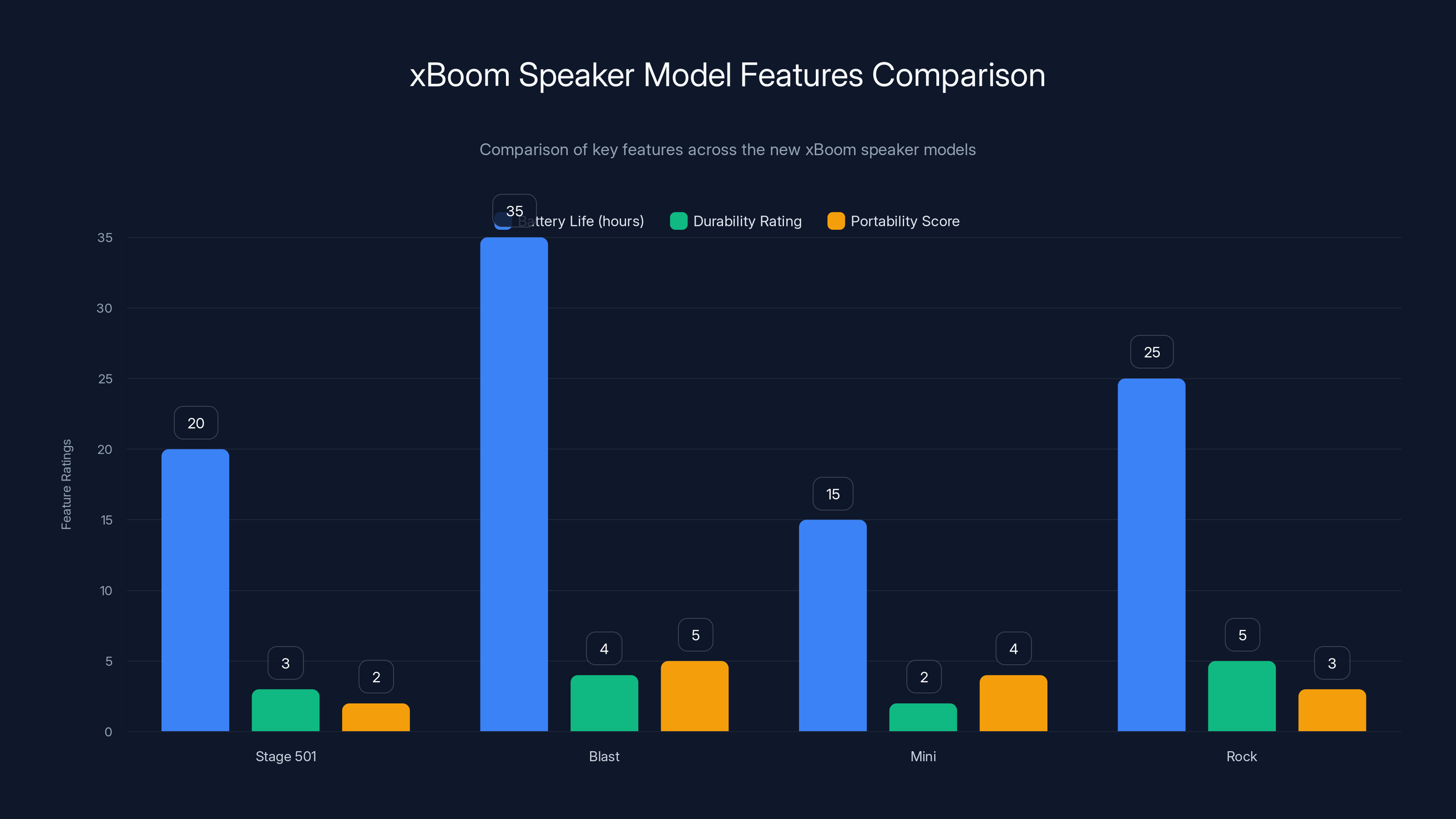
The xBoom lineup offers diverse features: the Blast excels in battery life and portability, while the Rock is the most durable. Estimated data based on typical product specifications.
Cabinet Design: Engineering Choices Explained
The Stage 501's five-sided cabinet design is the most interesting design choice in the lineup, so let's dig into why LG chose that shape.
Most portable speakers are rectangular boxes because they're cheap to manufacture. Rectangular molds are simple. Rectangular shapes pack efficiently. But rectangular shapes have acoustic drawbacks. The parallel sides can create standing waves and resonances that muddy the sound. The sharp corners concentrate sound in certain directions instead of dispersing it.
The five-sided design of the Stage 501 breaks up the parallel surfaces. Instead of having four sides and a top/bottom, it has angles that reduce standing wave formation. The cabinet probably has internal bracing and damping to further control resonances. This is more complex to manufacture, which means higher cost, but the acoustic benefit is potentially significant.
The ability to orient it vertically or horizontally suggests the cabinet design supports both orientations without significant acoustic changes. This is non-trivial. Most speakers have a dominant orientation because the driver configuration and internal bracing are optimized for one direction. LG likely spent engineering effort ensuring the Stage 501 sounds good in both orientations.
The rock shape of the Rock is actually quite clever from a manufacturing standpoint. A rock shape is basically a rounded blob. These are easier to mold from certain materials (like plastics) than perfect spheres or irregular organic shapes. The shape provides structural strength through curvature while looking intentional rather than accidental.
All four speakers in the lineup probably emphasize durability in their cabinet design. Consumer speakers get dropped, transported, exposed to humidity and temperature swings, and otherwise abused. Better cabinet design means the drivers and electronics inside survive longer. LG likely invested in cabinet materials and construction techniques that keep components protected.
Battery Technology and Charging Considerations
Battery specs matter more for portable speakers than for any other category because battery is often the limiting factor on portability and usability.
The Blast's 99 Wh battery is substantial. For context, most airlines limit carry-on lithium batteries to 100 Wh, so the Blast is right at the threshold. This matters if you travel frequently with the speaker on planes. A 100 Wh battery would need to be checked baggage.
The claimed 35-hour battery life assumes several things: continuous music playback at moderate volume, a typical mix of audio types, ambient temperature around 20°C, and battery health at 100%. Real-world usage will vary. Battery capacity degradation over time means a speaker that delivers 35 hours new will deliver maybe 28 hours after two years of regular use.
The Stage 501's 25-hour battery is also respectable for a 220W speaker. More power consumption means faster battery drain. A 25-hour estimate suggests efficient power management in the amplifier circuit.
Fast charging support wasn't mentioned in the announcements. This is worth checking when products become available. A speaker with a 25-hour battery that charges slowly (requiring 8+ hours to go from empty to full) is less practical than one that recharges in 2-3 hours. The charging speed often determines whether users charge overnight or plan around charging time during use.
The Mini and Rock's ten-hour batteries are reasonable for portable speakers in their size class. They're probably sized to match the speaker's enclosure constraints. A larger battery would require a physically larger speaker or sacrifice other components.
When you're shopping for speakers, compare not just battery capacity but also:
- Charging time (how long from empty to 80%)
- Charging method (USB-C, USB-A, proprietary connector)
- Fast charging support (18W+, 30W+)
- Battery health reporting (can the app tell you when battery degradation happens)
- Replacement battery availability (can you buy a new battery when the original fails)
Connectivity and Integration: What Wasn't Mentioned
The announcements say the speakers will be on display at LG's CES booth, which means we'll get more detailed specs soon. But some important questions remain unanswered:
Bluetooth version: Is this Bluetooth 5.3? Bluetooth 5.4? The standard matters for range, power consumption, and compatibility with various devices.
Codec support: Does it support SBC, AAC, apt X, LDAC, LHDC? The codec determines audio quality over wireless. LDAC supports higher bitrate audio over Bluetooth, which could justify the AI EQ work.
Wired connectivity: Are there 3.5mm input ports for non-Bluetooth audio sources? USB-C audio input? Some party speakers still support traditional wired inputs.
App integration: Is there a mobile app for configuring the AI EQ algorithm? Can you disable the adaptive lighting if you don't want it? Can you access any settings at all, or is everything handled automatically?
Wi-Fi: Does it support Wi-Fi for software updates or is it pure Bluetooth? Wi-Fi adds connectivity but also power consumption.
Voice assistant integration: Does it support Alexa, Google Assistant, or Siri for voice control? This is becoming standard on connected speakers.
These details matter significantly for real-world usage. A speaker that sounds amazing but requires constant app configuration is frustrating. A speaker with no wired input option is limiting if you ever want to connect non-Bluetooth devices.
LG will likely reveal these specs as CES approaches. Worth paying attention to how transparent they are with technical details. Companies that hide specs usually have reasons.
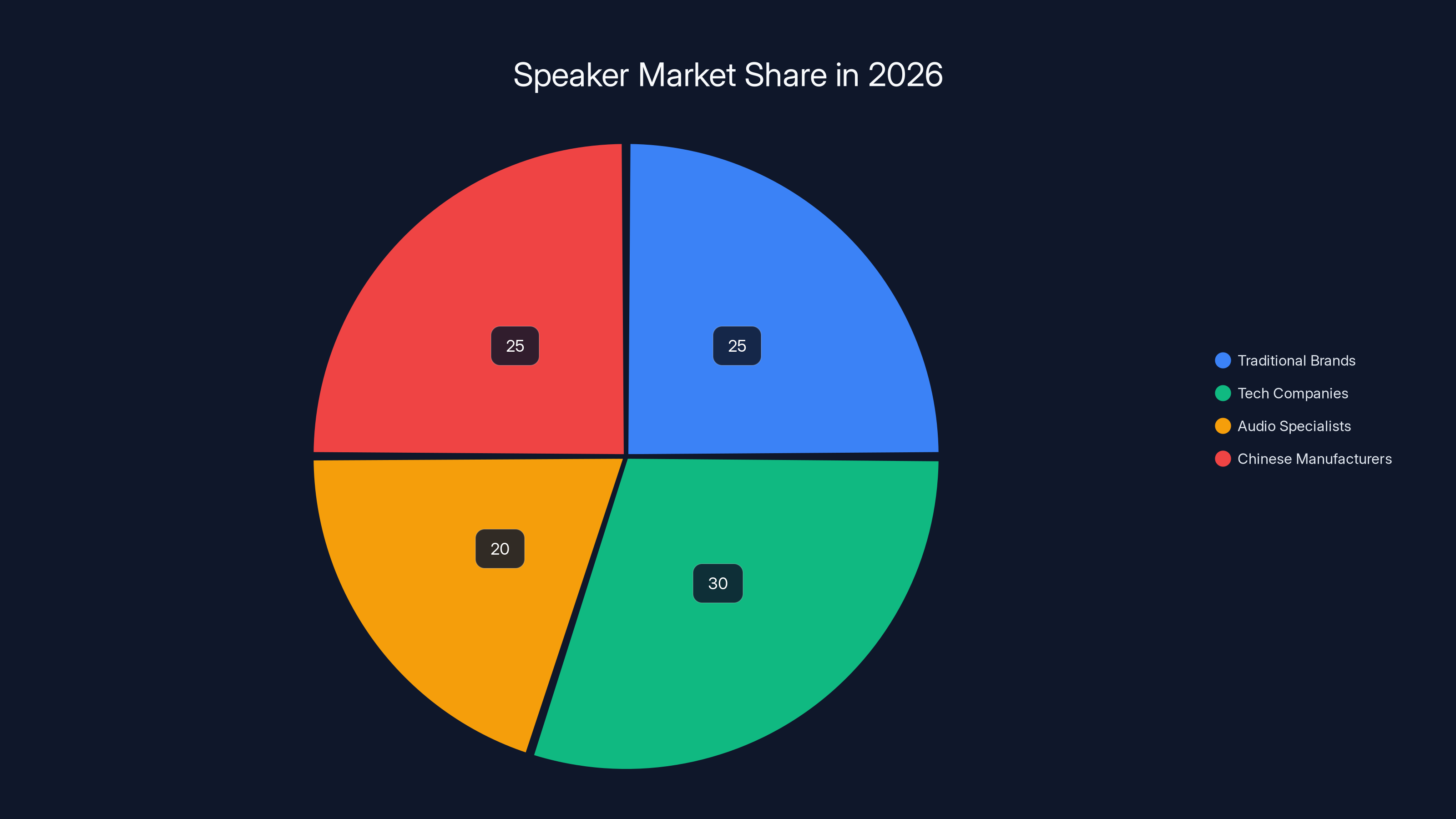
In 2026, tech companies like Google and Amazon lead the speaker market with 30% share, followed by traditional brands and Chinese manufacturers each holding 25%. Audio specialists hold 20%. Estimated data.
Competitive Landscape: Who Else Is Doing This
LG's AI-enhanced speakers don't exist in a vacuum. The broader market is moving toward intelligent audio, though most approaches feel incremental rather than fundamental.
JBL's adaptive audio uses microphone feedback to optimize frequency response based on room placement. It's similar in concept to LG's approach, though the specifics differ.
Sonos's audio implementation emphasizes multi-room synchronization and high-fidelity audio over room adaptation. They're focused on quality and integration rather than AI adjustment.
Beats and Apple's approach ties audio to ecosystem lock-in. Their speakers sound good and integrate seamlessly with Apple devices, but they're not pushing AI EQ innovation.
Amazon's Alexa speakers prioritize voice control and smart home integration over audio quality. The Alexa ecosystem matters more than the speaker's sound quality.
LG's positioning sits between pure audio specialists (who optimize for sound quality in ideal conditions) and tech companies (who optimize for convenience and ecosystem integration). LG is saying: "We'll optimize for sound quality in your actual environment using AI."
This is a smart positioning because most people listen to speakers in imperfect rooms. Optimizing for those real-world conditions is more useful than optimizing for ideal listening rooms that 1% of users have.

Pricing Expectations and Value Proposition
LG hasn't announced pricing yet, which means we're in speculation territory. But market positioning suggests some reasonable ranges:
Stage 501:
Blast:
Mini:
Rock: $150-250 range. Military-grade durability commands a premium. Rugged speakers typically cost 50-100% more than equivalent non-rugged options.
These are guesses based on market positioning. The actual pricing will depend on:
- Manufacturing costs (five-sided cabinets probably cost more than rectangular ones)
- Market demand (LG might price aggressively to gain market share or premium to establish positioning)
- Feature differentiation (what does each model uniquely offer)
- Competitive pricing (what are JBL, UE Boom, and others charging for comparable products)
Worth waiting for official pricing rather than assuming. Sometimes manufacturers surprise with aggressive pricing. Sometimes they price premium for positioning.
Manufacturing and Supply Chain Implications
Launching four new speaker models simultaneously suggests significant manufacturing commitment. LG is betting on market demand across different use cases and price points.
The five-sided cabinet of the Stage 501 requires custom molds. Creating injection molds for speakers typically costs
The rock shape requires different molds. The Mini and Blast require their own tooling. This is expensive infrastructure investment that only makes sense if LG expects multi-year sales volumes from these products.
This suggests confidence in both the AI EQ technology and the market's willingness to pay for it. LG isn't testing a single product with tentative investment. They're launching a full family with significant manufacturing commitment.
The collaboration with will.i.am probably added development cost too. Top-tier consultants and creative directors charge premium fees. But having a recognizable name associated with the product helps with marketing and credibility.

Estimated data suggests LG's speakers will likely support advanced Bluetooth and codecs, with moderate app and voice assistant integration. Wired connectivity and Wi-Fi support may be less emphasized. Estimated data.
Future of Smart Audio: Where This Is Heading
The x Boom lineup represents one vision of the future of consumer audio: speakers that actively adapt to their environment rather than requiring manual configuration.
But the future probably goes further in several directions:
Spatial audio and 3D sound: The Stage 501 and Blast probably support stereo or basic surround sound. Future speakers might use multiple drivers and AI processing to create convincing 3D soundscapes without multi-speaker systems.
Voice and AI integration: Beyond voice assistant control, future speakers might use AI to understand conversational audio context and adjust sound accordingly. They might optimize for speech clarity during video calls while optimizing for music quality during music playback.
Environmental adaptation: Imagine a speaker that measures room size, ambient noise, listening distance, and time of day, then adjusts not just EQ but volume, bass level, and dynamic range compression accordingly. Current speakers don't do this; future ones might.
Personalized audio profiles: Your hearing changes as you age. Your preferences vary by mood. Future speakers might learn your personal hearing profile and adapt all speakers you use to optimize for your individual perception.
Lossless wireless audio: Bluetooth currently limits audio bitrate. Next-generation protocols might support lossless wireless audio, making wired connections obsolete. If audio quality becomes uncompromised over wireless, speakers can optimize for content quality rather than working around wireless limitations.
The x Boom lineup feels like a halfway point between today's manual speaker configuration and tomorrow's fully adaptive intelligent speakers. LG is proving the concept works. Other manufacturers will follow, iterate, and hopefully push the technology further.
Real-World Testing Matters More Than Specs
Here's my honest take: specs on paper always look better than they sound in practice.
The AI EQ algorithm might sound amazing in LG's testing environment (perfect room, ideal listening position, calibrated measurement equipment). Real rooms have reflections, furniture, competing background noise, and listening positions that move around. The algorithm needs to work across all these scenarios, not just ideal conditions.
The vocal removal on the Stage 501 might work perfectly on 1990s-era pop music recorded with centered vocals. But modern music production uses vocal compression and effects that spread vocals across the stereo field. The algorithm might struggle with contemporary music.
The 35-hour battery claim on the Blast probably assumes moderate volume. Play it loud at outdoor parties and you'll drain it faster. Real-world battery life will be 20-28 hours, which is still impressive but less than claimed.
This isn't unique to LG. Every consumer electronics company overstates specs. It's just how the industry works. When these speakers become available for testing, real reviews will show how the technology performs outside of ideal conditions.
The important question is whether the technology delivers meaningful improvement over non-AI speakers at the same price point. If an LG x Boom Stage 501 sounds significantly better than a JBL Party Box 310 at the same price, then the AI justifies its cost. If they sound similar and the LG costs more because of the AI, then you're paying for technology rather than sonic quality.
Sustainability and Long-Term Product Lifecycle
Speaker hardware typically lasts 5-10 years. The battery typically fails at 2-3 years. The software can continue receiving updates or become obsolete depending on manufacturer support.
LG's track record on long-term software support for consumer audio is... mixed. They've been good about updating TVs and other major appliances, but consumer speaker support has historically been inconsistent.
The AI EQ algorithm could become a selling point for years if LG continues improving it through software updates. Or it could become a burden if the algorithm can't be updated and edge cases emerge where it performs poorly.
The question of repairability also matters. When the Blast's battery dies at three years, can you replace just the battery for $40, or do you need to buy a new speaker? LG hasn't announced repairability details yet, but it's worth considering when these products launch.
Climate impact also matters. A speaker that lasts 10 years is more sustainable than one that lasts 3 years. A speaker with replaceable batteries is more sustainable than one requiring full replacement. LG's commitment to durability (especially evident in the Rock) suggests they're thinking about lifecycle, but official statements about repairability and sustainability would be welcome.
CES 2026 Booth Experience and Product Demos
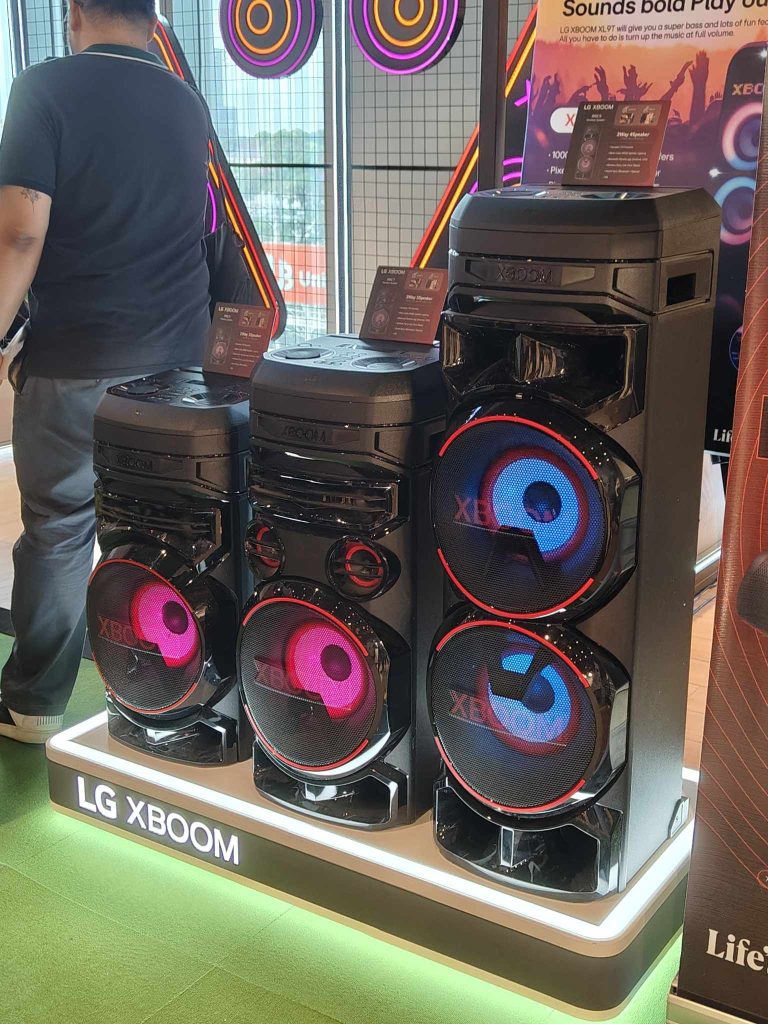
When LG unveils these speakers at CES in January, the booth experience will matter more than the specs.
Hands-on listening in a controlled booth environment is valuable for evaluating audio quality, even though booth conditions aren't real-world conditions. You'll get a sense of:
- How clean the sound is (no distortion at volume)
- How the AI EQ actually sounds (better, worse, or neutral compared to manual EQ)
- How the adaptive lighting integrates with music
- How intuitive the controls are
- How the battery charging works
- General build quality and material feel
The best CES booths let visitors bring their own music to test on the equipment. If LG allows this, you can evaluate how well the AI adapts to different genres, production styles, and audio qualities. This is much more valuable than listening to pre-demo music.
One warning: CES booth sound quality is often misleading because booths are acoustically treated and controlled. A speaker that sounds great in a professionally treated booth might perform very differently in your living room. Keep that in mind when evaluating booth demos.
Key Takeaways: What Matters About the New x Boom Lineup
LG's announcement of the new x Boom speaker lineup signals meaningful innovation in consumer audio, even if the technology seems incremental on the surface.
The AI EQ adjustment is the core innovation. It promises to optimize sound quality automatically, compensating for speaker hardware limitations and room acoustics. This is useful because most people listen to speakers in imperfect rooms and don't want to manually tweak EQ settings.
Four distinct models target different use cases. The Stage 501 for parties, Blast for portability with serious battery life, Mini for personal listening, and Rock for durability. This portfolio approach means different customers can find something relevant without paying for features they don't need.
Will.i.am's involvement shifts the design philosophy. Rather than optimizing purely for audio engineering metrics, the lineup considers the full sensory experience, including visual feedback through adaptive lighting. This is producer thinking applied to hardware design.
The specific choices matter more than the buzzwords. A five-sided cabinet design has legitimate acoustic benefits. A 99 Wh battery with 35-hour runtime is genuinely impressive. A tripod mount on a portable speaker solves a real problem. These are thoughtful design decisions, not random feature checks.
Timing at CES 2026 positions LG as innovation-forward. Announcing ahead of CES sets expectations. If the speakers deliver on promises after hands-on evaluation, LG rebuilds credibility in consumer audio. If they underperform or the AI feels gimmicky, the skepticism will be deserved.
Competitive positioning is smart but unproven. LG is betting that consumers will pay premium prices for AI-enhanced audio. If that bet is correct, other manufacturers will copy the approach. If it's incorrect, the high investment in tooling and development becomes a sunk cost.
The next step is waiting for official pricing, release timelines, and real-world reviews after CES. That's when the actual value proposition becomes clear.
FAQ
What are the new LG x Boom speakers announced for 2026?
LG announced four new speakers in the x Boom lineup for 2026: the Stage 501 (220W party speaker with karaoke features), the Blast (portable boombox with 35-hour battery), the Mini (compact portable speaker with tripod mount), and the Rock (military-grade rugged speaker with rock-shaped design). All models include AI-powered EQ adjustment and adaptive lighting that synchronizes to music.
How does the AI EQ algorithm work in LG x Boom speakers?
The AI EQ algorithm analyzes incoming audio content in real time and measures it against the speaker's hardware specifications and room acoustics. It automatically adjusts equalization to compensate for the speaker's frequency response limitations, aiming to deliver a more balanced sound regardless of the source material or listening environment. This dynamic adjustment happens continuously rather than relying on static preset EQ curves.
What is the battery life of the LG x Boom Blast?
The LG x Boom Blast includes a 99 Wh battery with up to 35 hours of continuous playback at moderate volume levels. The battery is rechargeable, though exact charging time hasn't been announced yet. Real-world battery life will vary depending on volume level, audio types, and battery age.
Can the Stage 501 remove vocals from any song?
The Stage 501 includes an AI algorithm that can remove or significantly reduce vocals from "virtually any song," though the announcement noted this applies to mainstream music styles. Results may vary with contemporary music that uses vocal compression and stereo spreading effects. The speaker can also adjust pitch for karaoke singers.
What does the adaptive lighting feature do?
The adaptive lighting algorithm analyzes the beat, tempo, and energy of music and adjusts built-in LED lighting to synchronize with the audio. This creates multisensory feedback where you see the rhythm as well as hear it, increasing immersion and emotional engagement during playback.
What does "military-grade durability" mean for the Rock speaker?
The Rock speaker has been tested to seven military standards for durability, which typically cover impact resistance, temperature extremes, humidity, salt spray, sand/dust ingestion, vibration, and shock. This makes it suitable for harsh outdoor environments, construction sites, and intensive use scenarios where regular speakers would fail.
When will the new x Boom speakers be available and how much will they cost?
LG has stated the speakers will launch in 2026 and will be on display at CES 2026, but specific release dates and pricing haven't been announced. Pricing is expected to be revealed closer to launch based on typical consumer electronics announcement timelines.
How does the five-sided cabinet design of the Stage 501 improve audio quality?
The five-sided cabinet design reduces standing waves and resonances compared to traditional rectangular speaker designs. The angled surfaces minimize reflections off parallel sides, which eliminates boom and coloration typical of rectangular enclosures. This design allows the Stage 501 to sound good both vertically and horizontally.
What is will.i.am's role in the x Boom speaker development?
Will.i.am serves as the "experimental architect" for the new x Boom lineup, involved in development, design, and brand marketing. His background as a music producer and artist brings a focus on user experience and multisensory design rather than purely technical audio engineering optimization.
Should I wait for the new x Boom speakers or buy existing speakers now?
If you need a speaker immediately, current options offer good value. If you can wait until 2026, the new x Boom lineup's AI features and thoughtful design might justify waiting to evaluate them hands-on. Wait for real-world reviews after CES 2026 to see how the AI EQ performs outside of controlled demo conditions before making a purchase decision.
What's Next for Speaker Technology
The x Boom announcement represents a turning point. For decades, speaker design meant choosing between size, sound quality, and portability. Manufacturers competed on specs: watts of power, frequency response range, battery life.
LG's new approach adds a fourth dimension: intelligence. Speakers that adapt instead of requiring adaptation. Technology that works for you instead of making you work for it.
This will become standard within three years. You'll see adaptive EQ from every major speaker manufacturer by 2028. Some implementations will be better than others. Some will be gimmicks. But the technology won't go away because it solves a real problem: most people don't want to manually adjust EQ settings.
The question for consumers is whether you want to pay premium prices for this technology now (as an early adopter) or wait for prices to drop as competition increases. Both are reasonable choices. The important thing is making an informed decision rather than buying based on buzzwords or brand reputation.
When the x Boom speakers become available for hands-on evaluation, go listen to them. Bring your favorite music. Listen for 30 minutes, not five minutes. Compare them to non-AI speakers at similar prices. Then decide whether the AI justification is worth the cost.
That's when you'll know if LG actually innovated or just marketed more effectively.
Related Articles
- Samsung Music Studio 5 & 7 Speakers: Design Meets Audio [2026]
- Best Bluetooth Speakers 2025: Expert Tested & Reviewed [2025]
- Samsung Music Studio 5 & 7 Speakers: AI Bass Control & Design [2025]
- NVIDIA CES 2026 Keynote: Live Stream Guide & What to Expect
- LG Gallery TV: The Ultimate Art Display Solution [2026]
- Amazon Echo Dot Smart Home Setup Guide [2025]


