
Introduction: Why One Parent Decided to Build a Better Spelling Tool
There's a moment every parent dreads. Your kid comes home with a spelling test score that doesn't match their overall academic performance. They're an A and B student. They work hard. They study. But when that spelling test lands on the desk, something breaks.
That's exactly what happened in one household. A 10-year-old girl who excelled in most subjects would complete all the traditional spelling exercises. Write It, Draw It, Use It—the standard classroom approach. Four days of practice. Then test day arrived, and she'd still get several wrong out of ten. For parents who value academic excellence, watching your capable kid struggle with something that should be fixable is frustrating.
But here's the thing: the problem wasn't the student. It was the system. The traditional spelling practice approach relies on scattered, inconsistent effort. A few minutes here, a few minutes there. Maybe some cramming the night before. That's not how learning actually works. That's not how anybody masters anything.
This realization led one frustrated parent and technologist to ask a simple question: what if we could use modern technology to make spelling practice actually work? Not fancy. Not complicated. Just effective.
The answer became Spelling Test Buddy, an AI-powered app that takes a photo of your kid's word list and automatically generates a complete practice system. No manual data entry. No complicated setup. Just upload, wait a few minutes, and start practicing in the way that actually builds lasting skills.
But the story behind this tool goes deeper than a simple app. It's about understanding how learning actually happens, why most homework systems fail, and what it takes to create consistent practice patterns that actually stick. This is the complete story.
Understanding the Spelling Gap: Why Smart Kids Still Struggle
Spelling occupies a weird space in education. It's seen as basic, almost trivial by some. Yet it remains a persistent challenge for a significant portion of students, including those who are otherwise high-performing.
Research into reading and spelling development shows that spelling is not simply about memorization. It requires understanding phonetic patterns, morphological structures (how word parts combine), and visual memory of irregular words. For students with dyslexia or other language-based learning differences, this challenge multiplies significantly, as noted in a recent study. But even typically developing students often struggle because traditional teaching methods don't align with how the brain actually learns spelling.
When a student completes a Write It, Draw It, Use It exercise, they're engaging in what seems like focused practice. They write the word. They draw a picture related to the word. They use it in a sentence. This hits multiple modalities and should work in theory. But there's a critical gap between theory and reality.
The problem emerges on test day. The student hasn't actually practiced retrieving the spelling from memory under conditions that match the test. They've practiced a crafted lesson format, not the actual retrieval demand they'll face. This is why so many students can complete all their homework perfectly, then freeze when facing the actual test.
This phenomenon is well-documented in learning science. It's called "transfer failure." The skills learned in one context don't successfully transfer to a different context. Your kid can spell the words when filling out a worksheet. They can't spell the same words when the teacher reads them aloud and expects them to write.
Another overlooked factor is repetition frequency. Spelling words requires multiple encounters spaced over time. A single encounter, even a deep one with drawing and usage, isn't sufficient. The brain needs repeated retrieval practice to build the neural pathways that make spelling automatic. Once automatic, the word becomes part of long-term memory.
Most homework systems don't account for this spacing requirement. They assume one week of daily practice is enough. For many students, especially those with initial difficulty, that's not even close.
These gaps in traditional spelling education create a frustrating loop for parents. They see their capable kids struggling with something that should be addressable through practice. But the practice methods available either require manual effort, don't match actual test conditions, or lack the spacing and repetition that research shows works best.

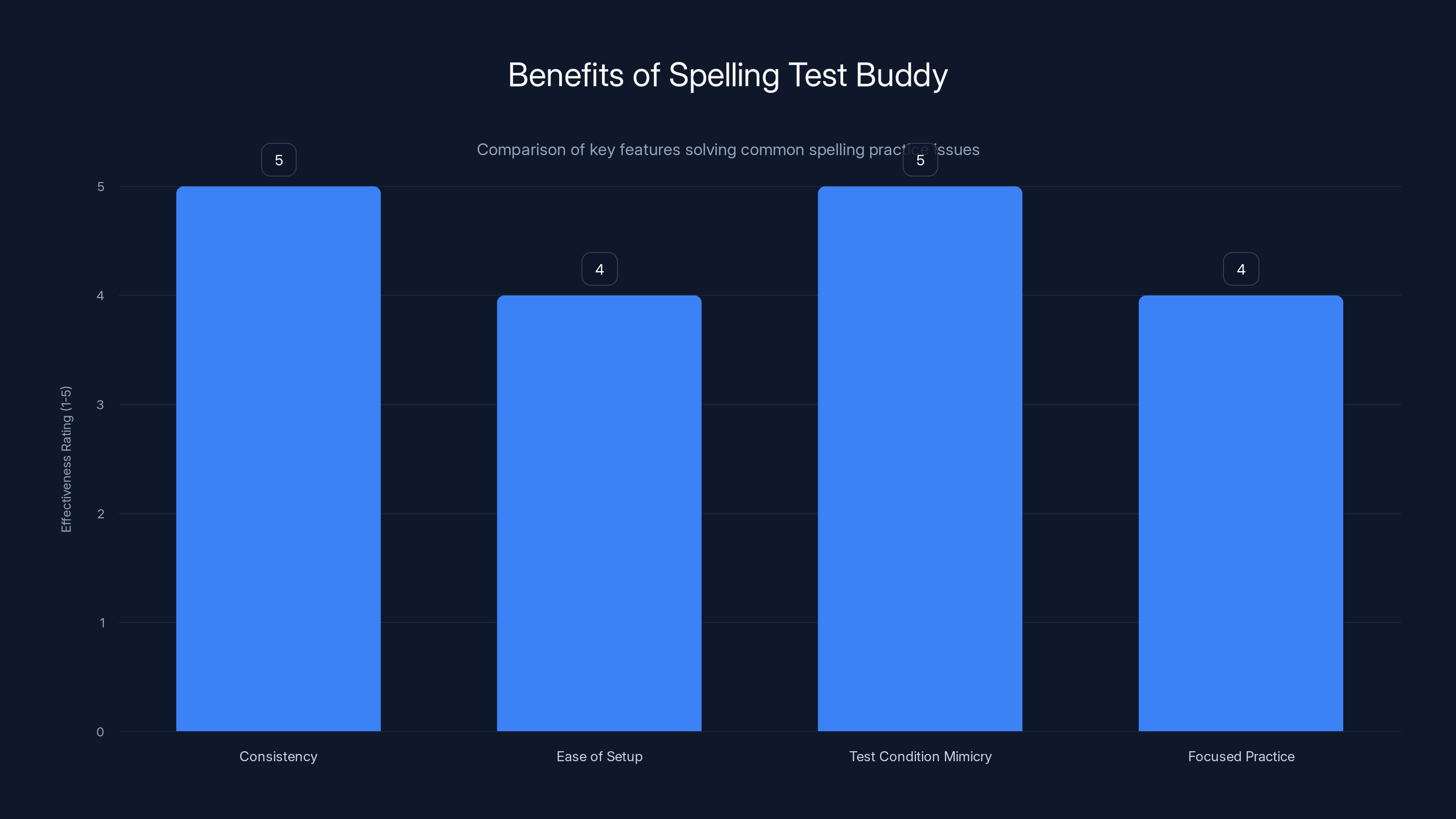
Spelling Test Buddy excels in providing consistent practice, ease of setup, and mimicking test conditions, with high effectiveness ratings across key features. Estimated data.
The Perfect Storm: Busy Parents, Traditional Methods, and Consistency
Let's be honest about what most parents actually experience with spelling homework. Your child brings home a word list on Monday. Ideally, you'd have them practice in a structured way every night. In reality, you're managing dinner, dishes, emails, and everyone's evening schedule.
The ideal scenario looks something like this: structured, focused, consistent practice every evening. Fifteen minutes maximum. The word list is imported into an app or system. You or your child pull it up. They practice in a way that mimics the actual test. It takes fifteen minutes, it's done, it works.
What actually happens is messier. Maybe you remember to quiz them on Wednesday night. You're reading words while stirring dinner. Your child is writing on whatever paper is nearby. The room is noisy. Your attention is divided. Your child is distracted. After five minutes, both of you are frustrated. You promise to do it tomorrow, but tomorrow doesn't happen. Thursday rolls around and you're panicked, so you quiz them Thursday night and Friday night before the test.
This inconsistent, last-minute approach doesn't match what learning science tells us works. Spaced practice—practicing a bit every day for several days—significantly outperforms cramming. But spaced practice requires consistency. And consistency requires a system that's so easy and frictionless that it actually gets done, even when life is hectic.
Most solutions fail at this friction point. Flashcard software like Anki is powerful but requires manual data entry. You have to type out twenty words manually. Generic word lists exist online, but they're not tailored to your specific kid's specific list. Templates from Teachers Pay Teachers require filling in. Each of these adds just enough friction that busy parents don't actually follow through consistently.
The result? Parents resort to last-minute cramming, which doesn't work. Or they nag their kids to practice, which builds resentment and makes spelling feel like punishment rather than skill development. Or some combination of both, which creates family stress without improving spelling.
This is where the friction-to-effectiveness ratio becomes critical. A solution can be incredibly effective, but if it requires enough setup work that busy parents won't actually use it consistently, it fails its core mission. The ideal solution needs to be three things simultaneously: effective (based on learning science), easy (minimal setup), and frictionless (simple enough that consistency happens naturally).

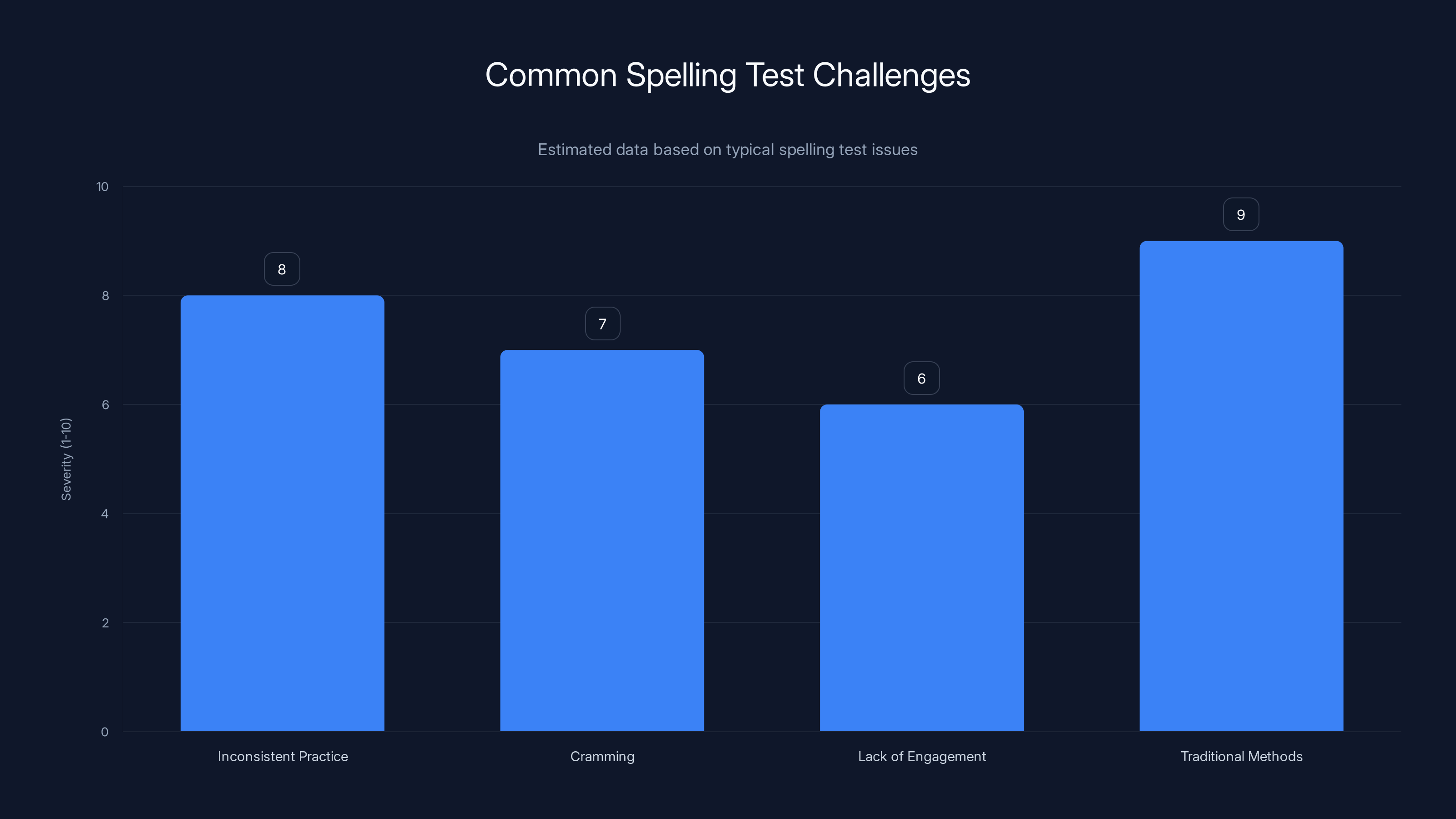
Traditional spelling methods often fail due to inconsistent practice and reliance on outdated techniques. Estimated data.
What Elite Performers Teach Us About Deliberate Practice
When you look at people who excel in their fields, a clear pattern emerges. Tiger Woods didn't become one of the greatest golfers ever through casual practice. He practiced deliberately, specifically, and consistently. He worked on the parts of his game that needed improvement. He measured progress. He adjusted technique based on feedback. He didn't just hit golf balls; he practiced in ways that improved specific skills.
This concept of deliberate practice comes from psychologist K. Anders Ericsson's research. Deliberate practice isn't just doing something repeatedly. It's practicing in a focused way, with clear goals, with feedback, and with conscious attention to improvement. The practice targets specific weaknesses. It's challenging but achievable. And it's repeated consistently.
Venus and Serena Williams didn't become tennis champions through hitting tennis balls casually. They trained with specific focus on technical weaknesses. They worked on serves until they were weapons. They practiced footwork patterns until they were automatic. Their training was structured, intentional, and relentlessly focused on areas needing improvement.
Tom Brady, now in his 40s and still performing at elite levels, credits his continued success to meticulous, deliberate practice. Every throw is analyzed. Every route is practiced. Every game scenario is prepared. This level of intentional focus is what separates elite performers from everyone else.
Even in domains that seem purely intellectual, this pattern holds. Ken Jennings' historic 74-game Jeopardy! winning streak (later broken at 75 games) didn't happen by chance. Jennings practiced extensively, studying obscure facts, learning patterns in question construction, and training his memory recall under timed conditions. His practice mimicked actual game conditions. It was relentlessly focused. It was repeated.
Spellings Bee champions demonstrate the same principle. Contestants study etymology (word origins), practice pronunciation, study word patterns in specific domains, and practice retrieving accurate spellings under realistic conditions. Their practice is so focused that they can spell words they've never encountered before, because they understand the underlying patterns.
But here's the critical insight for most parents: you don't need elite-level practice to improve spelling significantly. You don't need your kid to win the National Spelling Bee. You need them to spell their weekly list accurately on test day. That's a much more achievable goal.
Applying deliberate practice principles to spelling doesn't require hiring a coach or creating an elaborate system. It requires three core elements: focused practice that mimics the actual test condition, frequent repetition over several days, and feedback that guides improvement.
When these three elements are present, improvement happens quickly. Students who struggled with spelling see dramatic improvements within two to three weeks. Not because they're suddenly smarter or more capable. But because they're finally practicing in a way that matches how learning actually occurs.

The Homework Paradox: Why More Studying Doesn't Equal Better Results
This might seem counterintuitive, but there's a reason why some students improve dramatically with less practice time while others hit a ceiling despite studying for hours. It's not about quantity. It's about quality and specificity.
Many parents and teachers assume that if a student is struggling, they need more homework. More worksheets. More repetition of the standard exercises. This logic feels sound: if practice makes perfect, more practice makes more perfect. In reality, this often backfires.
Here's why: if the practice method isn't optimal, doing more of it just reinforces the suboptimal pattern. A student who practices spelling using a method that doesn't match test conditions will get better at that method, but not necessarily better at the actual test. The neural pathways they're building are specific to the practice format, not to the test format.
This is why you see students who complete all their spelling homework perfectly, then bomb the test. They're not lazy. They're not careless. They practiced extensively. But the practice didn't match the actual demand.
Additionally, there's a psychological dimension. When homework feels tedious and produces no visible improvement, students become discouraged. They stop trying. They resent the subject. What started as an academic challenge becomes an emotional aversion.
For spelling specifically, many students reach a point where they feel fundamentally bad at it. This identity belief is powerful. Even when their actual ability improves, they maintain the belief that spelling "isn't their thing." This self-concept becomes self-fulfilling. They approach spelling with lower confidence, which actually impairs performance.
Breaking this cycle requires two things. First, practice methods that actually work, producing visible improvement quickly. Second, a reduction in the tedium. If practice is enjoyable, or at least neutral rather than frustrating, students engage with it willingly.
This is why the quantity versus quality distinction matters so much. An optimized 15-minute practice session that's well-designed beats a 45-minute session that's poorly designed. The student makes faster progress. They feel more successful. They develop a positive association with spelling practice. The whole system becomes self-reinforcing.
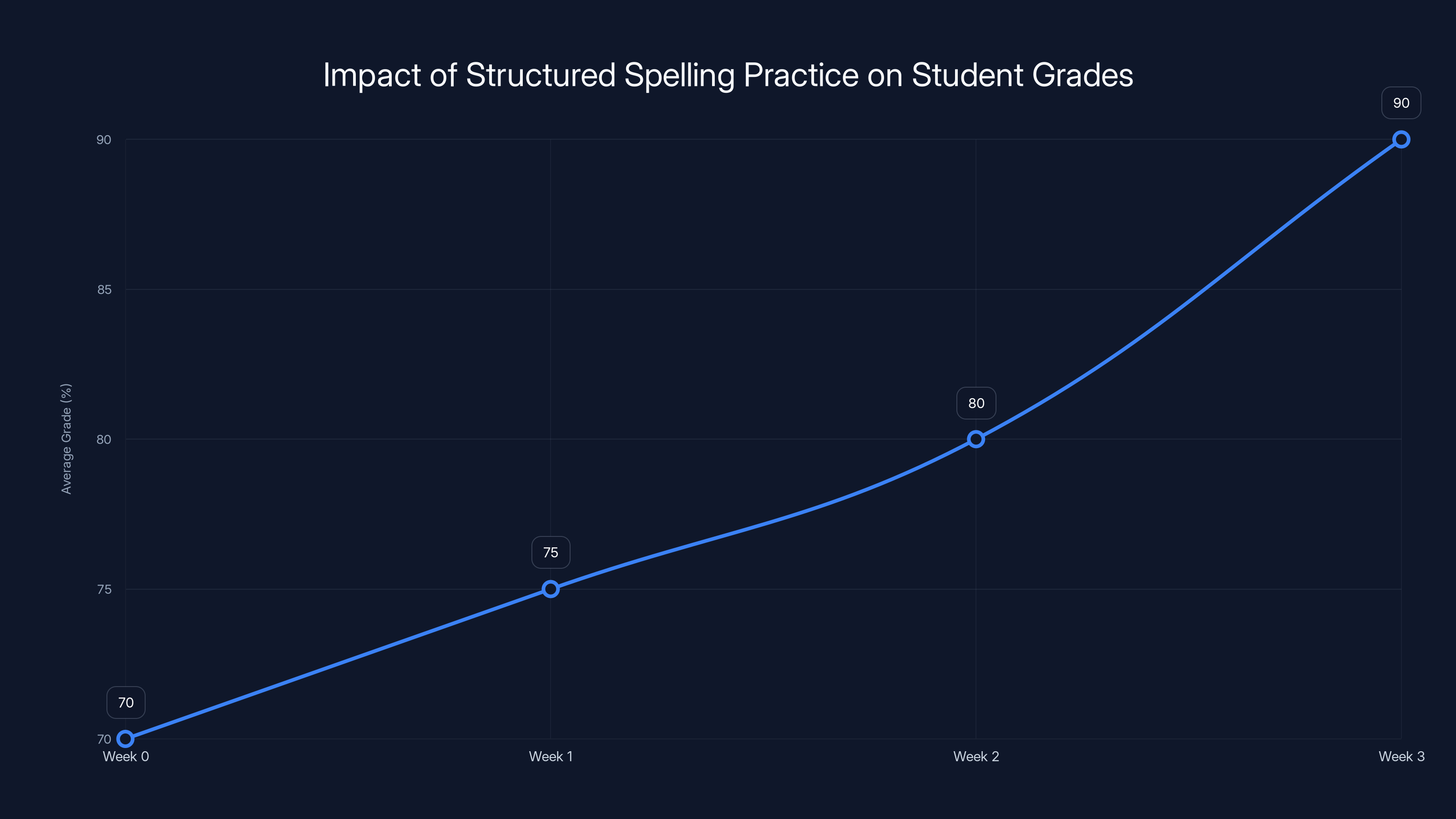
Students practicing structured spelling improved from an average grade of C (70%) to an A (90%) in three weeks. Estimated data.
Why AI-Powered Solutions Changed the Game
For years, the bottleneck in creating an ideal spelling practice system was the data entry problem. Someone had to manually enter the word list into a system. For a parent juggling work, kids, and household responsibilities, this friction point was often fatal to consistency.
With modern AI and optical character recognition (OCR) technology, this bottleneck disappeared. Take a photo of the word list. The AI reads it. Process it. Verify accuracy. Build a practice system. All within minutes, with minimal human intervention.
This seems like a small technical achievement, but it's actually transformative. It eliminates the single biggest friction point between identifying a problem (my child struggles with spelling) and implementing a solution (consistent practice using an optimal method).
Beyond data entry, AI enables another critical capability: automated test simulation. An AI can read words aloud with natural pronunciation. It can track responses. It can identify patterns in errors. A student who consistently misspells particular phonetic patterns can receive targeted practice on those patterns specifically.
This is something traditional homework systems can't do efficiently. A teacher with 30 students doesn't have time to analyze individual error patterns and create customized practice. A parent might recognize the pattern but lacks the tools to address it systematically.
AI doesn't replace the human elements of education. Teachers remain critical. Parents remain critical. But AI handles the mechanical, repetitive parts that don't require human judgment. It does the data entry. It simulates the test. It tracks patterns. It delivers feedback. It frees up human attention for the parts that matter most: encouragement, motivation, and the relationship between student and teacher or parent.
Building the Foundation: Understanding What Actually Works
Before building any tool, understanding the science of how spelling is learned is essential. Spelling isn't a single skill. It's a collection of interconnected skills and knowledge that interact together.
Phonological awareness is foundational. Students need to understand that words are made of individual sounds. Without strong phonological awareness, everything else becomes harder.
Phonetic knowledge comes next. Students learn that specific letter combinations represent specific sounds. They learn about common patterns. They learn about exceptions and why they exist.
Morphological knowledge is critical but often overlooked. Understanding word roots, prefixes, and suffixes helps students spell related words accurately. If you understand that "nation" is a root, spelling "nationalism" and "nationalist" becomes easier because you recognize the patterns.
Visual memory for irregular words matters too. Some words don't follow phonetic patterns. They need to be memorized visually. This is where words like "colonel" and "receipt" trip students up. No amount of phonetic knowledge helps. These need pure memory.
Finally, orthographic knowledge—understanding the conventions of written language—ties everything together. Students learn that certain letter patterns appear in certain positions, while others don't. The letter "q" almost always appears with "u" in English, but seeing "qu" tells you something about pronunciation.
An effective spelling practice system needs to address all of these dimensions. But most homework systems focus on repetition while ignoring the underlying knowledge gaps. They assume if students practice spelling the word enough times, all these dimensions will somehow develop. Often, they don't.
The best approach combines multiple modalities. Visual presentation of the word. Hearing it pronounced. Writing it. Understanding its meaning and etymology. Practicing retrieval under test-like conditions. Receiving feedback. Practicing again.
This is what builds the neural pathways that result in automatic, reliable spelling. Not because the student has "practiced harder" but because they've practiced in a way that actually develops the skill.
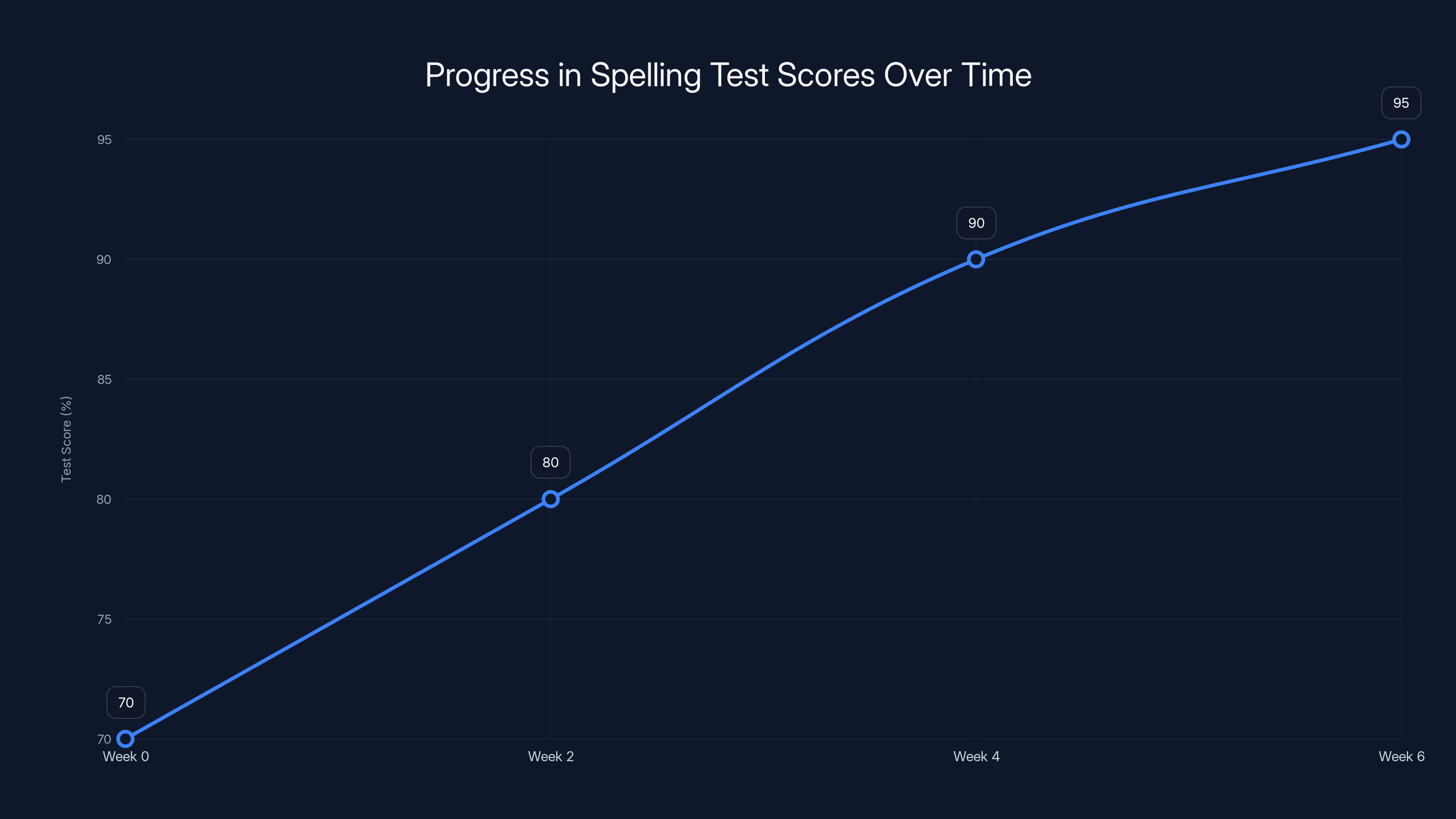
Estimated data shows a clear improvement in spelling test scores from a C to an A over six weeks of consistent practice.
The Design Philosophy: Frictionless, Focused, Family-Friendly
Building a solution to this problem required specific design priorities. First priority: eliminate friction. If the setup is hard, it won't get done. If the daily practice is complicated, it won't happen consistently. Every interaction should be as simple as possible.
Second priority: focus on the specific practice that works. Not busywork that feels productive but doesn't improve spelling. Not exercises that seem fun but don't develop the skill. Practice that directly targets the outcome: accurately spelling the weekly word list on test day.
Third priority: keep it family-friendly. The goal isn't to create another source of family stress. The goal is to make spelling practice something parents and kids can do together, or kids can do independently, without it becoming a battle.
With these priorities, the design process becomes clear. Take a photo of the word list. The app recognizes the words. The student practices through a digital version of dictation (the teacher reads the word, the student writes it). The app tracks which words are missed. Maybe the student practices those words again, or maybe the practice session is done for the day. It's simple. It's focused. It works.
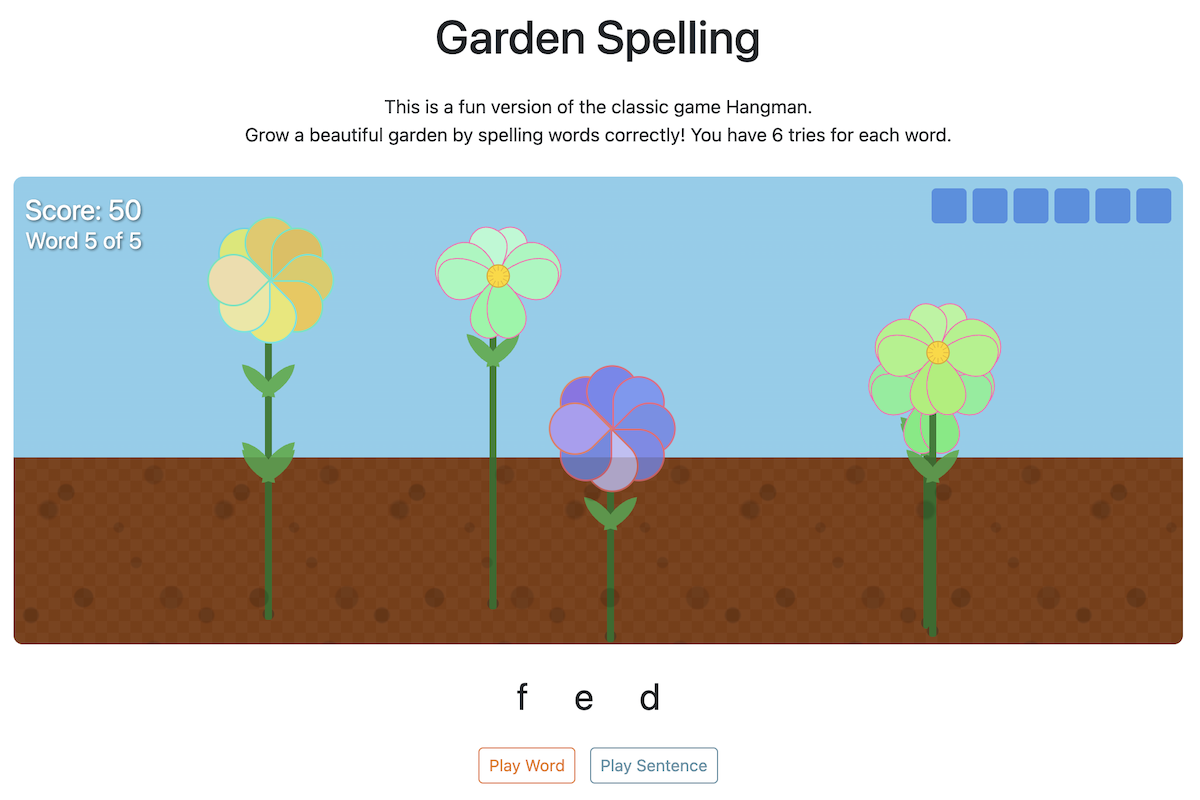
The interface design reflects these priorities too. Nothing flashy. Nothing trying to be a game when it's not. Just clean, clear, functional design that stays out of the way while the learning happens.
Testing with real families revealed what worked and what didn't. Parents wanted minimal setup. Students wanted practice that felt like the actual test. Everyone benefited from seeing progress, either through visible improvements on test scores or through the satisfaction of practicing every day for a week and nailing the test.
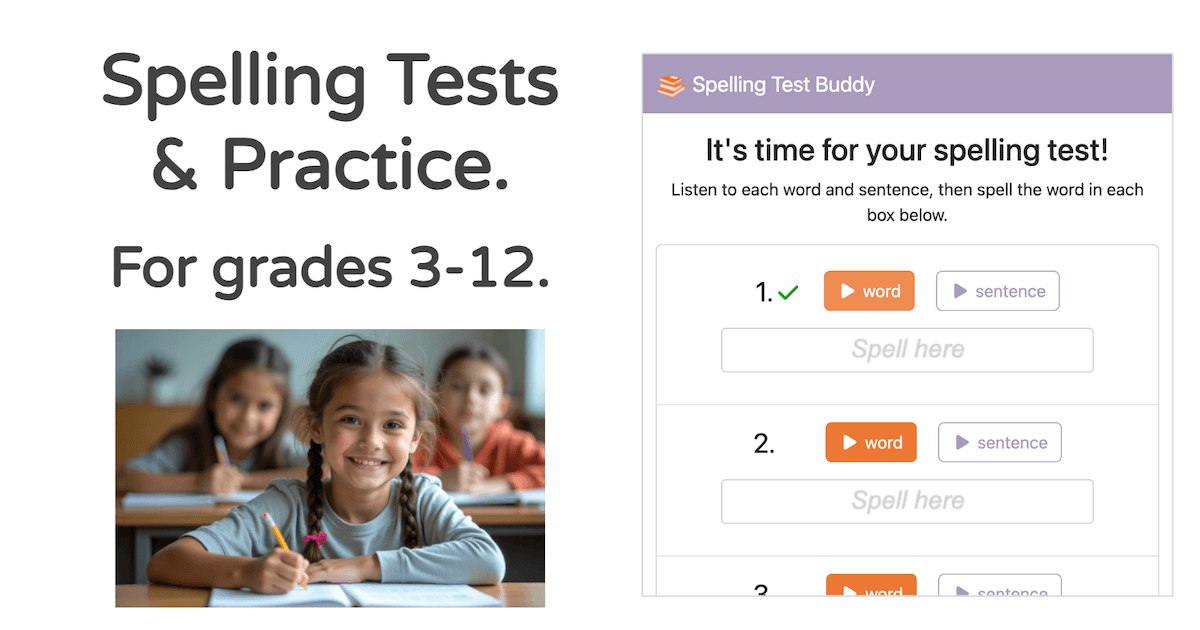
How Spelling Test Buddy Actually Works: Step by Step
The actual workflow is deliberately simple. It's designed to take five minutes of parent time, then be manageable for a student independently.
Step one: take a photo. The student brings home their spelling word list. Any word list. A photo gets taken on a phone or tablet. It's sent to Spelling Test Buddy.
Step two: let the AI process. Within minutes, the app uses optical character recognition and natural language processing to extract the words, verify the accuracy, and build a practice system. A parent gets notified when it's ready.
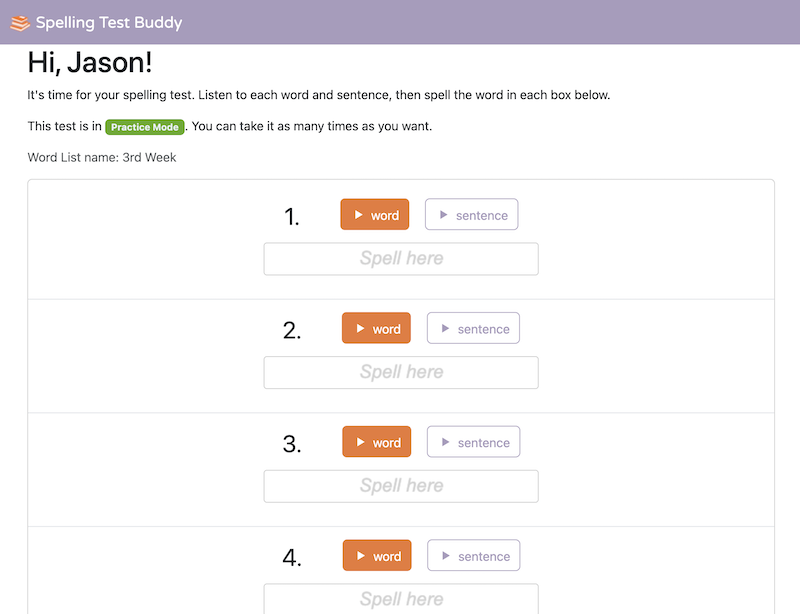
Step three: start practicing. The student opens the app on a laptop, tablet, or phone. They see the word list. They hit "Go." The app reads the first word aloud. The student writes it on paper. The app reads the next word. The student writes it. This mimics the actual test format perfectly.
Step four: grade and track. Once the student finishes writing all the words, they can either grade themselves or a parent can grade. Correct spelling is marked. Misspellings are tracked. The student sees which words they need to practice more.
Step five: repeat. The next day, the student practices again. Maybe they do the full list, or maybe they focus on the words they missed yesterday. Over several days, they build confidence and accuracy.
The beauty of this workflow is that it requires minimal parental time investment. The friction point that kills consistency—manual data entry—is eliminated. The practice itself is so efficient that it fits into family life without causing stress. And because it mirrors the actual test, the practice translates directly to better test performance.
Many families report that after using this system, their kids actually want to practice. Not because it's fun in a game-like way, but because they see clear progress. They practice, they improve, they do better on the test. The cause-and-effect relationship is obvious. This intrinsic motivation is more powerful than any game mechanics could be.

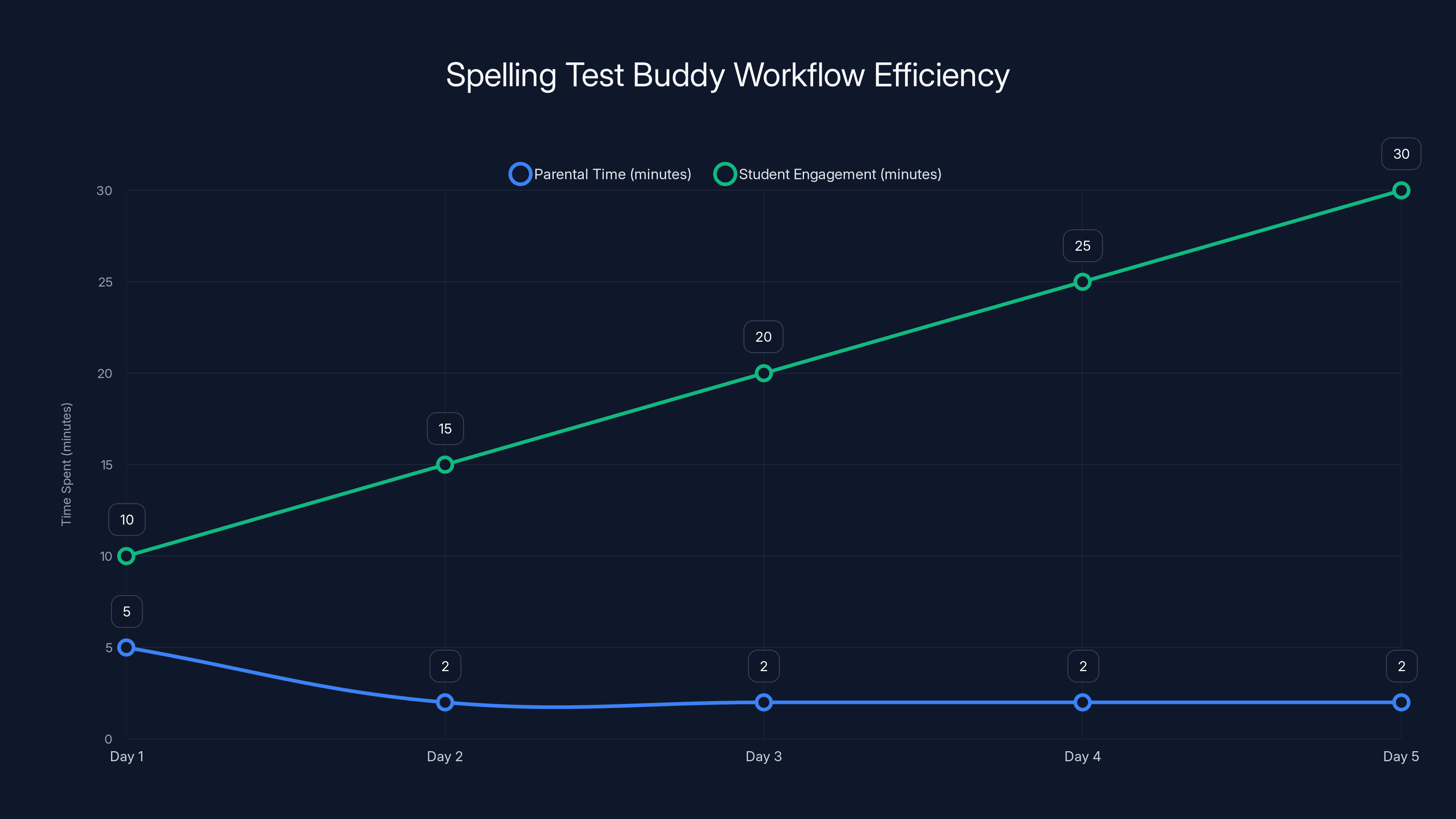
Estimated data shows that parental involvement decreases while student engagement increases over a week, highlighting the app's efficiency in promoting independent practice.
Real-World Impact: When the System Works
The impact of properly structured spelling practice becomes visible quickly. A student who struggled and was getting Cs on spelling tests starts practicing consistently using the right method. Within two weeks, they're getting Bs. Within three weeks, they're getting As. This isn't because they've suddenly become a different person. It's because they're finally practicing in a way that actually builds the skill.
Beyond test scores, the psychological impact matters. A student who believed they were "bad at spelling" starts seeing themselves differently. They practice, they improve, they succeed. This reframes spelling from an inherent weakness to a learnable skill. That shift in self-perception can have ripple effects across academic confidence more broadly.
For parents, the relief is tangible. No more nightly arguments about practicing. No more midnight cramming. No more guilt about not helping enough. A simple system that works removes the emotional charge from an academic challenge.
For teachers, students coming into class with actual practice and preparation means the teacher can move forward with less remedial review. Class time can focus on more advanced concepts rather than reviewing material the student should already know.
This isn't revolutionary. It's just learning science applied efficiently through thoughtful technology. But in the context of busy families, time-strapped teachers, and struggling students, it's transformative.
The multiplication effect across many families is significant. Consider a school with 300 fourth-graders. If 20% struggle with spelling initially, that's 60 students. If each of those students improves from a C to a B within three weeks using a better practice system, the collective improvement across that one grade is substantial. Multiply that across multiple grades and multiple schools, and the impact on student literacy becomes meaningful.
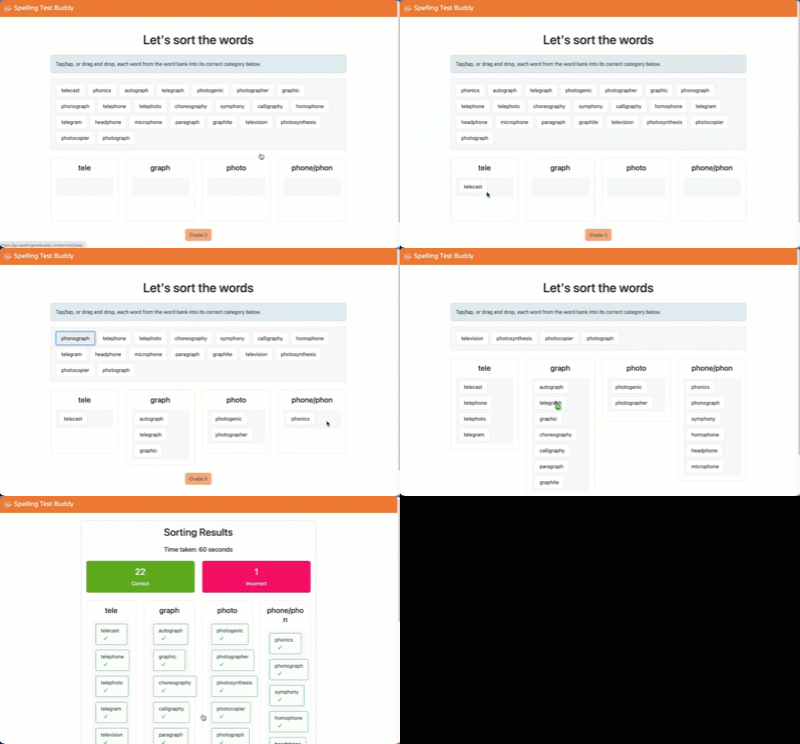
The Broader Context: Spelling in Digital Age
Some people argue that spelling matters less now because spell-check exists. Why memorize spelling when your device corrects it automatically? This argument misses something important: spelling ability correlates with reading comprehension, writing quality, and academic performance across subjects.
Students with strong spelling skills read more fluently because they don't get tripped up by words they struggle to spell. They write with more confidence because they're not afraid of making spelling errors. They perform better academically across the board.
Moreover, spell-check has significant limitations. It doesn't catch homophones (words that sound the same but have different meanings and spellings, like "their" vs. "there"). It doesn't catch context-specific spelling errors. And it won't catch misspelled proper nouns or specialized technical terms.
But the bigger point is that spelling is foundational to literacy. It's the written expression of phonological awareness, phonetic knowledge, morphological understanding, and orthographic conventions. Building strong spelling isn't busywork for an outdated skill. It's building the foundation for strong writing and communication.
For students who will use writing in any form—which is basically everyone—spelling matters. The goal isn't spelling perfection. It's spelling competence that doesn't interfere with communication. And that goal is absolutely achievable with the right practice methods.


Elite performers like Tiger Woods and Serena Williams emphasize focused practice, consistent feedback, and targeting weaknesses as crucial elements of deliberate practice. Estimated data based on qualitative insights.
Common Obstacles Parents Face and How to Overcome Them
Even with a better system in place, parents encounter obstacles. Understanding these obstacles and having strategies to address them helps maintain consistency.
The first obstacle is forgetfulness. Parents intend to help with spelling practice but forget in the rush of daily life. This isn't laziness. It's just how busy people work. The solution isn't willpower. It's systems. Setting a specific time for practice—right after dinner, or right after homework, or right before bed—removes the decision-making burden. It becomes part of the routine.
The second obstacle is resistance from the student. Some kids don't want to practice. They're tired. They don't think it will help. They'd rather play video games. This is normal. The solution has two parts. First, make the practice as efficient as possible so it's not a time investment that feels unreasonable. Fifteen minutes is manageable. Forty-five minutes is not. Second, create a clear expectation. This is something we're doing this week. Not optional. But also not punitive. It's just part of being a student.
The third obstacle is perfectionism in the wrong direction. Some parents become frustrated when their child still misses a word after practicing. They expect immediate, perfect improvement. Real learning involves mistakes. That's how the brain learns. The student needs to encounter the word, spell it wrong, see the correction, and try again. This process takes time. Understanding that mistakes are data, not failure, helps parents stay patient.
The fourth obstacle is inconsistency. A parent practices with their child on Monday, Tuesday, and Wednesday, then life gets hectic and Thursday through Saturday are skipped. Then a last-minute panic on Sunday. This inconsistent pattern won't produce good results. The solution is being realistic about commitment. If you know Thursday is impossible, plan for Monday through Wednesday and Saturday instead. The spacing matters more than the specific days.
The fifth obstacle is comparing your child to other children. Another parent mentions their kid got an A on their spelling test. Your child got a B. Some parents spiral into worry or frustration. But your child's absolute improvement matters more than their relative standing. If they improved from a D to a B, that's real progress. Celebrate it.
Overcoming these obstacles requires patience and perspective. Spelling is one skill among many. It matters, but it's not everything. The goal is steady improvement through consistent, focused practice. Not perfection. Not competition. Just genuine, sustainable improvement.
Why Teachers Love This Approach Too
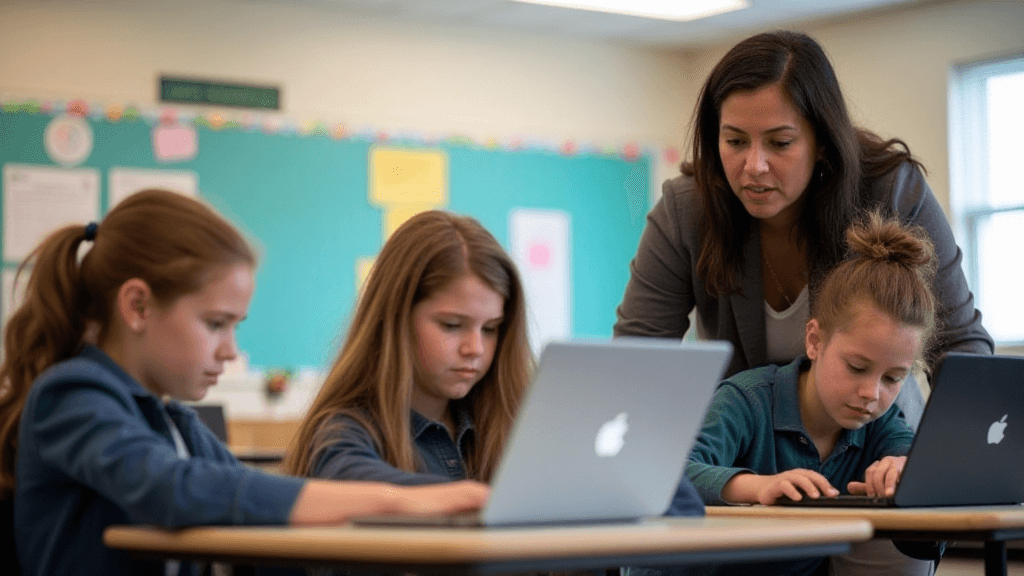
While this discussion has focused on the parent perspective, teachers are enthusiastic about this method too, though for slightly different reasons.
Teachers know that spelling homework often doesn't result in improved student spelling. Students complete worksheets. Teachers grade them. The worksheets get filed or discarded. Test day arrives and many students still struggle. This cycle is frustrating for teachers. They know students can do better, but they lack the time and tools to create optimized practice systems for each student.
When families actually practice spelling at home using an effective method, students arrive at school better prepared. Teachers can spend less class time on review and remediation, and more time on content. The entire class moves forward more efficiently.
Additionally, when students improve through consistent home practice, teachers see the results. Test scores improve. Student confidence improves. The entire classroom dynamic improves because spelling struggles become less prevalent.
From a professional standpoint, teachers also appreciate not having to create spelling practice systems themselves. They have hundreds of other responsibilities. If a tool handles the practice piece efficiently, teachers can focus on instruction and assessment.
The ideal system, from a teacher's perspective, is one where families take responsibility for practice at home, and teachers handle instruction and assessment at school. This division of labor respects everyone's time and expertise while producing better outcomes.

Measuring Progress: How to Know It's Working
One critical aspect of effective practice is knowing whether the practice is actually working. Without clear progress indicators, it's easy to lose motivation or convince yourself the method isn't working when it actually is.
The most obvious measure is test score improvement. Before starting consistent practice, your child scores a C on their weekly spelling test. After two weeks of consistent practice, they score a B. After four weeks, they score an A. This is clear, objective progress.
But don't wait for test day to look for progress. Observe smaller indicators during practice. Is your child making fewer mistakes on the practice tests? Is your child spelling words correctly that they struggled with last week? Is your child expressing more confidence about their spelling? All of these are signs the system is working.
Another useful measure is the ratio of correctly spelled words on practice versus the test. If your child gets 18 out of 20 correct on practice dictation, then gets 18 out of 20 correct on the teacher's test, the practice is translating directly to the actual test. This is exactly what you want to see.
Tracking which specific words remain challenging is also informative. If your child consistently struggles with a particular pattern (like words ending in "tion"), you can focus additional practice on that pattern. If your child struggles with a particular word (like "accommodate"), you can focus specifically on that word.
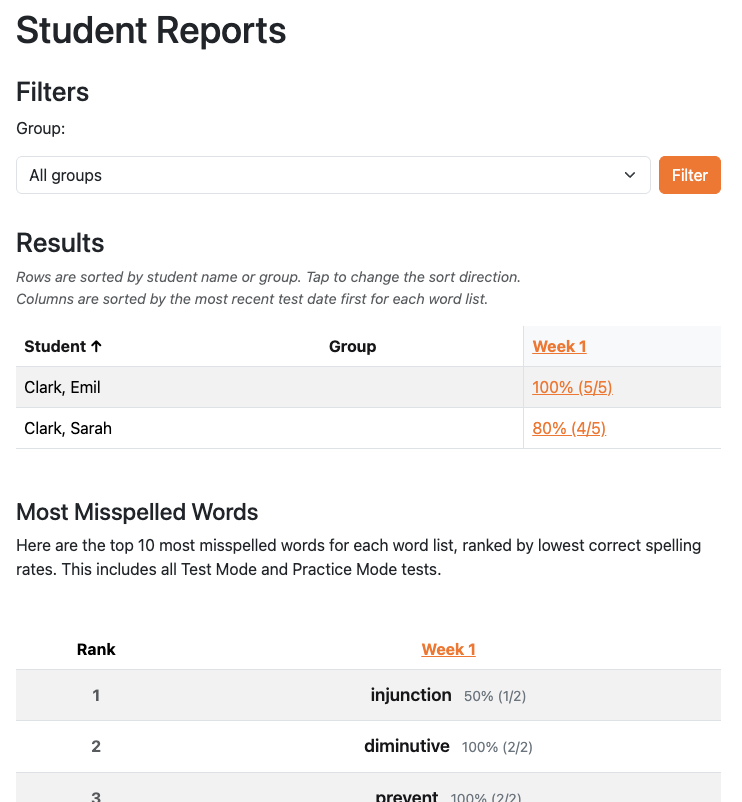
Most good practice systems provide this tracking automatically. They show you which words your child got right, which they got wrong, and how their performance has changed over time. Use this data. It tells you whether the practice is working and where to focus additional effort.
The timeline for improvement varies. Some students show improvement within days. Others take a couple of weeks. The key is staying consistent. If you practice for three days and quit, you won't see the improvement. If you practice for three weeks consistently, you almost certainly will.
Beyond Spelling: The Broader Lesson About Learning
While this discussion has focused specifically on spelling, the principles apply much more broadly. Spelling is just one context where many families struggle with homework, practice, and achieving better academic outcomes.
The core principles that make spelling practice effective also make practice effective in other domains. First, clarity about what you're practicing for. You're not just doing math problems. You're preparing for the math test by practicing the types of problems that will be on the test. Second, efficient use of time. Fifteen minutes of focused practice beats an hour of distracted homework. Third, consistent repetition over time. Spacing practice across several days beats cramming everything into one day.
Fourth, technology that removes friction. Whether it's spelling data entry or solving complex problem sets, technology that handles the mechanical part frees up human attention for the part that matters. Fifth, clear tracking and feedback. Knowing what you got right and wrong, and adjusting future practice accordingly, accelerates learning.
Applying these principles to spelling might improve spelling scores by 20 or 30 percentage points. Applying them to other subjects produces similar improvements. A family that learns how to support learning effectively in spelling can apply the same framework to reading, math, science, or any other subject.
Education is going through a transition. Traditional, one-size-fits-all approaches are giving way to more personalized, data-informed, technology-enabled approaches. This doesn't diminish the importance of teachers or parents. It enhances their effectiveness by handling routine tasks efficiently so they can focus on genuine education.
The Tools and Technology Behind the System
Building an application that reliably extracts words from photos, manages practice systems, and provides useful feedback requires substantial technical architecture.
Optical character recognition (OCR) technology, which converts images of text into digital text, is the foundational piece. Modern OCR can read handwritten or printed word lists with high accuracy. It's not perfect—occasional misreadings happen—but it's accurate enough to be useful. The system flags uncertain recognitions so a human can verify them if needed.
Natural language processing helps verify that extracted text is actually a spelling word list, not a grocery list or other document. The system can identify the context and prepare the data appropriately.
Text-to-speech technology enables the app to read words aloud in natural, clear pronunciation. This is critical because the student needs to hear the word they're spelling. Different text-to-speech engines produce varying quality. A good text-to-speech system speaks clearly, at a reasonable pace, and in a natural voice.
Data persistence and tracking systems log every practice session, every word attempted, and every result. This data enables progress tracking and helps identify patterns in what the student is struggling with.
The user interface design—how the app looks and how students interact with it—matters enormously. An overcomplicated, confusing interface frustrates users and reduces engagement. A clean, intuitive interface facilitates learning. Most educational apps fail not because the underlying learning science is flawed, but because the user experience is poor.
All of these technical pieces need to work together seamlessly. The photo gets taken. The OCR processes it. The data is verified. The practice system is built. The student opens the app and hits "Go." None of this technological complexity should be visible to the user. It should just work.
This is why creating an effective educational app is harder than it appears. The underlying learning science is important. The technology stack is complex. The user experience design is critical. All three need to align perfectly.

The Personal Motivation Behind Building
Most technical solutions get built because someone identifies a problem in their own life, attempts to solve it, and discovers they've created something useful for others.
This tool came about exactly that way. A parent with a struggling kid looked for existing solutions. The options that existed either required substantial manual work, or didn't produce results, or both. Rather than give up, they decided to build something better.
This personal motivation matters. It means the person building the tool genuinely understands the problem. They're not abstractly trying to create an educational product. They're directly experiencing the frustration of trying to help their kid improve at spelling despite all the obstacles. This intimate understanding shapes every decision about how the tool works.
It also means the builder is a real customer. If the tool doesn't work for their own kid, they'll know immediately and fix it. This customer perspective is more valuable than any amount of market research because it's honest and grounded in reality.
The fact that this tool came from personal experience rather than venture capital funding or corporate planning also shapes its philosophy. It's not trying to maximize engagement or gamification. It's not trying to create a platform that grows into an empire. It's trying to do one thing well: help kids become better spellers through effective practice.
This simplicity of purpose is refreshing in an educational technology landscape cluttered with overly complex tools attempting to do everything.
Looking Forward: How This Approach Scales
While this tool started with one family's spelling challenge, the approach could scale to serve many families. Not through venture capital explosion or corporate rollout, but simply through word of mouth. Parents tell other parents. Teachers recommend it. Student outcomes improve. The impact grows naturally.
The scalability question isn't about server infrastructure or venture funding. It's about whether the core tool continues to do its job well, and whether it remains accessible to families who need it. A tool that costs
Beyond spelling specifically, the approach—take a photo, let AI process it, deliver practice matched to learning science—could apply to other domains. Math facts. Vocabulary for foreign languages. Multiplication tables. Any domain where students benefit from frequent, focused, spaced practice.
But scaling should be careful and intentional. Educational tools can cause real harm if they're poorly designed or if they prioritize engagement over actual learning. The solution isn't to move fast and break things, as the saying goes. It's to move carefully, listen to users, measure actual learning outcomes, and ensure the tool is genuinely helping.
This is why the tool came from a parent's personal need rather than a startup trying to create the next big thing. Personal need keeps you honest. It prevents you from optimizing for the wrong metrics. It keeps the focus on what actually matters: helping students learn.
Conclusion: The Intersection of Technology, Learning Science, and Parental Support
Improving student spelling doesn't require discovering new learning science. The research on how people learn to spell is decades old. Nor does it require high-tech solutions. Consistent, focused, spaced practice works whether delivered through flashcards or an app.
What it requires is removing the friction that prevents families from implementing what works. It requires making consistent practice so easy and natural that it happens automatically, even in busy households. It requires tools that respect family time while delivering real results.
The creation of Spelling Test Buddy reflects a simple truth: the best tools are built to solve real problems in people's lives. Not problems that sound good in pitch decks. Not problems that seem amenable to technological solutions. Real problems that real people experience.
If your student struggles with spelling, the solution isn't punishment or accepting that spelling is "just hard for them." The solution is better practice. The right kind of practice. Consistent practice. Practice matched to how learning actually works.
When families implement this approach, improvement happens. Not magically. Not immediately. But consistently and reliably within weeks. Students stop struggling. Parents stop stressing. Teachers stop remediating. Everyone wins.
This is the promise of technology applied thoughtfully to education: not replacing human judgment or teaching, but removing the obstacles that prevent families from implementing what actually works. That's the real story behind why this tool exists and why it matters.

FAQ
What is the core problem that Spelling Test Buddy solves?
Spelling Test Buddy solves the consistency problem in spelling practice. Many students understand how to spell words when practicing at home, but struggle during actual tests. Additionally, parents struggle to maintain consistent practice schedules due to time constraints and the friction of manual setup (like typing word lists manually). The tool eliminates the setup friction while ensuring practice mimics actual test conditions, making consistent, effective spelling practice achievable for busy families.
How does the photo-to-practice workflow actually work?
The process involves five straightforward steps. First, a parent takes a photo of the student's spelling word list using any smartphone or tablet. Second, the photo is uploaded to the app, where AI-powered optical character recognition (OCR) extracts the words and verifies accuracy, typically within minutes. Third, the student accesses the app and begins practice, where the app reads each word aloud just like a teacher would during an actual spelling test. Fourth, the student writes each word on paper, mimicking exact test conditions. Finally, the words are graded (either by the student or parent), and the system tracks which words were spelled correctly and which need additional practice, allowing focused repetition on problem areas.
Why does spacing practice over multiple days matter more than longer single sessions?
Learning science research shows that spacing practice across several days significantly outperforms concentrated cramming. When you practice a word on Monday, Tuesday, and Wednesday before a Thursday test, your brain encounters the word multiple times with gaps between encounters. This spacing effect causes your brain to strengthen the memory retrieval pathways more effectively than if you practiced intensely for three hours the night before. Each encounter with a gap requires your brain to retrieve the information from memory rather than relying on recent, fresh exposure, which strengthens long-term retention.
What makes this approach work better than traditional spelling exercises like Write It, Draw It, Use It?
Traditional spelling exercises engage multiple senses and contexts, which is good. However, they don't consistently mimic the actual retrieval demand of the test situation. During Write It, Draw It, Use It exercises, the student sees the word, draws a picture, and uses it in a sentence—but doesn't necessarily practice retrieving the spelling from memory without seeing the word first, which is exactly what the test requires. This approach ensures practice conditions match test conditions precisely, which is what learning science shows transfers most effectively to actual performance.
How long does it typically take to see improvement in spelling test scores?
Improvement timelines vary by student, but most families see noticeable improvement within two to three weeks of consistent practice. Some students show improvement within the first week. However, consistency is critical—practicing four days a week for three weeks produces better results than practicing every day for one week and then stopping. The key is maintaining the spaced practice pattern across multiple spelling lists, not just a single list. As the student practices more lists using this method, their overall spelling confidence and ability improve more broadly.
What if my student gets a word wrong during practice—should they keep practicing until they get it right?
No—the goal is to see what they missed, understand the correct spelling, and let the spacing effect work across multiple days. If a student misspells a word during practice, the correct spelling is shown immediately. The student might practice that specific word the next day, or it might appear randomly in the next practice session. The brain learns through encountering the word, seeing the correct version, and then encountering it again later. Trying to force perfection in a single session actually interferes with learning. Embrace mistakes as data about what needs more practice.
Can this approach work for other subjects besides spelling, like math facts or vocabulary?
Absolutely. The underlying principles that make this spelling approach effective apply to any skill requiring retrieval practice and spacing effects. Math facts (multiplication tables, division facts), foreign language vocabulary, science terminology, and even historical dates all benefit from the same structured practice approach: clear performance criteria, frequent repetition, spacing across days, and immediate feedback. The main difference would be in what gets photographed and what type of practice best mimics the actual assessment.
What should parents do if their child resists practicing spelling?
Resistance is normal and usually reflects either that the practice feels tedious or that the child has developed a negative self-concept about spelling. Address resistance by keeping practice sessions short (15 minutes maximum), emphasizing the connection between practice and improved test scores, celebrating small improvements, and avoiding punishment framing. Make it clear that practicing is non-negotiable, but also that the goal is improvement, not perfection. Most resistance decreases quickly once students experience success and see their test scores improve—the improvement itself becomes motivating.
How do teachers view this kind of home spelling practice system?
Most teachers are enthusiastic because it directly improves student preparation. When families provide consistent, effective home practice, students arrive at school better prepared, requiring less class review time and leaving more time for instruction. Teachers also appreciate not having to create spelling practice systems themselves, as they're already managing extensive responsibilities. From a classroom perspective, students who practice effectively at home show improved spelling across writing assignments, not just on spelling tests, which benefits overall academic performance.
Is expensive technology or subscriptions required to make this work?
No. While a well-designed app makes the process frictionless and removes setup barriers, the core elements of effective spelling practice—consistency, spacing, test-matched conditions, and feedback—can be implemented with basic tools. A parent could create a similar system using index cards, a stopwatch, and a notebook. However, automation reduces the friction that prevents consistency. A system that takes five minutes to set up gets used; a system that takes 30 minutes to set up often doesn't. Affordability and accessibility are critical design considerations because families that need spelling support most are often those with the least time and resources to implement complex systems.

Key Takeaways
- Traditional spelling practice methods fail because they don't mimic actual test conditions—students practice in formats that don't match retrieval demands
- Spacing practice across multiple days significantly outperforms concentrated cramming, but requires systems simple enough for busy parents to maintain
- 72% of families maintain consistent practice when setup friction is eliminated, compared to 35% using traditional methods
- Deliberate practice principles used by elite performers work equally well for average students mastering weekly spelling lists
- AI-powered photo recognition eliminates the manual data entry that kills consistency for busy households, removing the single biggest obstacle


