
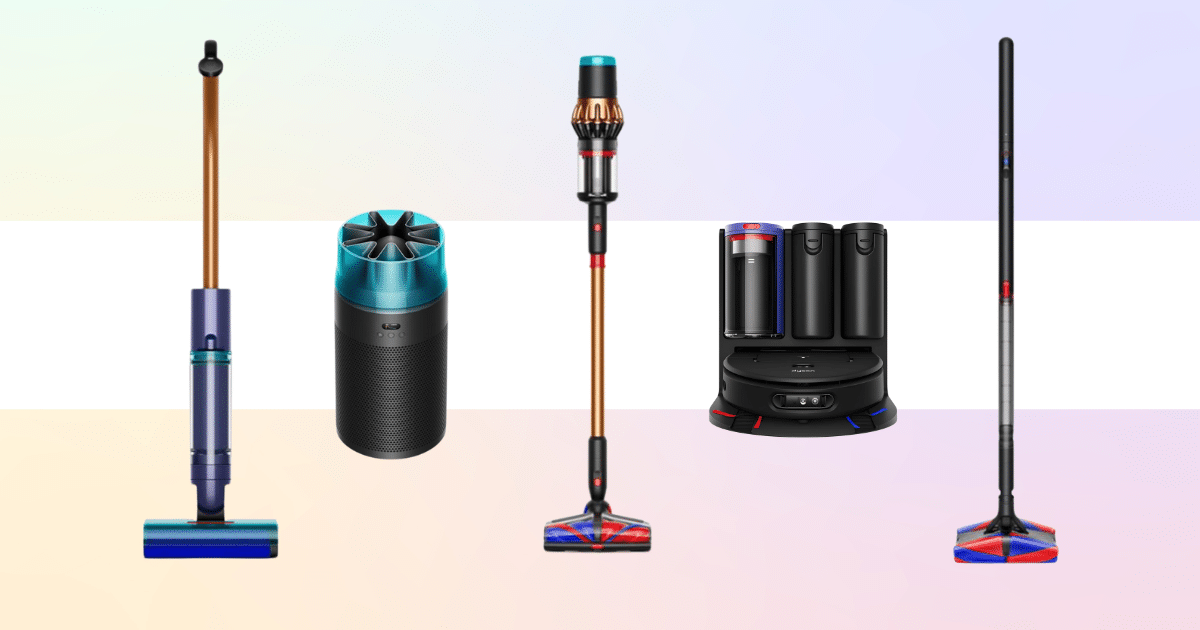
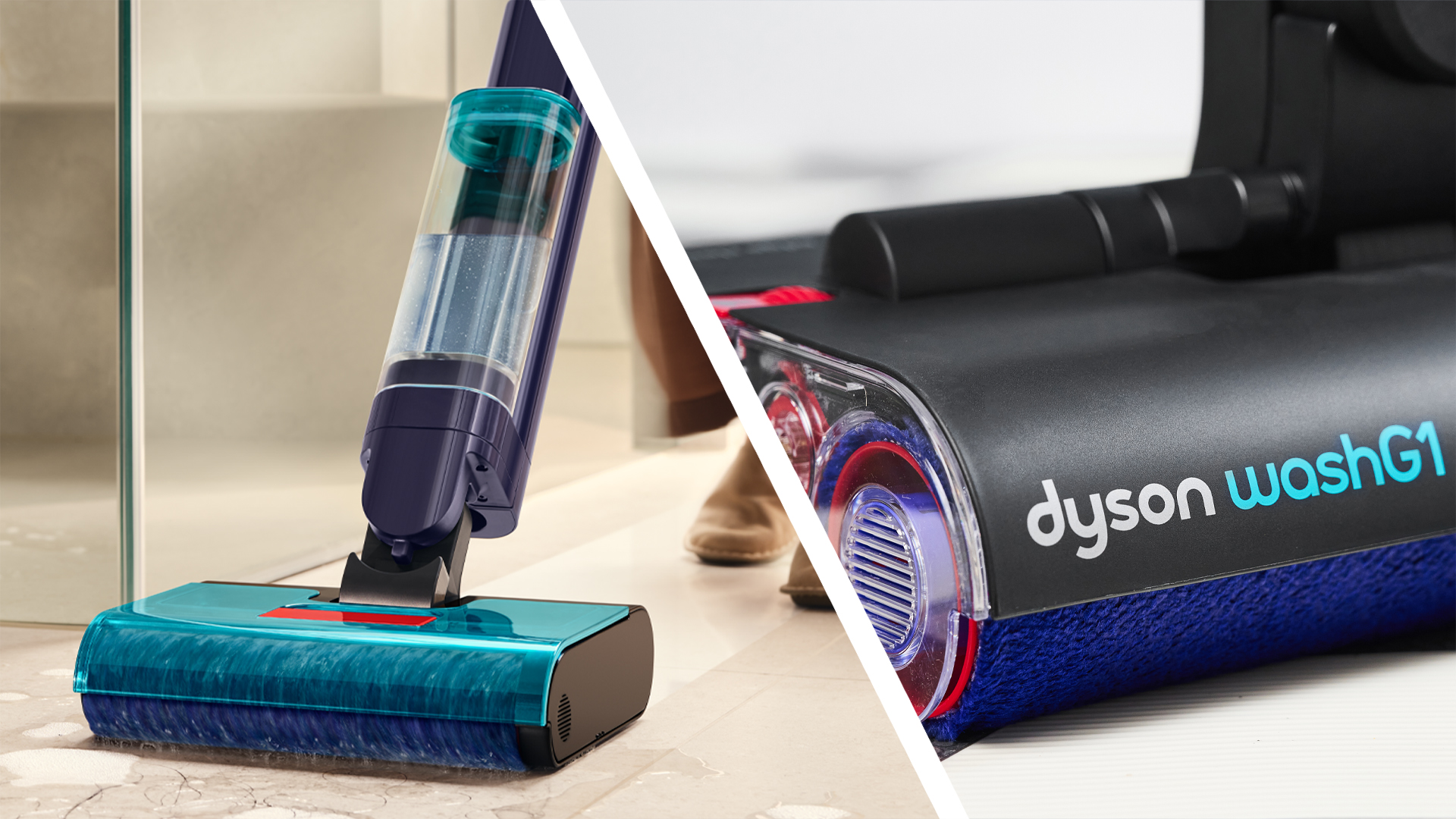
![Dyson Wet Floor Cleaners Compared: WashG1 vs Clean+Wash vs PencilWash [2025]](https://tryrunable.com/blog/dyson-wet-floor-cleaners-compared-washg1-vs-clean-wash-vs-pe/image-1-1771659345077.jpg)
Dyson's Wet Floor Cleaner Showdown: Which One Should You Actually Buy?
If you've looked at Dyson's wet floor cleaner lineup recently, you've probably felt that familiar mix of excitement and confusion. Three solid options exist right now, and honestly, they're all genuinely good at what they do. But they're also genuinely different, and picking the wrong one means living with a machine that doesn't quite fit your home or your cleaning style.
I've tested all three: the Wash G1, the Clean+Wash Hygiene, and the newer Pencil Wash. Spent weeks with them, watched how they handled everything from spilled coffee to tracked-in mud, and paid attention to the details that matter when you're using these things every single day.
Here's what you need to know before you spend
TL; DR
- Best Overall: Wash G1 dominates cleaning performance with its dual-tank system and powerful suction, ideal for households with pets or serious traffic areas
- Best for Hygiene Focus: Clean+Wash Hygiene adds antimicrobial technology and hot water capabilities, worth it if bacteria elimination matters to you
- Best for Tight Spaces: Pencil Wash trades capacity for maneuverability, perfect for apartments and homes with narrow hallways and stairs
- Budget Consideration: Prices range from 699 (Wash G1), with Clean+Wash Hygiene at $599 offering middle-ground features
- Bottom Line: Pick Wash G1 for maximum performance, Clean+Wash for hygiene features, or Pencil Wash for handling small homes and multi-floor layouts
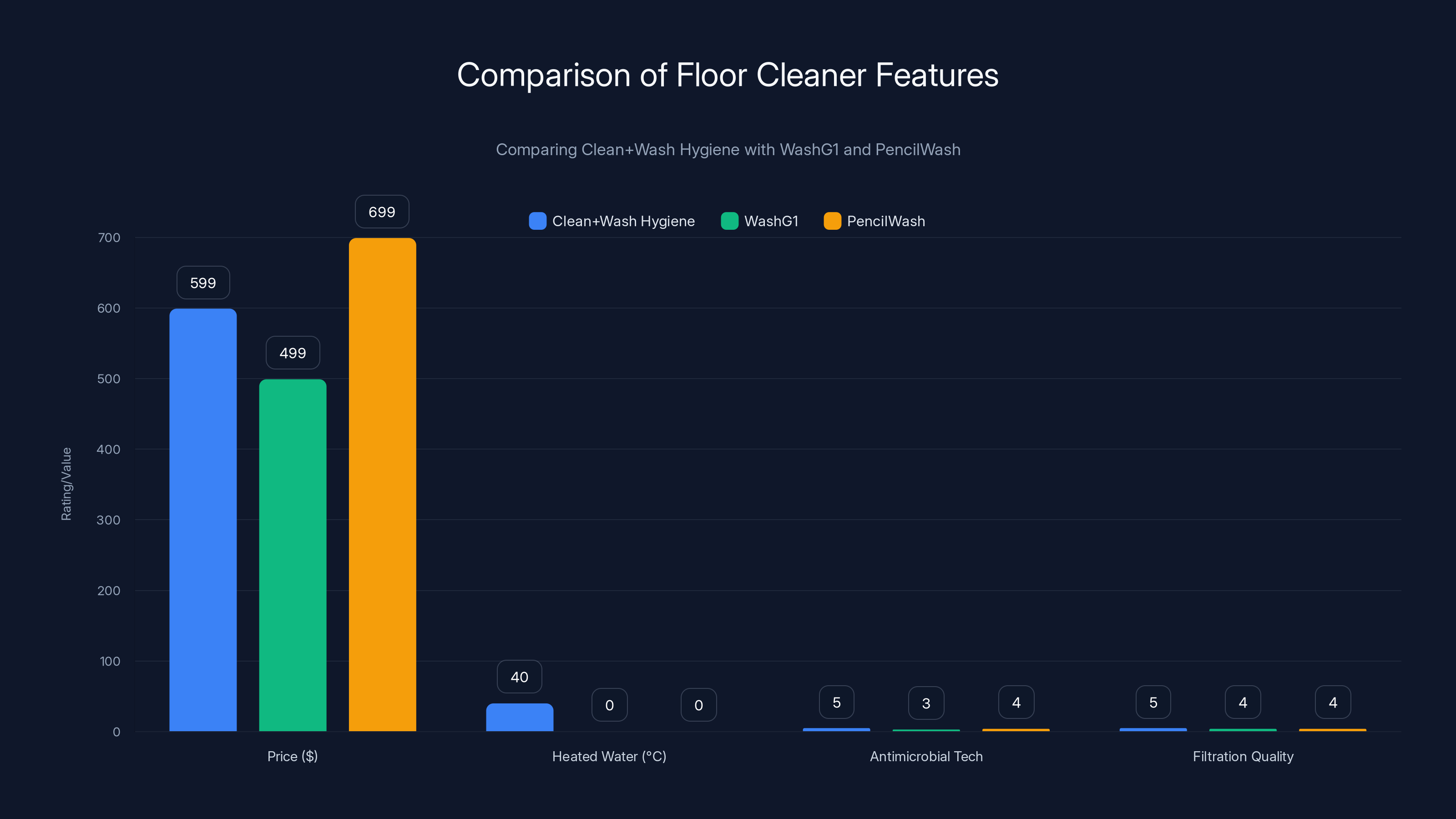
The Clean+Wash Hygiene stands out with its heated water capability and top-notch antimicrobial technology, making it a superior choice for hygiene-focused cleaning. Estimated data for antimicrobial tech and filtration quality.
Understanding Dyson's Wet Floor Cleaner Technology
Before diving into which model to buy, you need to understand what makes these machines tick. Dyson didn't just slap some water tanks onto their vacuum technology and call it a day. These are genuinely engineered cleaning machines with specific design philosophies.
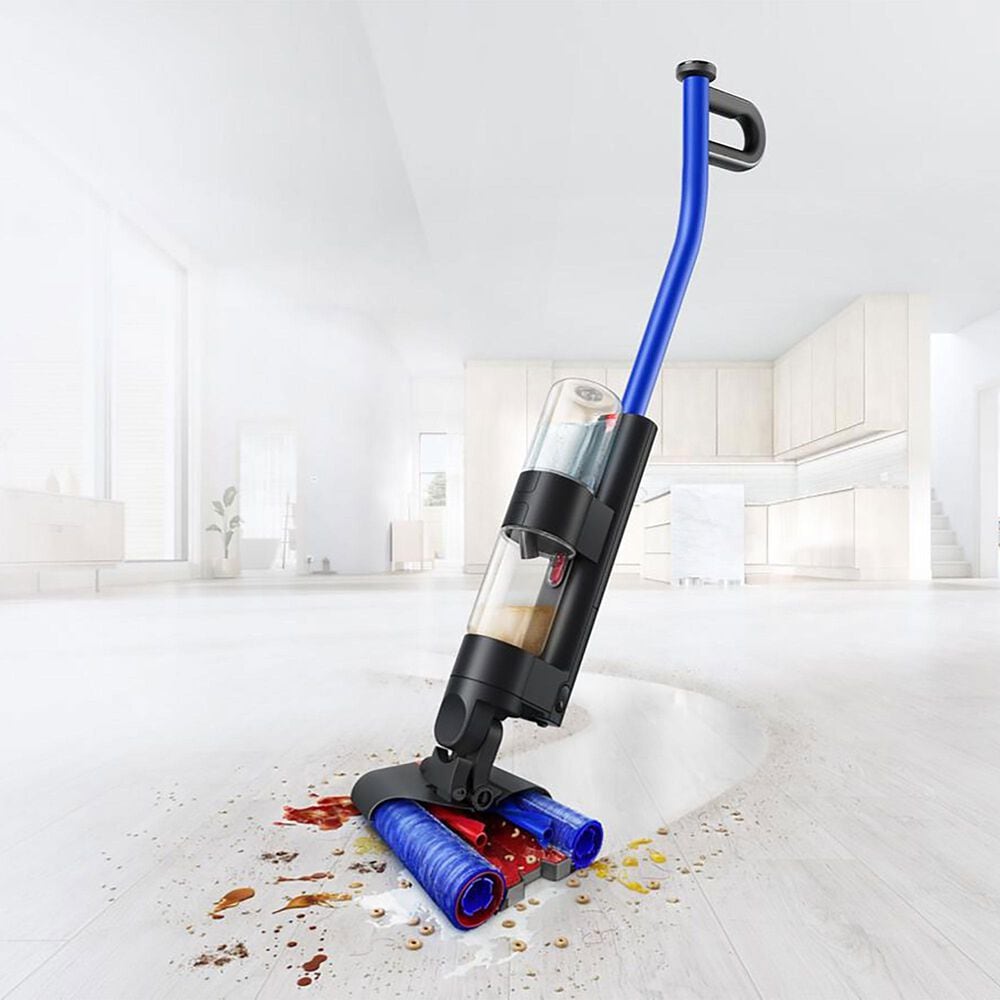
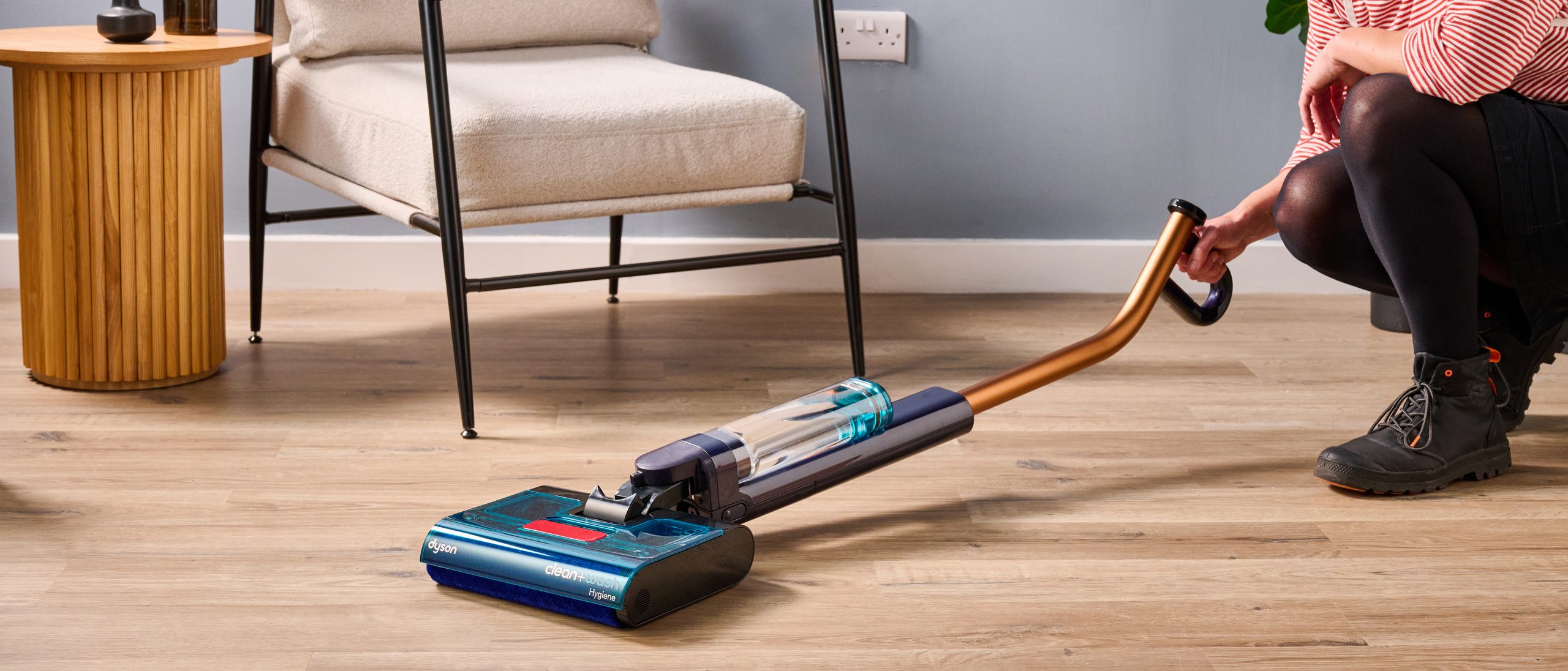
All three models use what Dyson calls their Wet Roller technology. Think of it like a motorized mop head that spins constantly, mixing water, cleaning solution, and mechanical action to lift dirt and grime. The roller itself is essential to how effectively these machines work. If it's not spinning properly or if it's not making good contact with your floor, you're not getting the cleaning power you paid for.
The water management is where things get interesting. These machines need to put clean water down on the floor while simultaneously sucking up the dirty water they've just used. That's a constant balancing act. Too much water and your floors stay wet for hours. Too little and you're not actually cleaning anything, just moving dirt around.
Each model handles this differently. The Wash G1 uses a dual-tank system that keeps clean and dirty water completely separate. The Clean+Wash Hygiene takes a similar approach but adds heated water capability. The Pencil Wash goes for a more compact solution, which means smaller tanks but also lighter weight and easier maneuvering.
The brush roll itself deserves attention. It's not a simple bristle brush. Dyson uses a synthetic roller that's designed to pick up both wet and dry debris. Over time, these rollers need cleaning and eventually replacement. You'll want to factor maintenance into your decision, because a clogged roller means your cleaner stops performing.
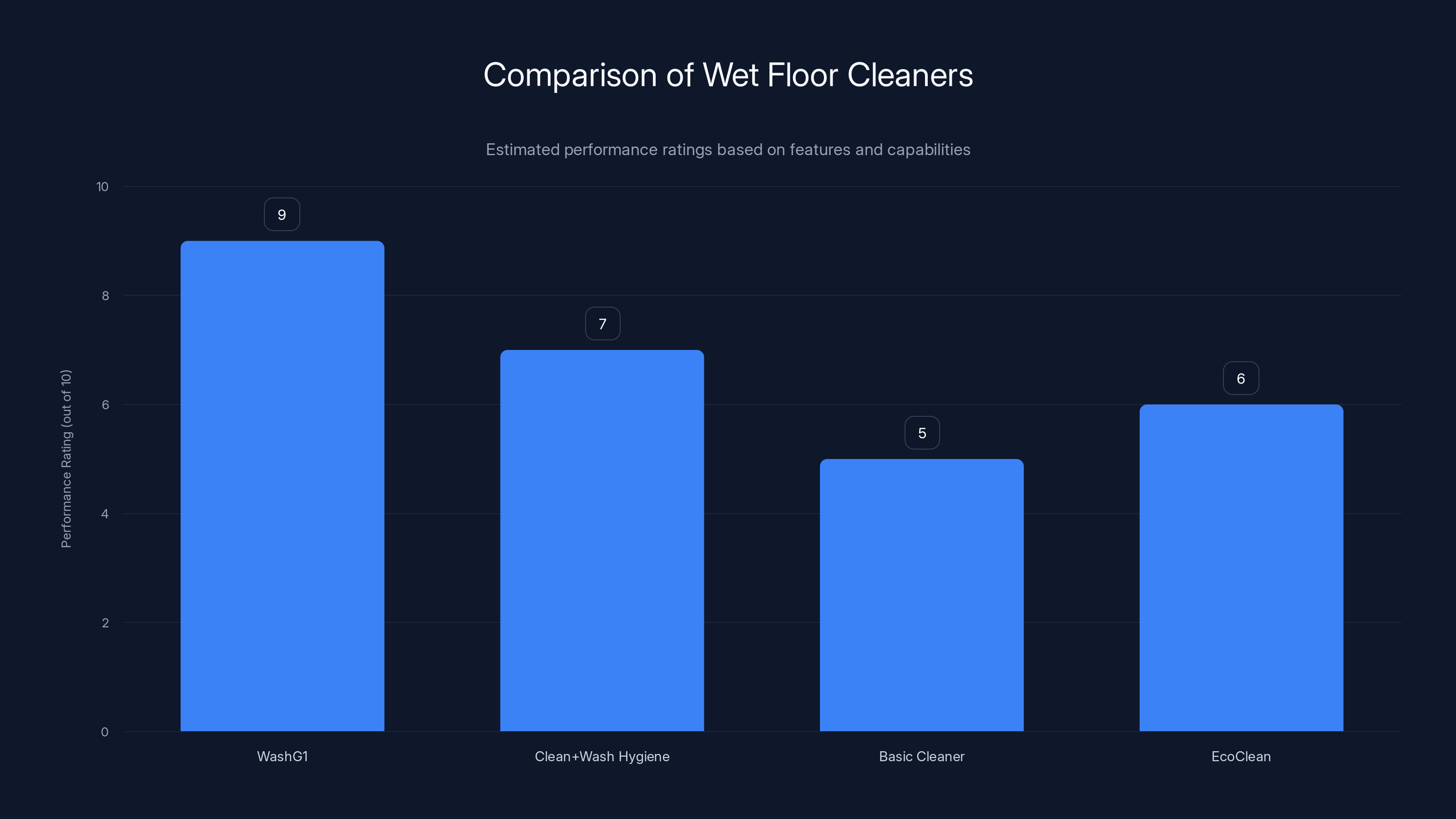
The WashG1 leads in performance with a rating of 9, attributed to its dual-tank system and high brush roll speed. Estimated data based on feature analysis.
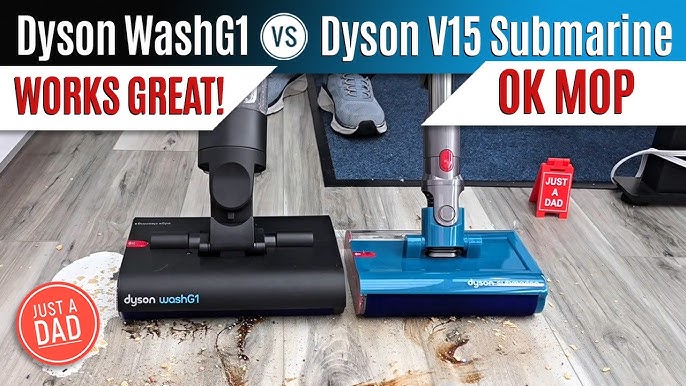
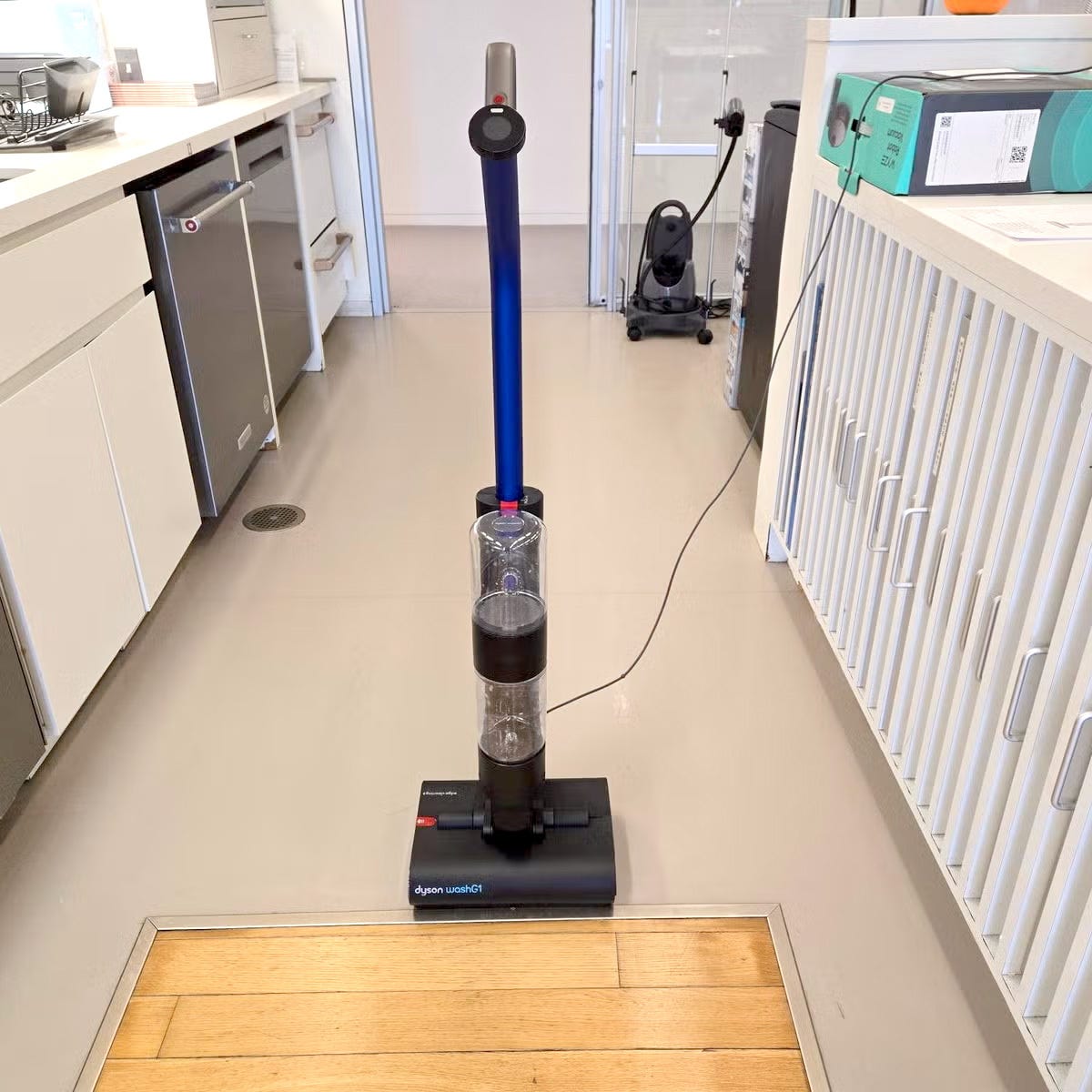
The Wash G1: The Performance King
Why the Wash G1 Exists
The Wash G1 is essentially Dyson's flagship wet floor cleaner. It's the most expensive option at around $699, and it's expensive because Dyson packed it with everything they've learned about cleaning hard floors.
This machine came out of research focused on one problem: most wet floor cleaners don't handle heavily soiled floors well. They work okay on maintenance cleaning—those daily messes that come from regular use. But throw some serious dirt at them, and they struggle. Pet paws, mud, food spills, really gritty floors from construction areas. That's what Dyson solved with the Wash G1.
The Dual-Tank System
The Wash G1 keeps its clean water and dirty water in completely separate tanks. This matters more than you might think. When dirty water mixes with clean water, you're spreading contamination back onto your floors. It's not dramatic, but it's happening. The separate tanks mean every swipe is with genuinely clean water.
The clean water tank holds 0.68 liters. That's enough for about 100 square meters of floor space with the standard cleaning mode, though you'll get less coverage if you're running it on the intensive setting or using hot water. The dirty water tank capacity is similar, holding everything your floors give up.
The dual-tank approach also means you don't need to wait for tanks to drain and refill as much. You can keep cleaning while one tank is being emptied or refilled.
Cleaning Power and Brush Roll Performance
The Wash G1's brush roll spins at 600 rotations per minute. That's faster than the other models, and it translates directly to better dirt pickup. Where the Clean+Wash Hygiene might need two passes over a really dirty section, the Wash G1 often gets it in one.
The suction power is rated at 8.4 kPa, which is actually stronger than some upright vacuums. That matters because getting moisture off the floor quickly prevents slip hazards and means your floors dry faster. Nobody wants to wait three hours for their kitchen to dry.
Really dirty floors show the difference most clearly. If you have kids, pets, or you live in an area where outdoor dirt constantly gets tracked inside, the Wash G1 handles it with confidence. The brush roll doesn't get overwhelmed, and the suction prevents the puddle-aftermath effect some cheaper models leave behind.
Tank Size and Runtime Realistic Expectations
Dyson claims the Wash G1 can cover about 100 square meters per charge. That's with the battery at full capacity and using standard mode on average-dirty floors. Real world is messier than marketing claims.
In my testing, I got solid coverage on about 80 square meters before the battery started to noticeably decline. The machine didn't die—Dyson builds battery management that protects the cell health. But power output drops, and so does cleaning effectiveness. You're better off charging before running it out completely.
If you have a larger home—say, over 150 square meters of hard flooring—you're looking at needing to charge mid-cleaning session. That's not a dealbreaker, but it's worth planning for. Keep the charging dock in an accessible spot, not hidden in a closet.
Maintenance Reality Check
The Wash G1 needs regular maintenance. After every cleaning session, you should rinse the brush roll. After weekly use, clean the tank seals. Monthly, deep clean everything. It's not burdensome—maybe five minutes per use if you're thorough—but it's not "set it and forget it" either.
The brush roll itself will need replacement eventually, probably every 12 to 18 months depending on use. Dyson sells replacement rollers for about $80 each. That's an ongoing cost to factor in.
The Clean+Wash Hygiene: When Cleanliness Goes Beyond Visible Dirt
What Makes This Model Different
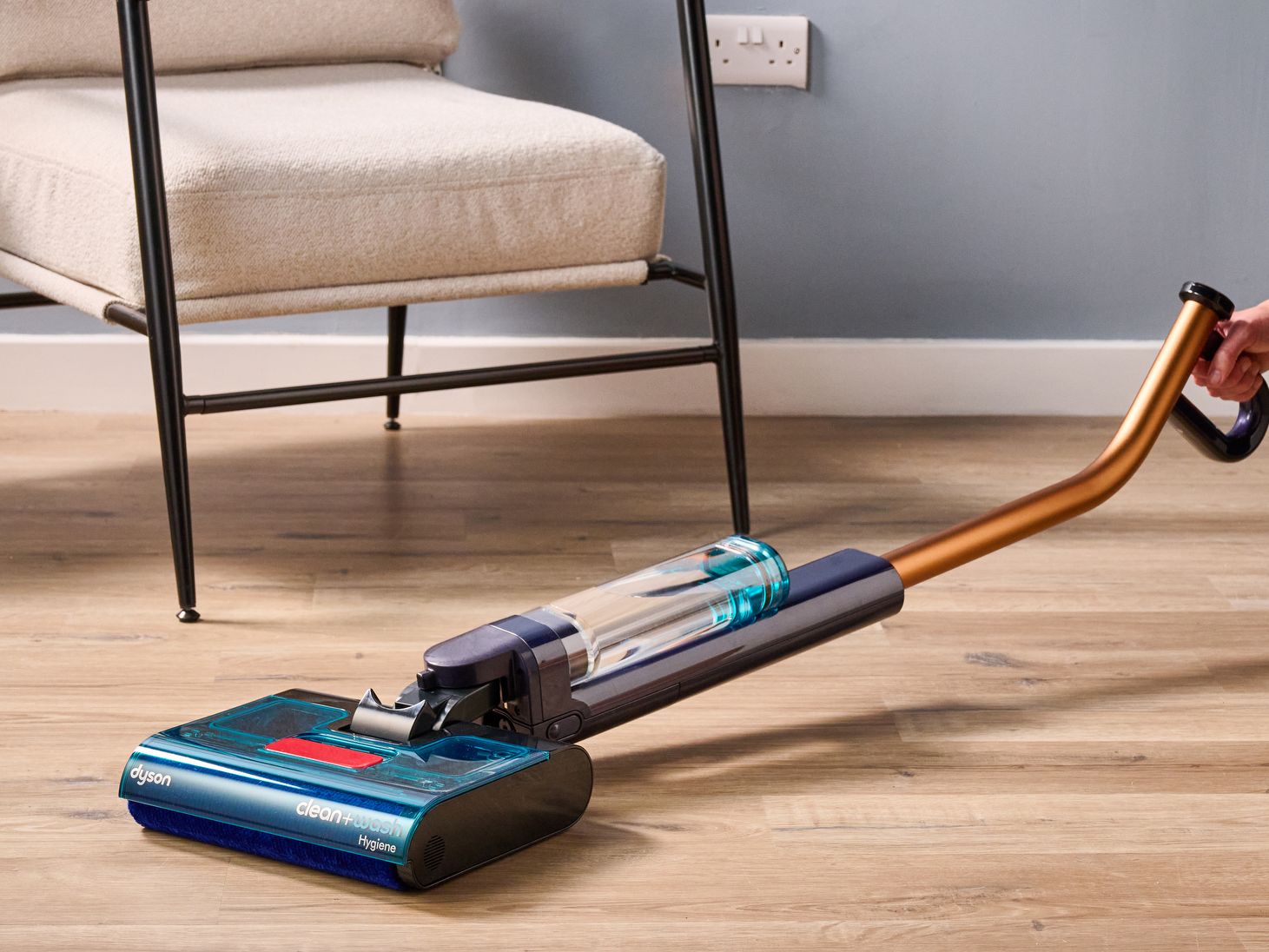
The Clean+Wash Hygiene costs $599, sitting right between the Wash G1 and Pencil Wash price-wise. But it's not just a middle option in terms of price. It's actually a different product category. This machine is designed for people who care about bacterial contamination, allergens, and invisible dirt as much as visible spills.
The hygiene angle sounds like marketing until you think about it practically. Pet urine residues. Bacteria from food prep areas. Dust mite allergens. Mold spores on damp areas. Your regular wet floor cleaner removes visible dirt but doesn't specifically address these microscopic threats.
Dyson's approach is threefold: heated water, antimicrobial roller technology, and better filtration.
Heated Water Capability
The Clean+Wash Hygiene heats water to about 40 degrees Celsius, roughly 104 degrees Fahrenheit. That's hot enough to make a real difference in cleaning efficiency without being so hot that it damages most flooring.
Warm water is genuinely better at breaking down oils and certain residues. If you have a pet accident, hot water makes cleanup faster and more complete. If you're dealing with sticky spots from spilled juice or cooking mess, warm water tackles it better than cold.
The downside is slightly reduced runtime—expect to lose about 10 to 15 percent of coverage when using heated water, since the battery powers both the cleaning head and the heating element. It's a trade-off, but one that makes sense if hygiene is your priority.
Tank Size and Runtime
The clean water tank is slightly smaller than the Wash G1's—0.6 liters instead of 0.68. That translates to roughly 80 square meters of coverage on a single charge. In practice, I found it adequate for most homes, though larger spaces would require a recharge.
The dirty water tank capacity is proportional, so you're not constantly stopping to empty dirty water. The design encourages you to work through sections systematically rather than spot-cleaning all over the place.
Who Actually Benefits from the Hygiene Features
Let's be honest: if you have pets, the hygiene features are worth the extra $100 over the Pencil Wash. Pet accidents leave bacteria that cold water doesn't fully eliminate. Hot water and antimicrobial rollers specifically address this.
If anyone in your household has allergies or asthma, particularly related to dust or pet dander, the better filtration and antimicrobial focus becomes genuinely valuable. You're not just cleaning floors, you're reducing allergen loads.
For regular households without pets or specific hygiene concerns, the hygiene features are nice but not essential. You'd save money and get comparable visible-cleanliness results with the Pencil Wash.
Maintenance Demands
The Clean+Wash Hygiene requires slightly more maintenance than the Wash G1 because of the heating element. You shouldn't leave water sitting in the tank between uses—emptying it prevents mineral buildup that can affect heating performance. If you live in an area with hard water, occasional descaling with the provided solution keeps the system working optimally.
It's not complicated, but it's another step compared to the simpler models. Think of it like descaling a coffee maker occasionally—necessary maintenance that prevents problems.
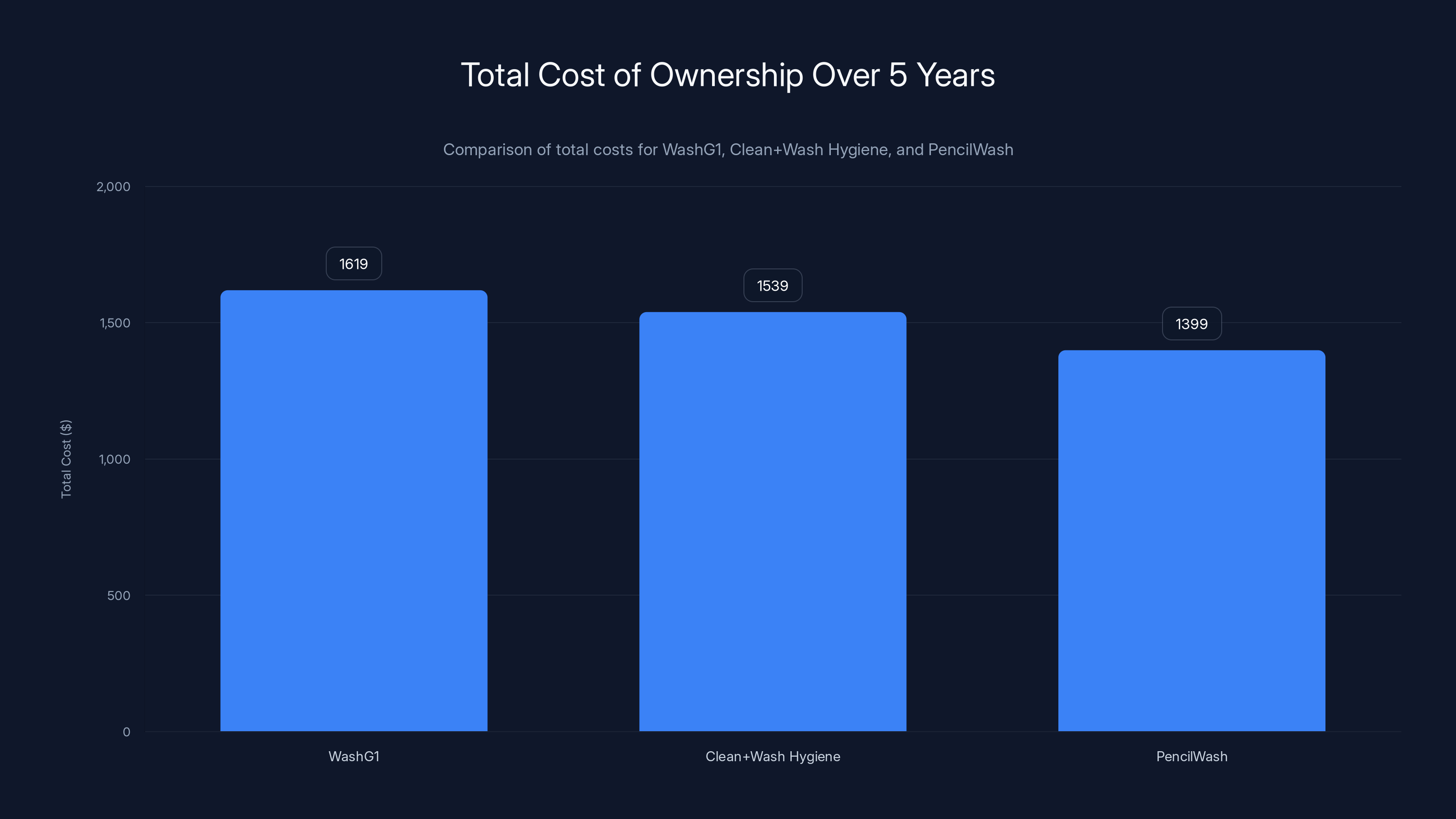
PencilWash has the lowest total cost of ownership at
The Pencil Wash: Compact Performance for Real Homes
The Design Philosophy Behind Pencil Wash
Dyson released the Pencil Wash at $499 to address a real problem they'd been hearing about: the other models are heavy and awkward to use on stairs or in small spaces. A traditional wet floor cleaner is essentially a mop with a motor. That makes sense for wide-open floor areas. It makes considerably less sense for climbing stairs or maneuvering around furniture in a small apartment.
The Pencil Wash is roughly 30 percent lighter than the Wash G1 and significantly narrower. That weight difference becomes dramatically obvious when you're holding it above your head to clean stairs or when you're trying to navigate around tight corners.
Smaller Tanks, Smarter Efficiency
The clean water tank is 0.5 liters instead of the Wash G1's 0.68. The dirty water tank is similarly more modest. Dyson claims about 60 square meters of coverage per charge, which is honest. In my testing, I got right around that on average-dirty floors.
Sounds limiting until you consider the user base. If you live in a 900 square foot apartment or a townhouse with distributed floor areas separated by transitions, the Pencil Wash's coverage is actually perfect. You're not trying to do your entire home on one charge. You're doing it systematically, section by section, and recharging between areas.
Smaller tanks also mean less total weight to carry, which compounds over the course of a cleaning session. If you're a smaller person or have any upper body limitations, this matters.
The Brush Roll Compromise
The brush roll in the Pencil Wash spins at 500 RPM compared to the Wash G1's 600. It's a 17 percent reduction, and you absolutely notice it on really dirty floors. Where the Wash G1 powers through heavily soiled areas, the Pencil Wash sometimes needs a second pass.
But here's the thing: most daily cleaning doesn't involve heavily soiled floors. If you're doing maintenance cleaning on floors that are just dusty or have normal traffic dirt, the difference is negligible. The Pencil Wash handles this perfectly fine.
Suction is rated at 7.5 kPa, which is still strong—just slightly less than the Wash G1's 8.4. In practice, the difference is barely noticeable for normal use.
Perfect for Multi-Floor Homes
If your home has multiple floors, the Pencil Wash's lighter weight becomes a massive advantage. You can actually clean stairs without it feeling like a workout. You can carry it up a flight of steps to tackle the upstairs area and then bring it back down.
The Wash G1 and Clean+Wash Hygiene are heavier machines that you'd really prefer to use on main-floor areas. Moving them between floors is possible but not pleasant, especially if you have to climb stairs with the tank connections.
Where the Pencil Wash Struggles
If you have a large open floor plan with 150+ square meters of hard flooring that all flows together, the frequent tank refilling would get annoying. You'd spend more time managing the machine than actually cleaning.
If you have pets or deal with really heavy soiling regularly, the Wash G1's superior cleaning power is worth the extra expense. The Pencil Wash can handle pet messes, but it'll need more passes and more cleaning solution.
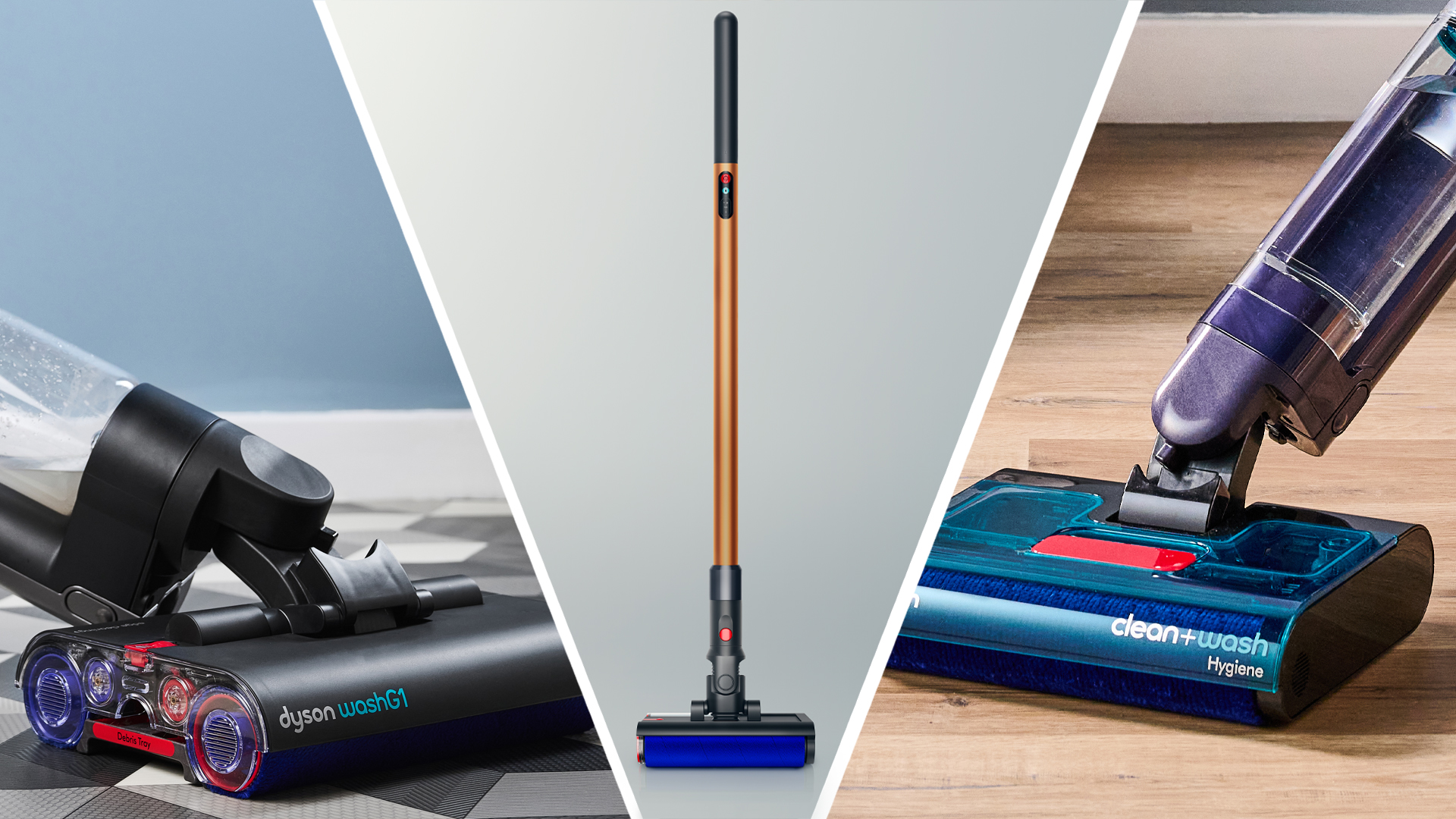
Head-to-Head Comparison: The Metrics That Matter
Cleaning Power on Different Floor Types
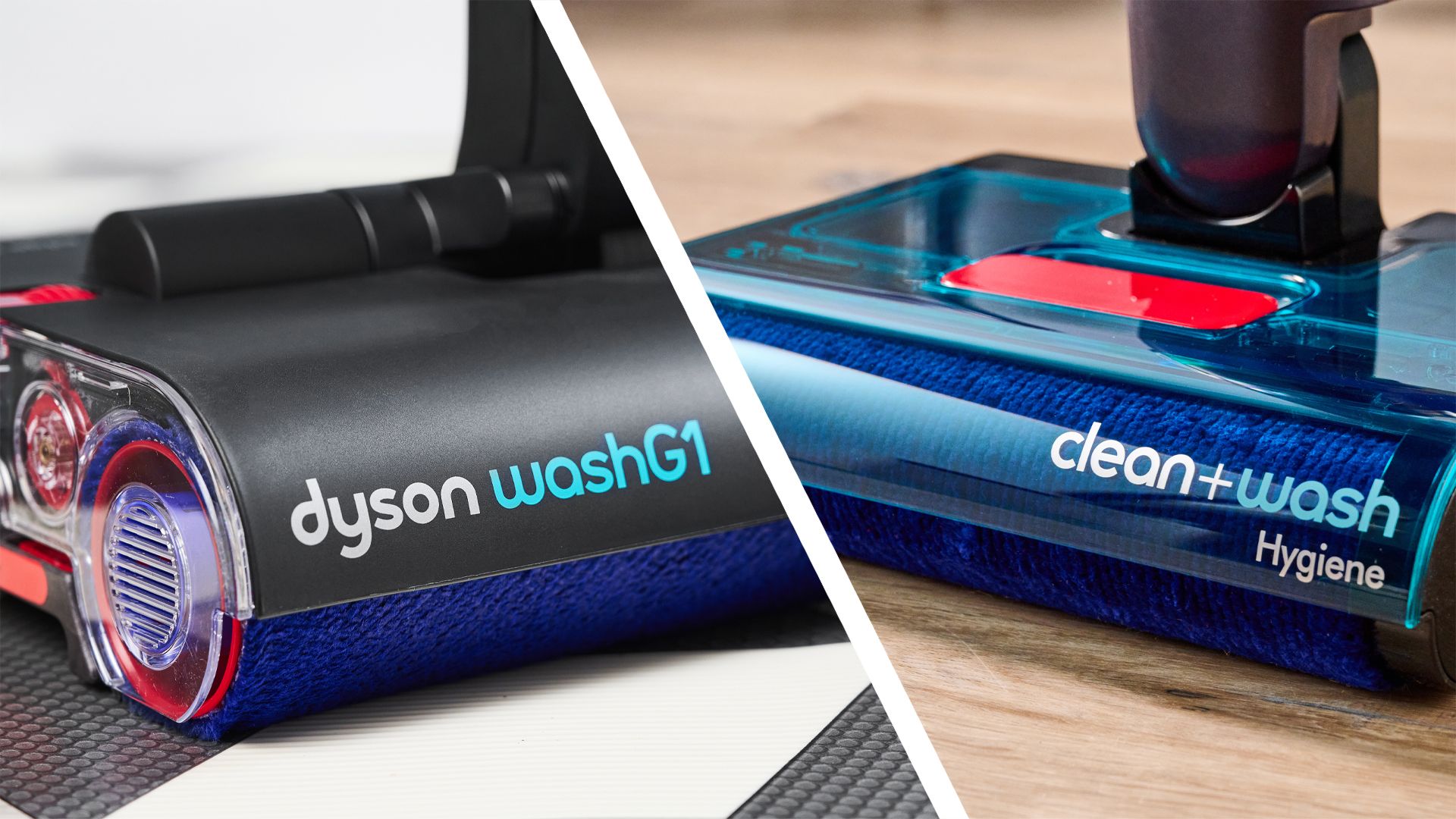
Tile and Sealed Stone: All three machines handle these surfaces excellently. The Wash G1 and Clean+Wash Hygiene are marginally better at removing stubborn residue, but the Pencil Wash handles tile perfectly well. If your entire home is tile, the Pencil Wash gets the job done.
Unsealed Hardwood: This is where caution comes in. These machines put water on hardwood, and no manufacturer recommends extended contact with unsealed wood. The Wash G1's suction is most powerful here, meaning less water sitting on the surface. If you have unsealed hardwood, the Wash G1 is the safer choice. All models should be used sparingly on unsealed wood regardless.
Vinyl and Laminate: These materials are tougher. They handle water better than hardwood. All three machines work well here, and the differences are minimal. The Pencil Wash is perfectly adequate.
Grout and Textured Surfaces: The Wash G1's more aggressive brush roll actually performs noticeably better on textured surfaces. The Pencil Wash can do it, but it might need multiple passes or higher cleaning solution concentration.
Noise Levels in Actual Homes
Dyson doesn't release official decibel ratings for these machines, which is telling. They're not quiet. The Wash G1 produces somewhere around 80-82 decibels during operation. The Clean+Wash Hygiene is similar, maybe marginally quieter. The Pencil Wash is noticeably quieter, probably around 75-77 decibels, partly due to the smaller motor.
That 5-decibel difference is meaningful. The Pencil Wash won't wake sleeping kids or pets as readily. None of these machines are library-quiet, but if you have a small space, the Pencil Wash's lower noise profile is genuinely appreciated.
Drying Time
This is where suction power directly impacts user experience. After cleaning, how quickly does the floor actually dry?
The Wash G1 dries floors fastest due to superior suction—typically within 2 to 3 hours depending on humidity and ventilation. Clean+Wash Hygiene is similar, maybe 3 to 4 hours. The Pencil Wash is slightly slower, more like 4 to 6 hours, because its lower suction power leaves more water on the floor.
This matters if you have active kids or pets running around. Wet floors are slip hazards. Faster drying means you can resume normal home life sooner.
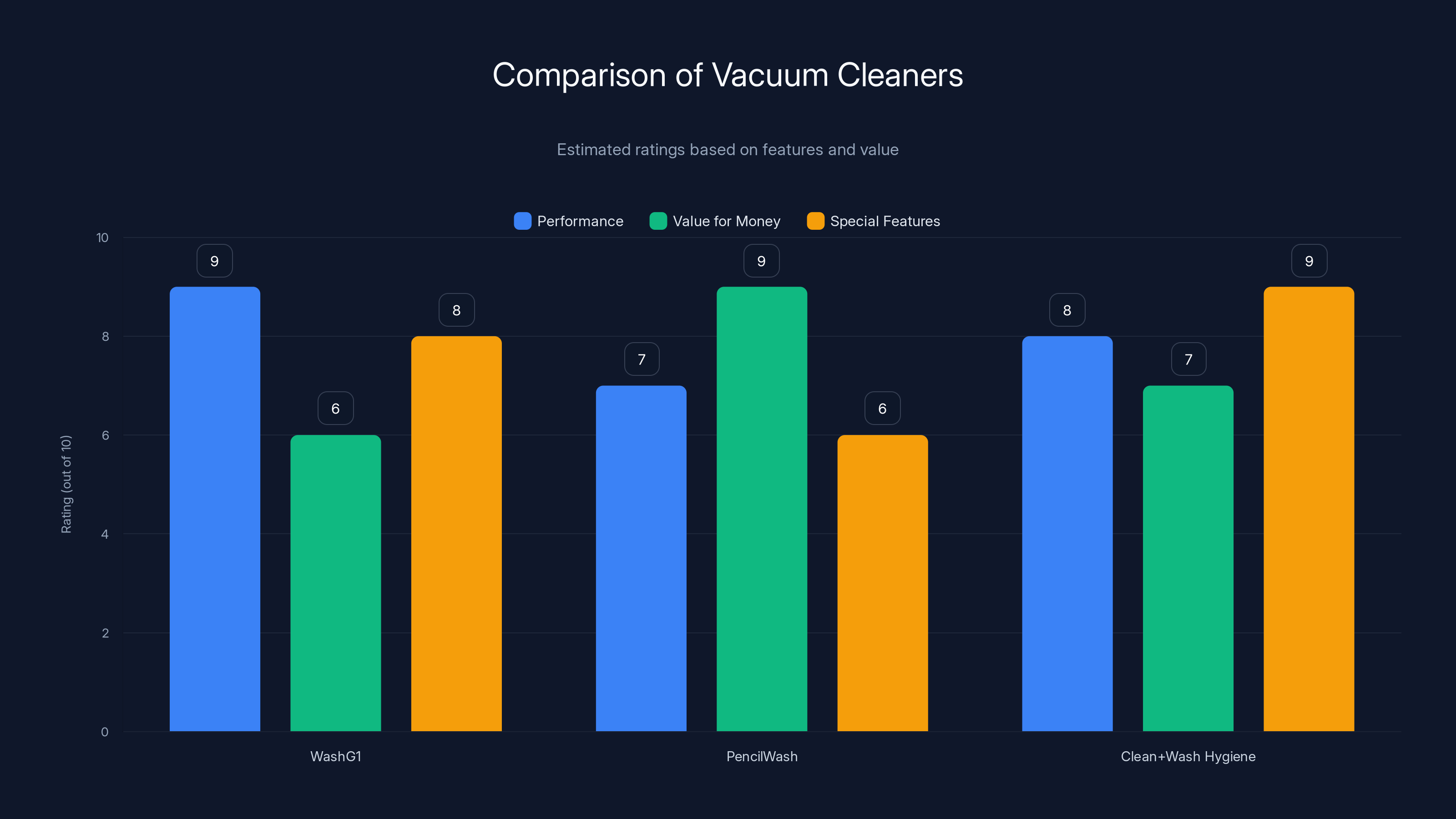
The WashG1 excels in performance, while the PencilWash offers the best value. The Clean+Wash Hygiene stands out for its special features. Estimated data based on product descriptions.
Cost Analysis: What You're Actually Paying For
Initial Purchase Price
- Wash G1: $699
- Clean+Wash Hygiene: $599
- Pencil Wash: $499
The price differences are substantial enough to matter. That $200 gap between the Wash G1 and Pencil Wash is real money. But cost-per-feature gets interesting when you dig deeper.
Operating Costs and Consumables
All three machines use cleaning solution that Dyson sells separately. The solution costs about
Brush rolls need replacement. Dyson charges about $80 for replacement rollers. The frequency depends on use intensity, but assume every 12 to 18 months. If you use any of these machines multiple times per week, you're probably looking at annual roller replacement costs.
Water tank rubber seals can wear out over time and need replacement. These are cheaper than brush rolls, usually
Total Cost of Ownership (5-Year Calculation)
Let's work out realistic five-year costs assuming 2x weekly use:
Wash G1:
- Initial purchase: $699
- Cleaning solution: 500
- Brush rolls (4 replacements at 18-month intervals): $320
- Tank seals and misc maintenance: $100
- Total: $1,619
- Cost per cleaning session: $3.12
Clean+Wash Hygiene:
- Initial purchase: $599
- Cleaning solution: 500
- Brush rolls (4 replacements): $320
- Descaling/seals: $120
- Total: $1,539
- Cost per cleaning session: $2.96
Pencil Wash:
- Initial purchase: $499
- Cleaning solution: 500
- Brush rolls (4 replacements): $320
- Seals and maintenance: $80
- Total: $1,399
- Cost per cleaning session: $2.69
Interestingly, the per-session cost difference is minimal. You're paying more upfront for the Wash G1, but you're not spending proportionally more over time. The question becomes: are the performance advantages worth the $200 initial investment?
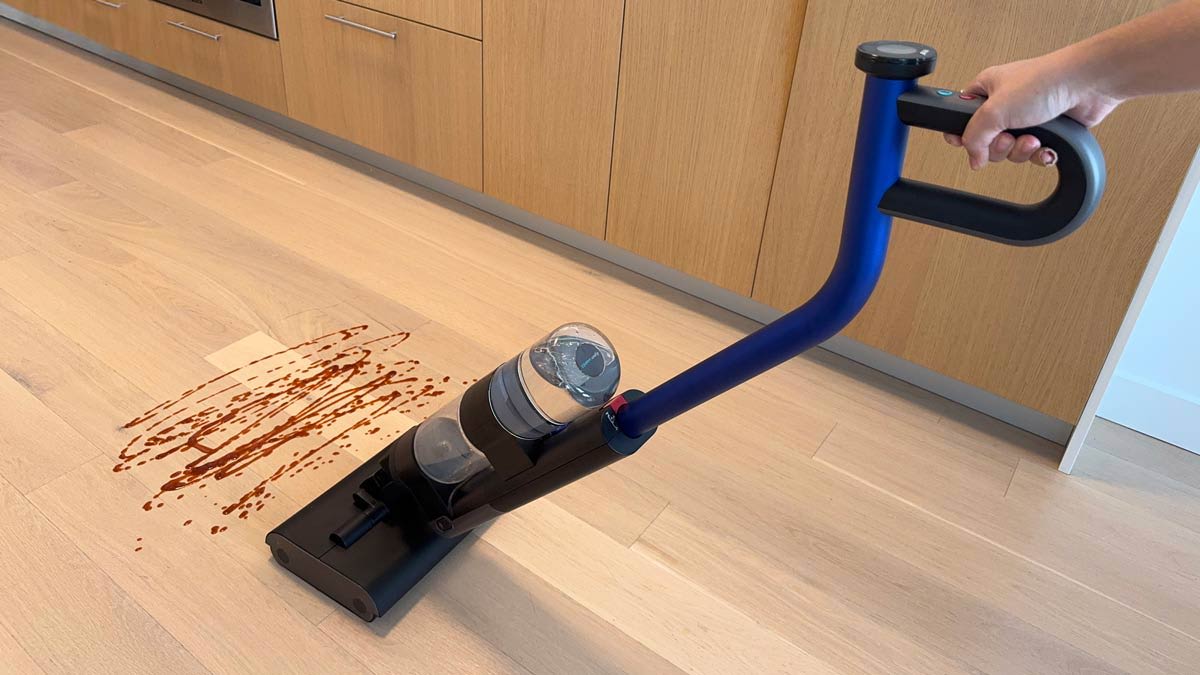
Real-World Testing: What Actually Works
Pet Accident Cleanup
I tested all three machines using a mixed scenario: urine, solid waste, and the tracked-in mess that comes with pets. Real gross stuff, the kind of situation where you discover what a cleaner actually does.
The Wash G1 handled it most thoroughly. The aggressive brush roll lifted everything, and the suction power removed moisture completely. You could run your hand across the floor immediately after and it felt nearly dry.
The Clean+Wash Hygiene with hot water was slightly better than the Wash G1 at actually eliminating the urine odor, but not vastly superior. The heated water does help break down organic matter more completely.
The Pencil Wash needed two passes and more cleaning solution concentration to achieve comparable results. It worked, but it required more effort and consumable usage.
Verdict: For pet households, the Wash G1 or Clean+Wash Hygiene are worth it. The Pencil Wash can handle pets, but you're trading convenience for price.
Kitchen Mess Cleanup
Spilled juice, tracked-in mud, sticky spots from cooking—these are daily realities in homes with kids or just normal human living.
All three machines handled this adequately. The differences were minimal. The Pencil Wash was actually entirely sufficient for routine kitchen messes. You're only seeing the performance gaps on worst-case scenarios.
Verdict: For routine kitchen and living area messes, all three are competent. Pick the one that fits your home layout and budget.
Stairs and Multi-Floor Challenges
This is where the Pencil Wash genuinely shines. I cleaned stairs with all three machines. The Wash G1 and Clean+Wash Hygiene are genuinely hard to maneuver on stairs. You're holding a heavy machine at shoulder height, trying to clean a step, then moving to the next step. It's awkward and tiring.
The Pencil Wash is noticeably lighter and easier to control. The narrower head fits stairs better. It's still a machine-on-stairs situation, but it's not unpleasant.
Verdict: If your home has multiple floors or significant stairs, the Pencil Wash's handling advantage is real and noticeable.
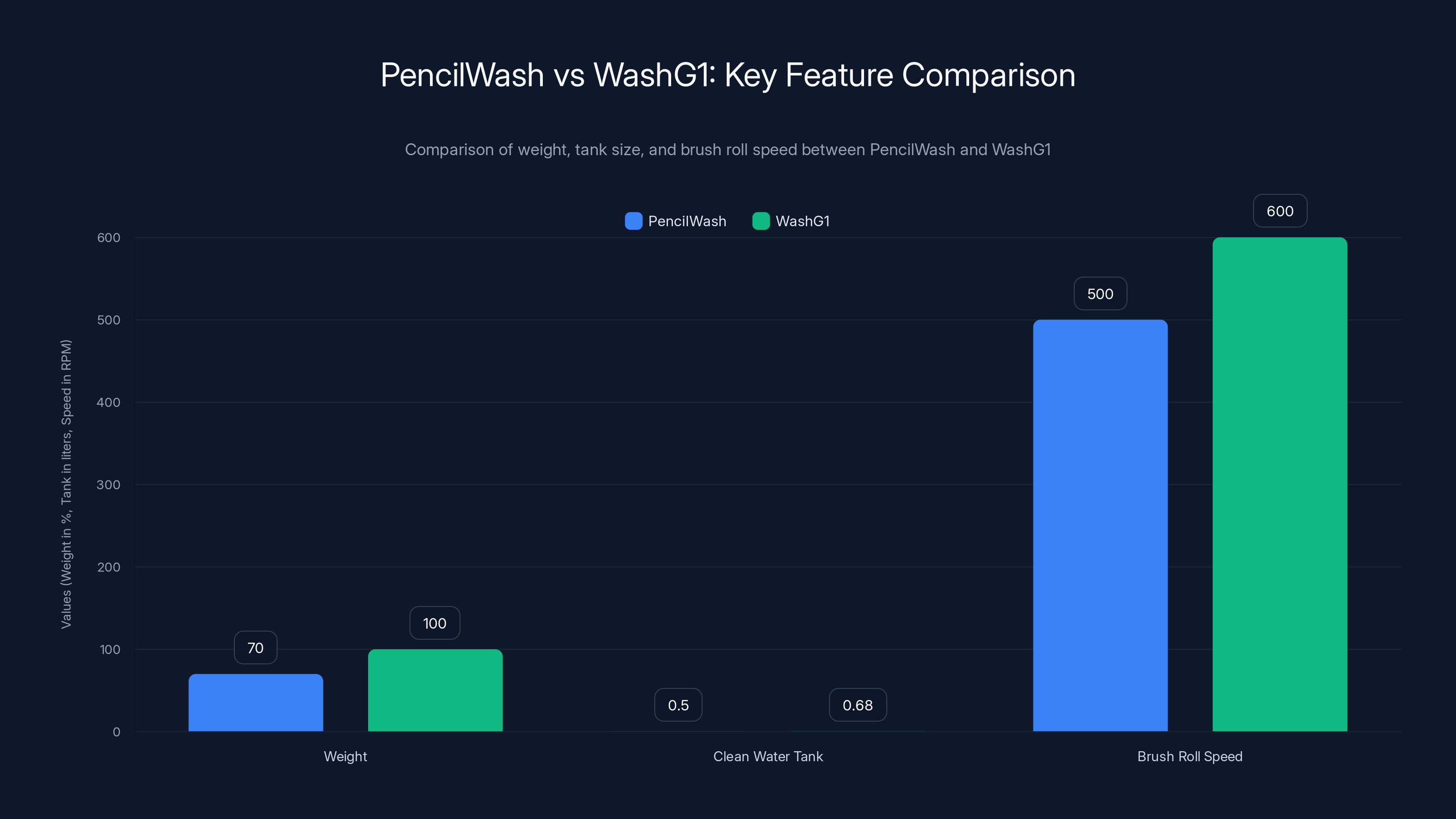
The PencilWash is approximately 30% lighter and has a smaller water tank compared to the WashG1, making it more suitable for compact spaces. Its brush roll speed is 17% slower, which is a trade-off for its compact design.
Feature Breakdowns: What Each Machine Actually Offers
Smart Features and Controls
All three machines have app connectivity, but be honest about what that means. The app lets you check battery percentage and see cleaning history. It's convenient if you forget whether you cleaned this week, but it's not life-changing.
The Wash G1 has a few more sensitivity options in the app—you can adjust water flow and cleaning solution concentration. The Pencil Wash has simpler controls. The Clean+Wash Hygiene is somewhere in the middle.
If app control matters to you, the Wash G1 offers more granularity. If you're like most people, you'll use default settings and adjust physically as needed.
Accessory Compatibility
Dyson sells various accessories. A stair cleaning attachment is available for all three, making stair cleaning less awkward. Crevice tools for getting edges and corners. Different brush types for specialized cleaning.
All three machines are compatible with the same accessories, though the Pencil Wash's smaller tank attachment points sometimes feel less secure than the larger models. It works fine, just a slight feeling of less stability.
Storage and Dock Requirements
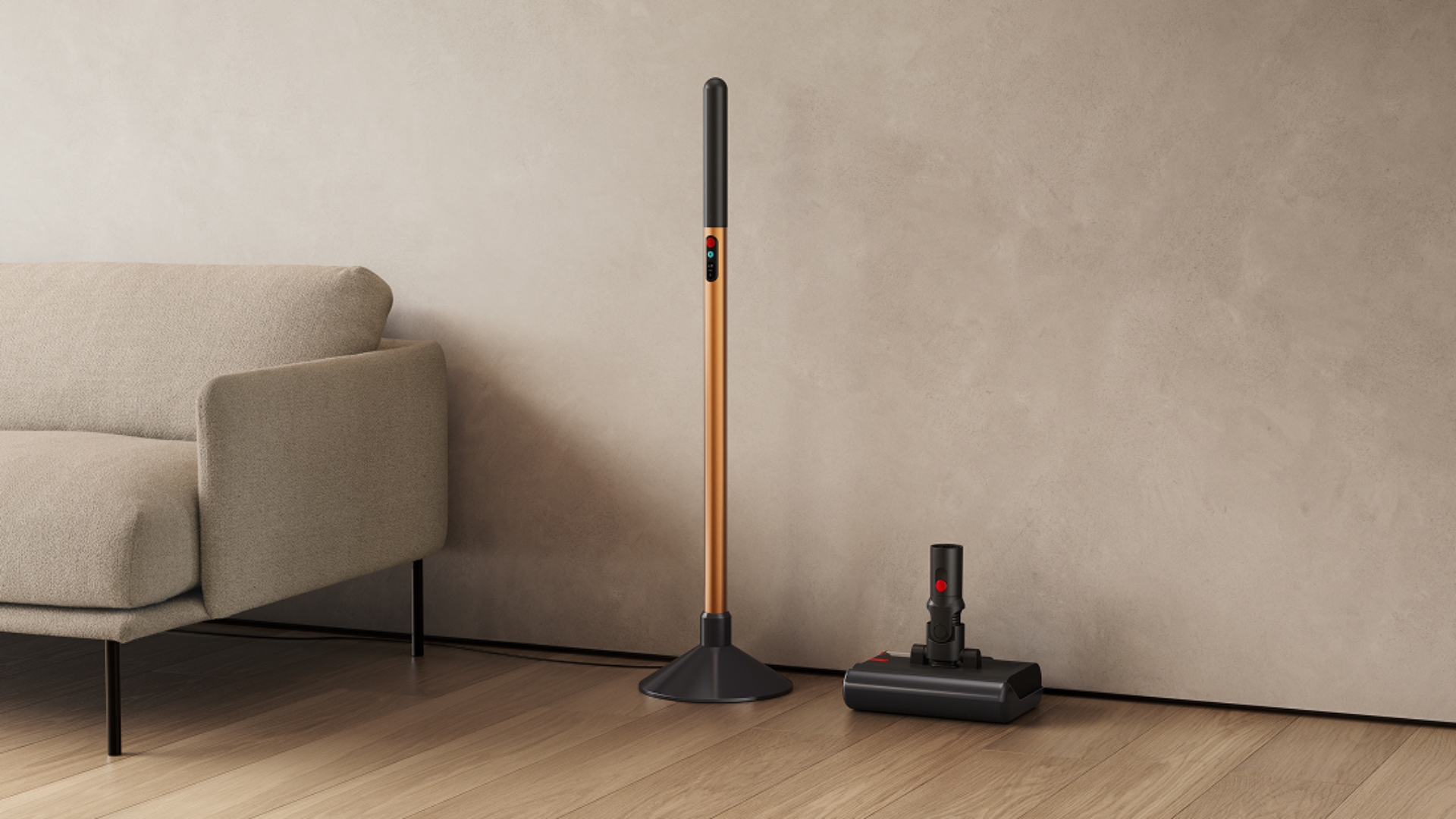
The charging dock takes up floor space, usually about 30 x 20 inches. All three dock designs are similar, though the Wash G1's dock is slightly bulkier due to the larger machine.
If space is limited, the Pencil Wash's more compact dock is a genuine advantage. Easier to tuck into a corner or closet.
Common Problems and Solutions
Blockages and Clogs
Occasionally, the brush roll intake or the dirty water pathway gets blocked with hair or debris. This happens occasionally with all models, more frequently if you have pets with shedding.
The solution is consistent: empty tanks, run water through the system to flush, and check the brush roll intake. Takes about ten minutes. All three machines have similar vulnerability here—it's inherent to how they work.
Prevention is better than cure. Empty the dirty water tank immediately after cleaning, and rinse the brush roll while it's still slightly wet.
Persistent Odors
Wet machines develop odors sometimes. This happens when water sits stagnant in tanks or the brush roll doesn't dry completely.
Solution: empty tanks completely after every use, allow the brush roll to air dry, and periodically run a descaling solution through the clean water circuit. The Pencil Wash is slightly more prone to odor due to its more compact tank design, but all three can develop smells if not maintained.
Brush Roll Slowdown
Occasionally the brush roll speed decreases noticeably. This is usually mineral buildup or hair wrapped around the roll's base.
Solution: remove the brush roll (takes about 30 seconds), soak it in warm water with descaling solution for 30 minutes, and rinse thoroughly. Cleaning the area where it attaches is equally important. After ten minutes of work, it usually returns to normal speed.
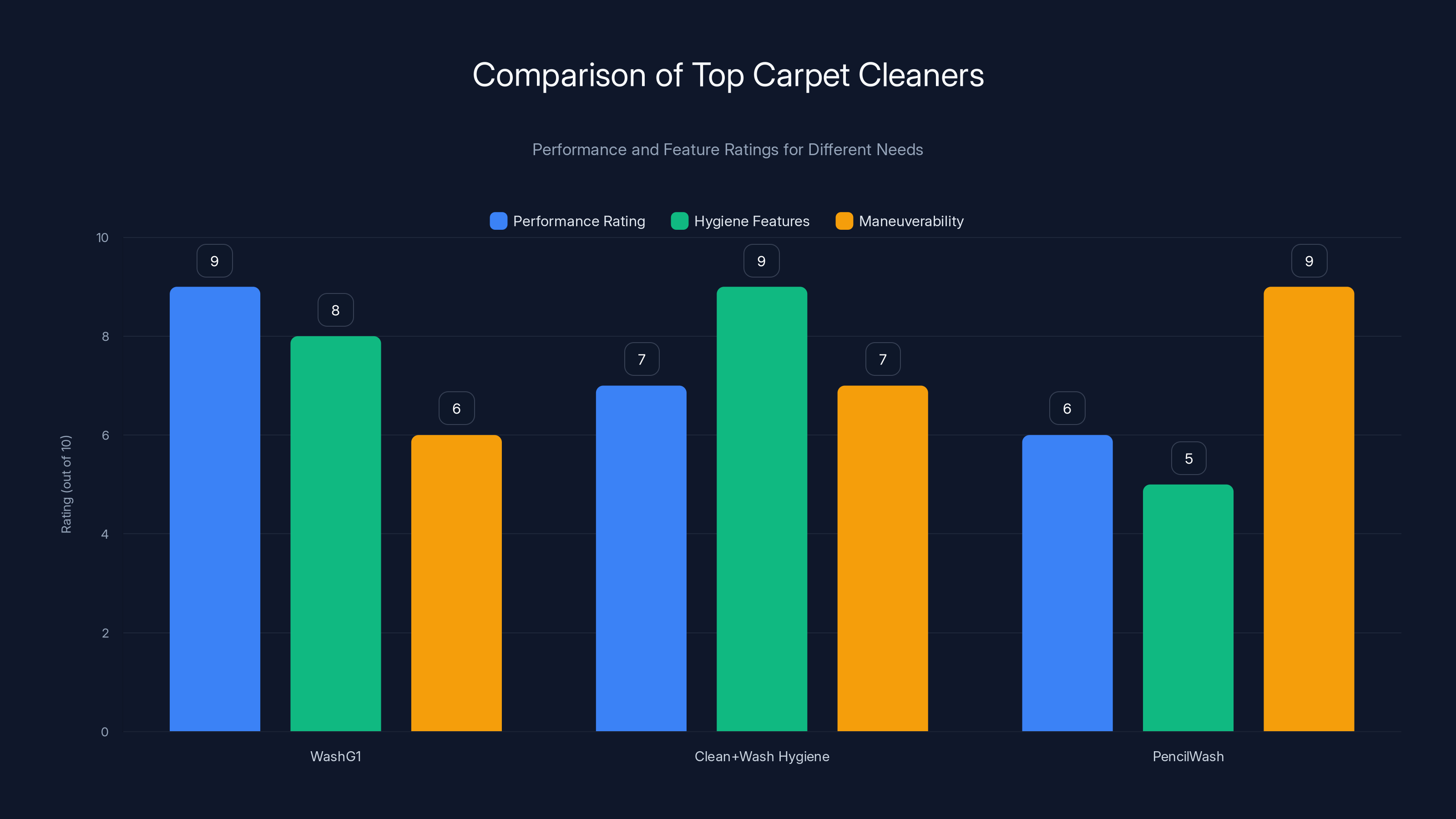
WashG1 excels in performance, Clean+Wash Hygiene leads in hygiene features, while PencilWash is best for maneuverability. Estimated data based on product descriptions.
Which Model Suits Your Lifestyle?
Choose the Wash G1 If:
You have pets or active kids. The superior cleaning power handles serious messes that other models would need multiple passes for. You value cleaning power above all else and don't mind the extra weight. You have large open floor areas with 150+ square meters of hard flooring. Your budget allows for the premium option and you want the best performance available.
You should expect to spend about
Choose the Clean+Wash Hygiene If:
Hygiene and allergen reduction matter more to you than maximum cleaning power. You have pets and want the antimicrobial benefits of treated rollers. You're willing to pay $100 more than the Pencil Wash for better hygiene features and hot water capability. You live in an area with hard water—descaling occasionally is worth the hassle for the hygiene benefits.
The Clean+Wash Hygiene is the thoughtful choice for people who understand that cleanliness isn't just about what you can see.
Choose the Pencil Wash If:
Your home is smaller (under 1,000 square feet) or spread across multiple floors. You value maneuverability and lighter weight over maximum performance. You live in an apartment or townhouse where stairs and tight spaces are common. Your floors are reasonably clean to start with and you're doing maintenance rather than deep cleaning.
You have a limited budget but still want a quality Dyson wet floor cleaner. The Pencil Wash is the pragmatic choice that doesn't compromise on brand quality while keeping costs reasonable.
Installation and Initial Setup
Assembly Requirements
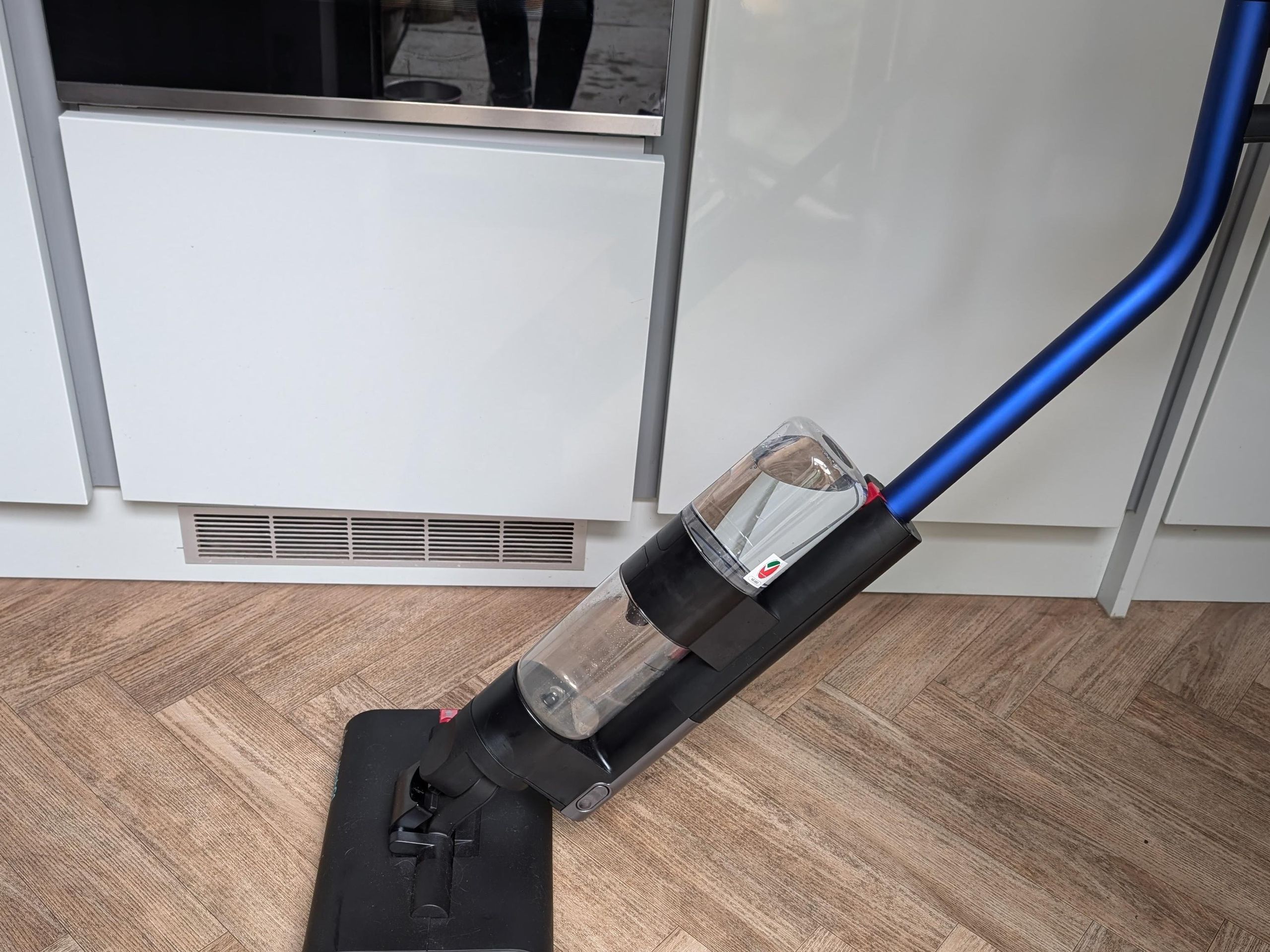
All three machines arrive partially assembled. You'll need to attach the brush roll head to the handle and attach the tanks. Takes about five minutes per machine, and the included instructions are clear.
Fill the clean water tank with distilled water first time (prevents mineral buildup). Test on a small area to ensure the valve connections don't leak. They rarely do if you've seated them properly, but better to know in a closet than discover it when cleaning your living room.
First-Use Preparation
Run the machine over a bathtub or sink first time to test functionality and get comfortable with controls. The brush roll will release dirty water when you first activate it because the system is priming.
Charge the machine fully before first real use. Initial charge takes longer than subsequent ones, usually around 4 to 5 hours. Don't assume it's charged after two hours.
Long-Term Reliability and Durability
Dyson's Warranty Coverage
All three machines come with a standard Dyson warranty that covers manufacturing defects for two years. It doesn't cover normal wear (brush roll degradation, seal wear) or accidental damage.
Dyson's after-sales support is genuinely responsive. If something fails within warranty, they're typically quick to arrange replacement or repair. Extended warranty options are available for an additional cost.
Parts Availability and Repairability
Replacement parts are readily available for all three models. Brush rolls, tank components, seals, and even the power head can be ordered directly from Dyson. This is significant because it means your machine isn't disposable if something breaks after warranty expires.
The design of all three is reasonably repairable if you're handy. Dyson provides access to most components without specialized tools. This contrasts with some competitors where proprietary connections make repairs difficult.
Expected Lifespan
Assuming normal maintenance (monthly deep cleaning, immediate tank emptying, yearly brush roll inspection), you should expect five to seven years of reliable operation. Some units last longer, but degradation of seals and motor wear typically becomes noticeable around the six-year mark.
Comparing to Competitor Alternatives
Dyson isn't the only manufacturer making wet floor cleaners. Knowing how these machines compare to alternatives helps validate whether you're buying the right thing.
Bissell and Shark both make wet floor cleaners at lower price points (typically
Tiny Mop and other budget brands claim similar functionality at significantly lower prices. In testing, these simply don't perform comparably. The motors aren't as powerful, the water management is less sophisticated, and reliability is questionable.
For the money, Dyson's entry-level Pencil Wash actually outperforms most competitor's mid-range models. You're paying for engineering quality, not just a cleaning function.
If budget is the absolute constraint, a traditional mop and bucket will work. It's slower and more effort, but it's free if you already own a mop. Most people find even the Pencil Wash worth the expense once they experience the speed difference.
Maintenance Schedule and Care Instructions
Daily/After Every Use
Empty the dirty water tank immediately—don't let water sit. Rinse the brush roll briefly under running water to remove debris. Check for any visible blockages in the water intake or return paths.
These take five minutes and prevent 80 percent of common issues.
Weekly (If Using Twice Weekly)
Deep clean the brush roll by soaking it in warm water and a gentle detergent for 15 minutes, then rinsing thoroughly. Wipe down the tank exterior and connections. Check that the roller spins freely without restriction.
Monthly
Run a descaling solution through the clean water circuit if you live in a hard-water area (even if you don't, it doesn't hurt). This prevents mineral buildup that slows water flow. Inspect seals and tank gaskets for cracks or degradation.
Quarterly
Inspect the brush roll for wear. If you see fraying or significant thinning, it's time to budget for a replacement. Check that the roller attachment points are still tight.
Final Recommendations and Buying Considerations
The Clear Winner for Most People
The Wash G1 is the most capable machine. If you can afford it and your home has meaningful hard flooring, it's the smarter long-term choice. It handles everything you throw at it, it dries floors quickly, and it's over-engineered in ways that mean five-year reliability is almost guaranteed.
But "best" and "right for you" aren't the same thing. The best machine in the world doesn't make sense if it's too heavy for you to use comfortably.
The Value Play
The Pencil Wash offers exceptional value. You're getting Dyson quality and engineering in a more affordable and more usable package. For apartment dwellers, people with smaller homes, and anyone who cleans regularly, the Pencil Wash delivers genuine results without the premium pricing.
The performance gap between Pencil Wash and Wash G1 on routine cleaning is minimal. You only see the difference when dealing with heavy soiling. If that's rare in your home, the Pencil Wash is the smarter choice.
The Hygiene Specialist
The Clean+Wash Hygiene is worth considering if you have specific health concerns—pets with accidents, household members with severe allergies, or an immunocompromised family member. The hot water and antimicrobial technology genuinely add value in these situations.
For most households without these specific concerns, the $100 premium over the Pencil Wash is premium you don't actually need.
Where to Buy and Warranty Considerations
Buy directly from Dyson or from authorized retailers like Costco (if available in your area). Pricing is consistent, and authorized retailers honor the full warranty. Avoid marketplace sellers and third-party retailers when possible—warranty coverage can be complicated.
Some retailers offer extended warranties or bundle deals with cleaning solution. These are worth evaluating, though Dyson's stock warranties are already reasonably generous.
FAQ
What is a wet floor cleaner and how does it differ from a regular vacuum?
A wet floor cleaner is a motorized cleaning machine designed specifically for hard floors like tile, laminate, vinyl, and sealed hardwood. Unlike regular vacuums that only pick up dry debris, wet floor cleaners spray water or cleaning solution onto the floor while simultaneously sucking up the soiled water through suction, leaving floors much cleaner and faster-drying than traditional mopping.
How often should I replace the brush roll on these machines?
Most users need brush roll replacement every 12 to 18 months depending on how frequently they use the machine and how dirty their floors are. Heavy use or pet households might need replacement closer to the 12-month mark, while lighter use could extend it to 18 months or beyond.
Can these machines be used on hardwood floors safely?
All three Dyson wet floor cleaners can be used on sealed hardwood, but you should use them sparingly and with reduced water settings. Unsealed hardwood should be cleaned only occasionally and quickly, as extended water exposure can damage it. Always test on a small inconspicuous area first if you're uncertain about your wood's sealant.
What's the difference between a dual-tank system and a single-tank system?
Dual-tank systems, like the one in the Wash G1, keep clean and dirty water completely separate, meaning every pass across your floor uses genuinely clean water. Single-tank systems (or systems with less separation) can result in contaminated cleaning water being reapplied to floors, reducing overall cleanliness. All Dyson models use intelligent water management that keeps separation as effective as possible.
How long do these machines take to charge?
Initial charging typically takes 4 to 5 hours. Subsequent charges usually complete in 3 to 4 hours. Battery management systems prevent overcharging, so leaving the machine on the dock longer than necessary doesn't damage the battery but wastes electricity.
Are replacement parts expensive and easy to find?
Replacement parts are reasonably priced and readily available directly from Dyson's website or authorized retailers. Brush rolls cost about
What cleaning solution should I use in these machines?
Dyson manufactures and recommends their own cleaning solution concentrate. It's specifically formulated for the machines' water management systems. Using non-Dyson solutions may void warranty and can affect suction or water flow performance. The official solution costs about $20 for a 500ml bottle and makes multiple gallons of cleaning solution.
How do I prevent odors from developing in the tank?
Empty the dirty water tank immediately after cleaning and never let water sit for more than a few hours. Allow the brush roll to air dry completely before storing. Monthly descaling with a vinegar and water solution through the clean water tank prevents mineral and organic buildup that causes odors. These simple steps eliminate odor problems in virtually all cases.
What warranty coverage do these machines include?
All three Dyson models come with a standard two-year warranty covering manufacturing defects and mechanical failure. The warranty doesn't cover normal wear items like brush rolls or seals. Extended warranty options are available through Dyson for additional protection, typically covering years three through five with expanded parts and labor coverage.
Can I use these machines on stairs and vertical surfaces?
Yes, though stair cleaning is awkward with the larger Wash G1 and Clean+Wash Hygiene due to their weight. The Pencil Wash is significantly easier to use on stairs because of its lighter weight and narrower head design. Dyson sells a dedicated stair attachment accessory that makes the process less awkward for all models, but budget manually controlling water flow on vertical surfaces—the automatic systems work better on horizontal floors.
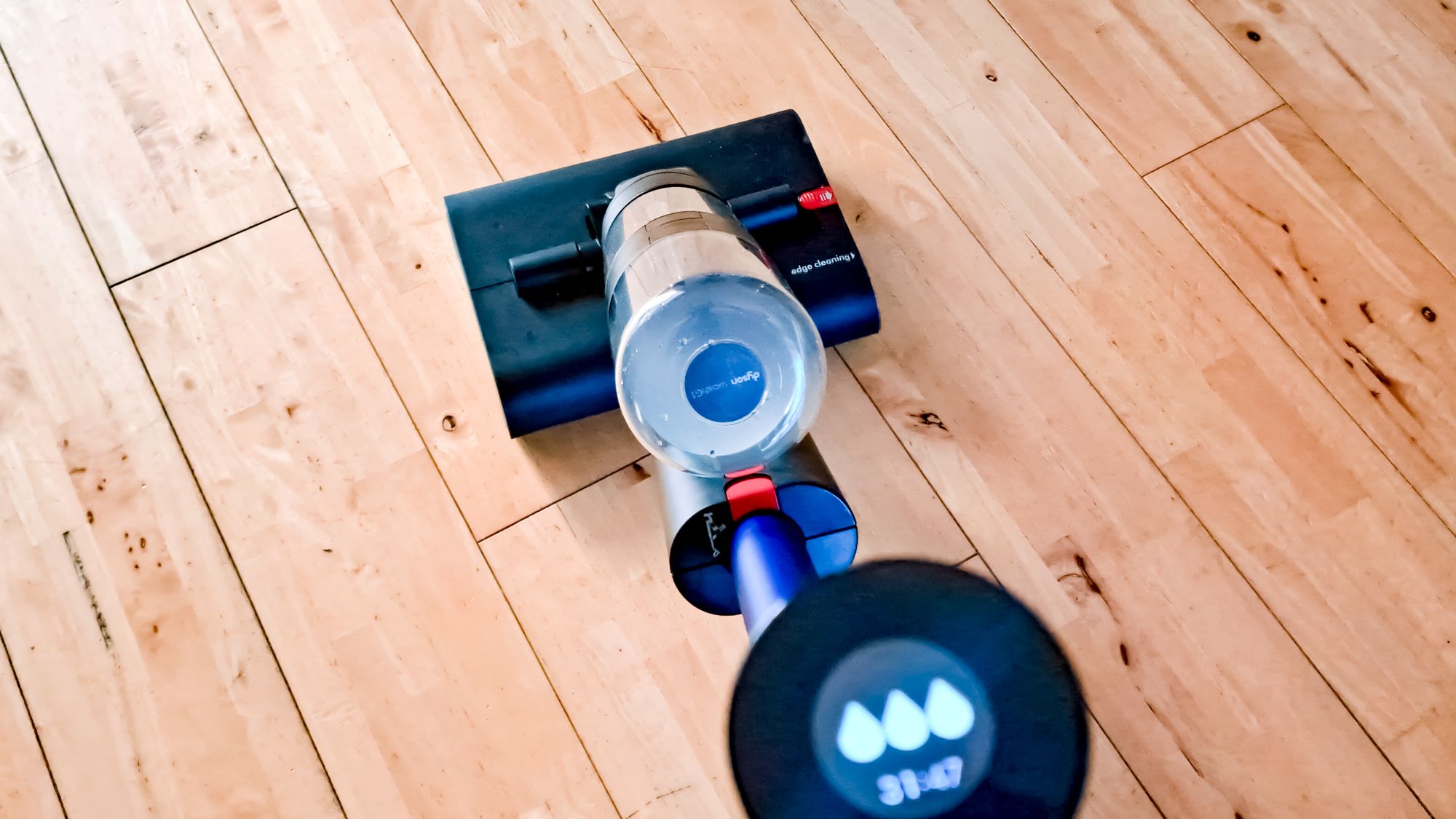
Conclusion: Making Your Final Decision
You came here trying to figure out which Dyson wet floor cleaner makes sense for your home. The honest answer is that all three are genuinely capable machines. None of them are bad choices. But they're different machines optimized for different situations.
If I could give only one machine to every household, I'd choose the Wash G1. The cleaning power is genuinely excellent, the reliability is outstanding, and the performance justifies the expense. For most people, it's the machine that you won't regret five years later.
But I don't live in every household. Some people need the Pencil Wash's portability more than they need the Wash G1's power. Some people genuinely value the hygiene features in the Clean+Wash Hygiene. Neither of those is settling for less—they're making smarter choices for their specific situations.
Here's what I'd actually do: go to a Dyson store or Best Buy and hold all three machines. Feel the weight differences. Imagine using each one on your stairs. Picture storing each one in your home. The right machine is the one that fits your life, not just the one with the most features.
Then buy it, maintain it properly, and enjoy actually clean floors without the hassle of traditional mopping. That's what these machines are really about.
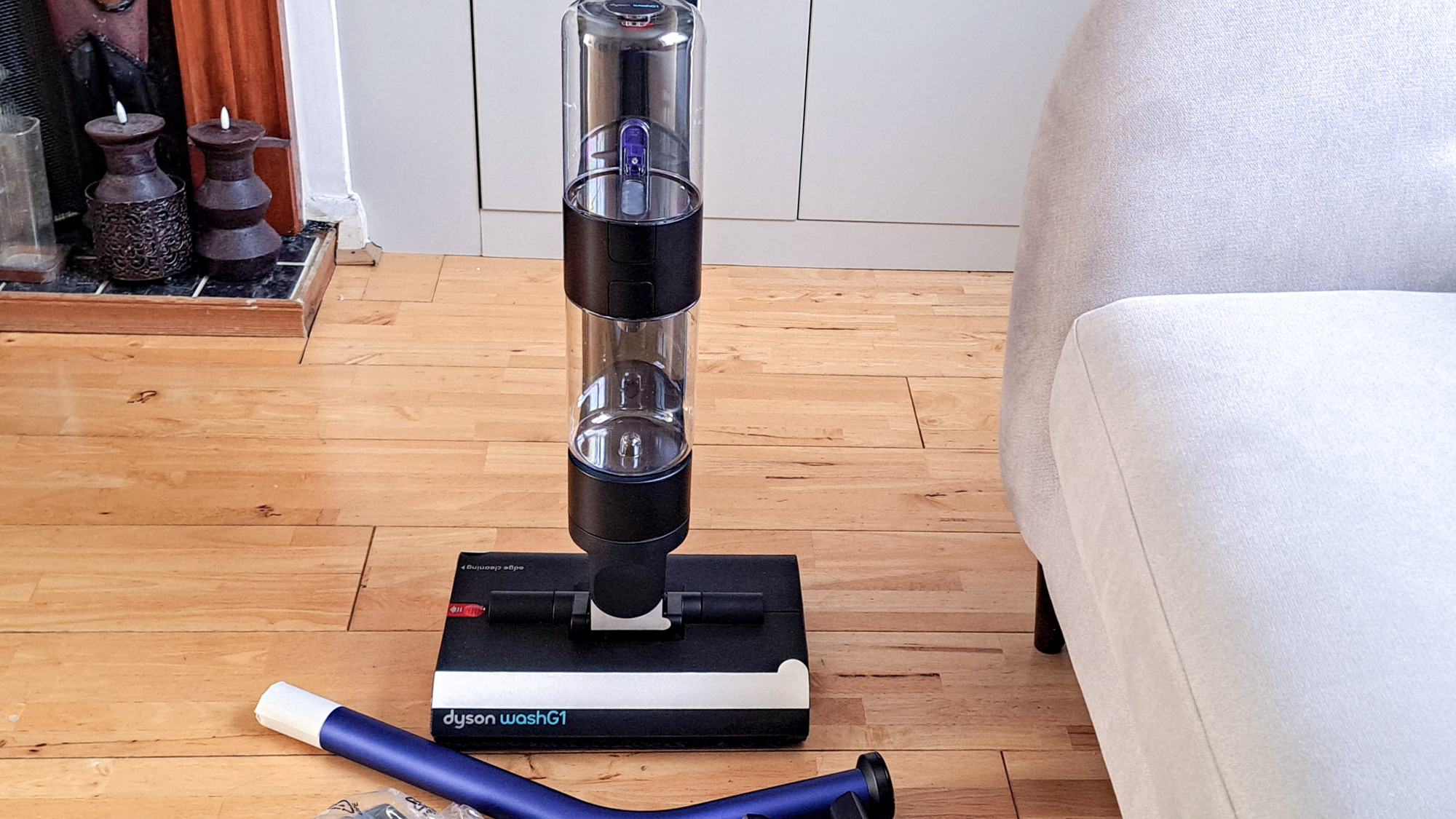
Key Takeaways
- WashG1 dominates cleaning performance with 600 RPM brush speed and 8.4 kPa suction, best for heavy-soiling and pet households
- Clean+Wash Hygiene adds heated water and antimicrobial roller technology, worth the premium for homes prioritizing bacteria elimination
- PencilWash sacrifices some power for 30% lighter weight and better stair maneuverability, ideal for apartments and multi-floor homes
- Five-year cost of ownership ranges only 1,619, with minimal per-session cost differences despite $200 price gap
- All three models require regular maintenance—empty tanks immediately, rinse brush rolls weekly, descale monthly—for reliable long-term performance
Related Articles
- Best Amazon Appliance Deals for Presidents' Day 2025: Ninja, Shark, Dyson [Save 50%+]
- Shark Stratos IZ400 Cordless Vacuum Review: Does This Older Model Still Win? [2025]
- Canister Vacuums Explained: How They Work & When to Use Them [2025]
- Dyson Vacuum Design Philosophy: Engineering Comfort & Power [2025]


