
![[2025] Google's AI Try-On Revolutionizes Fashion](https://runable.blog/blog/2025-google-s-ai-try-on-revolutionizes-fashion/image-1-1765530707610.webp)
[2025] Google's AI Try-On Revolutionizes Fashion
Imagine walking into a store, picking out an outfit, and trying it on—all without stepping out of your home. This is no longer a fantasy, thanks to Google's groundbreaking AI try-on feature that lets you virtually try on clothes with just a selfie. The integration of AI in fashion is not just a technological advance; it's a revolution reshaping how we shop. Let's explore this fascinating innovation, its workings, and its implications for the future of fashion.
TL; DR
- AI-Powered Personalization: Google's try-on feature uses AI to create a realistic full-body image from a selfie, enhancing the online shopping experience.
- Enhanced User Experience: This feature allows users to visualize clothing fit and style without physical trials, offering convenience and time savings.
- Technical Integration: Utilizing Google's Gemini 2.5 Flash Image model, the feature generates accurate digital representations.
- Industry Transformation: The technology promises to reduce return rates and increase customer satisfaction by ensuring better fit accuracy.
- Future Trends: Expect further integration of AI in fashion retail, enhancing sustainability and personalization.
The Evolution of AI in Fashion
From Full-Body Photos to Selfies
Previously, virtual try-ons required full-body images, which limited seamless user experience. However, Google's innovation enables these try-ons with just a selfie. This leap not only simplifies the process for users but also demonstrates the power of AI in image processing and personalization.
The Role of Google's Gemini 2.5 Flash Image Model
The Gemini 2.5 Flash Image Model is the engine behind this innovation. By analyzing a single selfie, it generates a detailed digital avatar that can try on outfits virtually. This model leverages machine learning algorithms to interpret and expand upon the limited visual data provided by a selfie.
AI's Impact on User Experience
AI enhances the online shopping experience by offering personalized recommendations and accurate fit predictions. It allows users to visualize how an outfit will look on their body, reducing the uncertainty that often accompanies online shopping.
How Google's AI Try-On Works
Step-by-Step Process
- Snap a Selfie: Users upload a selfie to the app or website.
- Select Clothing: Choose the desired outfit and size.
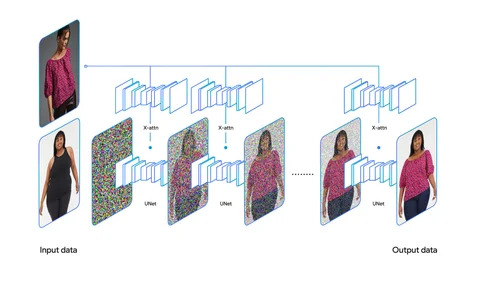
- AI Processing: The Gemini model processes the selfie to create a full-body avatar.
- Virtual Try-On: The avatar tries on the selected outfit, allowing users to see how it fits and looks.
This streamlined process is designed for ease of use, requiring minimal user input while delivering maximal results.
Technical Details
The AI try-on feature employs advanced algorithms to map the user's facial and bodily features accurately. Machine learning techniques enhance image processing, ensuring the avatar accurately reflects the user's physique and proportions.
pythonimport numpy as np
from sklearn.preprocessing import Standard Scaler
# Example of feature scaling for AI processing
features = np.array([[height, weight, age]])
scaler = Standard Scaler()
scaled_features = scaler.fit_transform(features)
The above example illustrates how features like height and weight might be normalized for processing, ensuring the AI model's predictions are as accurate as possible.

Practical Implementation Guide
Setting Up the Try-On Feature
For businesses looking to implement this AI try-on feature, here's a practical guide:
- Integrate Google's API: Ensure your platform can interface with Google's AI model for image processing.
- User Interface Design: Create an intuitive interface that guides users through the try-on process with ease.
- Data Privacy and Security: Implement robust security measures to protect user data, especially personal images.
- Feedback Mechanisms: Incorporate user feedback to continuously improve the AI's accuracy and user experience.
Common Pitfalls and Solutions
- Data Privacy Concerns: Users may be hesitant to upload selfies due to privacy concerns. Solution: Clearly communicate data use policies and ensure data is securely encrypted.
- Accuracy of Fit: Ensuring the digital representation accurately reflects the user's body is crucial. Solution: Continuously refine AI algorithms based on user feedback and testing.
- User Interface Complexity: A complex interface can deter users. Solution: Focus on simplicity and seamless navigation.
The Future of AI in Fashion
Trends to Watch
- Increased Personalization: AI will continue to tailor shopping experiences to individual preferences, enhancing satisfaction and loyalty.
- Sustainability: Virtual try-ons can reduce the environmental impact of returns, contributing to more sustainable fashion practices.
- Omni-Channel Integration: Expect greater integration of AI try-ons across various platforms, from mobile apps to in-store kiosks.
Recommendations for Retailers
- Embrace AI Innovations: Stay ahead by adopting AI technologies that enhance customer experience and operational efficiency.
- Focus on User Experience: Prioritize intuitive design and seamless functionality to maximize user adoption and satisfaction.
- Leverage Data: Use the data generated by AI interactions to inform business strategies and improve product offerings.
Conclusion
Google's AI try-on feature is more than a technological novelty; it's a transformative tool that enhances the fashion shopping experience. By combining cutting-edge AI with user-friendly interfaces, Google is setting a new standard for online retail. As AI continues to evolve, we can expect even more personalized, efficient, and sustainable shopping experiences.
FAQ
What is Google's AI try-on feature?
Google's AI try-on feature allows users to virtually try on clothes using a selfie, leveraging AI technology to create a digital avatar for a realistic try-on experience.
How does the AI try-on feature enhance shopping?
It enhances shopping by allowing users to visualize how clothes will look on them, improving fit accuracy and reducing the need for returns.
What are the privacy measures in place?
Google employs advanced encryption and data protection measures to ensure user selfies and personal data are secure.
What are the benefits of AI in fashion?
AI offers personalized shopping experiences, improves fit accuracy, reduces return rates, and supports sustainable fashion practices.
How can retailers implement this technology?
Retailers can integrate Google's API, design user-friendly interfaces, ensure data security, and use feedback to refine the AI model.
Key Takeaways
- AI-powered personalization enhances virtual shopping.
- Google's Gemini model processes selfies for realistic avatars.
- Improves user experience by reducing guesswork in online shopping.
- Potential to transform fashion retail with better fit accuracy.
- Future trends point to increased AI integration in fashion.


